The story
“’Will you marry me, Edith?’ John Dennys gazed intently into the face of the beautiful girl whom he had loved since childhood. As boys, he and Harry Dennys had been rivals for Edith Danver’s favor. But now the younger brother had abdicated his claim, apparently, by fleeing to Australia. Harry always was a wild one—though John, suddenly returned from four years in the service in India to settle his late father’s estate, had known little of his brother’s way of life since they had parted in England. Edith drew back, strangely confused. But the next instant she recovered her usual mischievous self-composure.
“’I’ve always liked you, John,’ she said, softly. ‘But’—her brown eyes came up to his, brimming with laughter—‘I—I—can’t be—your wife.’ Early next day, Dennys took the train into Devon. He was determined to bury himself indefinitely in a certain tiny fishing village. The life there was simple, rugged, refreshing—yet, the hamlet held its sorrowful histories. Nora Hughes appealed to John’s sense of pity from the moment he first set eyes upon her, scrambling over the rocks, her basket of fish on her back. Suddenly, spying the stranger, she stood still, her wide blue eyes startled and fixed. Dennys sprang up, helped her to the top of the flat rock, and made her sit beside him. The sea breeze, laden with spray, cooled their cheeks. Nora’s blue-black hair sparkled with tiny, glittering drops. She answered all Dennys’ eager, kindly questions with confiding seriousness, unfolding the story of her lonely, drudging life. After that they met every day by the sea. Her worship of him grew, and, more and more, he came to think of her as the one whom it had been given him to love and protect. At the month’s end their marriage was celebrated in the little church at Kelpsea.
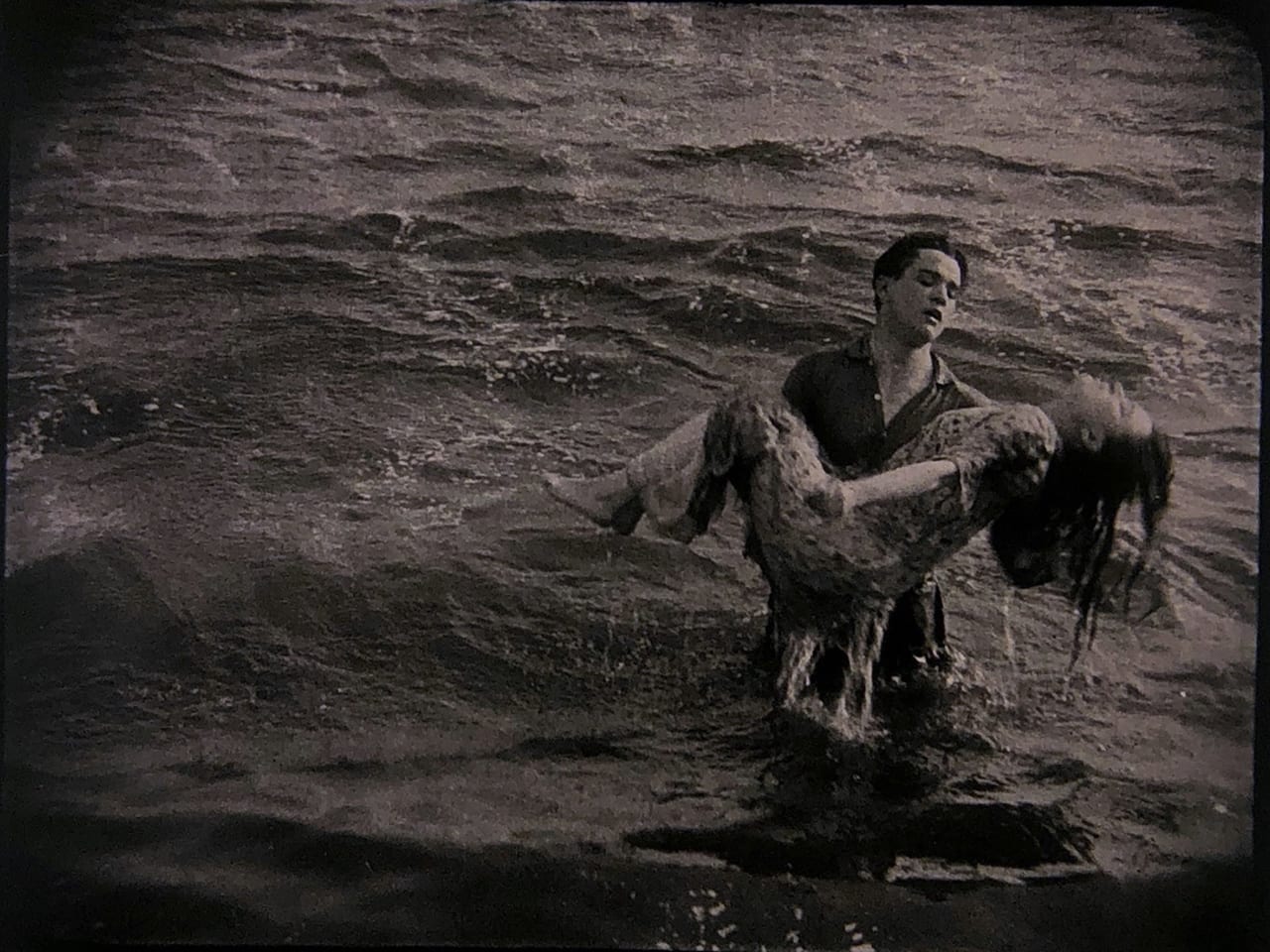
“John took his peasant bride home to Dennys Hall. He placed her under the tutelage of Edith, who came to be constantly at the house. Often Nora would surprise her husband and his charming neighbor in intimate tete-a-tetes—and unseen by them, would steal away to cry her heart out. Some secret, which he shared with the other woman, John was keeping from her. She could not guess that that secret was Edith’s, and not his, to betray. If Nora might even have divined her suspected rival’s misery, she scarcely would have begrudged her opening her heart to her old friend. Edith, six months before, had secretly married the scapegrace, Harry. On the night of Harry’s return, unannounced, Nora was the sole witness of his and Edith’s reunion in the garden. By the dim light of evening, the wife believed that it was her own husband. That night, at dinner, as Dennys raised his wine glass to his lips, Nora bounded from her place and, rushing to his side, struck the goblet from his hand. Then she fell at his feet in a paroxysm of weeping. It was the first intimation John had had of her nervous, distraught condition. He laid it to the unnaturalness of her new life, and vowed to himself that he would be even more tender, more considerate of her. But Nora, haunted by the terrible memory of how she had put the poison in her husband’s wine—though she had herself averted the tragedy—fled the house. All night she wandered delirious. Next morning, on the shore of the lake, Dennys found her cloak and Jim, her dog, guarding it.
“Seven years later, at the small railroad station on Dennys’ Downs, a lay sister of St. Agatha’s convent was gazing intently upon the happy face of Edith Dennys. Two children clung to Edith’s hands. The little lay sister, slipping away from her companion, stole out of the station. Long she wandered aimlessly. Then she found herself in the parish churchyard. It was very still; the deep peace of an English summer afternoon brooded over the silent resting places of the dead. Sweet briar roses twined among the grey, weather-stained stones, and the air was filled with the fragrance of the flowering hedges. From far below, in a field of ripening clover, came distant, drowsy humming of bees. Like an azure tent, the cloudless sky hemmed in that little world of low horizons. The sight of a man, kneeling on a grave, at last roused the sister. She went over and touched his arm. Their eyes met. John Dennys staggered to his feet. The woman’s gaze fell on the stone before them—and she read there her own name. ‘It’s not a spirit!—it’s me, Nora!’ she cried. And then she was pouring out to him the whole tragic story of her marriage, how the sisters of St. Agatha had found her, after many days, wandering demented, and how she had tried to forget her sorrow in the convent. And today—she had seen Edith—.
“’Edith is—my brother’s wife,’ whispered Dennys. For an instant she stared at him, like one turned to marble. Then, with a wild cry, she flung herself into his arms.”
Summary from Reel Life · 16 October 1915