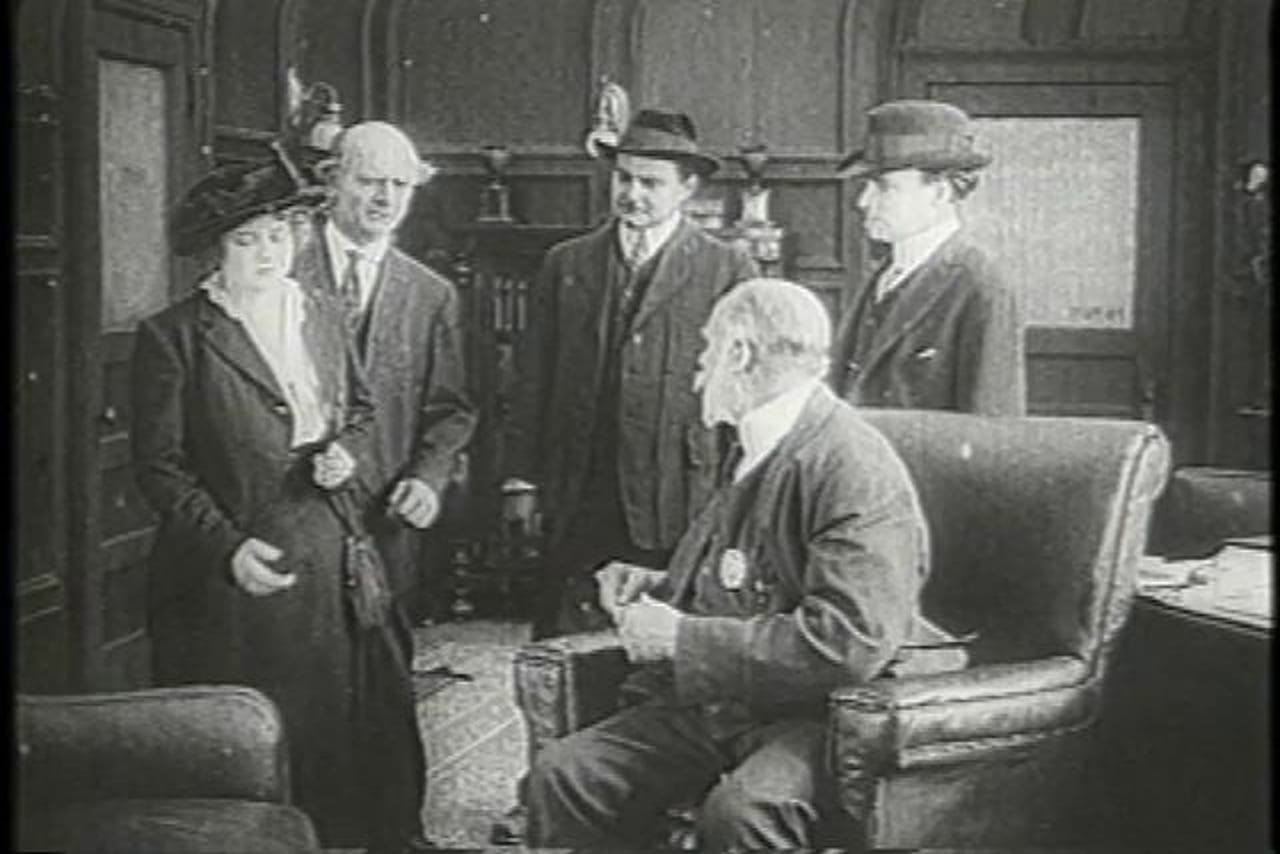
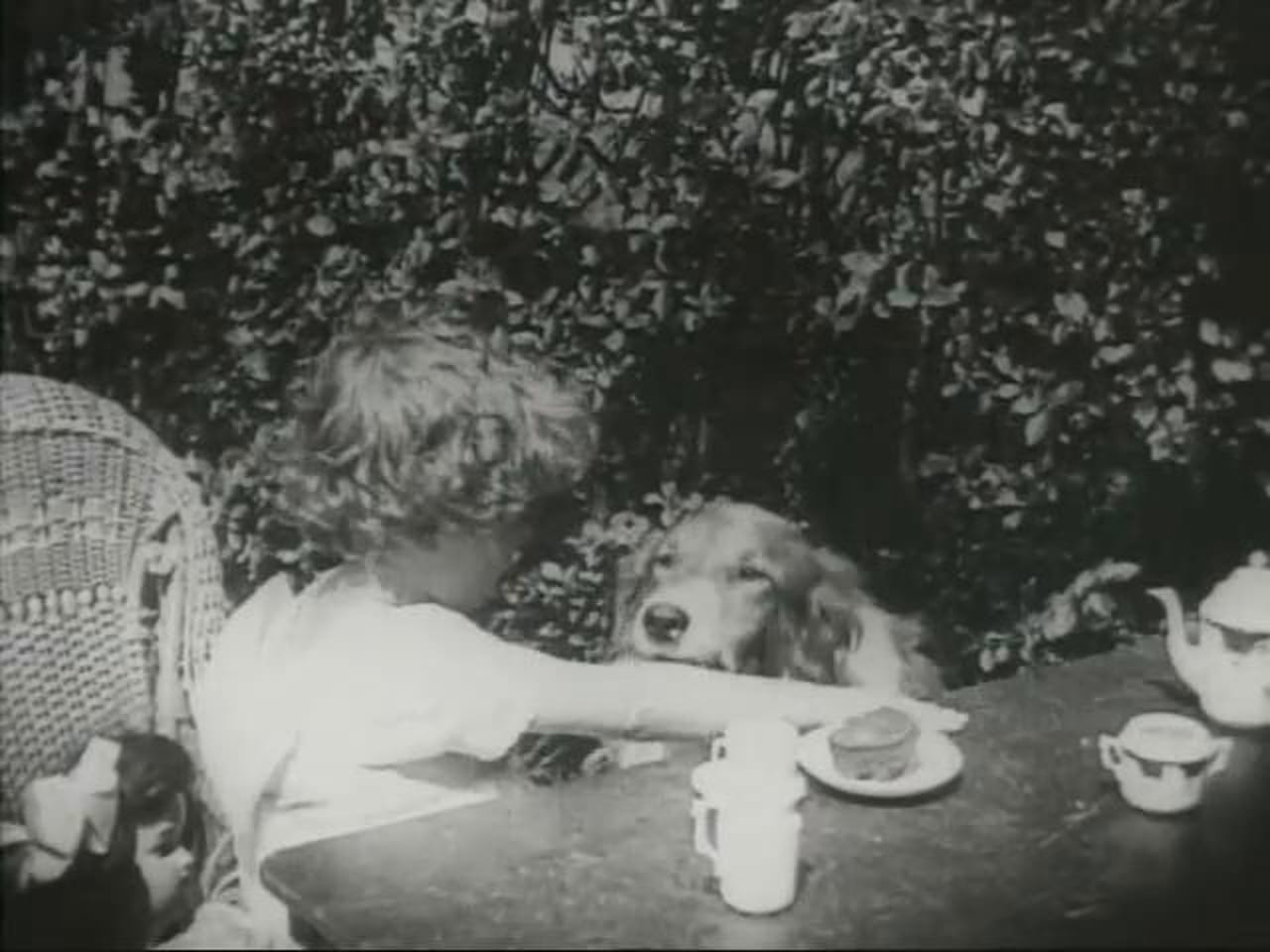
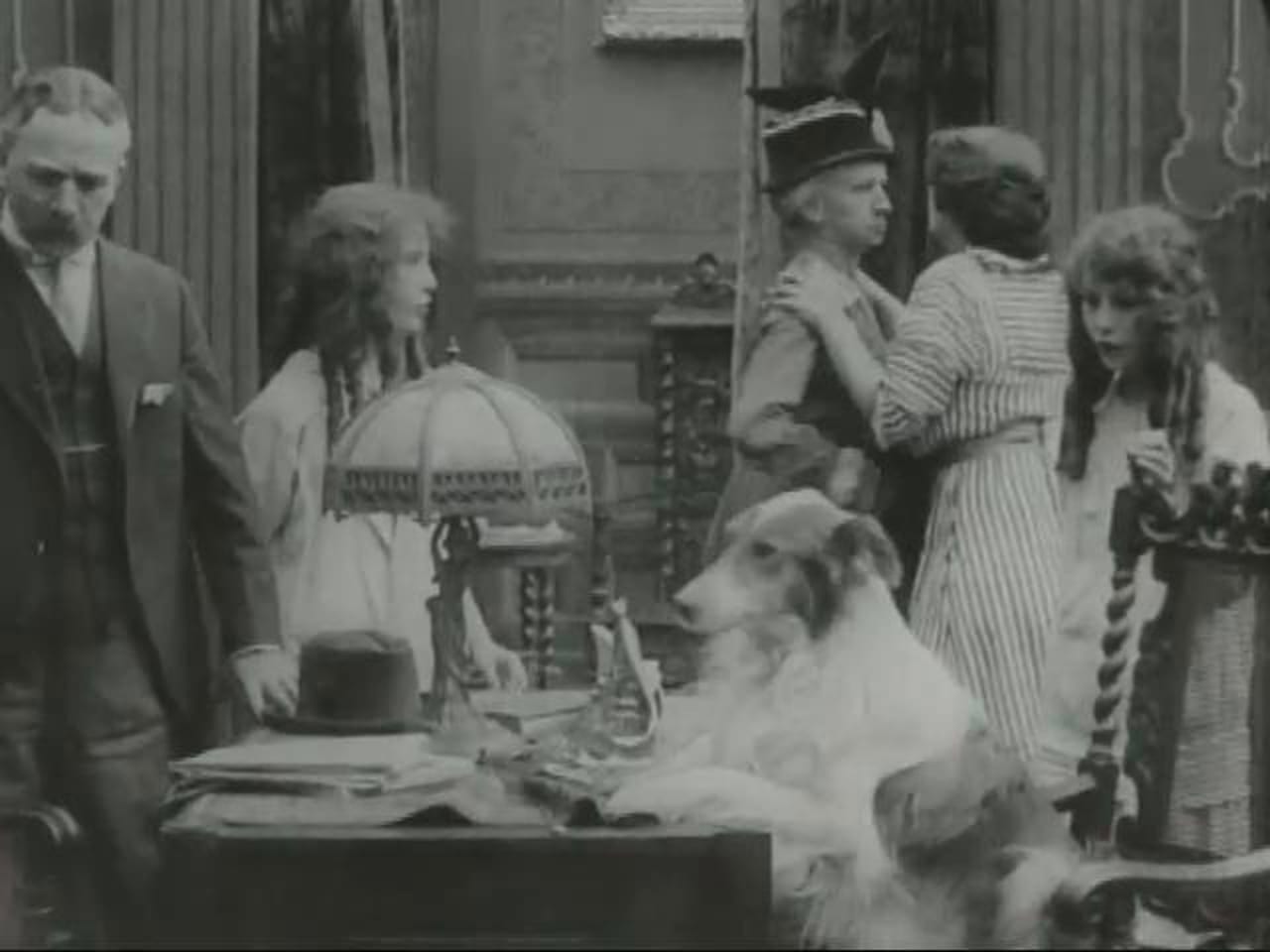
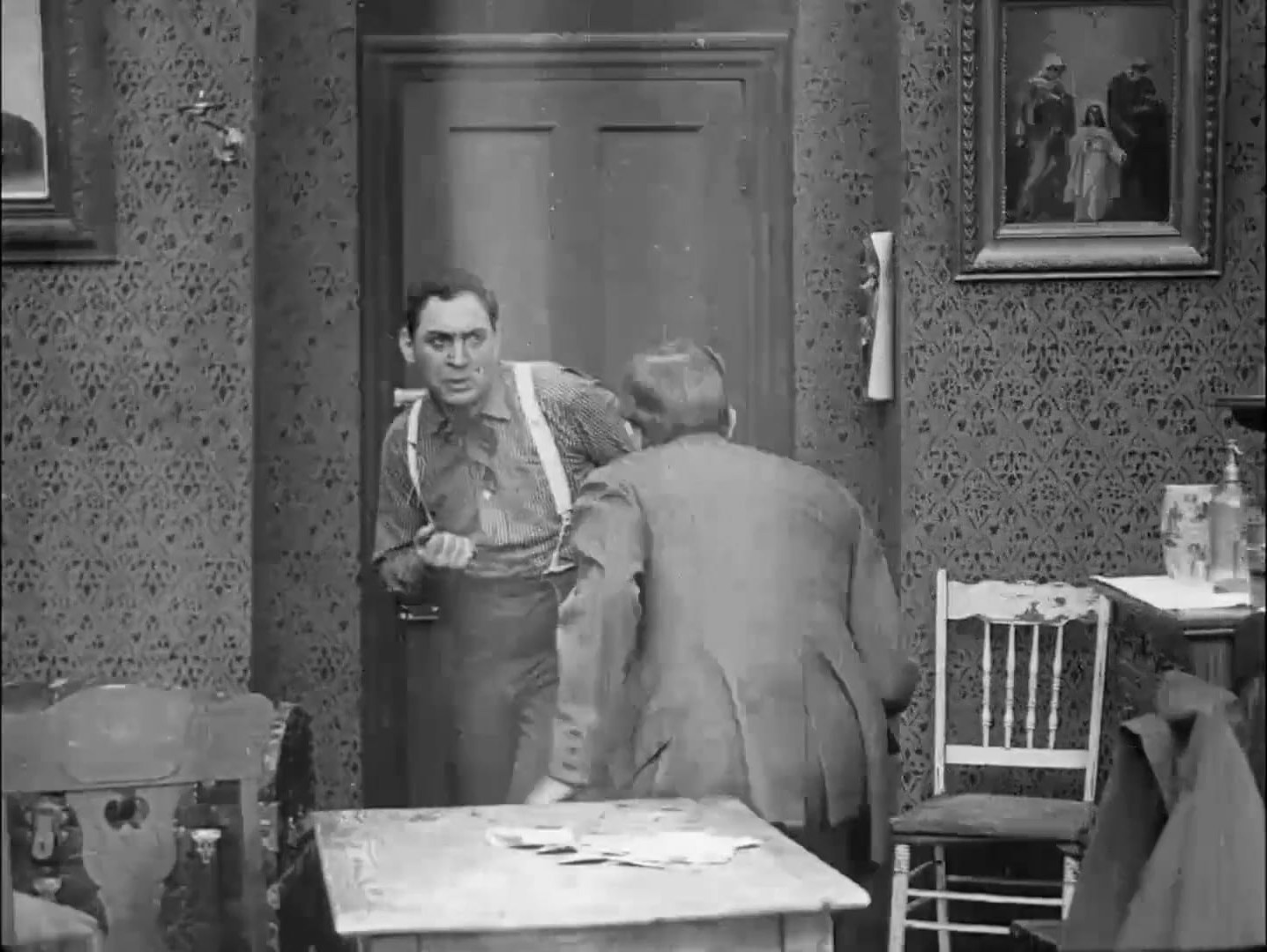
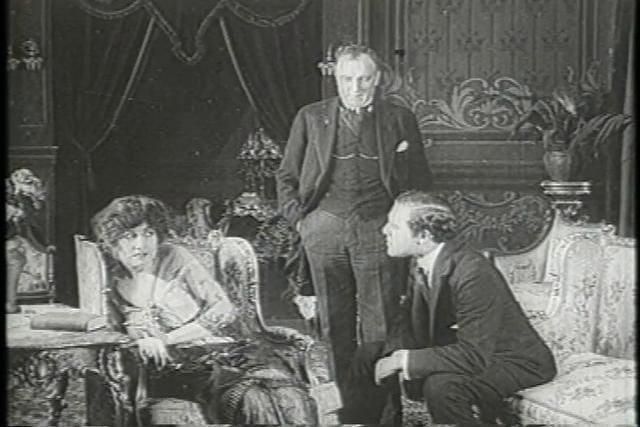
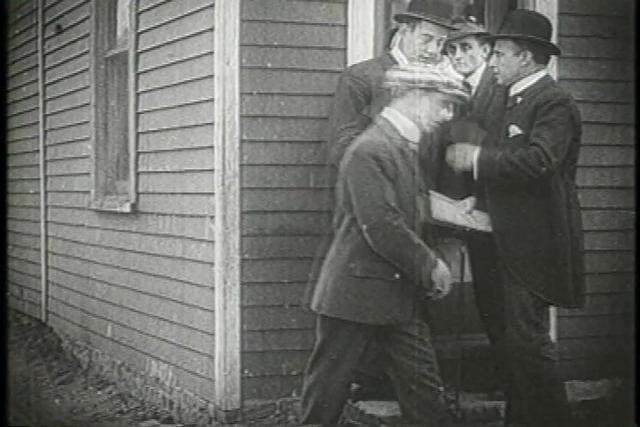
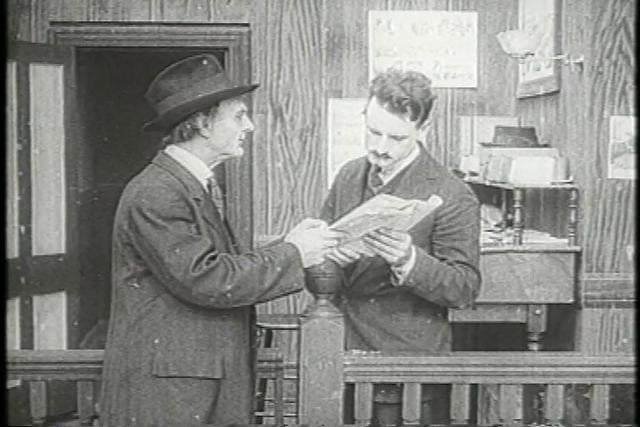
“Detective film dramas are at the present moment as plentiful as ever, but those which can claim some distinct original innovation are few and far between. Amongst the latter, however, there is a Thanhouser release which includes in its cast a pack of American police-dogs. The work of these animals in tracking down the law-breakers is intensely interesting, and decidedly increases the value of the film as a special draw. The producer, too, has given them plenty of scope, with the result that their operations are not cramped and can be thoroughly appreciated and admired. Apart from the dogs, the plot of The Centre of the Web is quite good, without any trace of exaggeration, and deals with the doings of a gang of counterfeiters. A clever touch is given to the heart interest side by having the heroine a confederate to the head of the gang, and the hero an ambitious and promising young detective. They, of course, are made to meet under favourable circumstances, and the lady becomes passionately fond of the secret service man. The latter picks up a clue to the origination of the false dollar bills which are flooding the district. He helps a girl, and arouses the lady’s jealousy. In order to incriminate her rival in the eyes of the detective, she engages the girl’s old father as a clerk, and at the end of the week pays him with false notes. The father and the girl are arrested, but this move only puts the young fellow on the gang’s track. He discovers their headquarters, but is overpowered.
“Then follows the entrance of the dogs, who are put on the trail of the missing detective. They arrive at their destination with the police just as the captured service man’s life is being pleaded for by the lady counterfeiter. The majority of the gang escape, but are unable to beat the intelligence of the pursuing dogs. All manner of ways are indulged in, such as hiding in an underground cave and wayside out-houses, and climbing trees, and one of the men even resorts to scaling a haystack and completely envelops himself in the litter. The dog scents him out, and he has to come down to earth under the compulsion of a revolver. Of the two reels the methods of the canine detectives occupy the major portion of the second. They are first seen in their kennels, which represent large cages, which can so be manipulated that all the animals are released simultaneously. A clever piece of double printing is shown at the end of the police-court scene. The hero’s evidence of the lady prisoner’s attempt to save his life is told in the superimposition. The other episodes, especially those of the false notes in the making, are arranged well, and give the drama a rather convincing atmosphere. The common inclination of depicting a forgery gang at work in some disused underground resort has been dismissed, with the result that with the inclusion of the dogs and a rational love interest, The Centre of the Web can be termed a splendid detective film. It is due for release [in England] April 8th. Length 1,870 feet.”
REVIEW by Elizabeth Lonergan, The New York Star, December 9, 1914:
“Recently at the Thanhouser studio, New Rochelle, the writer witnessed an unusual rehearsal. Twenty German police dogs, untrained as actors took part in a number of studio scenes. ‘It will be great upon the screen’, said one of the spectators. But the work seemed so slow and the patient director went over the scenes again and again before he was satisfied and ready to have the scenes taken. The finished product, The Center of the Web, was shown for the first time December 1, and was greeted with much applause by the patrons of the Stanley Theatre. The dogs, of course, are incidental to the story, but their part is most important and the many unique effects in the landing of the band of criminals are due almost entirely to the clever direction of the canine actors. It is a ‘band’ story, the clever leader of which is a society woman. She falls in love with the detective who is upon the trail of the criminals, but his identity is not suspected, nor is hers. Then into the story come two pathetic characters, an old man and his daughter, poor, shabby and homeless. The adventuress discovers that the hero is interested in them and plots to have them pass the bad action. There are some fine ‘fade-ins’ here and later, and the view of the adventuress in her machine passing the girl, the detective and the old man is very effective as she rides on leaving them in the background, unconscious of her presence. Through an advertisement the old man is hired to work for the concern and paid in Confederate [sic; counterfeit was intended] money. The daughter goes with his first earnings to buy some fruit, the tool of the gang tips off the Italian and she is arrested.
“The scene showing the detectives in the office and the apprehension of both girl and father is well played. Then the detective meets them and decides that they have been driven to pass the money through necessity. The web closes about the band and the detective goes to make further investigation. He is discovered and a fight follows. At first he is victorious, then overcome and carried a prisoner into the house. The adventuress confronts him. Their mutual surprise is well played and she tries to help him but cannot do so. In a thrilling scene, she smashes a window with a chair and saves him just in time. In the meantime, his absence has worried the authorities and the police dogs are set upon his track. It is almost uncanny to watch the pack at work. They reach the house, enter it and then continue the shadowing until each criminal is captured. One follows a man to an upper window, jumps after him to the ground, follows him over hill and meadow, finally standing beside him until the police arrive; another jumps through a transom, the door being locked; others climb down trap doors, jump through doors and high windows; one ascends a haymow and holds the man captive, while the greatest feat of all is a ‘tree climbing’ stunt. One of the huge wolf-like creatures actually climbs a tree while the audience watches breathlessly! The human actors played their parts exceptionally well. Frank Wood as the detective gave a fine portrayal of the part and caused some excitement by his fine fighting with the villains. Marguerite Loveridge in the small part of the daughter, gave a sympathetic performance and made much of her few opportunities. Claire Kroell had the part of the adventuress and was at her best in the dramatic scenes; while the minor roles were well taken. The play was directed by John Harvey and from the pen of Philip Lonergan.”