1911Thanhouser Company995 feetDrama

The Stage Child

No copy you can watch online. No print is known to survive. What follows is what does: the release, the cast, the story, and what the trade press said at the time.

The story

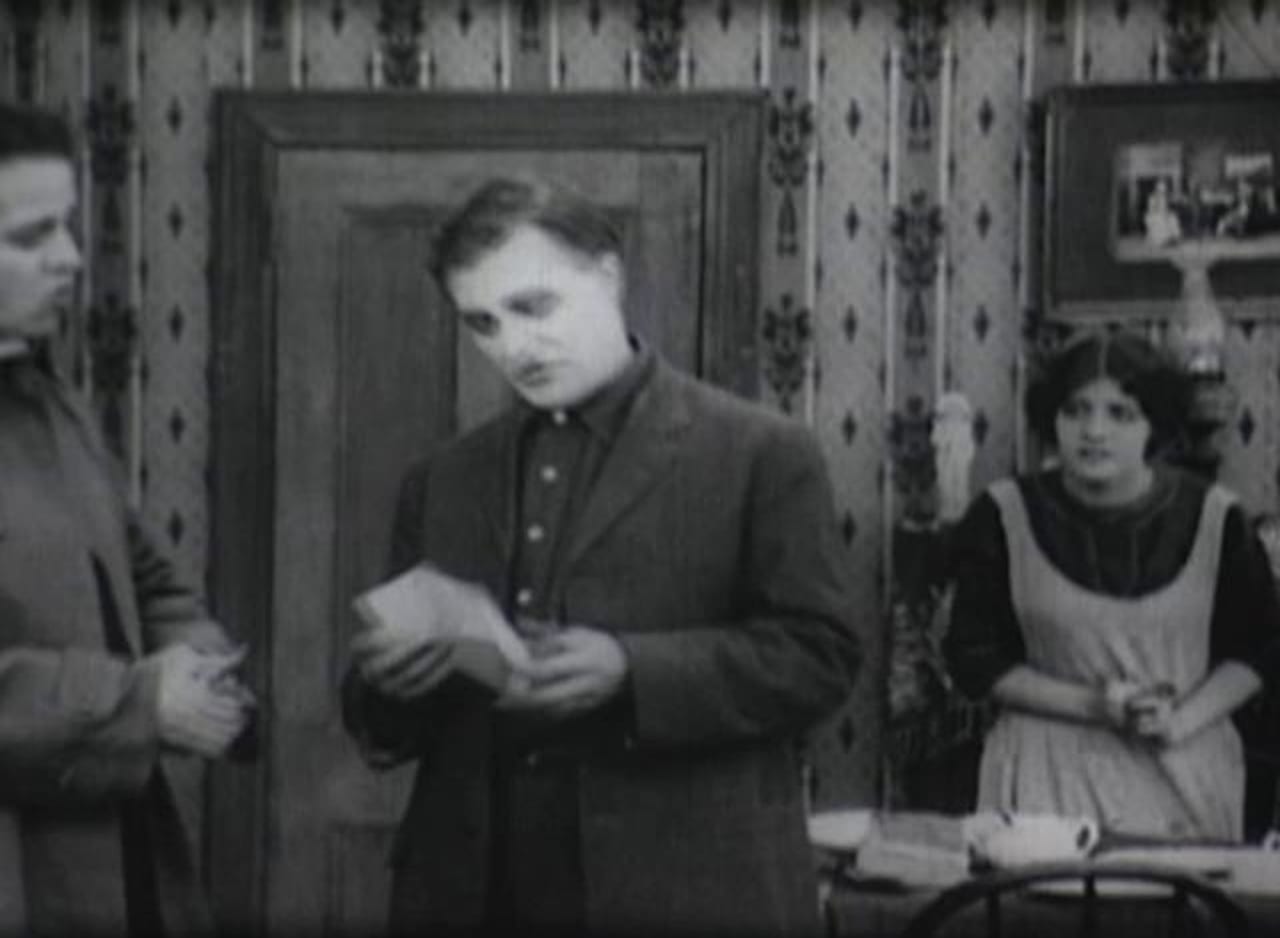
“The husband was not cruel, he was what is called a ‘good provider,’ but he never could realize that his wife ought to have a chance to spend money. And when she found that she could earn a good living because of her excellent voice, she left him, taking their baby daughter along. Then she joined an opera company, went on the road, and speedily achieved success. But six years later she found that her voice was failing her, and the skilled physician who was called in was forced to tell her that she would never recover it again. Thus in one day she fell from the proposition of a star to that of a woman with no prospects. Her little daughter felt sorry for mama, and going to the theatre, applied for a position as dancer. And it was promptly given to her.

“Then the law stepped in. A policeman informed her that a child of her tender years had no right to appear upon the stage. So the child called upon the mayor, expressed her opinion of a statute that would prevent a little girl from supporting her sick mother. The mayor was won by her entreaties, and went to see the mother. Then he realized why he had taken such a fancy to the child. He and his wife mutually forgave each other, and their home is much happier than it was when they ‘just drifted along.’”

Summary from The Moving Picture World · 20 May 1911
What the papers said

3 reviews · 1 advertisement

“This is a extremely well played little drama of stage life, showing some very interesting scenery and telling a heart-touching story. A husband and wife quarrel, after which the wife goes on the stage, taking their infant daughter with her. In a few months time it happens that the star of the show becomes ill, and no one is able …

Read in full · 1 min

“This is a extremely well played little drama of stage life, showing some very interesting scenery and telling a heart-touching story. A husband and wife quarrel, after which the wife goes on the stage, taking their infant daughter with her. In a few months time it happens that the star of the show becomes ill, and no one is able to take her place until the wife offers. She instantly becomes a favorite. Six years later, during the rehearsal, her voice suddenly gives way, and she is unable to sing another note. The throat specialist to whom she goes can offer no hope, and while the mother is crying over her misfortune, the little girl slips away to the theatre, demonstrates that she can dance, and is given a part in the show. The mayor of the town forbids her appearance, due to her age, so she goes to her father [sic; the synopsis says the mayor is her father] and succeeds in getting him to call upon his wife, when reconciliation takes place. The scenes in the theatre, both during rehearsal time and show time, are marvelously natural, while the little girl’s dancing is remarkably similar to the ordinary stage dance.”

REVIEW in “Film Charts,” The Moving Picture News, May 27, 1911:

“Start: Separation

“Finish: Reunion

“Moral: Providence, through the agency of a child, manifests many marvels

“Reception: Tense

“Biggest moment: Child pleading with her unknown father”

The Billboard · 27 May 1911

“In this picture little Marie Eline takes the part of the stage child. A baby is shown in the first scenes and the Thanhouser Kid impersonates this baby three years later. Spectators everywhere take a great deal of interest in Marie Eline and her acting, which is remarkably good. It is safe to say that this picture, which in itself is interesting, will be popular. It is not an important picture.”

The Moving Picture World · 3 June 1911

More reviews

31 May 1911The New York Dramatic Mirror1 min

“This is a thoroughly first-class production in every way, and while it does not take up the problem of the stage child to a great extent, it is opportune and suggestive. It is a clever story and is cleverly constructed and acted with superior settings. The husband discourages his wife’s passion for music and refuses her money to continue her extravagances. Through friends she obtains a position in the chorus, and some time later she rises to the eminence of leading lady through her ability to assume the star’s place when disabled. A few years after this, while at rehearsal her voice leaves her and she is obliged to surrender her part. She is anxious for the support of her child, who on hearing the conversation between herself and a physician goes to the manager and applies. She is engaged for her ability at dancing. On the first night she makes a great success, but is prohibited from further performing by an edict of the mayor preventing the appearance of children. She goes to the mayor to plead with him and takes him to see her mother, who is none other than the wife who left him. There is a reconciliation. The wife is well played, while the stage child is of course Marie Eline, which is explanation enough.”

Advertisement

20 May 1911The Moving Picture World1 min

“Just the release for this period in our national existence when the matter of the right of a child to act is being so strenuously agitated everywhere. Many eminent persons feel that a child has no right upon the stage; many just as eminent feel otherwise. The present picture leans to neither one side nor the other; it gives merely a new, true view of the question, one based on an actual happening from real life. The happening has been reproduced solely for the sake of the human interest that is in it.”

Have you seen this film, or a print of it?

Prints of films thought lost still turn up in attics, private collections and archives. A record like this one is how the next one gets found.

Tell us about a print

Cast and crew

Cast
Julia M. Taylor as the wife and mother
Marie Eline as the stage child

Every name opens that person's page, with each film they appear in and which of them you can watch.

Watch instead

Films you can watch from the same company

Matched by cast, director and kind

More about this film

From Volume II: Filmography of Q. David Bowers’ Thanhouser Films: An Encyclopedia and History, reproduced with permission and unchanged. Read the history of 1911 →

Cite as: Bowers, Q. David. Thanhouser Films: An Encyclopedia and History, “The Stage Child”. thanhouser.org/films/the-stage-child/

Where a print is held

Held by
No print known