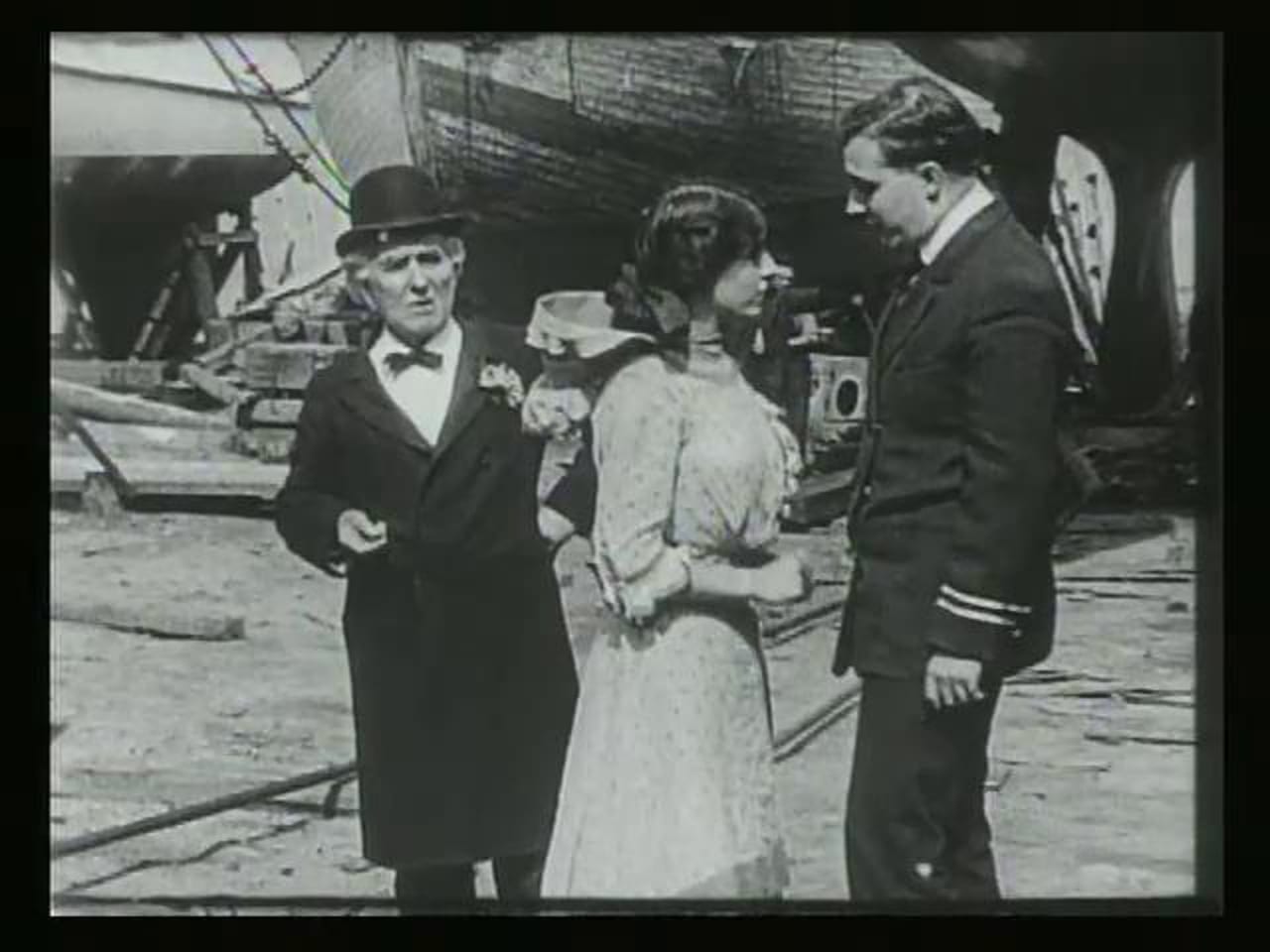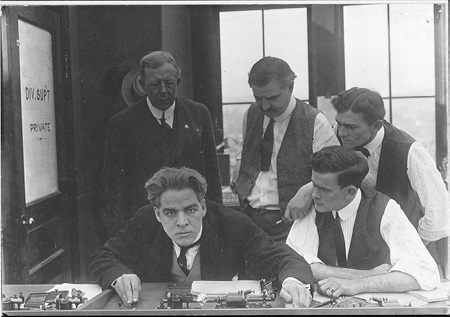
A frame from The Train Despatcher. William Russell in THE TRAIN DESPATCHER. Courtesy of Ralph Graham, M.D.

1911Thanhouser Company1,000 feetDrama

The Train Despatcher

No copy you can watch online. No print is known to survive. What follows is what does: the release, the cast, the story, and what the trade press said at the time.

The story

“The H.T. & D. Railroad engages a new general manager who, while he has plenty of ability, also has some decided prejudices. One is that women have no business in the service of a railroad, and the first thing he does after being installed is to notify the women that their services are no longer required. One of the victims, because of her faithfulness and excellent service, has risen to the position of train dispatcher, but she goes like the rest of her sex. The girl lives in a little country town, and is the sole support of her crippled little brother. Losing her position so unjustly was a severe blow to her, but she bravely made the best of it, and hid her troubles from the child. The boy was taken sick one night, and his sister, alone with him in the house, started out over the country road to get a doctor. On her way she crossed the railroad track, and to her horror saw that there had been a washout. Knowing the train time as she did, she was aware that the night express would be along shortly and unless it was halted, there would be a terrible loss of life.

“The train was coming from the opposite side of the abyss, so she could not flag it. There was no station near, no telephone that could be reached in time to prevent the catastrophe. But the girl was resourceful, climbed a telegraph pole, and with makeshift apparatus called up division headquarters. Even then her heroism would have been to no avail, had it not been for a lucky accident. The dispatcher who took the girl’s place was fond of liquor, and on this night was in a drunken slumber. He did not hear the call, and every moment increased the danger. But the general manager happened to be in his office. He had seen his mother off on that train, and then had returned to his desk to attend to some important business. He heard the insistent call in the next room, and being a railroad man, went in to investigate. There he found the operator asleep at his post, and took the message himself. It came in time for him to hold the train, but he realized that he had saved the train’s passengers and the mother he dearly loved only by a narrow margin. Also that the one person deserving a credit was the girl he had discharged, simply because she was a woman. The manager made amends the best he could. He restored the girl to her old position, at an increased salary, and as gratitude is often akin to love (and with more reason than pity), there is reason to believe that the dispatcher lost her job again, but this time to take a life position in happy surroundings.”

Summary from The Moving Picture World · 12 August 1911
What the papers said

3 reviews · 1 advertisement

“The rescue of a train from starting on a run which would have meant death to many of his passengers, forms the central theme and is highly-interesting and a well-played little drama. The holding of the train is accomplished by telegraphic dispatches sent by a girl who has climbed a telephone pole for the purpose of sending them. The act …

Read in full · 1 min

“The rescue of a train from starting on a run which would have meant death to many of his passengers, forms the central theme and is highly-interesting and a well-played little drama. The holding of the train is accomplished by telegraphic dispatches sent by a girl who has climbed a telephone pole for the purpose of sending them. The act gains a much-desired position for the girl and has other rewards. The scenes are staged along a real railroad wherever possible and a clear, realistic production has resulted. While one of the simpler of this company’s productions, it is likewise one of the best.”

The Billboard · 19 August 1911

This review is reprinted in the narrative section of the present work.

The Morning Telegraph · 20 August 1911

More reviews

26 August 1911The Moving Picture World1 min

“So pretty a scene opens this picture of railroad life that it is likely to be at once applauded. The story is very romantic and of the kind that many people prefer. The pretty girl train despatcher is discharged by the new general manager, who believes in having only men for such work. She leaves the city for her home in the country, but this the picture doesn’t make clear. Later, while going for a doctor for her sick mother [sic; the synopsis says a crippled boy became sick], she finds a dangerous piece of track and running home for her telegraphing outfit climbs a pole and cuts into a wire to warn the dispatcher and save the through express which is due. The man at her old desk is drunk and asleep. The manager overhears the key calling and investigates. This saves the express and wins back her old job and perhaps the manager’s love. The Thanhouser players act very well. This picture, if not important, is surely a very pretty one.”

Advertisement

12 August 1911The Moving Picture World1 min

“It is a tale of the rail that has become a classic on the H.T. & D. Railroad, where the incidents all transpired. Very exciting incidents they were, too, the pretty curled train dispatcher taking the leading part in them. She actually climbed a huge, swaying telephone pole, and managed to ‘tap the wire’ and so averted a most terrible railroad disaster. All these thrilling things they show on the picture. The reel will be famous for the daring work of its chief character, the realistic wreck scenes and the fine ‘railroad atmosphere’ throughout.”

Have you seen this film, or a print of it?

Prints of films thought lost still turn up in attics, private collections and archives. A record like this one is how the next one gets found.

Tell us about a print

Cast and crew

Cast
Peggy Glynn as the train despatcher

Every name opens that person's page, with each film they appear in and which of them you can watch.

Watch instead

Films you can watch from the same company

Matched by cast, director and kind

More about this film

Bowers’ notes
  1. “Despatcher” was the spelling used by Thanhouser, not “dispatcher” as preferred today. In 1911, the word “despatcher” was in common usage and was the preferred form. 2. A release date of August 11, 1911 was given erroneously in some notices. 3. A picture of Peggy Glynn holding a telegraph key apparatus and standing next to New York Telephone Co. pole No. 99 appeared in The Moving Picture World, March 9, 1912, page 36. An accompanying paragraph noted: “’Peggy’ really got to the ‘top ‘o the top’ and saved the day for the director. When questioned about this daredevil feat later, she simply said, ‘Oh, it was easy. My director told me to get to the top, and then I heard the camera purring. The wind was shaking the pole frightfully, but I simply kept my eyes upward and kept moving until I had only air overhead.”
Posters and media
Still for The Train Despatcher. William Russell in THE TRAIN DESPATCHER. Courtesy of Ralph Graham, M.D.

From Volume II: Filmography of Q. David Bowers’ Thanhouser Films: An Encyclopedia and History, reproduced with permission and unchanged. Read the history of 1911 →

Cite as: Bowers, Q. David. Thanhouser Films: An Encyclopedia and History, “The Train Despatcher”. thanhouser.org/films/the-train-despatcher/

Where a print is held

Held by
No print known