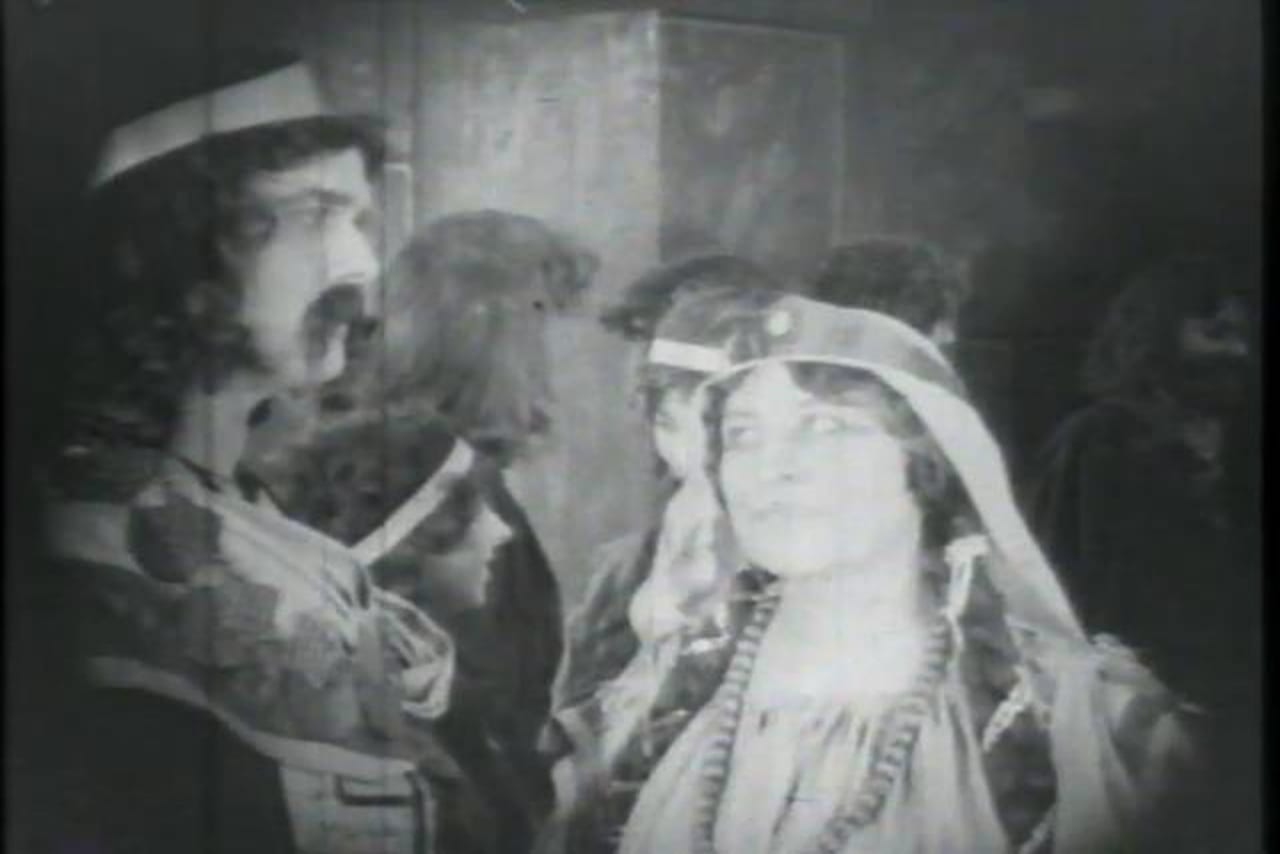
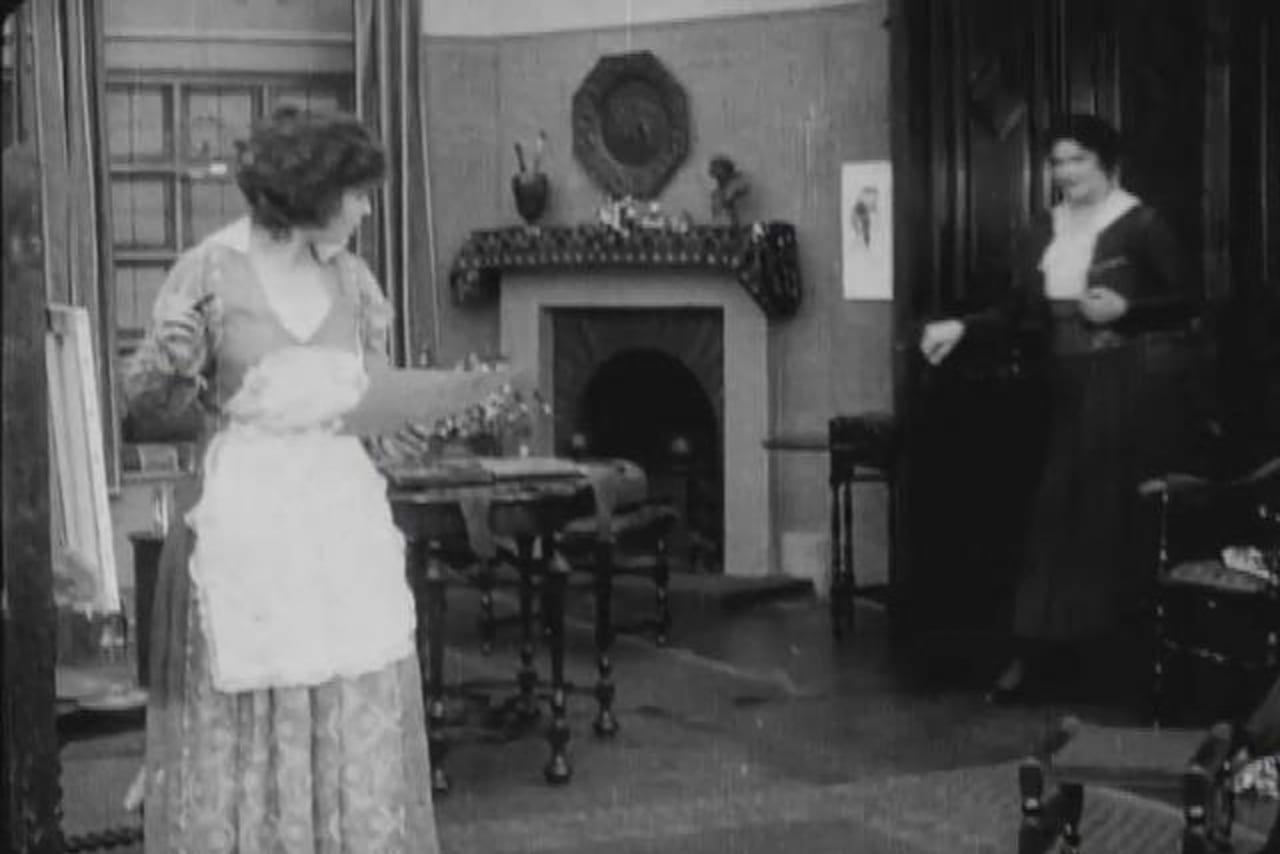
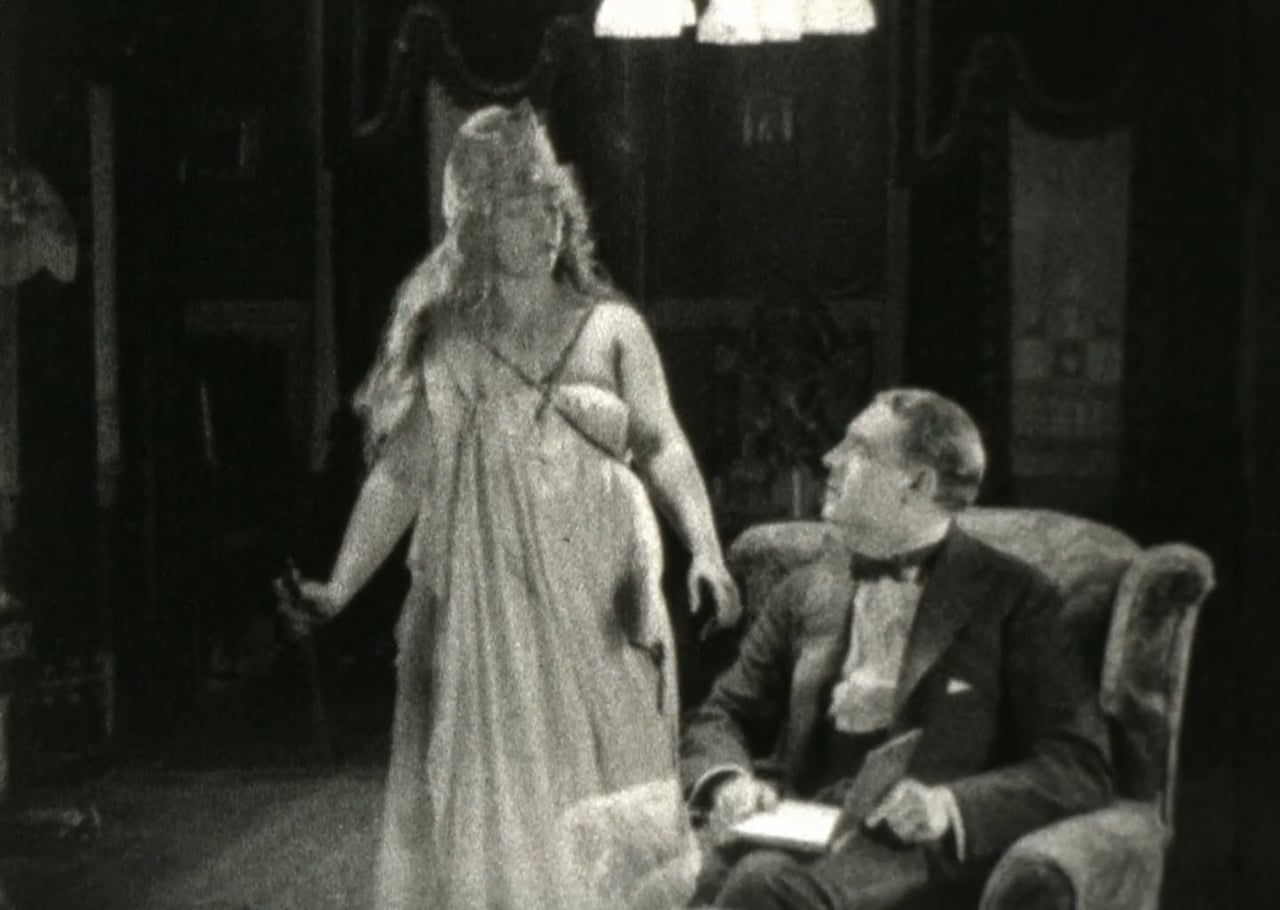
“One noteworthy feature which will appeal to the motion picture patrons is its simplicity and its true to life ideals. The home life and the happiness of the family, until the entrance upon the scene of the pleasure loving widow, is all told with a force that is appealing. The plot moves quite slowly at the beginning, but gradually hits a quicker pace until an interesting climax concludes the picture. Very clear photography and an intelligent use of close-ups likewise add impressiveness to the picture. This release should prove an attraction for any house which caters to the ‘family’ clientele or to any theatre whose patrons desire pictures and stories that teach a moral. Florence LaBadie, the heroine and the star, should also prove a very strong drawing card. Her work is exceptionally pleasing as the young girl who loves her home above all else and her dramatic abilities are brought into play with very good results in some very tense scenes in the final reel of the photoplay. Kathryn Adams, as the widow, presents a vampire characterization that is not overdrawn, as is usually done in screen types of this kind. The work of the male members of the cast, with the exception of J.H. Gilmour as the father, proved too stiff and formal. By keeping well in the minds of your patrons that this is a problem play dealing with the divorce question, with a strong moral value and likewise the fact that Florence LaBadie is seen in a part that is suited to her dramatic gifts, you should find little difficulty in filling your house with satisfied customers.”
REVIEW by Agnes Smith, The Morning Telegraph, November 19, 1916:
“Florence LaBadie’s ability to create a living, breathing and thinking character combined with Agnes Johnston’s faculty of writing an unexaggerated and human story of everyday life makes this feature one well worth seeing. It is a sensitive study of a girl whose faith in the sanctity of marriage is destroyed when she learns that her father and mother whom she has always believed to be ideally happy are planning a divorce. Her disillusionment leaves her susceptible to the high-sounding arguments of a free love advocate. It takes a disagreeable experience and a near tragedy to prove to the girl the falsity of the man’s reasoning, but in the end we find her happily engaged to the nice, commonplace suitor who has loved her all along. Miss Johnston’s story is not a big one nor a pretentious one, but it is sincere in its theme and delicate in its character drawing; she writes with a real feeling for family life. The climax, which comes when the villain locks the girl in his apartment, is pretty much like other pictures, but the developments which lead up to it show originality of plot and genuineness of purpose. Miss LaBadie’s acting is both intelligent and sympathetic, and other members of the cast behave very much like human beings. The direction is decidedly good.”
REVIEW by Laurence M. Reid, Motion Picture Mail, November 18, 1916:
“Divorce and the Daughter, is a sort of preachment on the ever-increasing laxity in the modern home today, a picture teeming with dramatic instinct and suspense, a poignancy, a fresh observation and a directness that are admirable. While it illustrates the weakness of the family nest, we sincerely hope it does not represent the average but the exceptional. It is a sort of an undergraduate eternal triangle, not quite fully matured, but which in its embryonic state is potent nevertheless. Here we have a family eking out an existence on a meager income in a representative city, when fortune favors them in the guise of a legacy which is sufficiently large to maintain them in a moderate nouveau riche manner without the exaggerated and pseudo culture that usually accompanies that class of people. It is a family of dreamers, each intent on some particular hobby—the father to stimulate his latent ability in painting, the mother and daughter to cultivate and foster a real home atmosphere. In fact, the fundamental motive of the entire family is to seek new ideals and cherish them in the open country.
“We find them fully established in a manor house dangerously near an artists’ colony, with their broad conceptions of live and love. One night an elaborate carnival takes place at the colony, to which our friends are invited. The father facetiously renews his youth, becoming again impressionable through the ensnaring coyness of a siren whose only intention is to entice the old man from his family and thus gain his sudden wealth. Meanwhile, what of the family? Are they, too, intoxicated, swept away with this newly found environment and freedom? Not entirely. We see the daughter in a budding romance with the unmarried and eligible young doctor next door, displaying all the coyness of her sex in keeping him in suspense. He fairly radiates anxiety. He has a rival, too, in Herbert Rawlins, an artist and waster from the adjacent colony. Whether the artist inculcates in the girl a desire to explore the chameleon depths of his soul or whether the fascination of the specie is entirely analogous to her desire to entertain a new type of being is difficult to explain. However, he is confidant of his powers of seduction, and the girl represents youth and innocence, something not encountered in his artistic circles.
“Meanwhile, events have reached a climax. The siren is safely ensconced at opportune times in the old man’s home with the apparent object of taking art lessons, but with the real intention of skirting as near a liaison as possible, when the dam bursts. The mother, noticing her husband’s growing indifference, suddenly confronts teacher and pupil in one another’s arms, and forthwith divorce is broached. The father had outgrown his environment and wanted a bigger outlook, a new freedom, a new love. Meanwhile, the daughter, harboring the same belief as her father, and enraptured with Rawlins, who, knowing his game well and how to play it, made an appointment with her at his quarters. Innocently and unwittingly the girl falls into his trap, whereupon he attempts to dishonor her. In fear she hits him with a heavy object, apparently killing him, and makes her escape. The episode becoming known in the community, the doctor, whose hope still smolders, hastens to her aid and brings her safely home, though suffering from shock and wounded pride. Her father, entirely upset by the near tragedy, and realizing the error of his ways, amends matters and the doctor wins a successful courtship. This, briefly, is the moving history of the plot. The picture presents a powerful appeal, showing as it does the many pitfalls and dangers to which the home is heir. It is graphically developed, embodying situations of intense interest. Florence LaBadie as Alicia played the daughter with delightful naturalness and charm. Edwin Stanley gave to the role of Dr. Osborne a manly, convincing characterization, and J.H. Gilmour was forceful as the father. The photography maintained a high standard, as did the direction.”
REVIEW by Edward Weitzel, The Moving Picture World, December 2, 1916:
“The theme of Divorce and the Daughter, the five-reel Pathé Gold Rooster Play featuring Florence LaBadie, is handled with excellent effect. A young girl’s ideals are shattered by the conduct of her father, who decides to give his wife grounds for divorce in order that he may wed another woman. The entire family narrowly escapes moral shipwreck, but his daughter’s danger brings the man to his senses. Save for one extraneous instant, the introduction of the betrayed maiden—the material employed in telling the story is well adapted to his purpose. The opening scenes show the beauty of congenial home life, and the dramatic qualities of the remaining reels are shown upon the screen in strong relief. Florence LaBadie is earnest and capable as the heroine, and J.H. Gilmour is equal to all demands as the father. The uniformly competent cast includes the names of Sam Niblack, Edwin Stanley, Zenaide Williams, Ethelmary Oakland, and Arthur LeVien. The picture was made by Thanhouser and is well produced.”