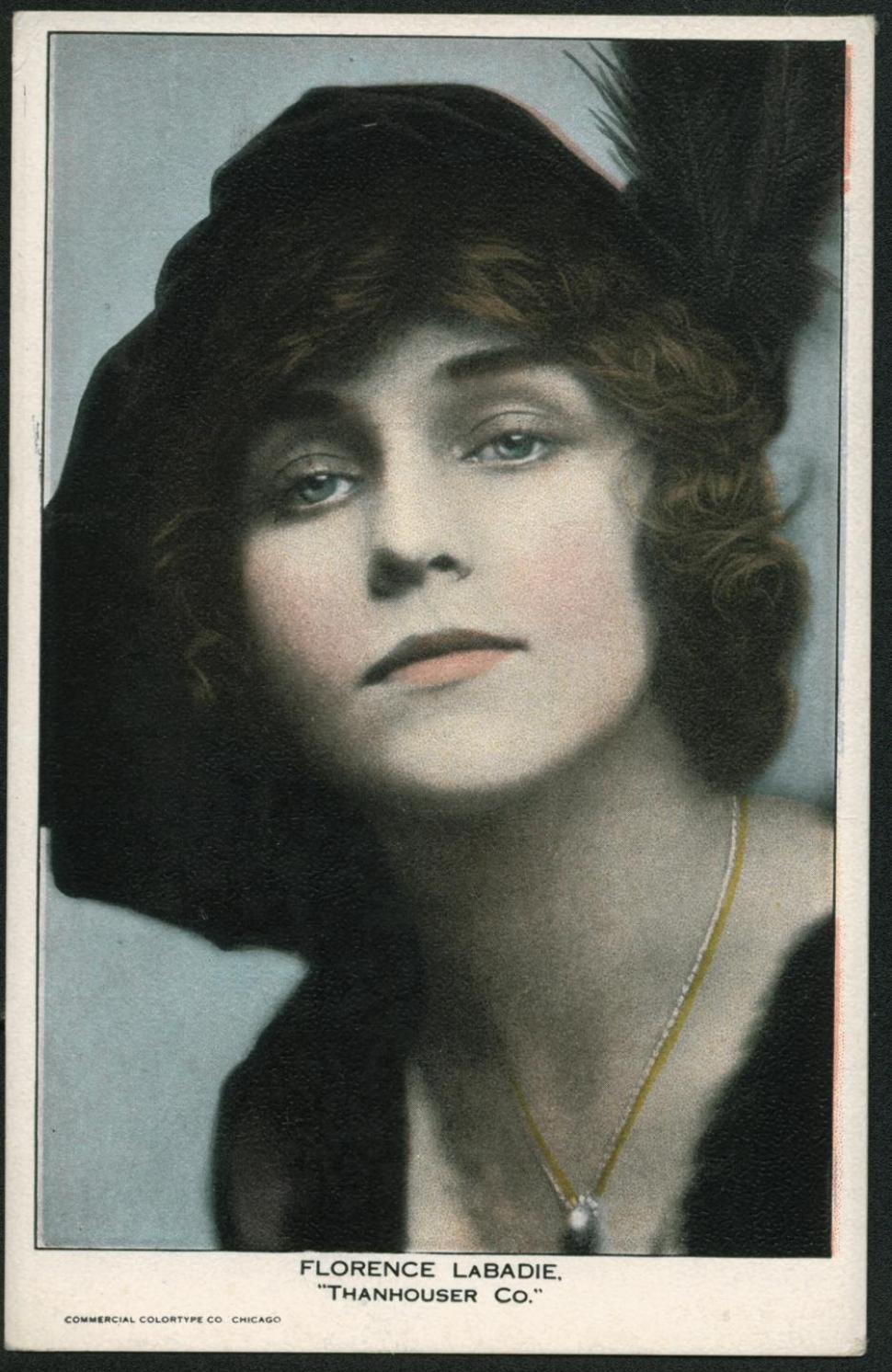
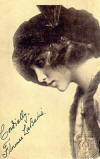
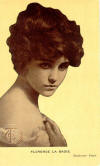
The following article, by “Mae Tinee,” appeared in The Baltimore American, July 12, 1914: “Blue-Eyed, Golden-Haired Florence LaBadie: “’Come in!’ I had rapped on the door of Florence LaBadie’s dressing-room, of the Thanhouser Studio, at New Rochelle, N.Y. and at the pleasant-voiced summons I stepped inside. I stopped abruptly. ‘It isn’t—‘ The funny little thing on the couch laughed, showing teeth that gleamed astonishingly white out of a weird brown face. ‘O, yes it is!’ She patted the pillows beside her invitingly. Come, sit down!’
“Still staring, I squatted down by her side. She certainly looked too queer for words. She had on an Arabian costume of many colors and her head was swathed in an enormous turban, from under which her blue eyes looked merrily, the whites of them as surprisingly white as her teeth had seemed. ‘Why the disguise?’ I asked. ‘Upon what dark enterprise are you about to embark?’
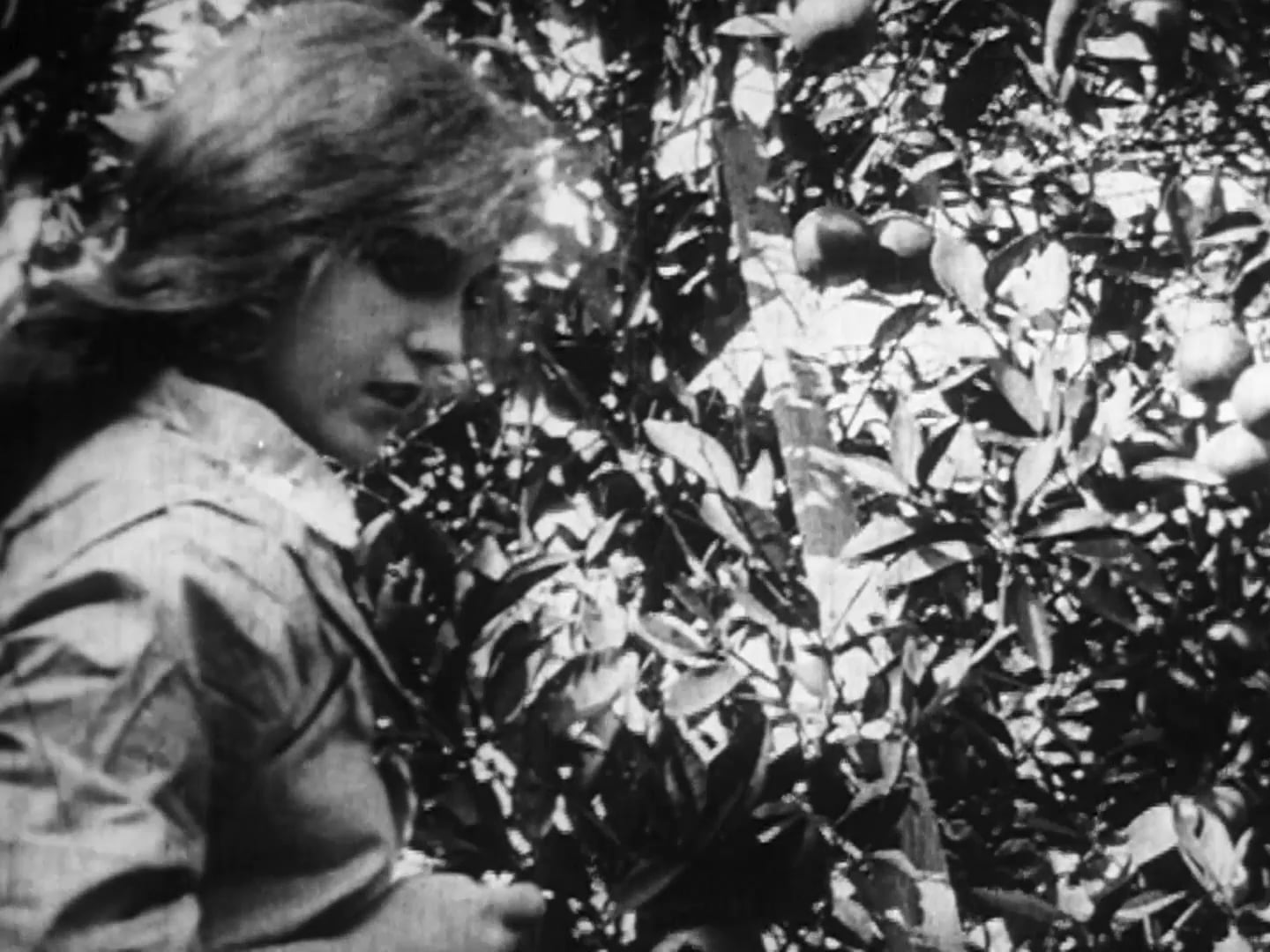
“She leaned toward me and whispered mysteriously behind her little brown hand: ‘Sh! Not a word. I’m a spy! I’m the ward of a governor over in the Orient and we have just discovered there is a plot on hand to kill all the English by putting germs in their food. We sent one man to reconnoiter, but he was discovered and put to death. So I volunteered, and after much persuasion induced my guardian to let me don this costume and go to the city, which is the heart of the conspiracy, where I conduct the fruit stand. I snoop around, and whenever I learn anything I send a message to my guardian in an orange. The orange is delivered to him by a faithful servant who is always about protecting me. I get in with the conspirators and they invite me to attend one of their meetings, at which they tell me they are to talk over something of great importance. I go—‘
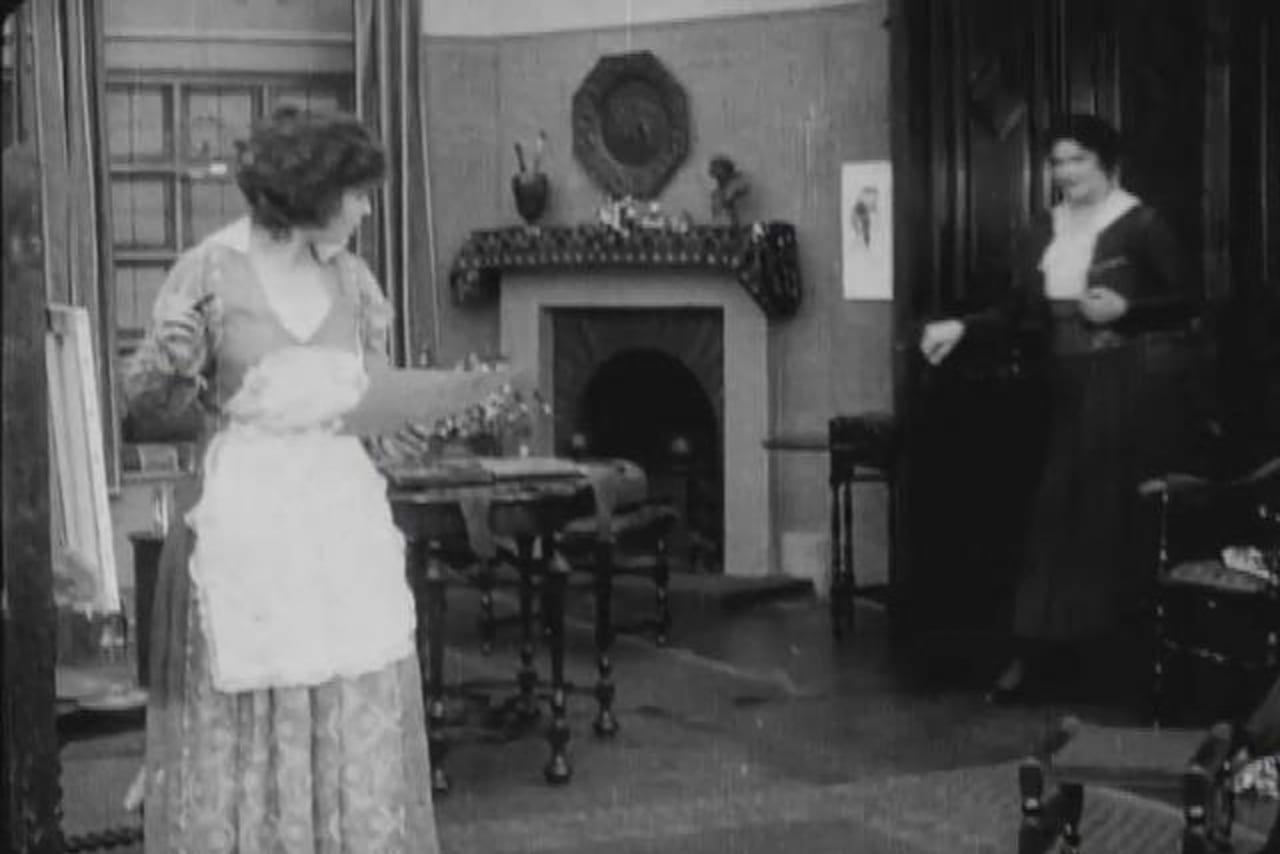
“’I do go,’ Florence LaBadie said, laughing. ‘Wouldn’t you like to watch this scene taken?’ I answered enthusiastically that I would and went up to the stage, on which were all sorts of queer-looking persons in queer-looking garbs—not one of whom you could even think of meeting on a dark night without a tremor. Awful, sinister, bearded men; stinky, furtive-eyed women with half veiled faces, etc. And the scene was a council chamber. At a table in front of rows of chairs evidently intended for the conspirators stood a fierce, bearded individual. Before him on the table were two large glasses filled with mysterious-looking concoctions.
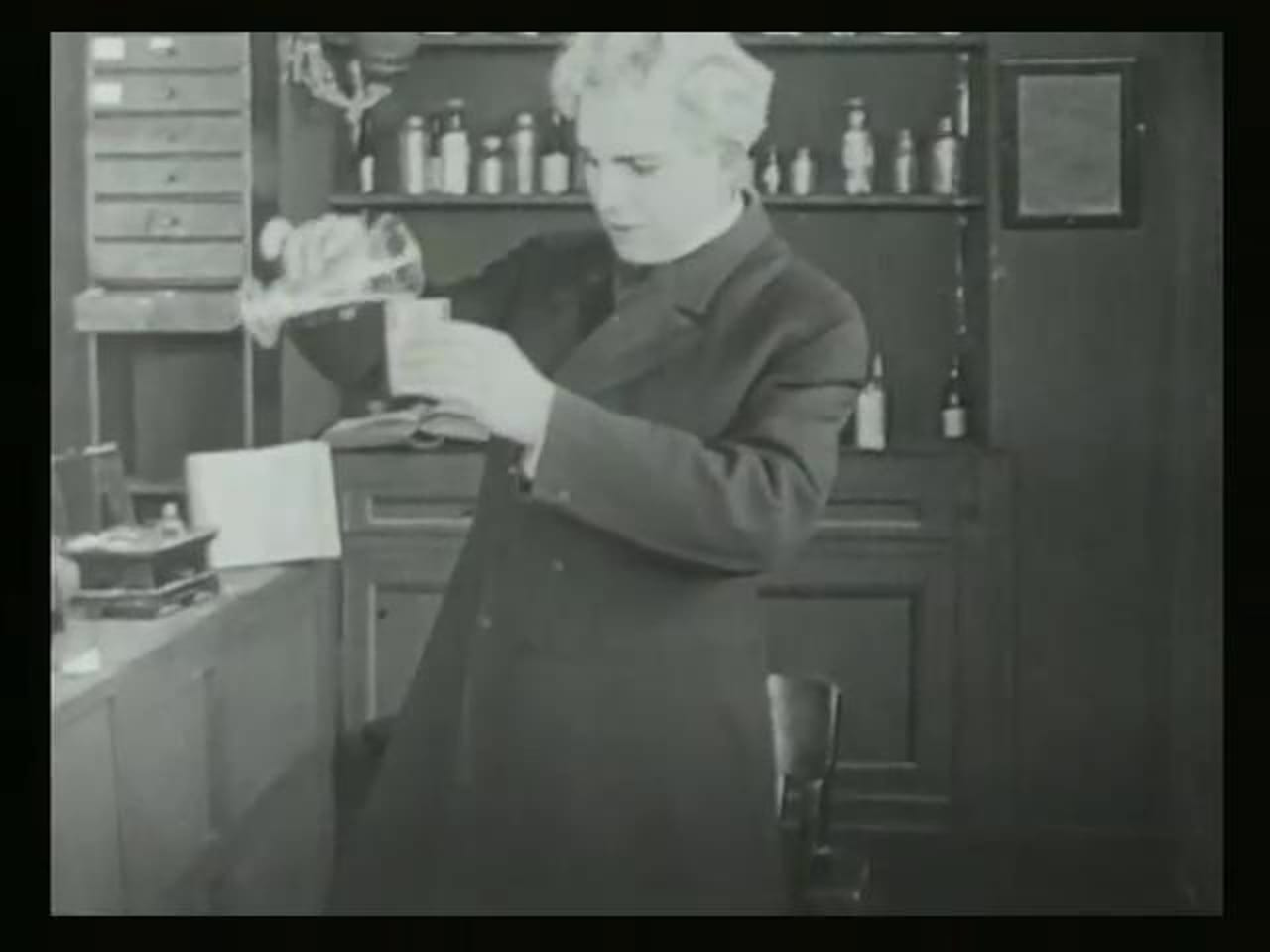
“At a word from the director the conspirators fell in, each raising a hand, as a high sign of some kind. Among them was my interviewer. The camera had not started its grinding yet and she made a face at me. Then she sank into her chair in the very front row and rehearsed what she was to do—which was to depict first alarm then horror—then in a frenzy of fear to tear her bodice revealing her white skin. As the others filed out, after they had taken oaths to make way with the English by the germ system, the bearded individual tapped her on the arm, asked her politely to be seated, and informed her that, as she had been the first to learn the secret, so should she be the first to die by it, and she prepared to feed her a germ. She struggled and—enter the faithful servant, who throttles the bearded one, rescues Florence, and incidentally saves the English. [This was a scene from A Mohammedan Conspiracy, released May 12, 1914.]
“Oh, it was awfully thrilling! But it was over at last and Miss LaBadie still panting a little from her exertions, came and led me back downstairs to her dressing-room. There she removed the warm turban and let down her blonde hair, presenting, as Alice in Wonderland would probably have said, a curiouser and curiouser appearance. She asked: ‘Do you imagine you’d like to be a movie actress?’ I shook my head. ‘Wouldn’t have the nerve. It takes a brave human to face a camera. Of course, I suppose one might get used to interior scenes—but the things you have to do out of doors—in front of a crowd. I should die!’
“’Oh, no, you wouldn’t.’ Miss LaBadie was positive. ‘Of course, you do mind it at first, but, like everything else, you get used to it.’ ‘But the risks! You do have to take terrible risks. Aren’t you ever afraid?’ ‘Oh, no—‘ Miss LaBadie started. Then she stopped, laughing. ‘What’s the use of fibbing? Of course I am. I get terribly panicky. But I don’t believe I was ever so frightened as the first time I was called on to do something hard.’
“’Tell me about it, won’t you?’ She ran her slender fingers through her mass of hair. ‘Well,’ she said, ‘I hadn’t been in the business very long when we did a picture in which I and my father had to escape from some Indians. There was a scene in it where we were to climb in a wagon and drive a couple of horses helter skelter down a steep hill. At the bottom of the hill there was a river and we were supposed to jump from the wagon—a big, high affair—into the water and swim for our lives. I had never driven in my life—and I was the one who had to hold the reins. Well, just let me tell you, Miss Tinee, the morning that scene was to take place there wasn’t a more frightened girl on the face of the earth than Florence LaBadie.’
“’I can believe it.’
“’Yes. Well.’ I said to myself, ‘you knew you’d have to do scary things if you got into this business, now it’s up to you to go ahead and make good!’ So, when the time came we got in our wagon and down the hill we tore, with the wagon bumping over stones and me sawing at the reins, praying every prayer I’d ever heard of just as fast as I could pray. And what do you think happened?’
“’What?’
“’Just as we reached the bottom of the hill the wheels on one side struck a big rock, and instead of jumping the wagon turned over, throwing us into the water. Everybody let out a yell—you see they thought surely we had been killed, but my prayers had worked, and the next they saw of us we were swimming as per program. And the wonderful thing was that the camera caught the whole thing—the camera man being too excited, I suppose, to stop his camera when the spill occurred. It was a great picture, I can tell you—but it came near being the finish of my career.’
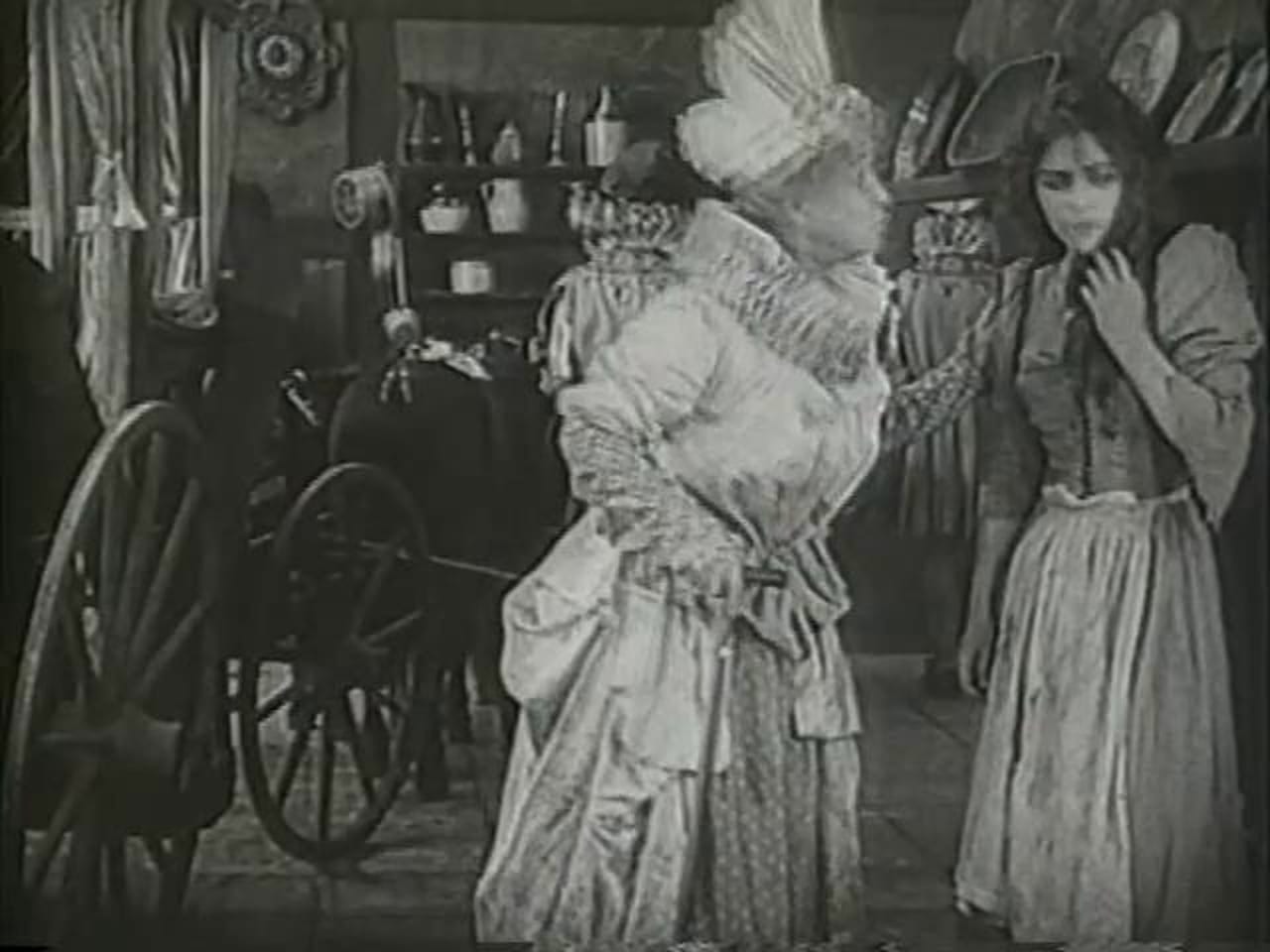
“’And I had another thrilling adventure—‘ she paused. ‘Please,’ I said, ‘tell me about it.’ ‘Well,’ she said slowly, ‘I rather hate to think about that, it came so very near being the end of me; but I might as well get used to talking of it, I suppose. We were playing in a picture called The Ward of the King and there was to be a scene in which I, mounted on a fast horse, would endeavor to escape from the pursuers. (You see, being a leading woman, I am usually either being pursued or something of the kind.) Before it was time for the scene to be taken, I got on my mount and rode over to where my pursuers to be were sitting on theirs. And there we sat all together idly talking until such time as the director should give us the signal that it was time to take the picture. ‘Are you ever afraid, Flo?’ one of the actors asked me. I smiled and told him that I was, sometimes, but that I never let my fear influence me. ‘Afraid now?’ he wanted to know. ‘No, indeed,’ I exclaimed; ‘not a bit. I don’t believe there’s horse on earth that could throw me.’
“’I had no sooner said the words than something or other got into the horse I was to ride. I couldn’t tell what was the matter, but probably a horsefly bit him. At any rate, suddenly, without the slightest warning he snorted. Like a flash he whirled around and bolted off down the road, with me clinging to my seat and the reins for dear life and mumbling incoherent and jolty prayers as I sawed away in my frantic efforts to stop him. Behind me the others were coming, of course. They were all frightened out of their wits, for they were sure I would be killed. As suddenly as he started, then, my horse stopped. Of course, I was thrown and almost under the heels of other horses; but for some reason or other I wasn’t hurt at all, excepting for a good shaking up. But my nerves received a shock that I can never forget.’
“’Surely,’ I said, ‘you didn’t go on with the picture after that did you?’
“She laughed and nodded. ‘Oh, yes. It would have been a shame to disappoint everybody when they were all made up and all for this particular scene.’
“’But you didn’t ride the same horse, I warrant.’
“’I did not. And they had to make an awfully long time before I’d get on any horse at all. I insisted on being babied, praised for my bravery, congratulated on my nerve, and all that.’
“’You are a wonder!’ I said—and I meant it. ‘I should think,’ I said, ‘that after such an experience you would never have dared to take a chance again.’
“She smiled. ‘I thought I never would, but goodness—we live day by day, you know, and I find that when the time comes for me to take a chance I go ahead and take it. My mother and father, though, are frightened all the time. I never dare tell them when something particularly thrilling is docketed.’
“’In The Million Dollar Mystery you’ll have quite a number of difficult things to do, won’t you?’ She took the chair in front of her dressing table and commenced removing her makeup. It was on good and solid, and she was silent for a moment while she applied cold cream industriously. ‘Yes,’ she said then, ‘several. For one thing, I have to jump from the captain’s bridge of the Imperator. But that doesn’t particularly frighten me, for I can swim like a fish—and I shan’t try to dive—might break my back if I’d hit the water just right. I’ll go feet foremost.’
“’Well,’ I said with conviction, ‘feet foremost, or—or—anything foremost, you wouldn’t catch this brave person trying it, Miss LaBadie. I’m sitting here regarding you with an amount of awe that would certainly impress you if you could gauge it.’ I was sorry afterward that I said it, though, for she immediately grew shy and it was with difficulty that I could persuade her to talk about herself anymore. She has the reputation of being the most modest and retiring person around the studio, you know, or you probably didn’t know—but you do now—and it is told of her, proudly, by those who work with her, that she has never, during her entire engagement with the Thanhouser Company been known to say an unkind thing about anybody.
“But I found out quite a little about her. She lives with her father and mother, and when she is not working or enjoying herself out of doors she’s usually found domesticating just like any girl who never dreamed of being anything else but somebody’s wife or mother or daughter. With all her love of outdoor sports, Miss LaBadie confesses frankly that she is deeply interested in mesmerism, hypnotism and the subjects that bear of the relation of mind to matter.
“’Ever since I was a little girl,’ she said, ‘I have liked weird stories. The fairy stories that the other children enjoyed were never the ones that made a hit with me. Beautiful, golden-haired fairies interested me not at all. I liked queer, ghoulish creations of the brain, who were always doing miserable, unlooked for, uncalled for things. Not that I approved of them or their doings, you know. I was simply fascinated—that’s all.’
“’Ever try crystal gazing?’ I wanted to know. She looked at me warily.
“’Djou?’
“’Yes. Once. And once I had my fortune told by a woman who had a stone that looked like a piece of coal. She made me touch it and it had a nasty greasy feeling. She said it was an E-jah stone and that the grease was the elixir of life oozing out.’
“’Oogy!’ Miss LaBadie said. ‘It was probably in the stove and some bacon grease dripped on it! Yes, I’ve crystal gazed. It’s fun, isn’t it?’ I agreed that it was and we both agreed the occult was fun, if nothing else. An odd, charming, interesting personality! The Thanhouser people crow shamelessly over her exploits—and the Thanhouser people have good cause to.”