The story
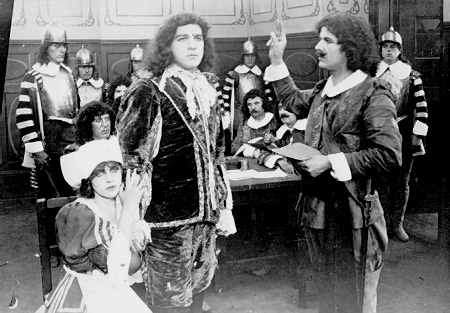
“Life’s Pathway, from the same pen as The Farmer’s Daughters,’ shows what a versatile dramatist Mr. Lonergan is. The two plays could scarcely be more unlike—the imagination of the author ranging from the purely amusing in one to serious subjects in the other, treated with supreme realism and impressiveness. Life’s Pathway is a thoroughly thoughtful, artistic piece of work. It is a study in the appalling contrasts in conditions of life—brought home forcibly by the case of twin sisters, separated as babies, and developed by widely divergent circumstances into two utterly different women. Anna and Bess are left orphans in babyhood, and neighbors of their mother, poor women like herself, agree to take them and bring them up. The husband of one of these becomes wealthy, and Anna is spoiled by a life of idleness and selfishness, while Bess, left in a poverty-stricken environment, develops sympathy for the strugglers everywhere around her—by her own efforts, becomes a trained nurse, and gives herself to alleviating the sufferings of her neighbors.
“Anna’s one ambition is to catch a rich husband. She marries a broker, reported to be a millionaire, but proving to be by no means so rich as was supposed. Anna’s extravagance has embarrassed him, and when the crash comes, he flees the state under an assumed name, to avoid imprisonment, leaving his wife alone and penniless. Her idle life, and lack of training for anything useful, finds her helpless. She is utterly unfit to earn her own living—and, gradually, she sinks lower and lower. Bess, meanwhile, has become the superintendent of a refuge home for women. She is full of joy and comfort for all with whom she comes in contact—and everyone who knows her loves her. How Anna, worn out and sick, finds her sister again—though neither is known to the other—and how their pathways in life cross at last, some slight shadow of memory falling from Anna’s personality across Bess’ intuitive mind—concludes with rich suggestiveness and intense pathos, the drama of these twin sisters.”
Summary from Reel Life · 27 September 1913