The story
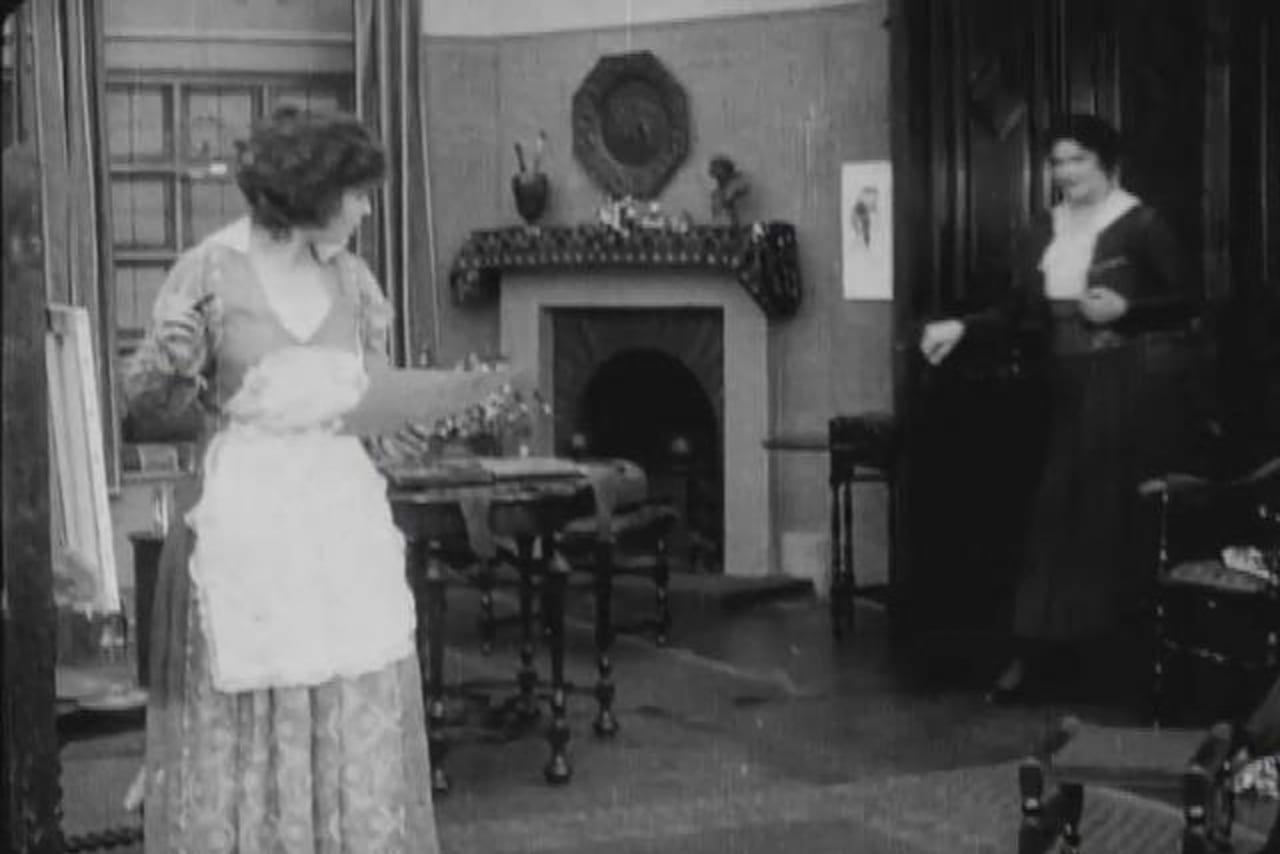
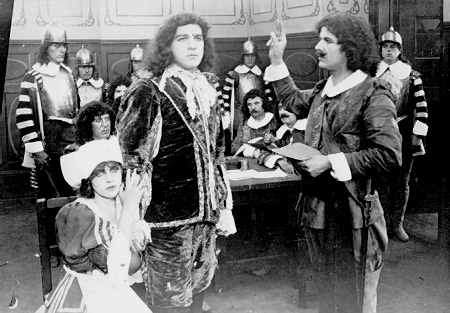
“In the days of Oliver Cromwell, justice was swift and merciless. The film, Curfew Shall Not Ring Tonight, concerns the adventures of a young follower of King Charles, who is captured, tried and sentenced to die ‘at the ringing of the curfew,’ the bell which announced that the day was over. The young man had a sweetheart, Bessie, who failing to win over his stern judges, finally appealed to the village sexton, urging him not to ring the curfew, hoping that thereby the execution would not take place. The aged sexton loved her as though she had been his only child, but refused to shirk his duty, although he knew it meant her lover’s death. At the last moment inspiration came to girl. She ran into the church, and by a ladder none had tried in hundreds of years, reached the belfry. To silence the bell she seized the iron clapper, and desperately clung to it while it swung her far out into space. Plans for execution were all made, but the bell did not ring. The puzzled officers waited, and while they conferred, Cromwell arrived. Bessie ran to him with her story, and when he realized what she had dared for love, the stern old protector told her that she would have nothing to fear. He freed the prisoner, telling him he did it because of the love and faith displayed by the heroine, who at the risk of her own life had silenced the curfew bell.”
Summary from The Moving Picture World · 29 November 1913
Another synopsis, from Reel Life · 22 November 19133 min
“Most of us recited the poem on the school platform before the visiting members of the school board—or at commencement exercises—or upon some other occasion when we regarded the poet as one of those satanic torturers whom the teacher or the principal was always raking up to make our lives miserable. And for that reason we may not have realized what a bully good old sensational drama the poem really was, or how sweet a love-story ran all through it. Whether the story has ever been played upon the legitimate stage, we do not at this moment remember—but this Thanhouser adaptation for the moving-picture screen has been staged with a careful attention to detail that reflects great credit upon Mr. C.J. Hite, who made the selection, upon Mr. Lloyd F. Lonergan, who wrote the scenario, and the directors who assembled the ‘props’ and drilled the cast. As far as we have been able to discover, there is not a single discrepancy in costume, furniture, accessories or natural scenery. Considering that much of the action is out of doors where it is impossible to do much ‘faking,’ the actual reproduction of English village life and architecture is surprisingly realistic.
“The story—as most of us will remember, if we put the lines of the poem into conversational prose—deals with the capture of the Cavalier Basil Underwood by some of Oliver Cromwell’s soldiers—his trial, presumably as a spy of King Charles’—and his sentence to be executed at the ringing of the curfew that evening. Bessie, who is in love with him, hears the sentence and tries every way she can think of to procure a pardon. Being unsuccessful, she goes to Sim, the old village sexton, and begs him not to ring the curfew that evening. But the idea of duty is an obsession with Sim—and he sorrowfully refuses. Half crazed by her lover’s approaching execution, the one idea in Bessie’s mind is that the curfew must not ring that night—at all costs—at any hazard—that bell—must—not—ring. As eight o’clock approaches, she dashes wildly up the old worn stairs in the church-tower—and then climbs a rickety ladder which no one has attempted to mount for years. As she finally gets up, breathless—with torn clothing—to where she is almost in reach of the great bell, there is a premonitory quiver of the rope. She knows that, far below her, Sim is gathering the slack in his hand for a mighty heave which shall tilt the bell from side to side on its heavy axle. Springing out at the risk of her neck, she grasps the massive tongue, desperately, with hands and arms—curling her body about it. She is swung far out of the belfry—poised, suspended, over the frightful height for a second—then swung out at the opposite side—her frail body acting as a muffler between the heavy iron tongue and the rim of the bell—so that it gives forth no sound except the creaking of the axle beam.
“On the village green, where the executioners are waiting, the minutes pass—but no death signal is heard. For the first time in the memory of any man there, the curfew does not ring. Superstitiously alarmed at the sign, they postpone the execution and send for Cromwell. Just as he arrives, Bessie staggers out of the church door—bruised in every limb—scarcely able to move—and, throwing herself at his feet, explains what she has done. Cromwell was, in spots, a just man—an admirer of courage and devotion. So he pardons Underwood and sets him free with the girl who has gone through so much for his sake. The poet neglected to give us a picture of their married life, in after years—but we hope Basil was good to her. All this, and a great deal more of the incidental detail in the story is beautifully shown on the screen—and if the Thanhouser people continue the pace they are now setting in the way of beautiful film production, the other manufacturers will have considerable difficulty in keeping up with them.”