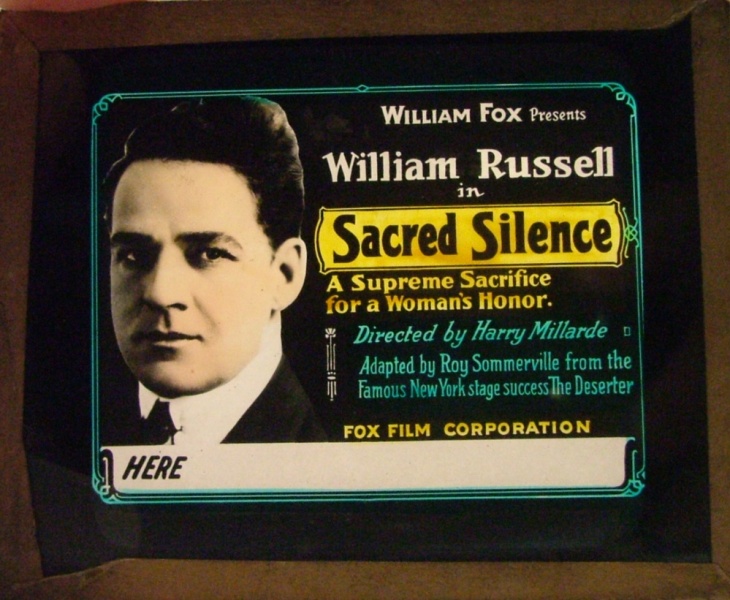
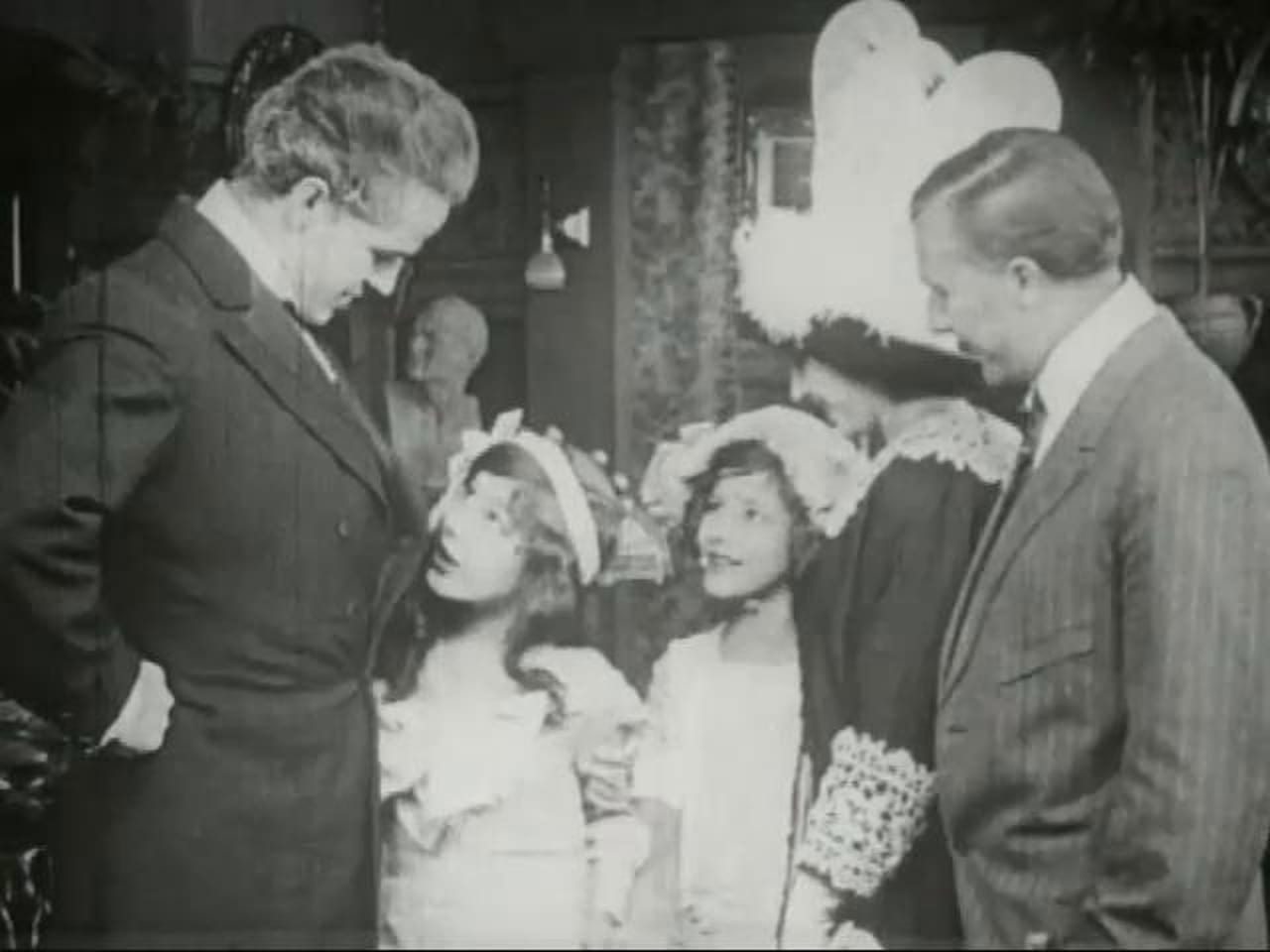
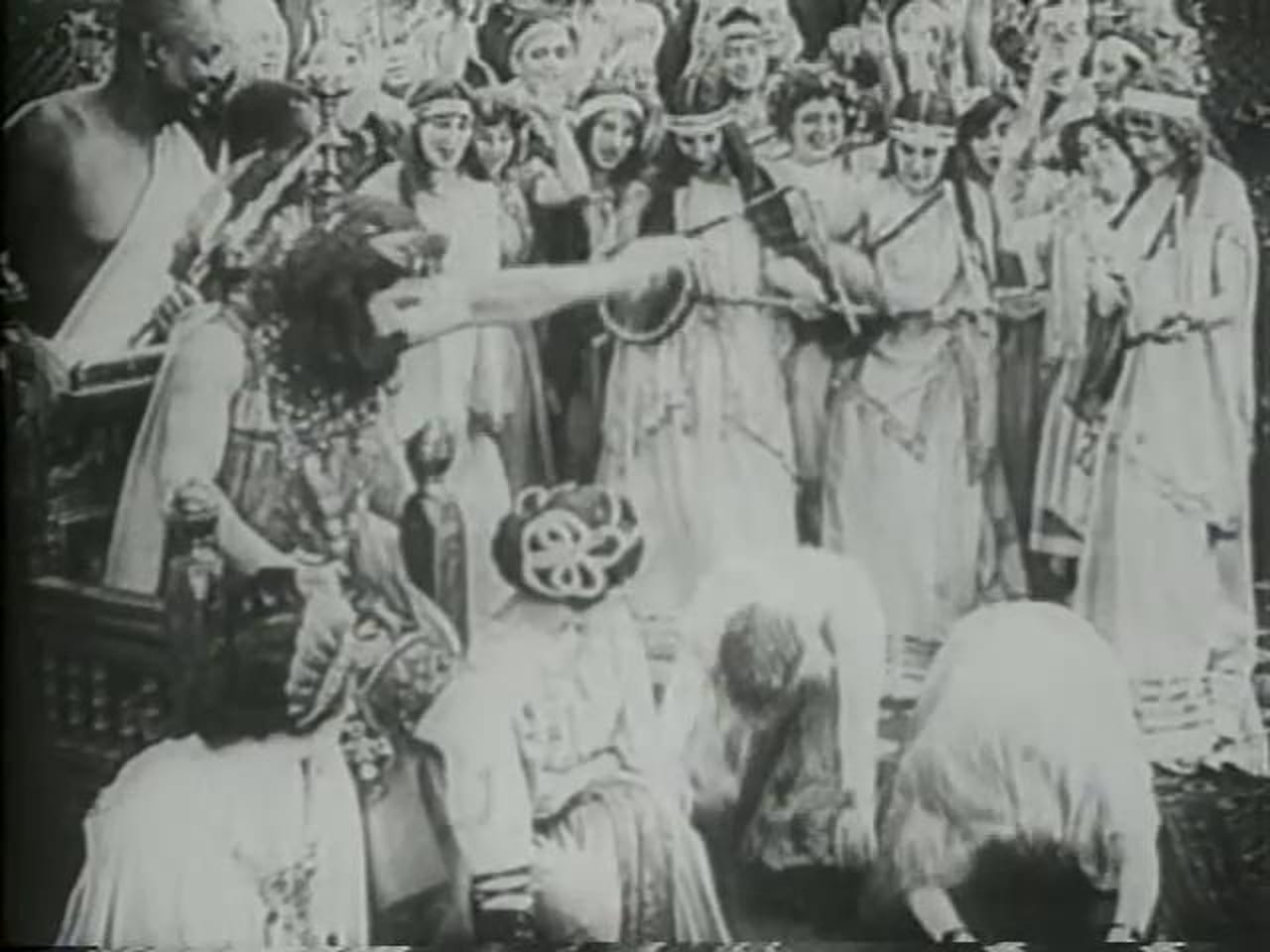
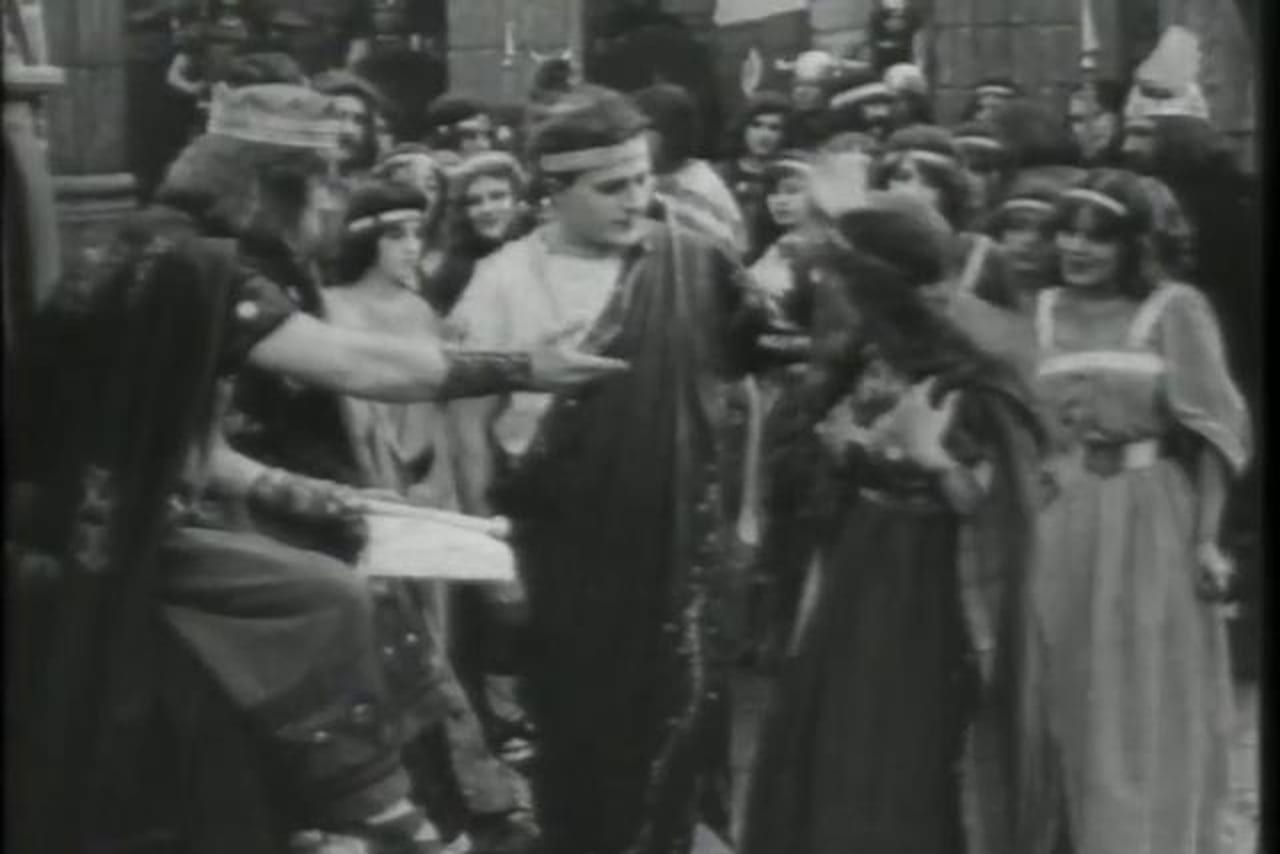
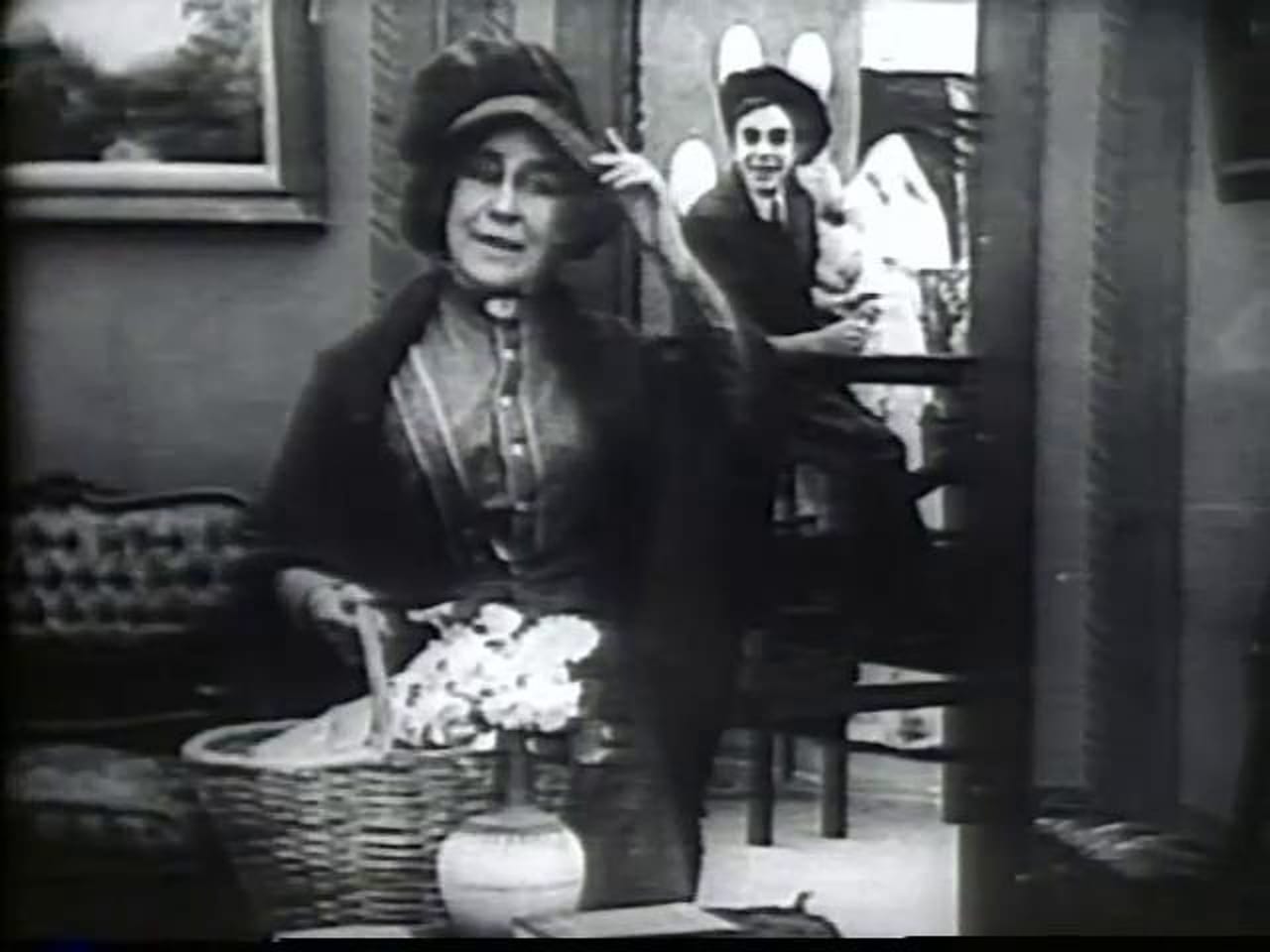
The Motion Picture Story Magazine, March 1913, carried this sketch: “’Here’s the man who does the thriller,’ said Mr. Adler, the publicity man of the Thanhouser Company, ushering in a big, broad-shouldered, breezy-looking man, who greeted me with a quiet cordiality that made it easy to begin asking the inevitable questions of the interviewer. ‘I’m a New Yorker born and bred,’ he said in answer to the first question, ‘and I still live in the big city, but I was educated at Harvard.’
“I learnt next that Mr. Russell went under Bernarr MacFadden’s instruction after he left the big university, and has been a successful teacher of boxing and athletics himself. It was natural that he should take up stage life—he comes from a theatrical family—and before he began his work in the pictures he starred with May Tully. ‘You like the pictures better?’ I asked. He considered a moment, and let me say right here that Mr. Russell is not the type of man who talks without thinking. He gives his opinions somewhat deliberately, and the hearer feels that whatever he says is absolutely genuine and sincere.
“’My point of view is purely commercial,’ he replied, finally. ‘This line of work means a good salary all the year ‘round; absolute certainty of a good thing, that is. Then it means that a man can have a fixed habitation—a home. And that is what I am going to have. Yes, you are at liberty to state that I am going to be married—it may lessen the volume of my mail, but that doesn’t matter!’
“’Shall you continue to live in New York after the happy event?’ I asked. ‘I want, ultimately, a home in the country,’ he answered. ‘I want it near New York, of course; a nice little farm and some time to experiment with my hobbies.’ I was a bit surprised. I had seen Mr. Russell do such daring and exciting stunts in the films that I had pictured him as a man who would never yearn for the quiet life. He smiled, quietly, when I expressed this thought.
“’You can’t tell what a man really cares for by his acting,’ he laughed. ‘I admit that I enjoy my parts. They are always heroic ones, but, as a rule, they are not actually jeopardizing. Still, once in a while we have a close call. Talk about the ease of this life—there’s nothing to it! A month of one-night stands with a stock company isn’t to be compared with some of the things we face.’ Further questioning drew out the fact that this heroic actor had been injured recently when he was supposed to be rescuing a little girl from a railroad wreck. The child actually got caught in the burning wreckage, and, in protecting her from injury, he was obliged to drop, hurting his knees rather badly. Not long after, Mr. Russell, with Miss Florence LaBadie in his arms, was being pulled up by a rope from the fourth to the fifth story of a burning building. Suddenly he saw that his hand, which was grasping the rope, was about to be caught between the rope and a stone projection from the building.
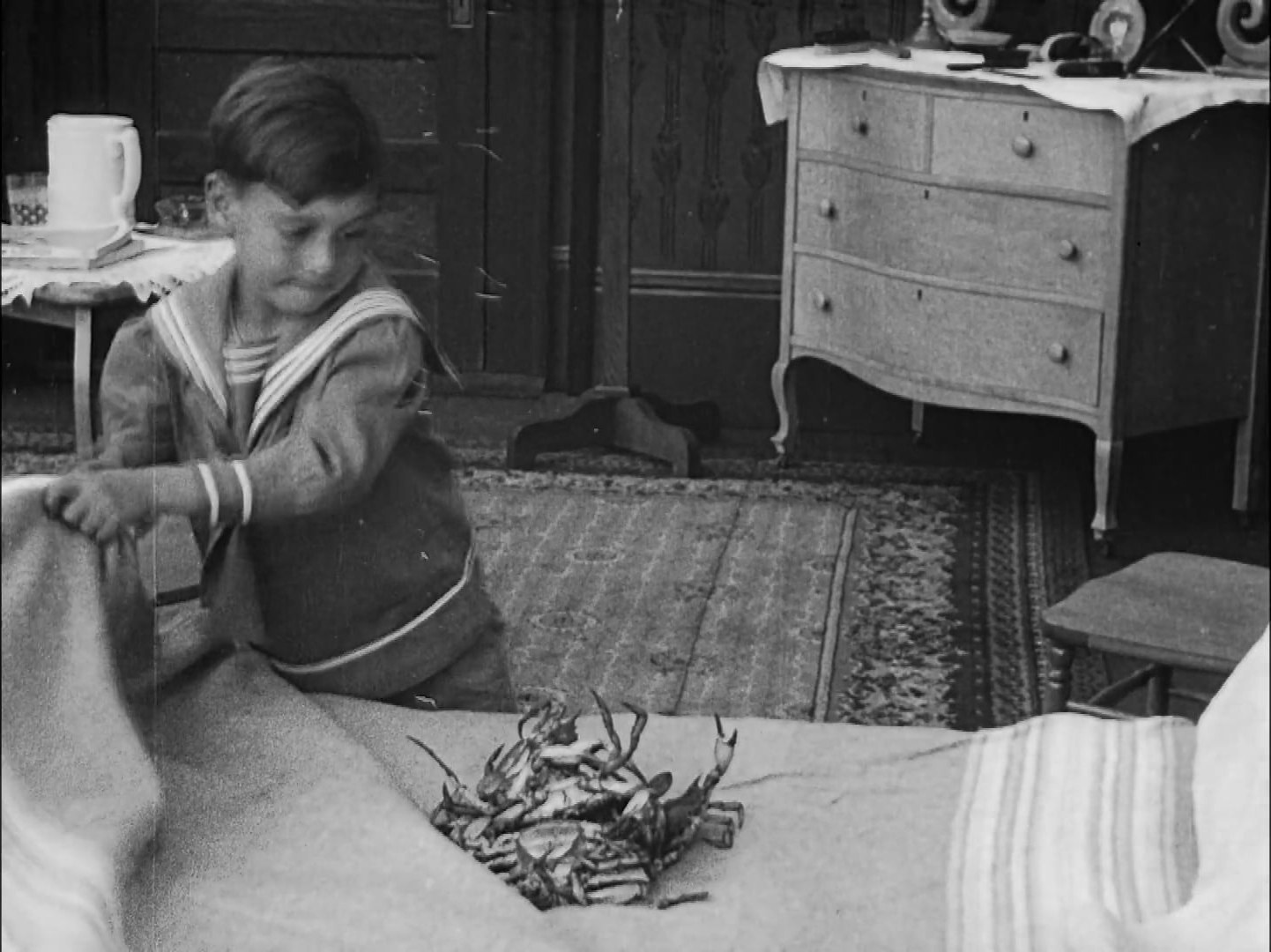
“’It was a case of losing my fingers if I held on,’ he said, ‘but I didn’t care to drop Miss LaBadie down four stories. I just hung on and yelled for them to stop pulling. They heard me just in the nick of time. My fingers were bruised, but that was all.’ Just then a tiny, brown-haired girl came running into the office, and leaned against Mr. Russell’s knee, looking at me from under a fringe of brown hair. The man’s face lighted instantly as he lifted the child, and she smiled into his face with a look that told of perfect confidence. ‘Here’s the little girl who does all the stunts with me,’ he explained: ‘Her name’s Marie Eline, and she’s the bravest little girl in the country. After a little, we will show you a film [In Time of Peril] where I climb a seventy-five foot trestle and pull Marie off the track, and hang by one hand with her in my other arm, while a train goes over our heads. That was some stunt, wasn’t it, Marie?’
“Marie nodded emphatically, but when I asked if she was not afraid, she only looked up into her partner’s eyes and shook her head. ‘He wouldn’t let me fall,’ she said, confidently. ‘It seems dreadful,’ I said, impulsively, ‘not only risking your own life, but feeling that other lives are dependent upon you—and all for the sake of the public’s amusement.’
“’In the midst of life we are in death,’ he quoted, ‘that’s all there is to it. If it’s time—we go! We don’t go any quicker by doing our work, whatever it is.’ ‘How do you spend your leisure time?’ I asked, turning from such serious topics. ‘I’m extremely fond of swimming and all sports. Twice a year I train with prominent boxers at the Fairmount Athletic Club. We take no vacations, except an occasional off-day.’ I had been studying the man as we talked, and my memory of him is a big man, a typical athlete, with brown eyes, a mass of rumpled, half curly hair, good features and a manner that fills one with instinctive confidence. Right living and fair dealing speak frankly from his face in real life as they do in his play life. But remember, girls, he is engaged!—The Inquisitor.”