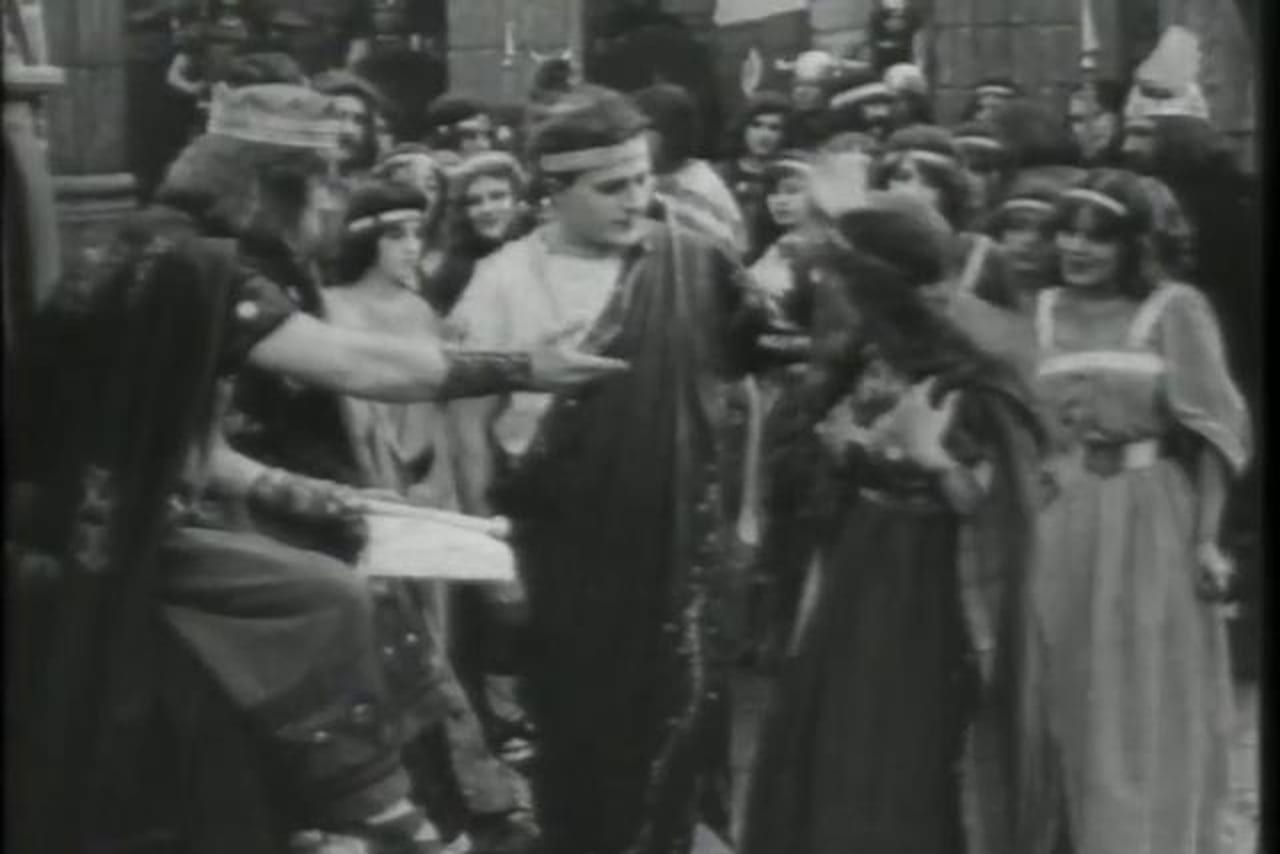
1912Thanhouser CompanyTwo reelsLiterary adaptation

The Forest Rose

No copy you can watch online. No print is known to survive. What follows is what does: the release, the cast, the story, and what the trade press said at the time.

The story

“A young girl is left in the charge of a captain by her father, who has been killed in a battle at the time of the Revolution. After the war the family go to live on territory granted them by the government. One of the captain’s sons falls in love with the girl, and one day finds that Indians have destroyed all the family and the home, with the exception of the girl, whom they have carried off. With a friend he sets off to rescue her, and after a series of thrilling adventures, he finally marries the maiden.”

Summary from The Bioscope · 13 March 1913

Another synopsis, from The Moving Picture World · 23 November 19122 min

“PART ONE: Forester and Maywood, two wealthy neighbor planters, volunteered their services to defend their country when the war of the Revolution broke out. Forester was made a colonel of his regiment, while Maywood became a captain. The men mortgaged their plantations and gave the benefits to the government, which was hard-pressed for funds. Colonel Forester was mortally wounded at the Battle of Cowpens, but before he passed away Captain Maywood promised that he would care for Forester’s motherless little girl. Maywood’s family at the close of the war was so penniless that the government gave them 1,000 acres of land, which at that time was known as the Northwestern Territory, and into this land journeyed the family. As the years went by Albert, one of Maywood’s sons, fell in love with Rose Forester. Albert continually cautioned his father against the invasion of the Indians, but the elder man was opinionated and declared that there was no danger. One day when Albert and his friend, Louis Wetzel, returned from a hunting trip they found that Maywood’s cabin had been destroyed by fire by the Indians, and apparently all of its occupants, with the exception of Rose, whom Wetzel, by virtue of his wood craft, determined had been carried off by the Indians.

“PART TWO: Albert Maywood vows that he will avenge the death of his parents and will rescue the abducted Rose. He and Wetzel set out and track the Indians. They rescue Rose, but the trio encounter another band of Indians, who capture Albert and Rose, Wetzel being successful in making his escape. Albert, however, by cleverness soon effects his escape, and he and Wetzel go in search of Rose. In their wanderings they come upon a small fort upon the banks of the Hockhocking River, the commandant of which is in fear of an attack from the Wyandottes. Albert and Wetzel go on a reconnoitering expedition for the commandant, and from a place called Standing Stone they observe the Indian village far below. As their canteens are nearly empty, Albert takes them to a nearby stream to refill them, and there he meets two women, apparently Indians. Fearing that they will give the alarm, he grapples with them, and in the course of the struggle he discovers that one of them is his ‘Forest Rose.’ The real Indian woman escapes, spreads the alarm, and hundreds of Indians surround Standing Stone. While the two men are planning the defense Rose slips away, but returns, and aids the white men to pass the sentries and escapes with them. The trio are followed, but after many hardships reach the fort, where Albert and the ‘Forest Rose’ are married.”
Background of the scenario

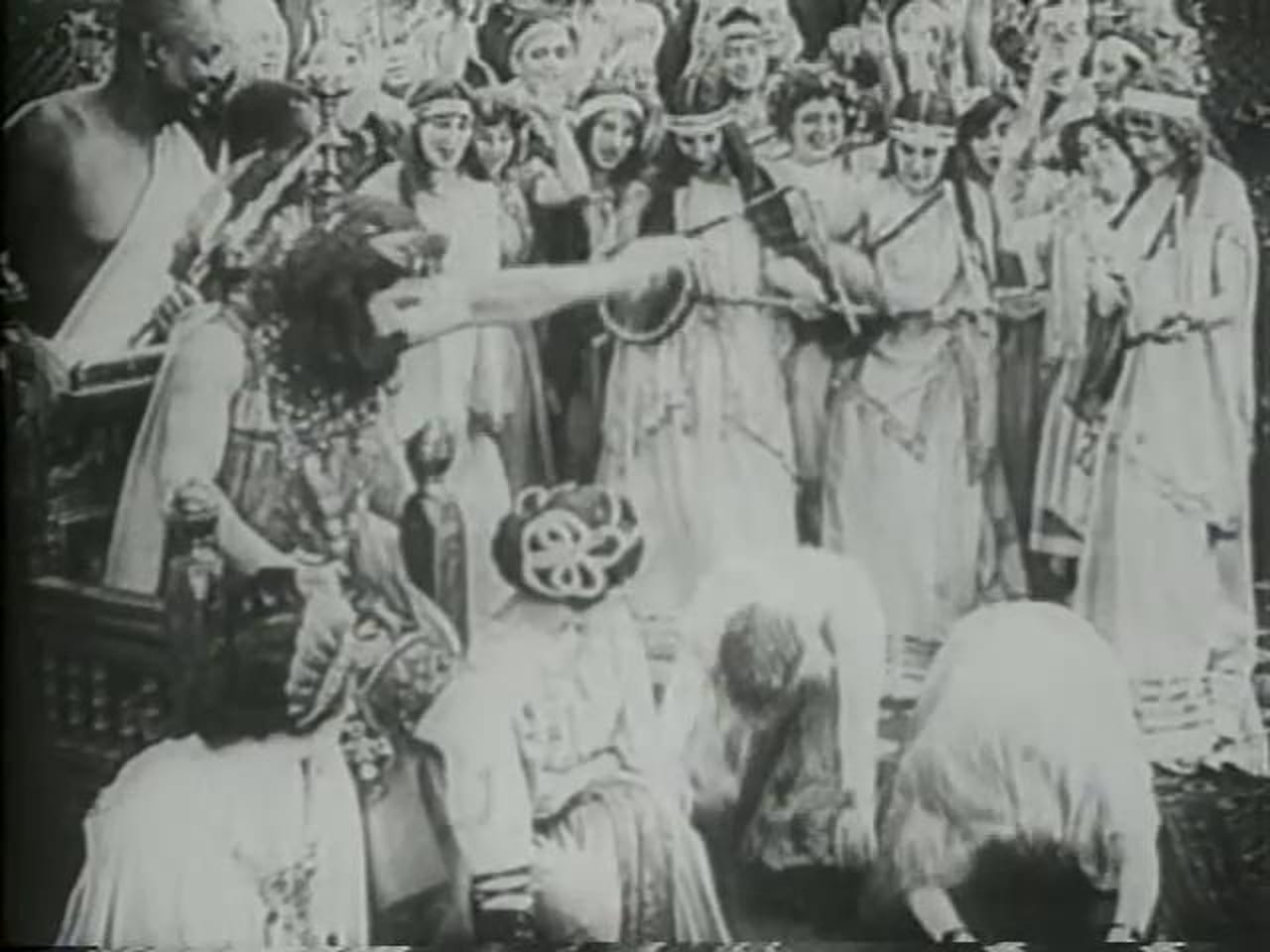
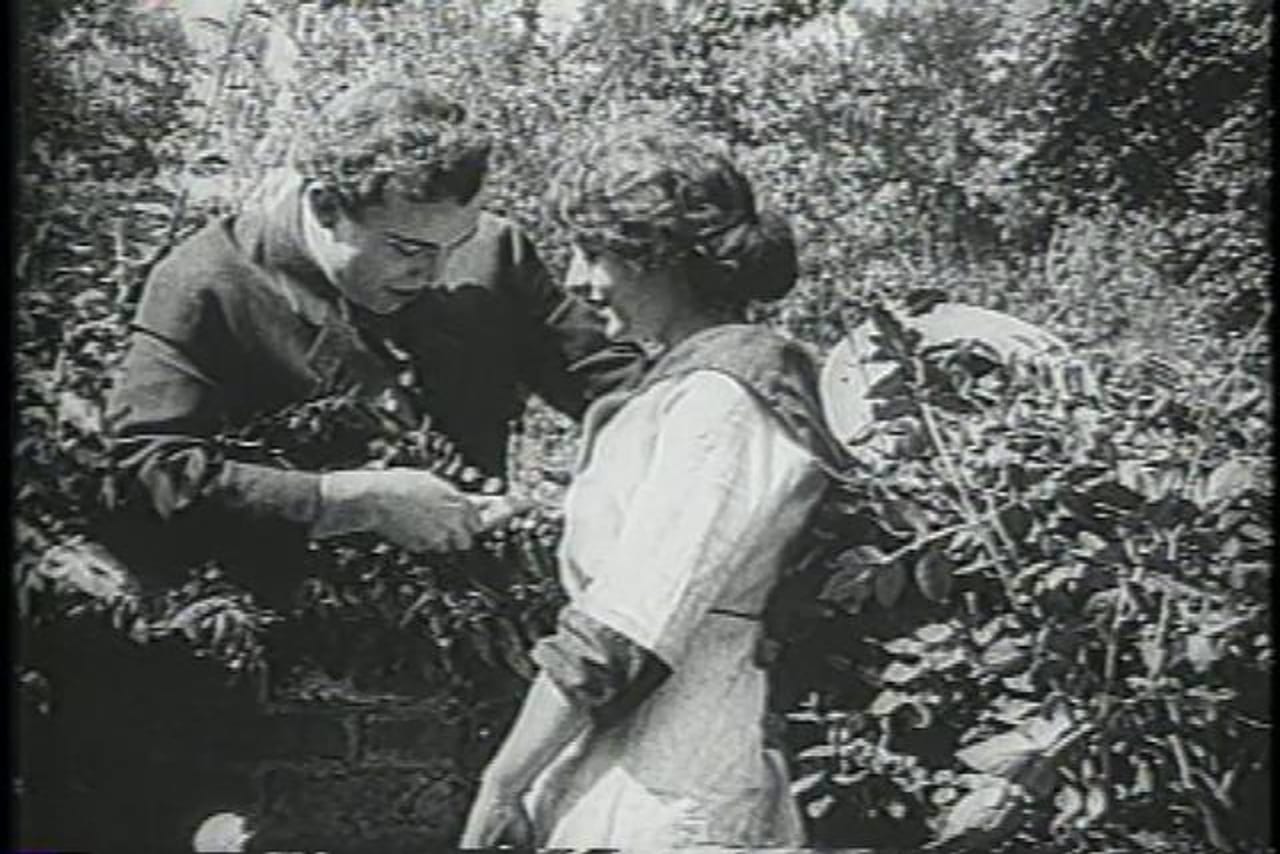
The Forest Rose was written by Emerson Bennett and told of the early pioneer days of Lancaster, Ohio and the Hocking Valley. Lancaster was the site of Charles Hite’s childhood, and it is reasonable to assume that this work was one of his favorites. Certainly, great care was put into the Thanhouser production of it. The Forest Rose was first published circa 1850 and was reprinted for many years thereafter, to 1892, after which a new printing did not appear until 1920.

Bennett, born in Massachusetts in 1822, left home at the age of 17 to embark on a journey with stops at many American cities, including New York, Baltimore, Cincinnati, and Philadelphia. Beginning at age 18 he wrote extensively, eventually creating hundreds of short stories and columns and 50 novels and other long works. His book-length fiction was regarded by later generations as being shallow. Such topics as Western adventures, secret identities, inheritance, and other themes, common to dime novels of the day, were treated. Upon his death in 1905 he was forgotten. He was a well-appreciated contributor to different journals, including the New York Ledger, which in 1856 secured his services on an exclusive basis.

What the papers said

3 reviews · 2 articles

“Without a doubt this two-reel production is deserving of praise seldom bestowed on any offering. It is of the Revolutionary period of American history. It commences during the time of the struggle, and shows some action between Colonial and British troops, and begins the romance which furnishes the plot for the rest of the story. In the second reel the …

Read in full · 1 min

“Without a doubt this two-reel production is deserving of praise seldom bestowed on any offering. It is of the Revolutionary period of American history. It commences during the time of the struggle, and shows some action between Colonial and British troops, and begins the romance which furnishes the plot for the rest of the story. In the second reel the life of the early settlers of the Ohio region is pictured most vividly, closing with an Indian raid and fight which is quite as realistic as one could desire. In this a girl is kidnapped by the Indians and rescued in a thrilling manner by a famous hunter and her lover, his own folk having been killed off. These scenes are beautiful. The make-up of the many ‘white men’ Indians is remarkably lifelike.”

The Morning Telegraph · 1 December 1912

“The Forest Rose, in two reels, adapted from the novel of the well-known author, Emerson Bennett, is one splendid triumph for Thanhouser. The work of Marguerite Snow, Messrs. Cruze, Brown, Thompson and others, is almost beyond criticism. From a spectator’s point of view there is not a moment lost during the run of this excellent film.” …

Read in full · 1 min

“The Forest Rose, in two reels, adapted from the novel of the well-known author, Emerson Bennett, is one splendid triumph for Thanhouser. The work of Marguerite Snow, Messrs. Cruze, Brown, Thompson and others, is almost beyond criticism. From a spectator’s point of view there is not a moment lost during the run of this excellent film.”

REVIEW by Louis Reeves Harrison, The Moving Picture World, November 30, 1912: This review is reprinted in the narrative section of the present work.

The Moving Picture News · 23 November 1912

More reviews

27 November 1912The New York Dramatic Mirror1 min

“Two reels have been used by the Thanhouser Company in telling the dramatized story of the famous novel written by Emerson Bennett. When the producers in question essayed the task, they undertook a labor filled with difficulties and pitfalls, and just how well they have fared remains a question. Some will enjoy it—perhaps those who have read the novel, and many will distinguish only a series of events, unrelated to each other and some that are impossible. It is much easier to take an improbable situation and give it the realistic touch in a novel than it is on the stage or screen, and the author, in writing his plot, should have appreciated this fact, and omitted some of the scenes in the book he has shown here that he has allowed to creep into the picture. We have such a scene where the young hunter, his friend, and the girl withstand the attack of a tribe of Indians. It would be useless to attempt to tell the story in detail. There are some intense moments and an occasional bit of good acting. Perhaps, of all the characters, the leading man is the poorest. The vitality and emotional power needed in the role are lacking.”

Articles2 · 3 November 1912 – May 1914

3 November 1912The Morning Telegraph1 min

“Friday, November 29, has been selected by the Thanhouser Company as the release date of their Forest Rose in two reels. It is stated that the New Rochelle producing firm has made a stirring picture from Emerson Bennett’s story of early days in the great West, and that the Indian and pioneer life of the period has been accurately reproduced. Large companies spent a week and a half in the mountains making the subject. The principals of the company were Marguerite Snow, Jean Darnell, James Cruze, William Russell, Fred Vroom, David Thompson, Harry Marks, and of the juveniles, the Thanhouser Kid, the Kidlet, and Leland Benham.”

May 1914The Photoplay Magazine1 min

The following is an excerpt from an article by Jean Darnell, in which she told of her most exciting experiences as a film actress

“In The Forest Rose I was cast in the part of a young mother whom the Indians were supposed to murder, scalp, and drag from the cabin. Harry Marks, the Indian chief, did the heavy part. When he broke into the cabin he seemed to forget that I was a regular human being, and came at me with a vengeance, grabbed me by the hair, dragged me and whacked me on the head, and almost fractured my skull. The cameraman had to stop until I recovered. The Indians dragged me into the yard, set fire to the house, and in the war dance that followed they almost trampled out my life.”

Have you seen this film, or a print of it?

Prints of films thought lost still turn up in attics, private collections and archives. A record like this one is how the next one gets found.

Tell us about a print

Cast and crew

Fred Vroom as Albert Maywood in Part 1
Harry Marks as Indian chief
James Cruze as Albert as an older man, as Forest’s lover
Jean Darnell as young pioneer mother
Marguerite Snow as Forest Rose
Photographed by
Arthur A. Cadwell

Every name opens that person's page, with each film they appear in and which of them you can watch.

Watch instead

Films you can watch from the same company

Matched by cast, director and kind

More about this film

Filmed in
Cuddebackville, New York
Bowers’ notes
  1. While in Cuddebackville, the Thanhouser people stayed at the Caudebec Inn, arriving on Monday, October 21, 1912. Among the Thanhouserites registered were the players in the above list, except for Marie Eline and Helen Badgley, and the others as listed here, some of whom may have been players: Ernest Davidson, Mr. Wallace, A. Rosson, Miss Vincent, Miss Sussman, and John Miller. 2. Thanhouser contemplated releasing this film in three reels, and then reconsidered and released it in two. 3. This picture was filmed in Cuddebackville, New York, a small community which was used frequently as a location during this era by the American Biograph Company, whose players stayed there at the Caudebec Inn during the summers of 1909, 1910, and 1911. 4. The release date was listed erroneously as November 24, 1912 in The Motion Picture Story Magazine, March 1913.

From Volume II: Filmography of Q. David Bowers’ Thanhouser Films: An Encyclopedia and History, reproduced with permission and unchanged. Read the history of 1912 →

Cite as: Bowers, Q. David. Thanhouser Films: An Encyclopedia and History, “The Forest Rose”. thanhouser.org/films/the-forest-rose/

Where a print is held

Held by
No print known