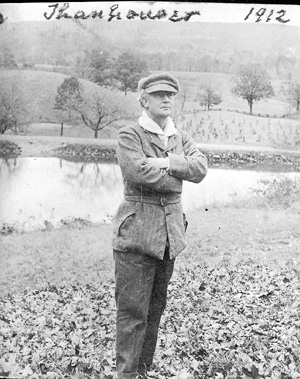
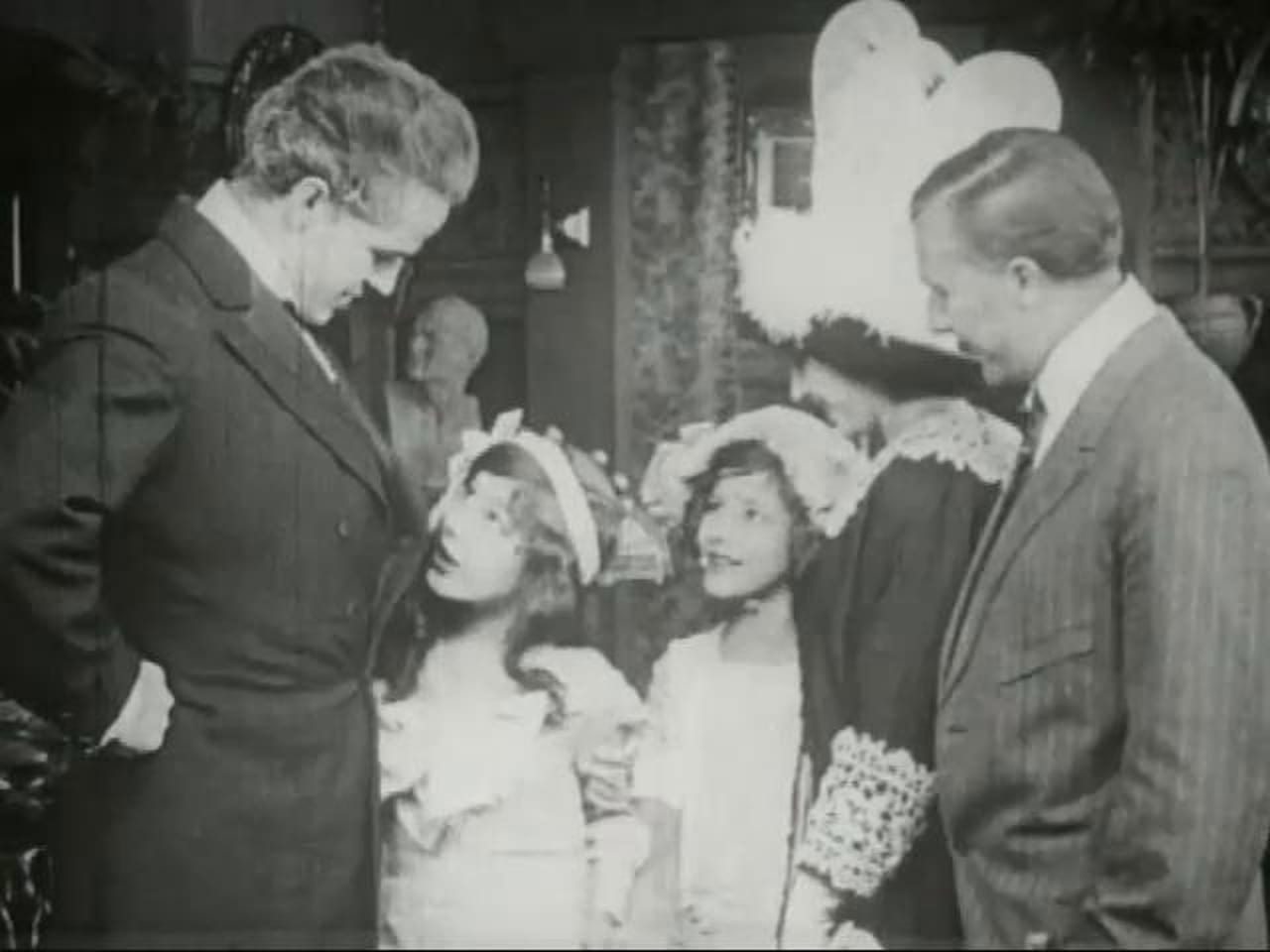
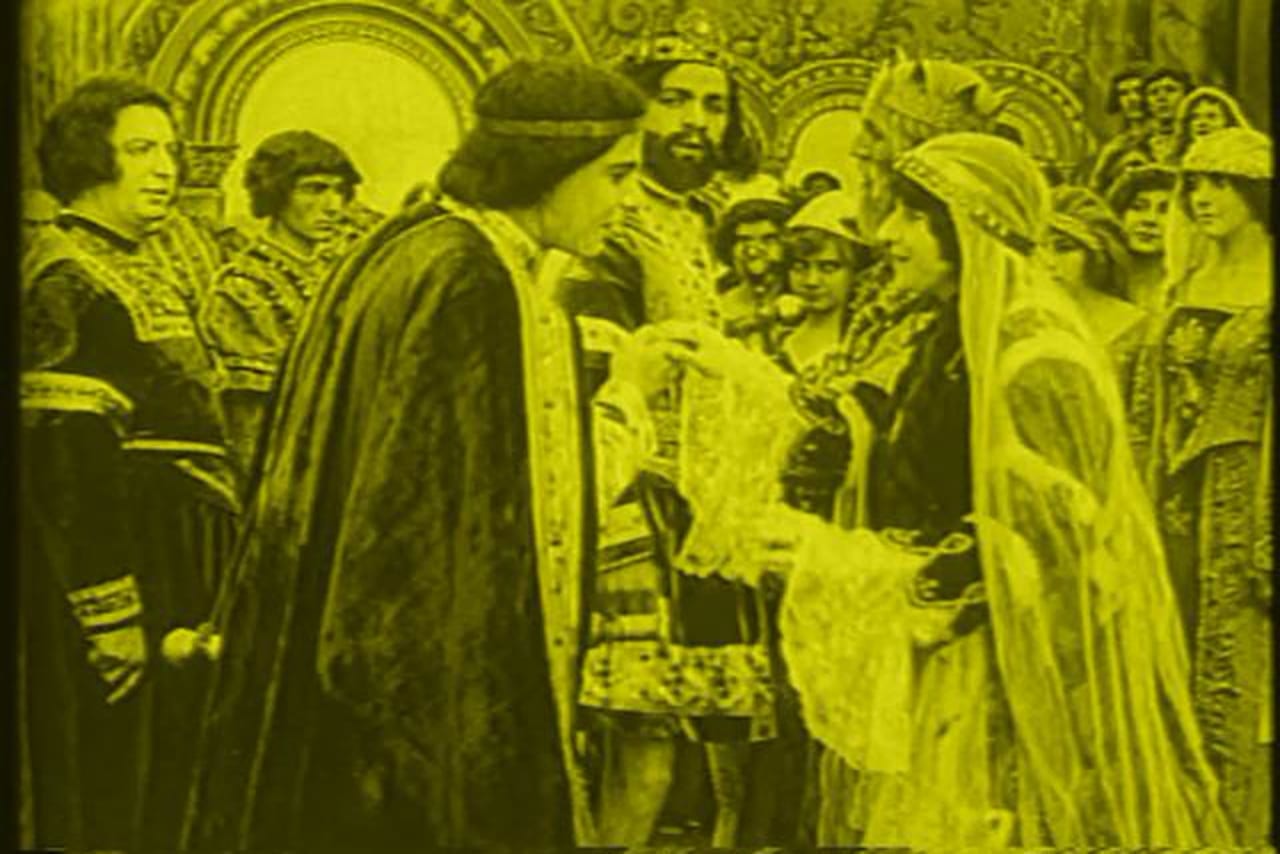
By late autumn 1910 Lucius Henderson was directing Thanhouser productions, a position he maintained for several years thereafter. He also appeared as an actor from time to time, including in the 1912 release of The Twins. New Rochelle city directories indicate that from 1911 through 1918 he lived at 10 Faneuil Place. On December 15, 1912 he went with a group of Thanhouser players to Los Angeles. After their arrival they moved into the old IMP studio at 651 Fairview Avenue, where Thanhouser films were made under his direction for the next several months. When the Thanhouser players left for the return trip to New Rochelle on April 30, 1913, Lucius J. Henderson remained behind, with Fred Vroom (the studio manager), to do work in California for the Mutual Film Corporation. He subsequently directed many Majestic films, including the six-reel Sapho, starring Florence Roberts and Shelley Hull.
The December 1913 issue of The Photoplay Magazine, suggested that he enjoyed sunshine: “Some members of the Thanhouser Company received a card from Lucius Henderson, manager of the Majestic plant in California. The genial Lucius says: ‘I hear you folks think it’s almost winter time in New York, and it seems just like the beginning of spring out here.’ Isn’t nature a wonderful thing?” The February 4, 1914 issue of The New York Dramatic Mirror noted that Henderson was retiring from Majestic that month and had a number of offers he was considering. He had directed “some 150 one- and two-reel dramas” for Thanhouser, the account stated. An advertisement in the same issue informed readers that Henderson was at liberty. At the time he address was 2951 Dorchester Street, Los Angeles.
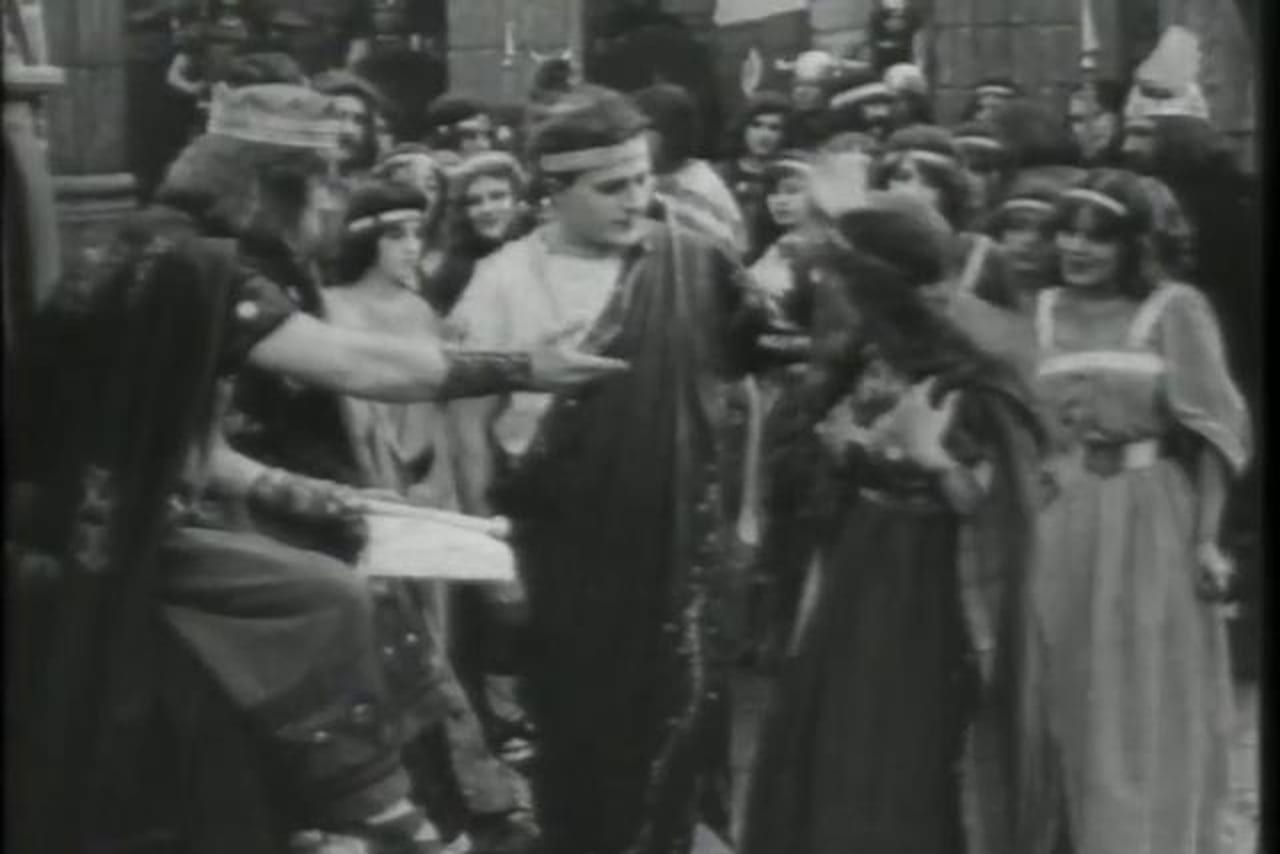
In March 1914, he and Arthur Cadwell, a former Thanhouser cameraman, went to the California Motion Picture Company, where Henderson directed feature productions. By late 1914 Lucius Henderson moved to Universal, where he directed films, including such productions as The Daughter of the Nile, The Girl With a Soul, The Girl Who Lied, The Little Fraud, Love’s Masquerade, The Garden of Shadows, The Girl Who Feared Daylight, The Strength of the Weak, The Untamed, The Trail of Chance, To the Highest Bidder, The Heart of a Mermaid, and others, released under various Universal labels, including IMP, Victor (primarily), Bluebird, Star, and Laemmle. He claimed to have been the first to recognize the screen appeal of Rudolph Valentino. The January 29, 1916 edition of the Motion Picture News Studio Directory stated that he was with Universal at the time and lived at 10 Faneuil Place, New Rochelle.
Henderson was a director at one time for William Randolph Hearst’s International Pix. Later, he formed the American Cinema Company, which by 1922 became a financial disaster. England and Italy furnished the sites for his next activities, where he produced films. In 1925 he was in Cuba, where he worked with William Powell, who was to become an important actor. In the late 1920s he was seen on stage in the role of Mr. Frietchie in the Shubert production of My Maryland, which was on the road for three seasons. In 1929 he announced his retirement.
Henderson was involved with the Works Progress Administration’s Radio Division beginning in 1939. He was a part of the programs, Jules Verne and Portraits in Oil, broadcast by New York radio station WHN, and Mr. Mergenthwirker’s Lobblies, over WOR in the same city. On June 10, 1938 the Players Club, New York City, tendered a testimonial dinner to him in recognition of his many contributions. In the mid-1940s he was the oldest living member of the Lambs Club, in New York City. He died in New York City on February 18, 1947, at his home at 227 West 52nd Street (an obituary in The New York Times gives 335 West 43rd Street as the address).