1911Thanhouser Company1,000 feetDrama

The Impostor

No copy you can watch online. No print is known to survive. What follows is what does: the release, the cast, the story, and what the trade press said at the time.

The story

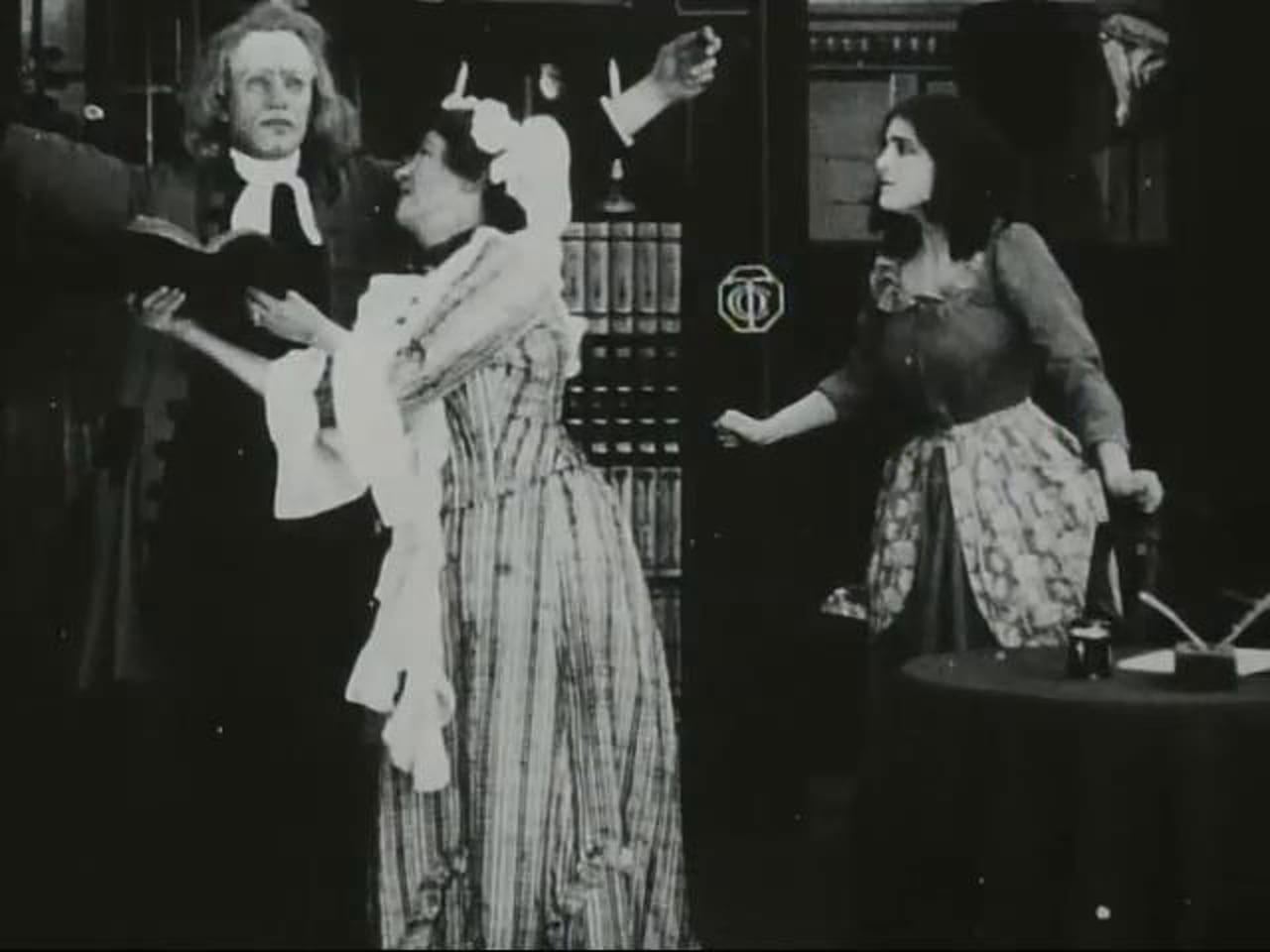
“John Reed, a Northern man who has lived in the South for many years before the Civil War, enlists under the banner of the Confederacy when hostilities break out. Outside his relatives in the North, he is alone in the world except for his daughter, who is just budding into young womanhood. May follows her father to the front as a nurse. When he is mortally wounded, she is brought to the hospital to which he is assigned. A camp follower, a woman, has been brought there on a charge of being a spy, and hears the dying message of Reed. He leaves his daughter to his cousin, a Northern woman she has never seen, and asks her to be good to May for his sake, as the girl is alone in the world. Later when the two women are alone with the dead, May is struck by a shell and apparently killed. The spy, seeing a chance to escape, takes the letter from May, disguises herself in the clothing of the supposed dead girl, and goes north, where she is warmly greeted by the family, who take her for a relative.

“May is found by the Union troops who have captured the entrenchment, and the doctor discovers that she is not dead. Her recovery is slow, however. Before she has a chance to go North the impostor has firmly settled herself with her cousin, who believes her implicitly. In fact she desires to see her married to her son, although he is not inclined to the union. When May arrives, shabby and pale, she is denounced as an impostor, both by her cousin and the usurper. Fortunately for May, however, the child of a neighbor has overheard the impostor offer May a sum of money to go away, and at the same time, believing herself alone, has sneeringly admitted that she is sailing under false colors, but declares that her victim cannot prove it. May is just about to be turned away a second time, despite the sympathy of John, who is half inclined to believe her story, when the boy confronts the impostor, and is evidenced, together with a severe cross-examination by the indignant John, force her to confess her fraud, and leave the home where she has no right. May kisses the child who has aided her, and is grateful to the man who proved himself a friend when everyone else made haste to disown her.”

Summary from The Moving Picture World · 1 April 1911
What the papers said

4 reviews · 1 advertisement

“The Impostor is another one of those excellent war dramas which the Thanhouser Company are past masters. It tells a very pretty little story full of pathos and patriotism, and it paints so faithful and lifelike a portrait of the days it deals with that one would think that the great Brady took a moving picture machine south with him …

Read in full · 1 min

“The Impostor is another one of those excellent war dramas which the Thanhouser Company are past masters. It tells a very pretty little story full of pathos and patriotism, and it paints so faithful and lifelike a portrait of the days it deals with that one would think that the great Brady took a moving picture machine south with him and that we had just discovered the long-lost reel. So realistic are some of the scenes that we can almost feel ourselves down south during the battle days of ’61.”

The Billboard · 1 April 1911

“More care in the early scenes of war time should have been taken. The camp and military etiquette displayed were not up to the standard and the soldiers did not work like veterans. Why place the episodes under such circumstances? Why not tell the same story without any war environment? It could easily have been done. And the war had …

Read in full · 1 min

“More care in the early scenes of war time should have been taken. The camp and military etiquette displayed were not up to the standard and the soldiers did not work like veterans. Why place the episodes under such circumstances? Why not tell the same story without any war environment? It could easily have been done. And the war had really little to do with it. People pass away without the fray of battle and others become temporarily unconscious. The ending was very weak and not at all satisfactory. Why the sudden interest of the young man in the girl heroine? No cause given. Why his sudden antipathy to the other earlier? No action on her part to cause it. Why should this latter girl suddenly throw up the scheme when the aunt backed her up and stood by her? Nothing save the evidence of the child against her. A little more care all around would have made a fine photo-play of this.”

The Morning Telegraph · 2 April 1911

More reviews2 · 15 April 1911 – 5 April 1911

15 April 1911The Moving Picture World1 min

“A domestic story beginning in the Civil War where a girl commended to a cousin in the North by her dying father almost loses her chance for home through the machinations of an impostor, who takes advantage of an injury to the girl to go north and claim the cousins protection. Happily the plot is discovered and the girl comes into her own. There is nothing particularly dramatic about the picture, yet it is a leaf from what might occur in any life and therefore holds the interest of the audience throughout.”

5 April 1911The New York Dramatic Mirror1 min

“For some reason or other this company did not attain their usual standard in this film. In the first place, it hardly brings out the important points as clearly as desirable, and the manner in which the scenes are joined together has not the sequence necessary to a well developed tale. The story is given a war atmosphere, which added nothing to it, for it was not made a vital part of the play. When her father went to war she decided to become a nurse, but it was not known she was in the same camp as her father until he was killed. Just before his death, he wrote a note to his sister [sic; the synopsis says cousin], from whom he had been estranged, asking her to receive his daughter. A woman spy, whose identify was not exactly clear at first and who seemed at least to be a very much unwatched person for an enemy, as her actions would indicate her to be, stole this note from the girl as she lay as dead when she was shot in some action not obvious. Scenes explaining that there was an attack on the camp and whether the spy was the cause would have been acceptable. The spy goes to the house of the aunt and apparently makes good her claim, until the girl herself, having recovered from her wound, comes to the house to convince her of the utter futility of any attempt at exposing her, the spy shows the girl the paper she has in her possession, and the conversation is overheard by the little boy of the household. This somewhat weakens the plot, and the opportunity for a strong climax is lost by not having the elder son make this discovery. In fact, the end leaves one in a quandary. The spy leaves the room, the papers still in her possession.”

Advertisement

25 March 1911The Moving Picture World1 min

“A Civil War subject as you would expect the producers of For Her Sake to turn out. So faithfully and lifelike a portrait of the days it deals with that you’ll think the great Brady took a moving picture camera South with him and we discovered his long-lost reel. Certainly, all the rediscovered Brady collection of war photos will not surpass the motion film as an accurate picture of Rebellion time. Only the knowledge that moving pictures are a late event will convince you that this reel wasn’t done in the actual battle days of ’61. The story it tells is a very gem of ingenuity, with a perfect ‘Thanhouser twist.’”

Have you seen this film, or a print of it?

Prints of films thought lost still turn up in attics, private collections and archives. A record like this one is how the next one gets found.

Tell us about a print

Cast and crew

Cast
Lucille Younge as the impostor

Every name opens that person's page, with each film they appear in and which of them you can watch.

Watch instead

Films you can watch from the same company

Matched by cast, director and kind

More about this film

Bowers’ notes
  1. The title was given erroneously as The Inspector in The New York Dramatic Mirror, April 26, 1911. 2. The Impostor was one of the most popular film titles of the era. Releases of the same name by other companies included Bison (1910), Nestor (1912), Lubin (1912 and 1914), Komic (1914), and World (1915).

From Volume II: Filmography of Q. David Bowers’ Thanhouser Films: An Encyclopedia and History, reproduced with permission and unchanged. Read the history of 1911 →

Cite as: Bowers, Q. David. Thanhouser Films: An Encyclopedia and History, “The Impostor”. thanhouser.org/films/the-impostor/

Where a print is held

Held by
No print known