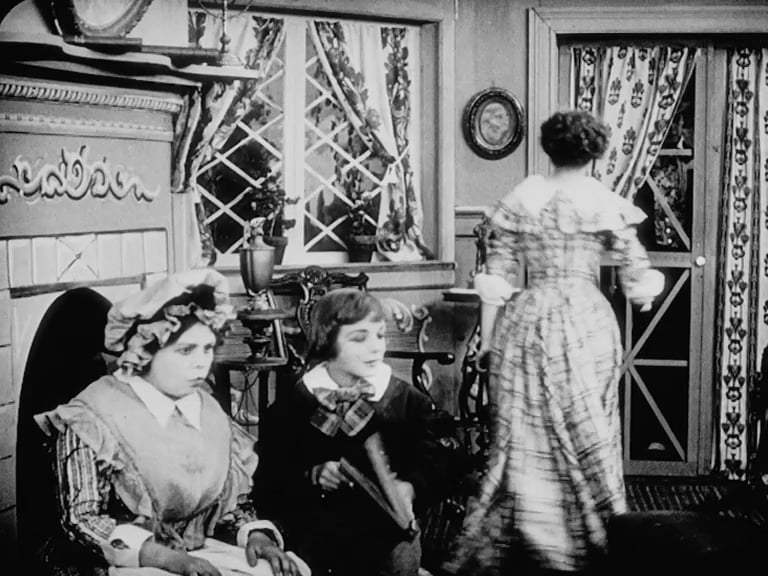
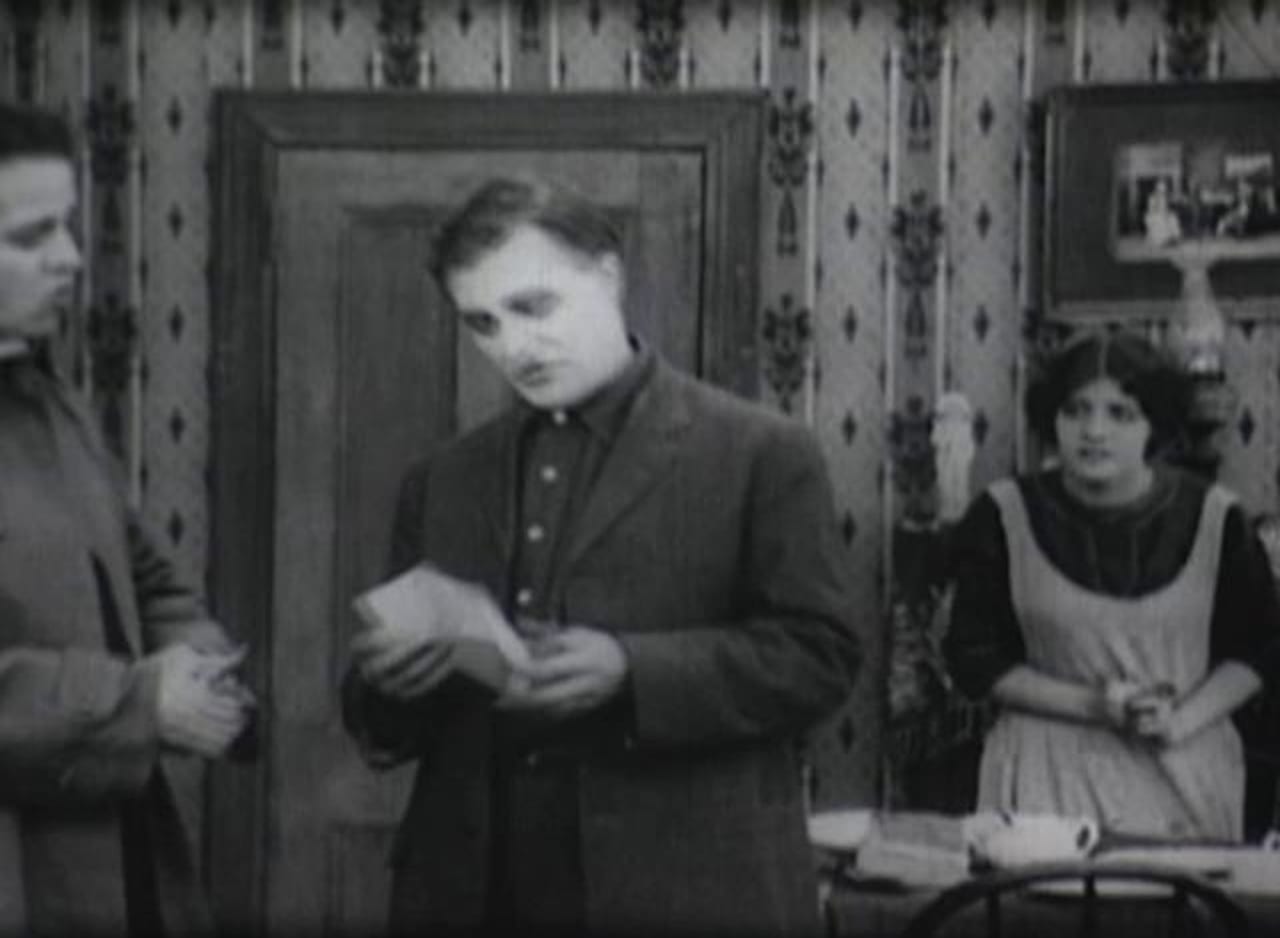
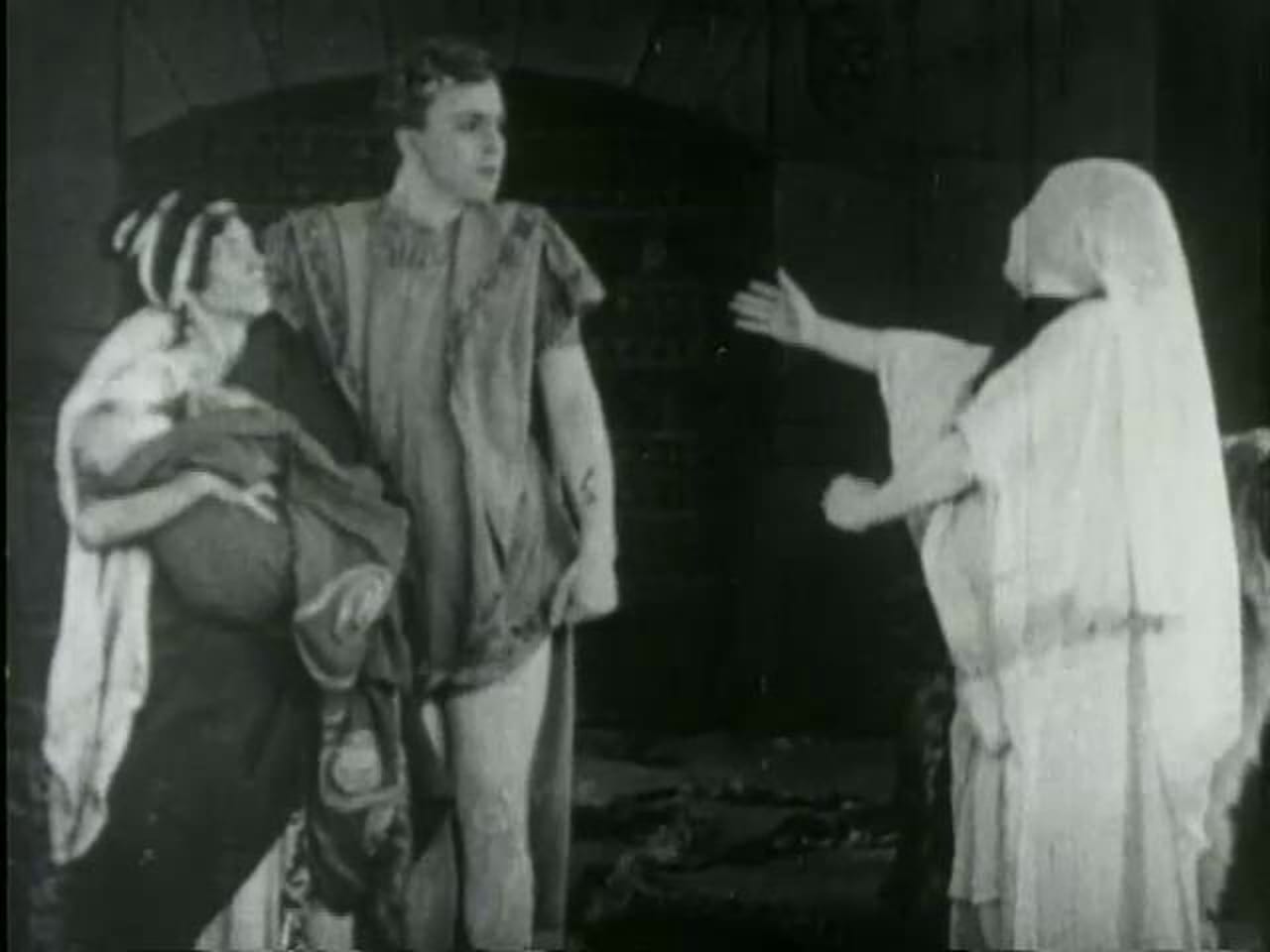
“Ibsen has a strong grip on the human heart. He understands situations which have been and always will be problematic to the masses. He paints a picture of human life such as only the painter’s brush can hope to approach in the matter of coloring and animated detail. Of his story of The Lady from the Sea Thanhouser has made a very creditable reproduction—in fact, beautiful reproduction. The opening scene where Ellida is reclining on the rocks by the sea, her beautiful, luxuriant hair blowing in the breeze, stays as one as a gem of motion picture photography—a little, refreshing, artistic bit, that in its beauty has a soothing effect on the senses. The psychological intention of the story is well brought out in the picture, and great credit reflects not only on the director for his beautiful and appropriate setting of the piece, an intelligent conception of the subject, and also on all those who assisted in the production. The part of Ellida is splendidly portrayed—the struggle of the mental woman to release herself from the spell cast over by the stronger mind of the man is made quite illusive. The self-assertion of the mental woman when she is thrown back upon herself to choose unhampered between the man whom she respects and the one for whom she can feel no respect, but whose spell is still upon her, is good. This film was a fine psychological study, and worthy of exhibition throughout the land.”
REVIEW by W. Stephen Bush, The Moving Picture World, December 2, 1911:
“Quite irrespective of the merits of this film, which will presently be considered at some length, it is meek to say just a word about the play in its presentation at the Lyric in the city. The Moving Picture World on diverse occasions has recorded its emphatic dissent from the philosophy of Ibsen and would recoil with the proverbial horror from the thought of trying to film such plays as The Pillars of Society or The Ghosts, and with a bitter sob even prefer a ‘Western drama.’ The savage and intolerant criticism of The Lady from the Sea, however, we cannot allow to pass without a challenge. The dramatic power of Ibsen and his technique are no longer subject to controversy in the literary and critical world. In The Lady from the Sea Ibsen displays his ripened dramaturgic faculties and yields nowhere to that strange penchant for the purely morbid and repellent, which alone threatens his claim to be numbered in the first flight of dramatists.
“Now a word as to the story of the play. It centers about a girl, who had been familiar with the sea from her childhood—if indeed one may speak of a mere mortal becoming ‘familiar’ with a mysterious and pitiless element. In all ages men have credited women with intuition, possession of a sense-like faculty by which they can understand or at least communicate with nature more easily than men. Now imagine the sensitive soul of a little girl, brought up by the sea, among the tragedies of the ceaseless ways, and the solitude of a lighthouse. Is it strange that her mind takes on a pensive hue? If such a state of mind can be brought in conflict with the accepted conventions of society, it surely is possible to create dramatic situations of supreme interest. What is there improbable or dramatically incompetent in her meeting another child of the sea, a mysterious and magnetic stranger, as he appeared to the fancy of ‘The Lady of the Sea’?
“’The ring-marriage by the sea’ may have an element of weirdness about it, but who will say it lacks fascination and dramatic interest? What finally is more probable and more satisfying, both dramatically and ethically, than the end? The woman wants to cast off the evil influence on her mind not through seeking the protection of her husband, but through the exercise of her own free will. If Ibsen had ended the play by having Dr. Wangel come forward at the critical moment and exclaim melodramatically ‘Avaunt, she is my wife,’ the thing would immediately have dropped with a dull thud to the level of the Desperate Desmond school of drama, and we would presently have looked for a cigarette in the mouth of the mysterious stranger. The triumph of sanity over threatening moral unsoundness is nonetheless dramatic and convincing, because it comes as a result of the absolutely untrammeled will of the wife.
“In no reel of motion pictures has the superiority of the cineograph to the speaking stage been demonstrated more forcefully than in this Thanhouser production. Indeed, the criticism aimed at the play is completely disarmed by the film, for the manufacturer has made the most of his opportunity to show the influence of the sea over the girl’s mind and soul. In the play we never see the lighthouse, and never have a chance to prepare our minds for the mysterious marriage by the sea. What we only hear in the play, we actually see in the film and the supreme of the yielding of the girl’s heart to the power of the stranger is sure of its effect. The seascapes shown were perhaps lacking in the weird fascination of the Norwegian fjord, but they were well chosen and created that atmosphere of mystery so essential to the full development of the dramatic moments of the story.
“Some of the best actresses on the European stage have essayed the role of Ellida, the ‘Lady from the Sea,’ and it has taxed their powers to the utmost. The task of a player on the silent stage, though by no means a light one, has made easier because the film shows what she was in the days of her early youth, it develops her character gradually and we see every important steps in the development take place before our very eyes. The very first scene strikes the keynote of the play—a girl and this fellow of the sea. The story then runs on with commendable clearness and swiftness and the climax is finally rendered. The scene showing the restless, though now married, Ellida, reading in the garden, while the returned stranger is pushing his way through the hedges is of singular beauty and has caught the spirit of the dramatist with striking success.
“The part of Ellida is well taken. The combination of moodiness and willfulness, of which in the early part of the story the character of Ellida is composed, has been understood and brought home to the spectator, and the latter hardening of the girl’s will when she resists the power of the murdered sailor and finds peace on her husband’s bosom after freeing herself by an effort of her own individuality was portrayed with skill. Dr. Wangel solved the problem on his part by a sensible logical subordination of his part to the central figure; he begins to dominate the situation only the very last moments, a fact which was intelligently seized by the actor. The last scene is strong and rounds out the play most satisfactorily. The Thanhouser Company deserves great credit for filming such a subject with such success. The moving picture public is sick unto death of the conventional and the monotonous, more so perhaps than even the theatre-going public. A departure from the beaten path is a service to the industry at large.”
Note: It is evident that Bush did not know the identities of the actors and actresses in this film.