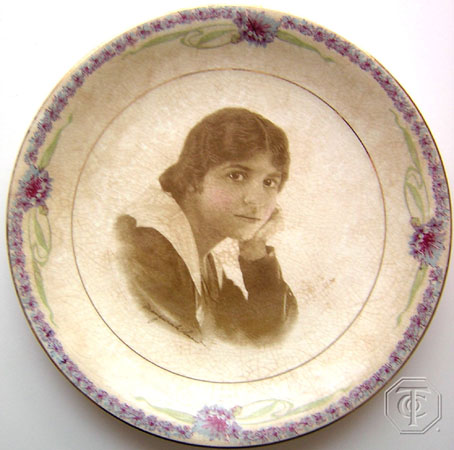
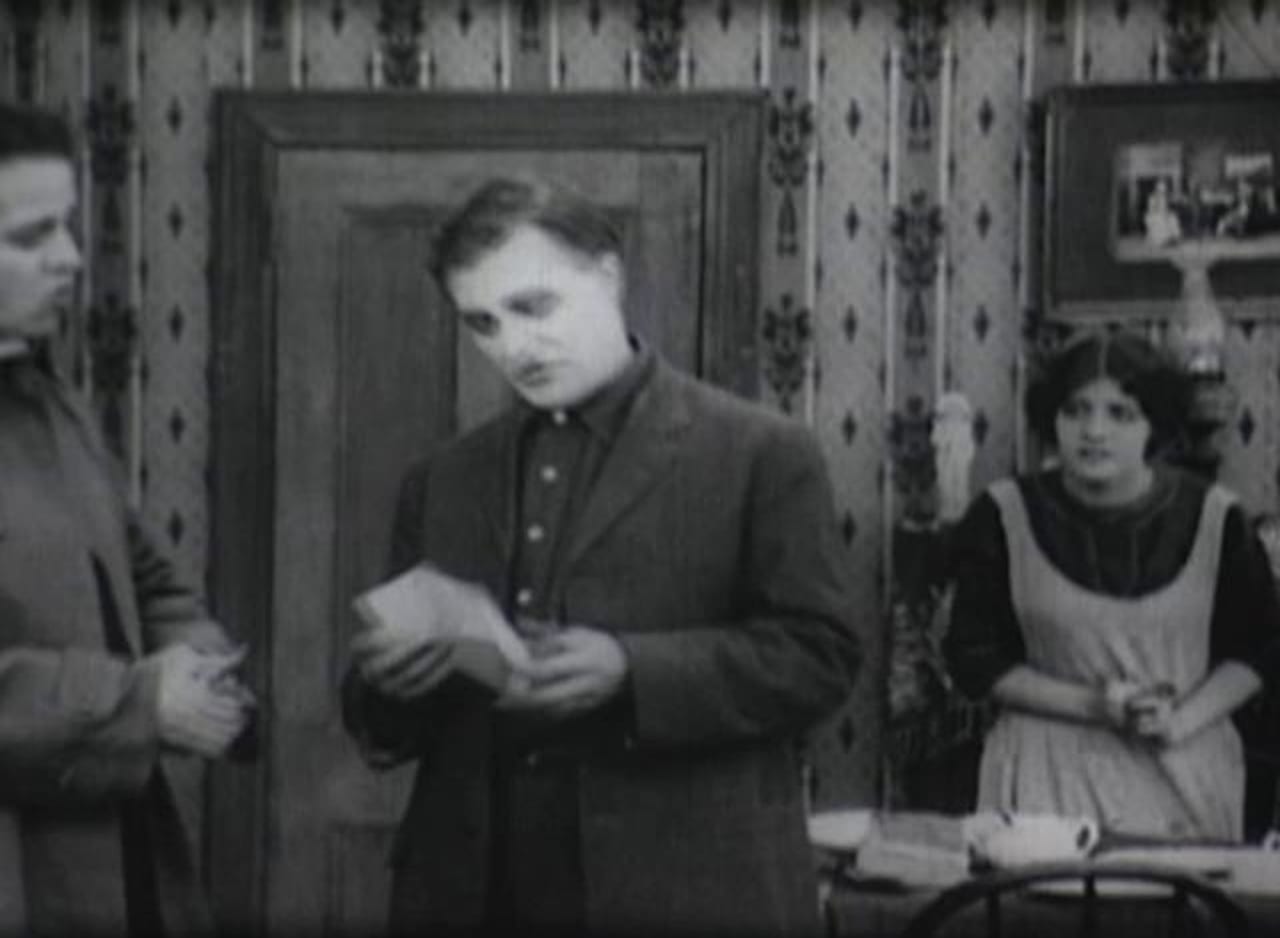
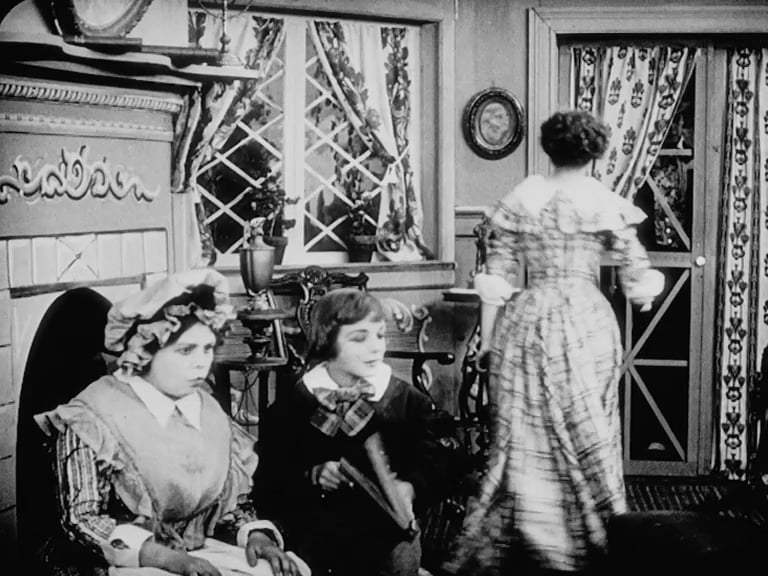
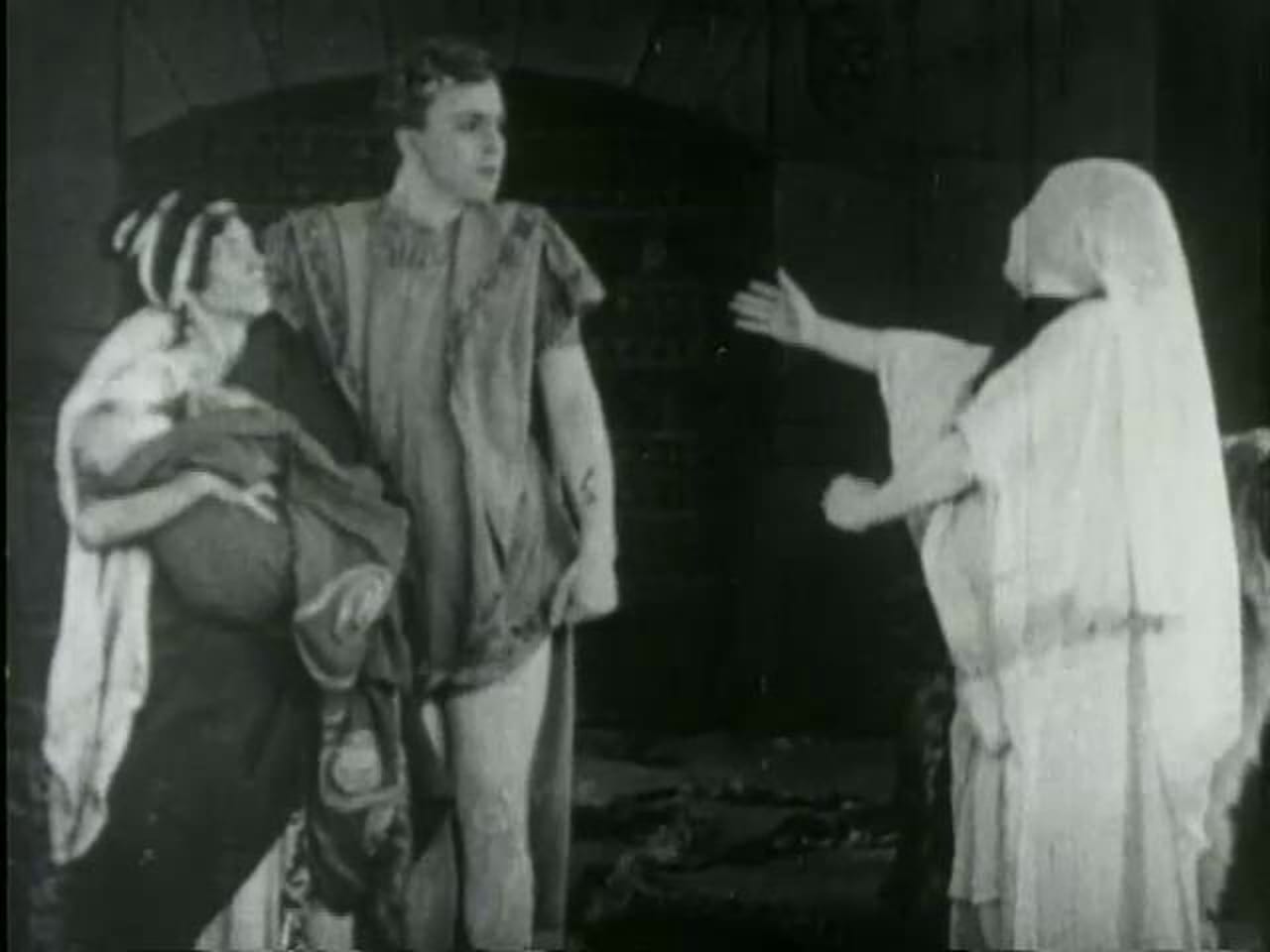
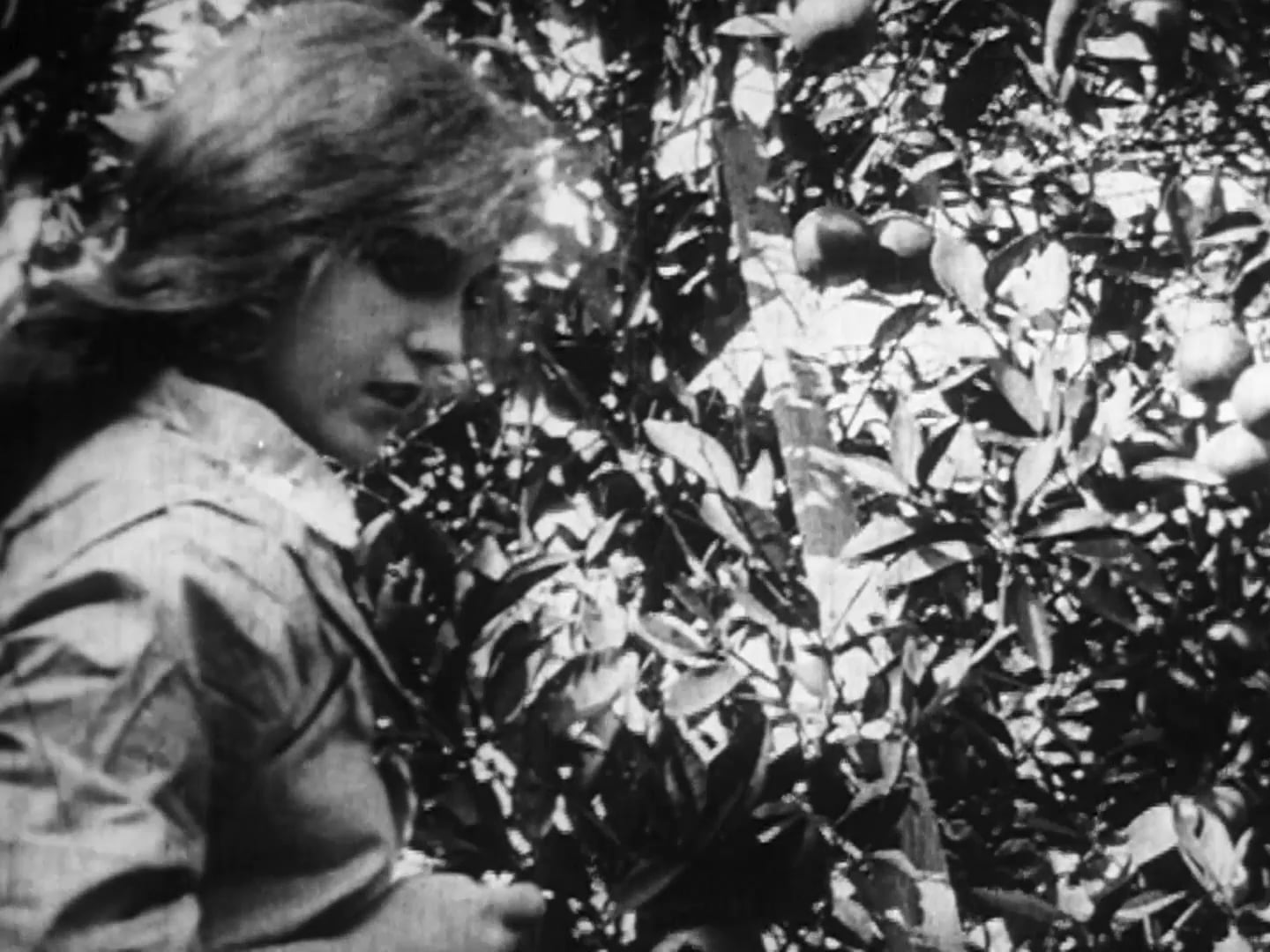
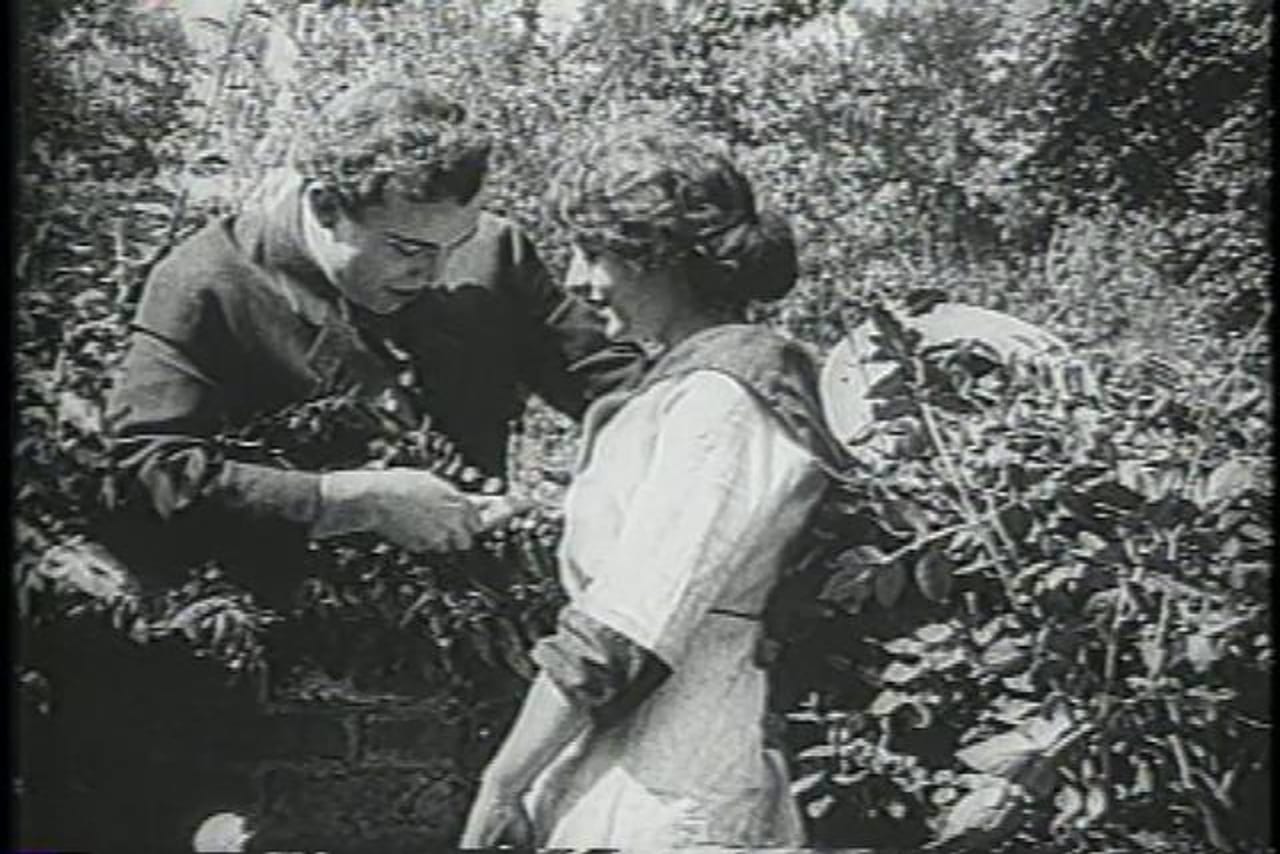
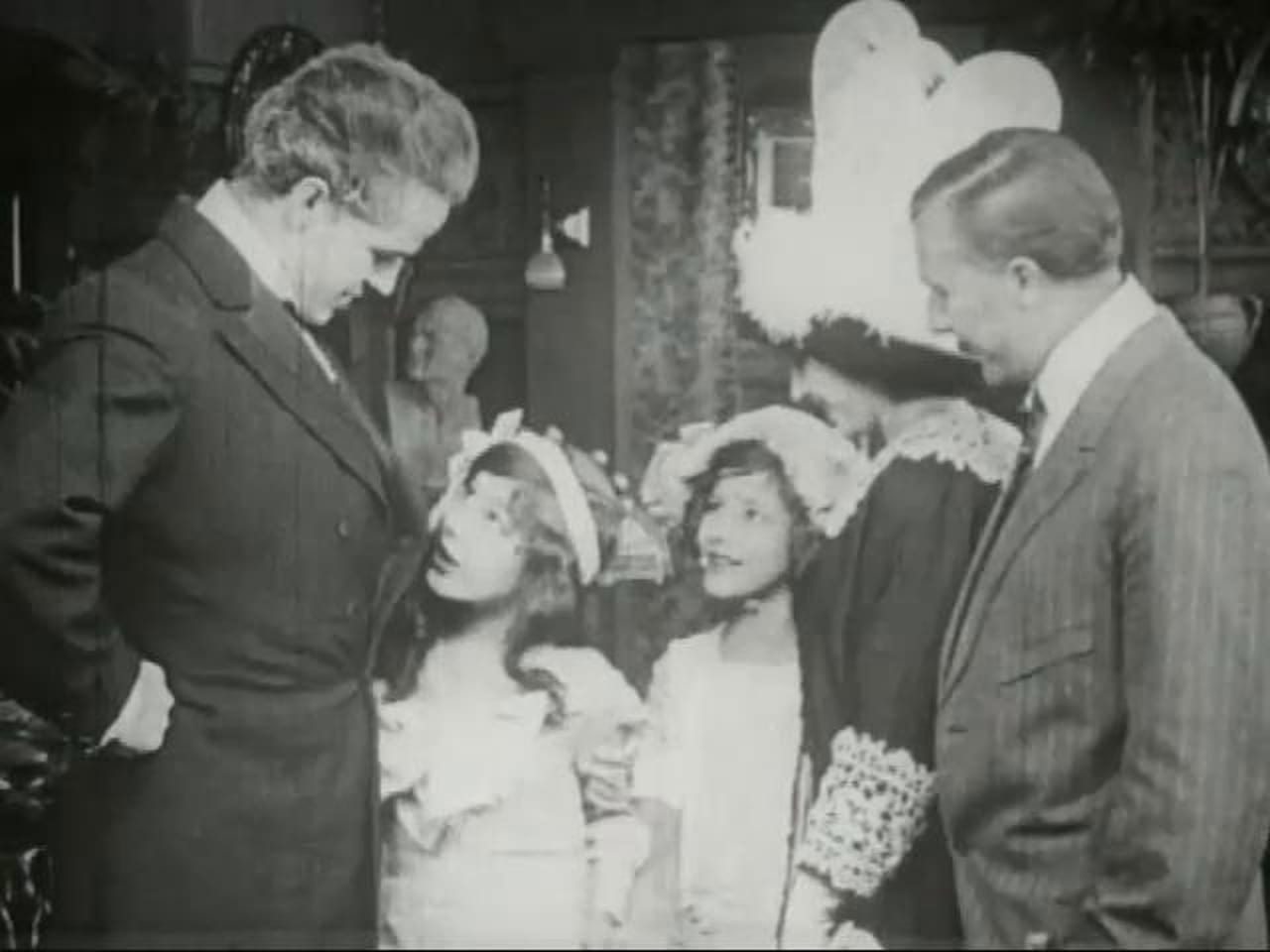
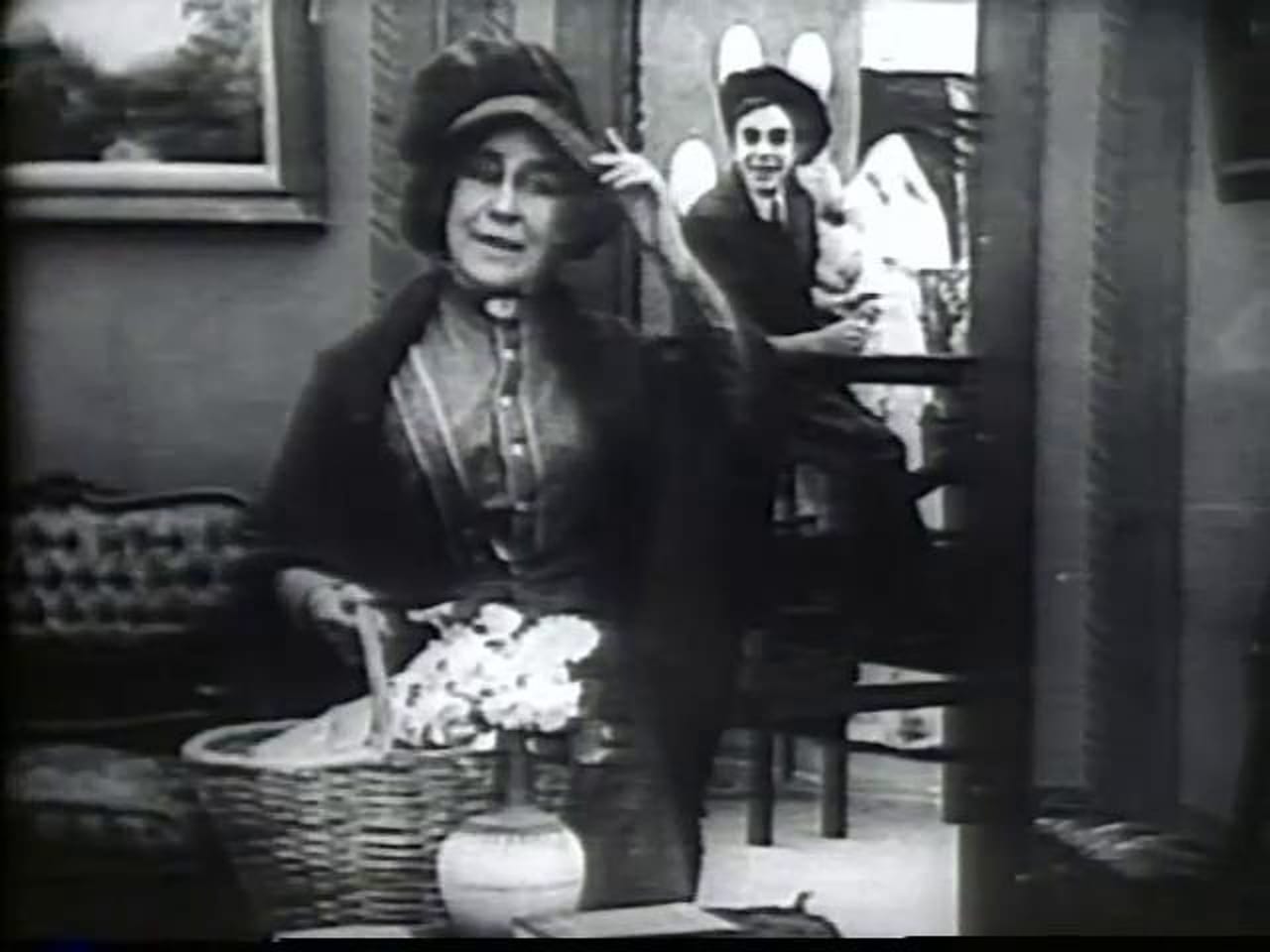
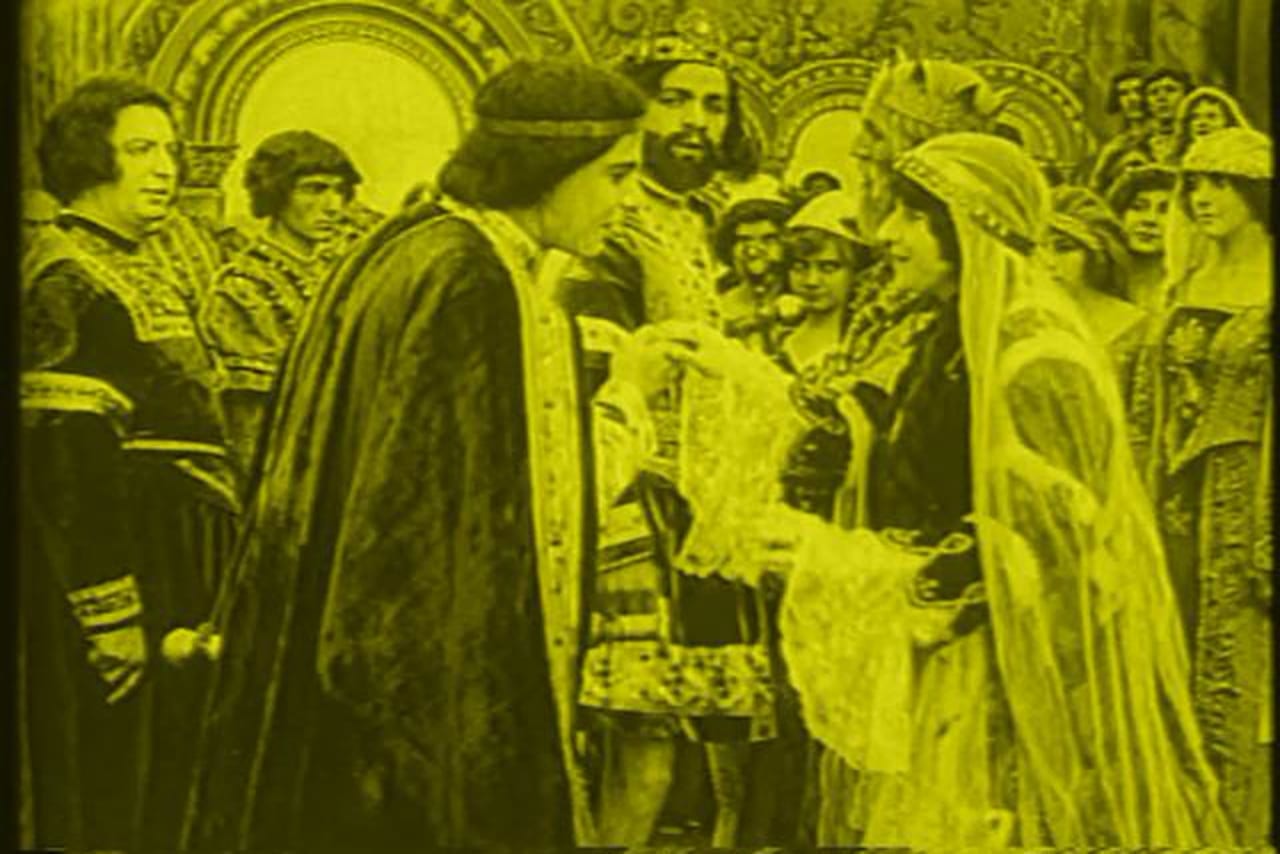
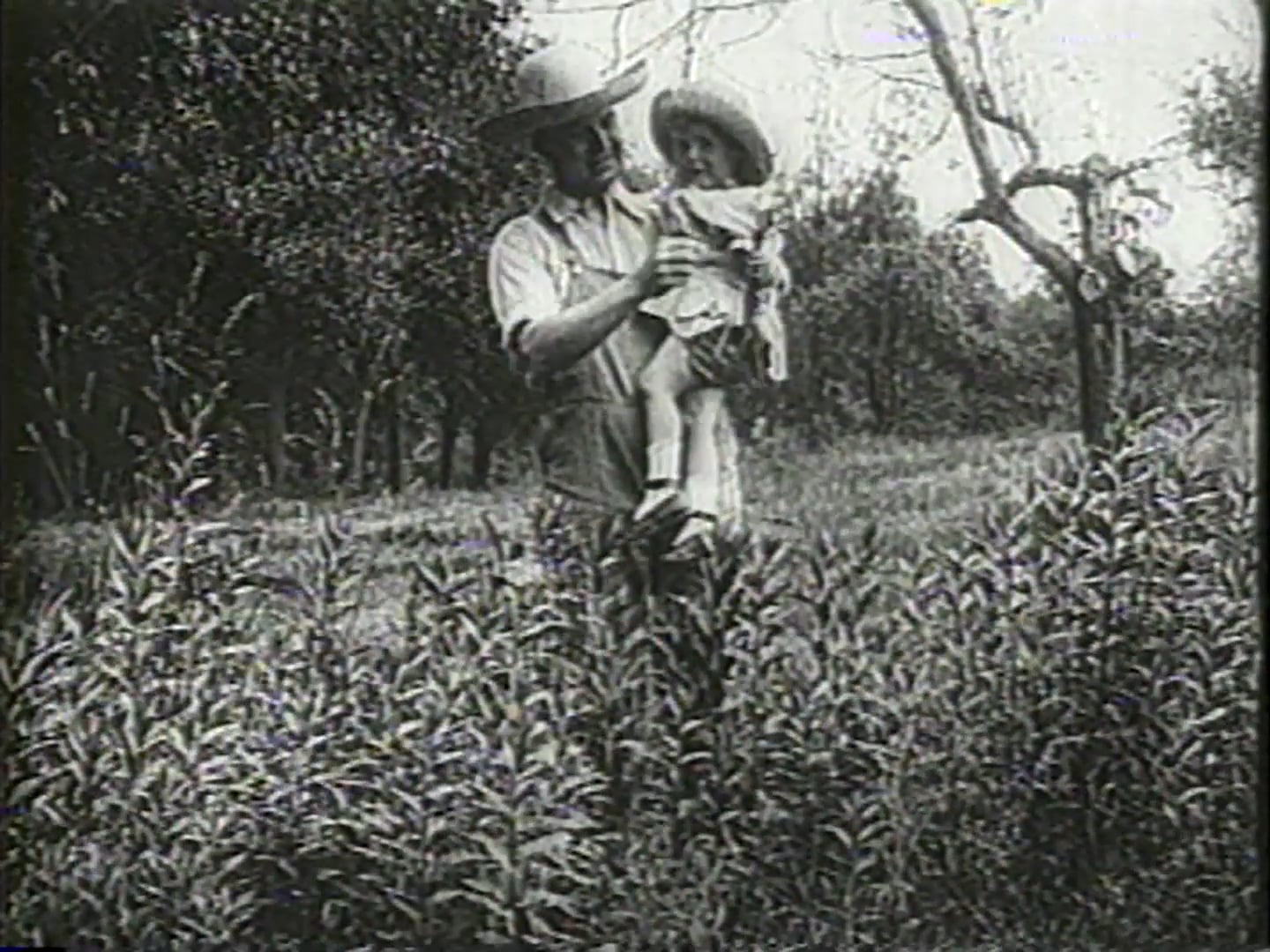
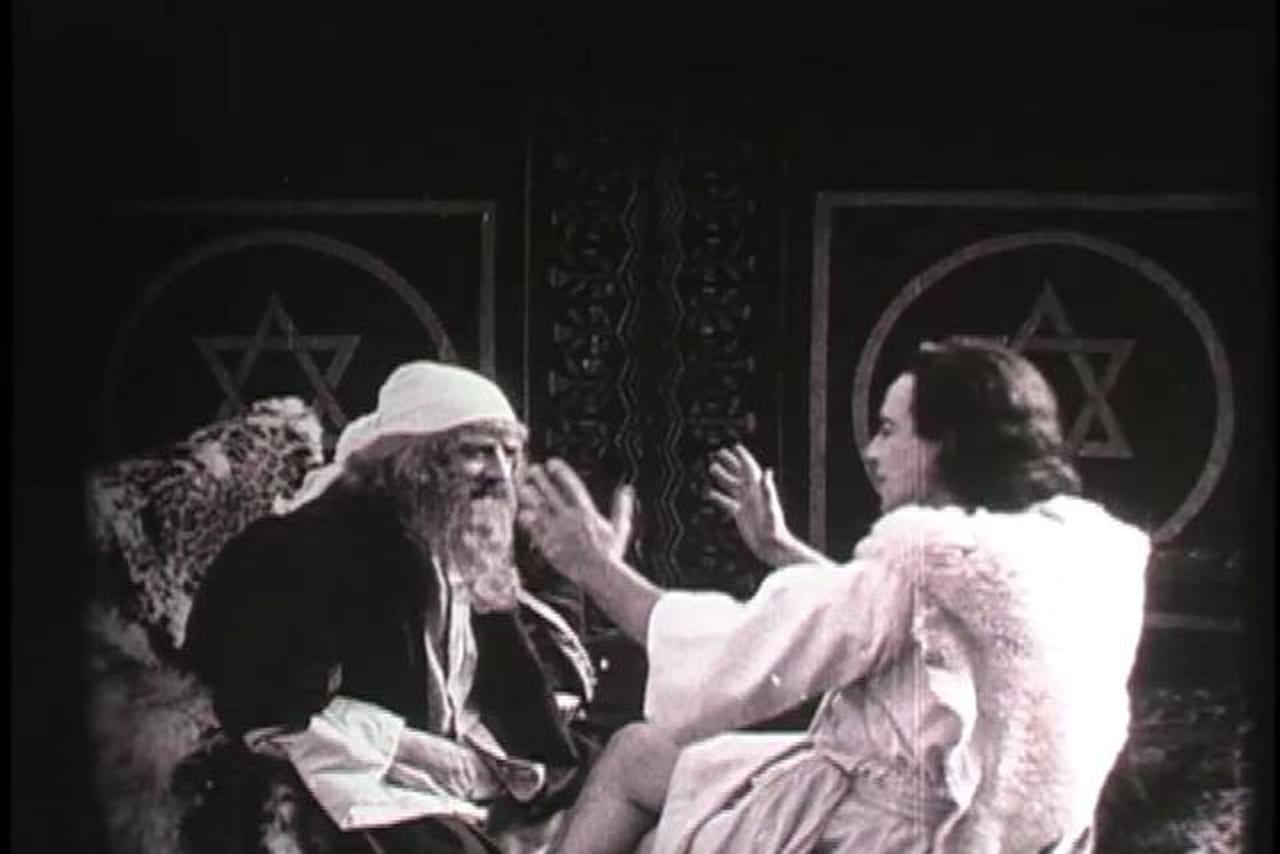
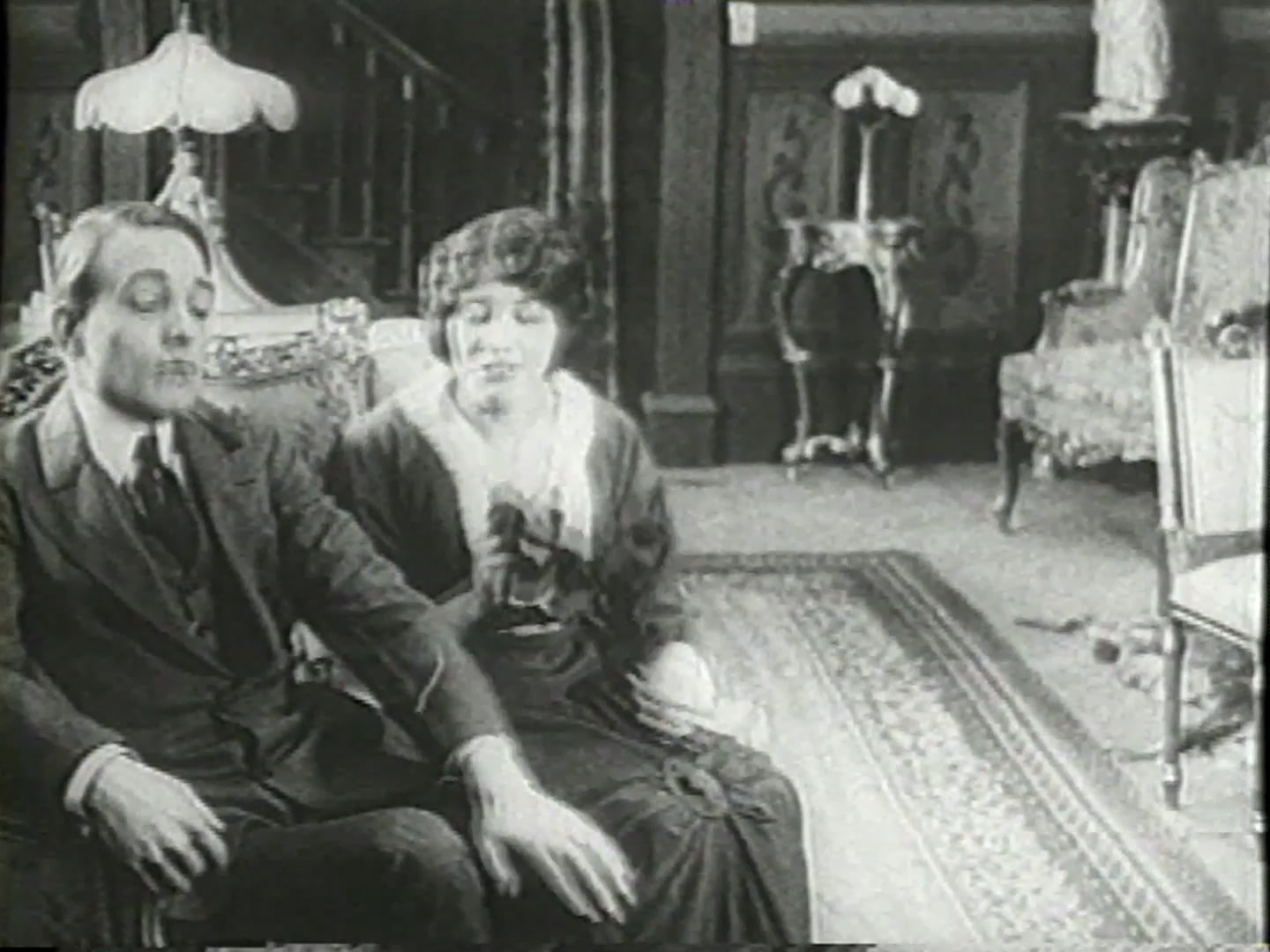
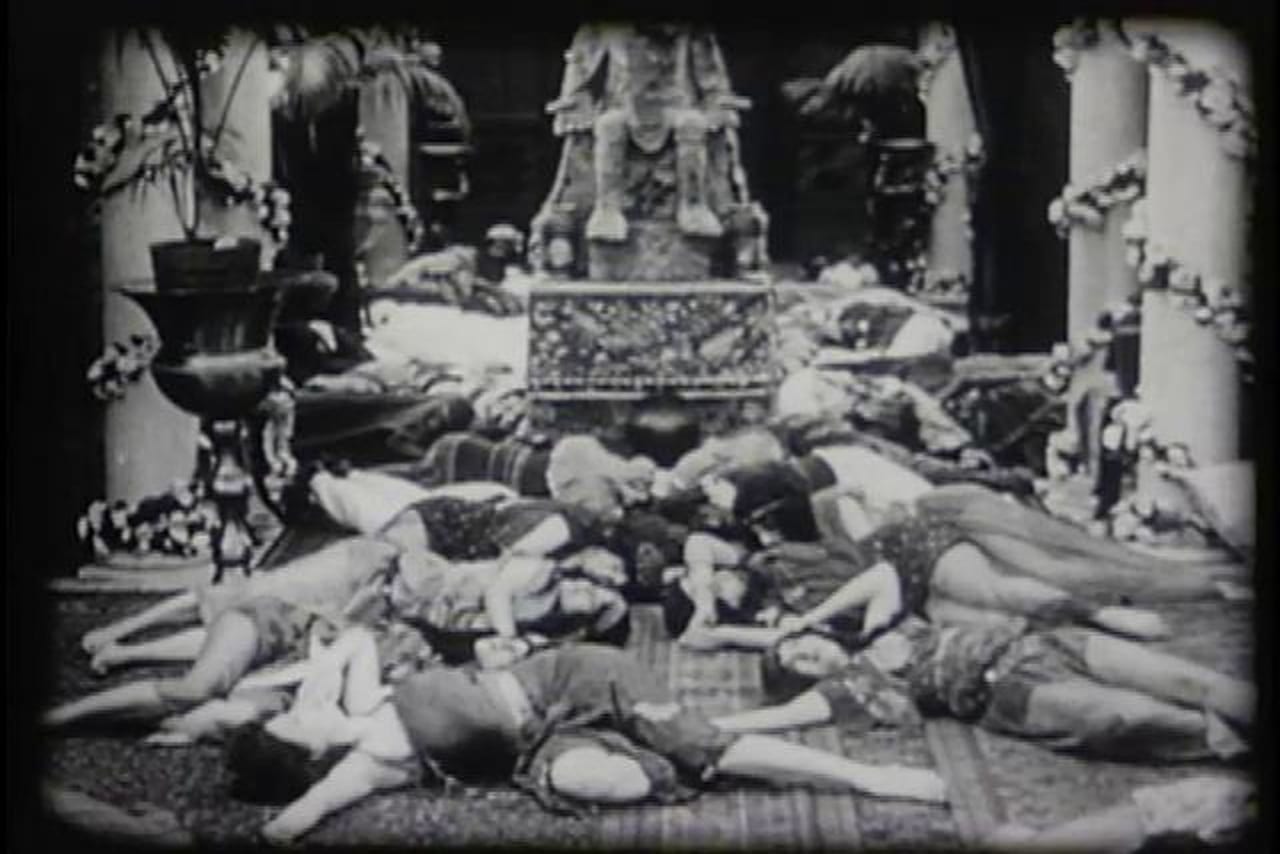
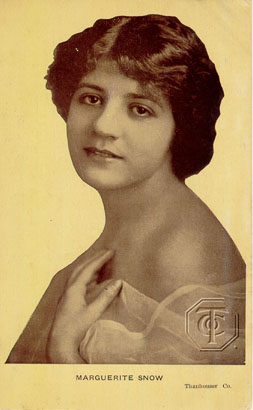
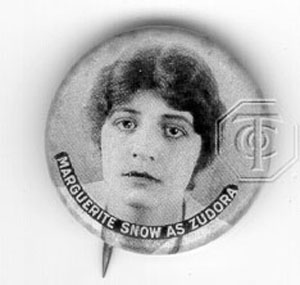
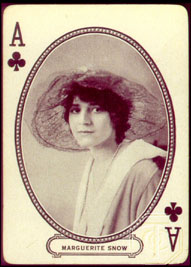
Marguerite Snow was one of the most important Thanhouser players. She appeared in many leading roles and was widely featured in advertising. Among her more memorable roles was the second or “heavy” lead in the 1914 serial, The Million Dollar Mystery. At one time she was the wife of Thanhouser actor James Cruze.
Marguerite Snow was born on September 9, 1889 (some accounts say 1891 or 1892; she kept moving her birth date forward) in Salt Lake City, Utah. (Some listings give Savannah, Georgia; a 1916 listing in Motion Picture News Studio Directory gives her birth date as September 9, 1892, in Atlanta; an obituary in The Los Angeles Examiner, February 19, 1958, gave Denver as her natal city.) Her father was William G. Snow, a long-time minstrel comedian and half of the Snow and West act. Her mother, the former Marguerite West, was the other half of the act.
Miss Snow spent her childhood in Denver and was educated there at the Loretta Heights Academy. Her stage career began in 1907 with James O’Neill in The Count of Monte Cristo. Later, her managers included Henry W. Savage, J.W. Gates, Delamater and Norris, and Walter Lawrence. As a member of the Belasco Theatre stock company in Washington, D.C., she had leads in Peter Pan, Old Heidelberg, The Christian, The Devil (in which she played the heiress), The Road to Yesterday, and other productions. In 1908 she appeared on stage in the Garden Theatre, New York City, in The Devil. Miss Snow played the title role in The College Widow under the management of Henry W. Savage, and in a 1914 biographical sketch was noted as “the only brunette that ever played that part.” On the West Coast she was a success in Mrs. Temple’s Telegram.
The following, an excerpt from an article by Johnson Briscoe in The Photoplay Magazine, November 1914, tells of Miss Snow’s early life and stage career: “We got along splendidly together, Marguerite Snow and I. The whole proceeding had much more the spirit of a social call, as against a cut-and-dried interview. She was a perfect interviewee, and she pronounced me an equally satisfactory interviewer, ‘so different from a horrid man who called upon me the other day and whose first words were, ‘Now, say something brilliant!’ The attractive Miss Snow, so surprisingly free from affectations of any sort, I found, can be delightfully witty and entertaining, without any such absurd, fatuous cue as that.... Our chat began early in the morning, at the Thanhouser studio in New Rochelle....
“’Was Denver your birthplace?’ I rather stupidly began, for, you see, it was rather difficult to insinuate questions, as [Miss Snow and Florence LaBadie] were busy chatting about a party which they had attended in New York the night before, at the Jardin de Danse. (Incidentally, so far as I could gather, the Thanhouser stars, when not before camera, spend much of their time in a round of social gaieties.) ‘Why, yes, you can say so in print, if you like,’ replied Miss Snow, ‘though, as a matter of fact, I generally claim Savannah, Ga., as my birthplace, though I was really born in Salt Lake City.’ This seemed to me a somewhat prodigal geographical usurpation, so I pressed her for details. ‘Well you see, it was this way. My father, William G. Snow, was a minstrel comedian for twenty-five years, of the team of Snow and West, and of course he traveled constantly. It simply happened that mother was in Salt Lake City when I was born. Almost immediately thereafter we went to Savannah, where we lived for several years, my father dying when I was a baby. After a time mother and I went to Denver, where I passed all my childhood.’...
“[After a morning’s work] we climbed back into the automobile, this time with Mr. Cruze and Mr. Farrington as companions, and were whisked off to the Cruze homestead for a bite of luncheon. As all, or certainly most of you know, Miss Snow is Mrs. Cruze in private life and the Cruzes have a most comfortable, attractive home in New Rochelle, about five minutes’ walk from the Thanhouser plant. The very air of the house spells comfort, without ostentation of display, and their marriage, a genuine romance of the studio, may truly be said to be an ideally happy one. You have only to be fortunate enough to see them in their home to realize that fact. The ceremony of luncheon completed, it was still some time before they would be required at the studio, Miss Snow and I lingered over our coffee cups for additional intimate chatter. Meanwhile, in the livingroom, Miss LaBadie played Victor Herbert’s fascinating Badinage upon the piano, while Mr. Cruze smoked innumerable cigarettes.
“’The stage? No, I shall never take up that work again, I am sure. I liked it, of course, when engaged in it, but the risks are too great. Youth and pretty faces, rather than real talent, are what count upon the stage now. Then there is always the danger of your company closing, or of your not making good. Now in pictures there is no risk at all, you have steady employment, without fear of closing, and, too, I couldn’t possibly have a home like this if I were an actress. Having lived all my life in hotels, first as a child and later when I went on the stage, of course, I am in an especially favorable position for appreciating a home.’
“As I was aware of the fact that Miss Snow’s stage career had been short, but surprisingly successful, I determined to find out, if I could, whether there was not a frequent longing in her heart for a row of footlights, a boxed-in set, and an audience, with the assistant stage manager calling, ‘First act.’ I put the question to her directly, and she met it directly. ‘No, I don’t long for the stage any more, for the simple reason that I don’t allow myself to think about it. Nor do I trust myself even to visit the theatres, for fear the fever might return. Why, do you know, the very last play I saw was John Mason in The Attack, which was over two years ago. Of course, there is a small, very small, chance that I may return to the stage someday, but I think it is highly improbable.’
“All the same, and despite her protestations, I cannot but believe that there must come occasional times when the lure of the stage door is poignantly felt by Miss Snow. Very few young actresses there are who have been more successful than she, especially when you consider that her stage experience numbered less than five years in all. She studied in Denver under Marguerite Fealy, Maude Fealy’s mother, and during the summer of 1906 played one or two small parts with the stock company at Elitch’s Gardens, Denver. What might be called her real stage debut occurred February 11, 1907, at the Crawford Theatre, Wichita, Kansas, when she played Mlle. Danglars in Monte Cristo, in the support of James O’Neill. The very next season Miss Snow stepped into the title role in Henry W. Savage’s production of The College Widow, and the next season came her Broadway debut, when she created Elsa in The Devil, at the Garden Theatre. After that came a season in stock work, divided between Grand Rapids, Michigan, and Wheeling, West Virginia, and in the fall of 1910 she was seen at the Bijou Theatre with Thomas Jefferson in The Other Fellow. This play being a failure, I suspected that then she returned her thoughts towards picturedom. It was so....”
The Indianapolis Star, January 22, 1911, told of an incident in her stage career: “Miss Marguerite Snow, who has just returned to New York after finishing an engagement, was present at a dinner when the subject of disagreeable weather came up. ‘When I was playing at the Willis Wood, in Kansas City, two years ago,’ said a young woman, ‘we had an awful sleet storm. The streets became so slippery that 27 horses fell and broke their legs. All were shot. The noise of the revolvers sounded like a battle.’ Everybody gasped and a short period of silence followed. Then a young man spoke up.
“’When I was in Denver, playing at the Broadway,’ he said, ‘the snow was so deep and slushy that every woman who attended the performance wore rubber boots which she removed and checked in the foyer. One woman lost her boots and had to remain in the theatre all night.’ There were more gasps of astonishment. Miss Snow was the next to score. ‘I was in a company that opened in Salt Lake City one winter,’ she said. ‘Two Utah men were the financial backers of the show. The night of the opening performance the frost was so thick it froze the pocketbooks of the angels and there was no show.’”
Bowers’ own filmography list is left out here: the filmography above lists the same films. Cite as: Bowers, Q. David. Thanhouser Films: An Encyclopedia and History, “SNOW, Marguerite.” thanhouser.org/research/people/marguerite-snow/