1911Thanhouser Company1,000 feetDrama

Little Old New York

No copy you can watch online. A print survives in an archive but has not been digitised, so what follows is the record rather than the film.

The story

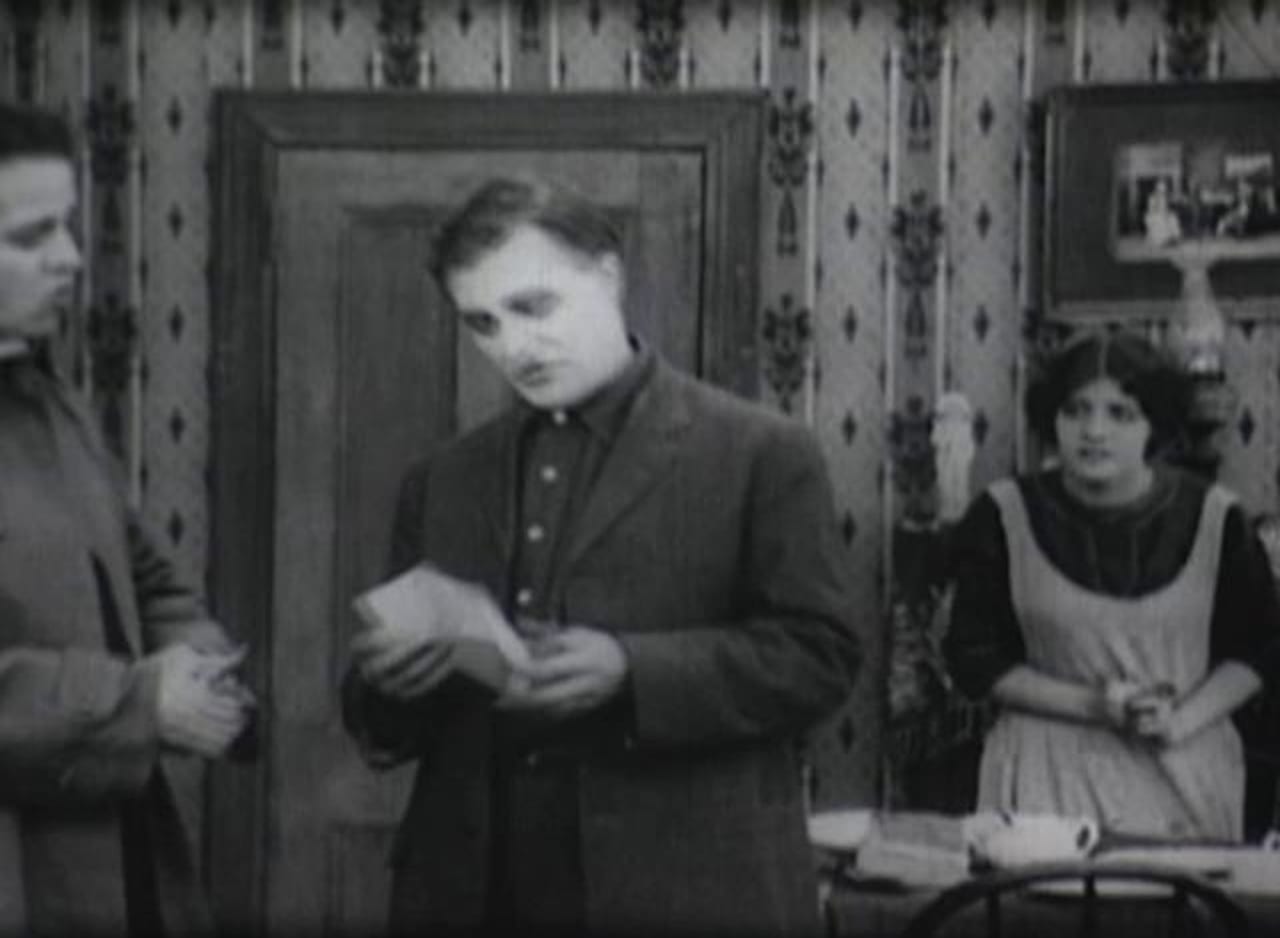
“A country boy, spoiled and pampered by his mother, a widow, decides that it is time for him to make a name for himself in the great city. He has no doubt as to his ability, for he has been told all his life how wonderful he is. But he does not dare to tell his mother of his determination, fearing that she will still keep him tied to her apron strings. So he cautiously steals out at night to show the world what a wonderful man he is. The mother intercepts him, however, but when she hears his determination, she does not try to restrain him. She, too, knows that glory awaits her son, and is only sorry that he has decided to leave her. But she gives him money and good advice, and he starts out rejoicing.

“There are youngsters of this kind coming into the city every day. As a famous confidence man once said, ‘there is one born every minute.’ The boy, soon after his arrival in New York, fell into the clutches of a confidence man, who induced him to ‘invest’ in stocks on margin. Needless to say, he was wiped out so quickly that it made his head swim. And, realizing that he was not only a failure, but a miserable one at that, the youngster decided to end his troubles in the river. Fortunately for him, the broker had a stenographer, a gum-chewing, sophisticated damsel, who felt sorry for the boy she recognized as a boob. She saves him from death, restored him his money by a clever ruse. And he was very grateful. He asked her to go to the country with him and make her home with his mother. If she had, there might have been a marriage someday, for gratitude is akin to love. But the girl decided that little Old New York was good enough for her, and sent the boy back to his doting mother which is where he really belonged.”

Summary from The Moving Picture World · 10 June 1911
What the papers said

5 reviews · 1 advertisement

This review is reprinted in the narrative section of the present work.

The Billboard · 17 June 1911

“This film should have a splendid run outside the metropolis, while it proves decidedly entertaining to the citizen of New York. Many views are taken in Manhattan, views from tall buildings showing panoramic pictures of the great city below the spectator, a view in Wall Street, showing the Sub-Treasury building and the statue of George Washington, views in Riverside Drive …

Read in full · 1 min

“This film should have a splendid run outside the metropolis, while it proves decidedly entertaining to the citizen of New York. Many views are taken in Manhattan, views from tall buildings showing panoramic pictures of the great city below the spectator, a view in Wall Street, showing the Sub-Treasury building and the statue of George Washington, views in Riverside Drive and of General Grant’s tomb, together with other interesting pictures of historic and characteristic interest. And all of these are brought into legitimate play with the story, which makes it all the more entertaining. It starts off with a country boy reading a sensational paper about the big town and of his mother’s discovering his desire to go forth and make his fortune. She sympathizes with her boy’s ambition and helps him start. He arrives in town, meets the usual confidence man, who shows him about town, at last taking him to his office, from which a fine view of the city is obtained. Then he proceeds to fleece him.

“The crook’s stenographer feels sorry for the boy and follows him from the office, discovering him on a park bench lamenting his loss. She returns to the office, makes the usual substitution of paper for money in the wallet in which her employer had placed the stolen sum, returns the real money to the boy, while the other discovers his loss at the bank. The boy begs her to return home with him, and the last we see of her she is standing on the Thirty-third Street elevated station looking up Broadway, with the remark about ‘little old New York being good enough for her.’ It is one of the best pictures of the week.”

The Morning Telegraph · 18 June 1911

More reviews3 · 24 June 1911 – 21 June 1911

24 June 1911The Moving Picture World1 min

“There is a true story here of a country boy’s visit to New York with $150 in his pocket, and the story is made pleasant by a romantic white lie. It is good to see such pictures of the metropolis as a background of the story. One feels that this is the only way to show pictures of a city or place of interest. The play’s as good as the Rollo books used to be. The country boy was very unconvincing and plainly an actor’s idea of such a young man. This film should be very welcome.”

26 August 1911The Moving Picture World1 min

Review from an column titled “Croak No. 1,” by Tadpole, an otherwise unidentified writer who saw a dozen films and commented on them, including this one

“Methinks that if the filmmaker had called this subject A Bird’s-Eye and Other Views of New York and had done the job as well as he could have done it, it would have been truly educational. There are two ideas in this film, if we forget the dollar aspect of all films—these two are: (one), showing views of New York; and (two), trying to sell you some laughs. Of the first, the pictures are fair—not really good; of the second, the means used is the old, threadbare stunt of having a simpleton walk through the streets of a city followed by crowds of other simpletons—that’s all.”

21 June 1911The New York Dramatic Mirror1 min

“This is a very praiseworthy picture in that it gives a very complete idea of New York City in conducting a green country boy through various adventures. The business district, including Wall street and the Stock Exchange, is shown together with a bird’s eye view on all sides of this district. The North River and the bridges are also shown. There is a trip up Fifth Avenue, and a view of Grant’s Tomb. The country boy comes to the city and is buncoed out of his mother’s savings, but by the quick wit of the confidence man’s stenographer his money is returned, and he is sent back home. The titles might have indicated the localities passed through more explicitly. There were evidently two ways of getting to where he lived; he arrived by ferry and went home by train.”

Advertisement

10 June 1911The Moving Picture World1 min

“It is the story of the pitfalls that await the country boy in the big city. There are shoals of them, he shouldn’t forget it. This reel will make him remember. But aside from the moral value of the film, it carries an interest value that will be appreciated by those who aren’t country boys. In point of interest of story, many think it the best Thanhouser release of the month. And the city scenes are even better than those in our City of Her Dreams of last year.”

Know where this print is, or another copy?

Prints of films thought lost still turn up in attics, private collections and archives. A record like this one is how the next one gets found.

Tell us about a print

Cast and crew

Cast
Edward Genung as country boy
Marguerite Snow as the stenographer

Every name opens that person's page, with each film they appear in and which of them you can watch.

Watch instead

Films you can watch from the same company

Matched by cast, director and kind

More about this film

Filmed in
Some scenes were filmed in New York City

From Volume II: Filmography of Q. David Bowers’ Thanhouser Films: An Encyclopedia and History, reproduced with permission and unchanged. Read the history of 1911 →

Cite as: Bowers, Q. David. Thanhouser Films: An Encyclopedia and History, “Little Old New York”. thanhouser.org/films/little-old-new-york/

Where a print is held

Format
Nitrate
Completeness
Fragment
Format
35 mm nitrate
Completeness
Unknown
Completeness
Unknown