1913Thanhouser CompanyOne reelLiterary adaptation

The Woman Who Did Not Care

No copy you can watch online. No print is known to survive. What follows is what does: the release, the cast, the story, and what the trade press said at the time.

The story

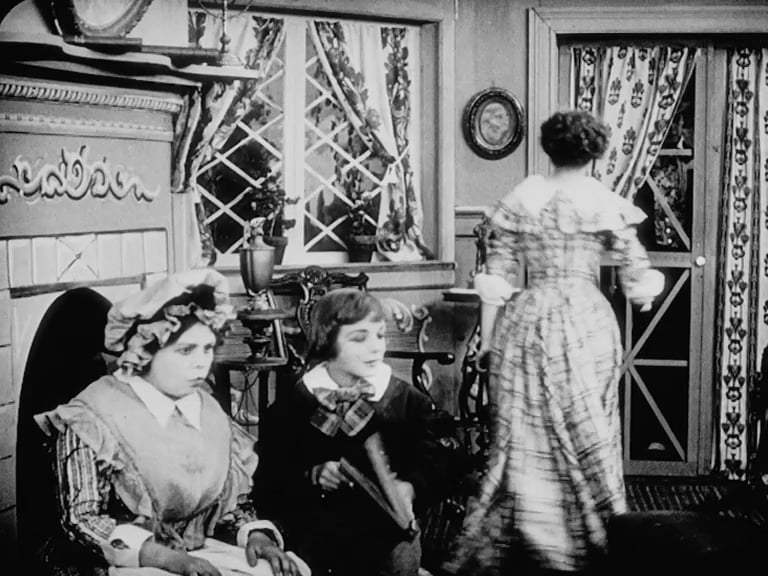
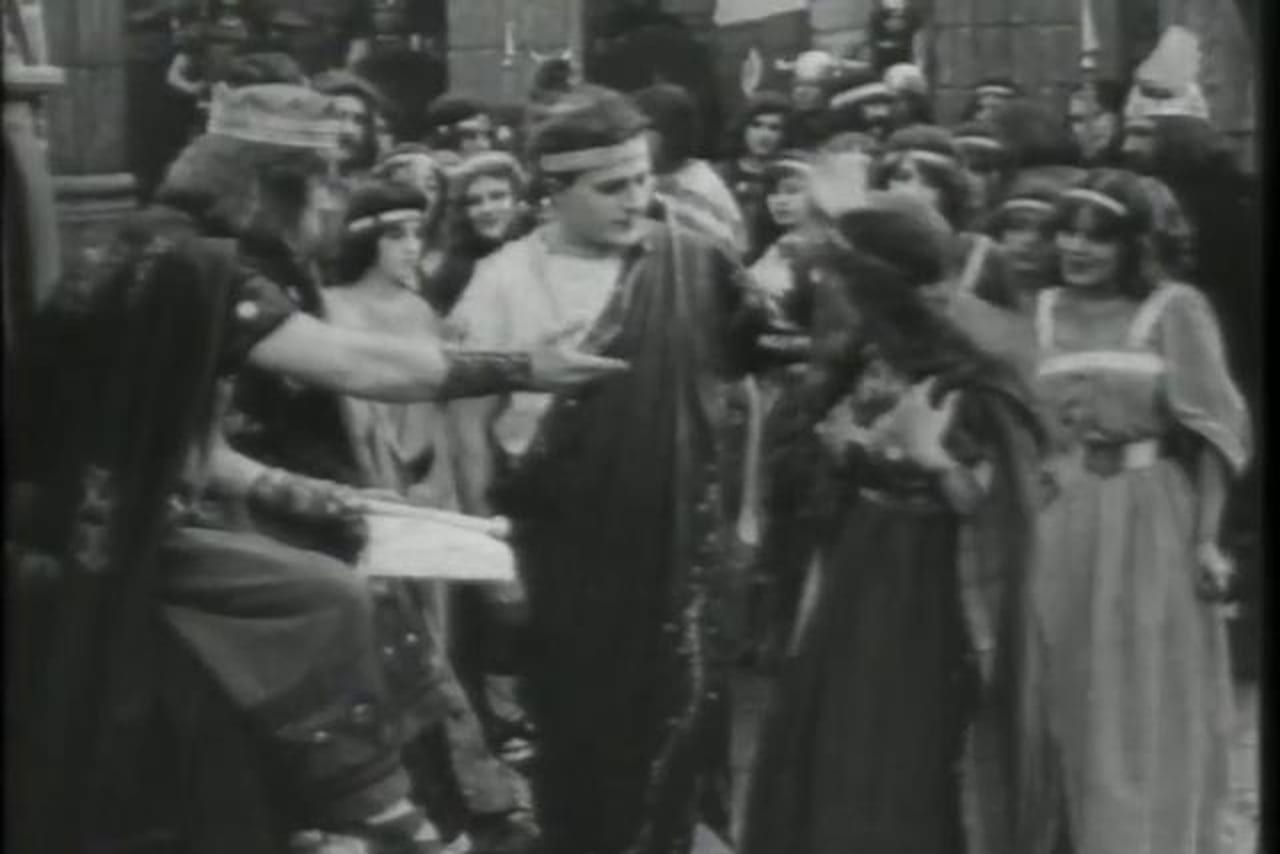
A girl beautiful, but heartless and ambitious, was the girl of a poor miner and was devotedly loved by a man in her own station of life. She accepted his attentions willingly until a young engineer came along and paid court to her. She then dismissed her first suitor. Her father made a lucky strike, and they moved to the city to enjoy their wealth. This sealed the fate of the second suitor, for a rich man became smitten with the girl and she accepted his advances. Perhaps she would have married him in time had it not been that she aroused the enmity of an old witch, deeply skilled in magic. The witch, to have revenge, brought a scarecrow to life, supplied him with a title and seemingly great wealth, and ordered him to win the girl for his bride. He did this easily, for the idea of being a nobleman appealed to the heartless girl. Her triumph was complete until the wedding day, when the witch appeared just as the ceremony was completed. She jeered at her victim, and then transformed the ‘nobleman’ back into a scarecrow again, so the girl was stricken down in what she had believed to be her hour of success. The story is allegorical.

Summary from The Moving Picture World · 5 April 1913
What the papers said

3 reviews

James Cruze and Marguerite Snow are the principals of this fairy play of modern life. An allegory, it is dramatic in spots and holds interest all of the way through. The girl is the daughter of a poor miner, beautiful but without heart or conscience, selfish in the extreme. She turns one lover aside for another as she rises in …

Read in full · 1 min

James Cruze and Marguerite Snow are the principals of this fairy play of modern life. An allegory, it is dramatic in spots and holds interest all of the way through. The girl is the daughter of a poor miner, beautiful but without heart or conscience, selfish in the extreme. She turns one lover aside for another as she rises in life, her father having struck a rich vein of ore and become wealthy. Then a miracle worker appears to the girl in the form of an old woman, and she offers the girl a titled marriage, changing a scarecrow into a nobleman. The girl accepts this suitor in preference to the others, and on the day of the wedding, when her triumph seems complete, the witch-woman turns the nobleman back into his original shape. It is very well put on and makes a striking subject.

The Morning Telegraph · 6 April 1913

An allegorical film story, in which a witch converts a scarecrow into a nobleman in order to punish the heartless woman who has broken so many hearts. As the wedding ceremony is in progress the nobleman again becomes a scarecrow. A successful offering of its type.

The Moving Picture World · 12 April 1913

More reviews

9 April 1913The New York Dramatic Mirror1 min

Fanciful pictures are very good in their way when well produced, but poorly produced they seem to fall with a doubly hard thud; such is the fate of this picture. She is a woman who doesn’t care for anything except wealth and society. She flits from one man to another, finally marrying an incarnated scarecrow, given to her by a witch. A modern fairy tale, it might be called—perhaps—but it is all so senseless and indifferent that one is more bored than interested.

Have you seen this film, or a print of it?

Prints of films thought lost still turn up in attics, private collections and archives. A record like this one is how the next one gets found.

Tell us about a print

Cast and crew

Cast
David H. Thompson as the one-legged man
Fred Vroom as the father
Jean Darnell as the witch
William Garwood as the eloper

Every name opens that person's page, with each film they appear in and which of them you can watch.

Watch instead

Films you can watch from the same company

Matched by cast, director and kind

More about this film

Bowers’ notes
  1. The title was probably taken from the woman who did not care in Kipling’s poem, The Vampire, which inspired the play and film, A Fool There Was (Fox, six reels, 1915; Lubin issued a one-reel film with this title, in 1914). Alternatively, the title may have been inspired by Eva Tanguay, the best known and most heavily advertised vaudeville personality of the time, who was known as the I Don’t Care Girl, from her sign-off song, I Don’t Care. 2. The release date was given erroneously as March 28, 1913 in The Billboard, March 29, 1913.

From Volume II: Filmography of Q. David Bowers’ Thanhouser Films: An Encyclopedia and History, reproduced with permission and unchanged. Read the history of 1913 →

Cite as: Bowers, Q. David. Thanhouser Films: An Encyclopedia and History, “The Woman Who Did Not Care”. thanhouser.org/films/the-woman-who-did-not-care/

Where a print is held

Held by
No print known