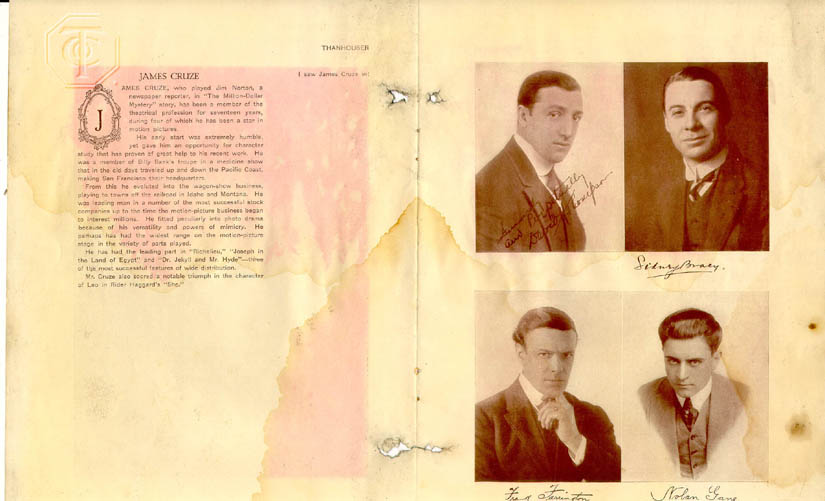
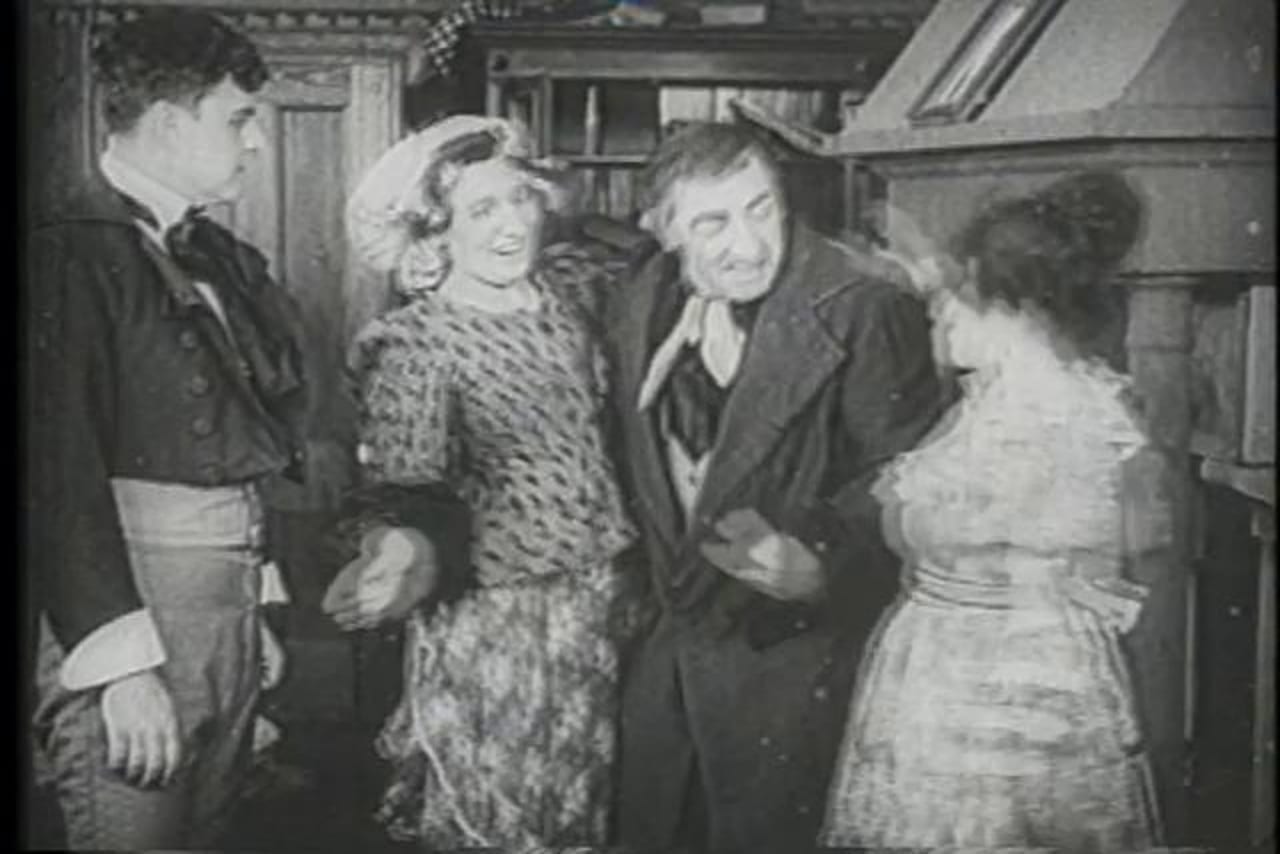
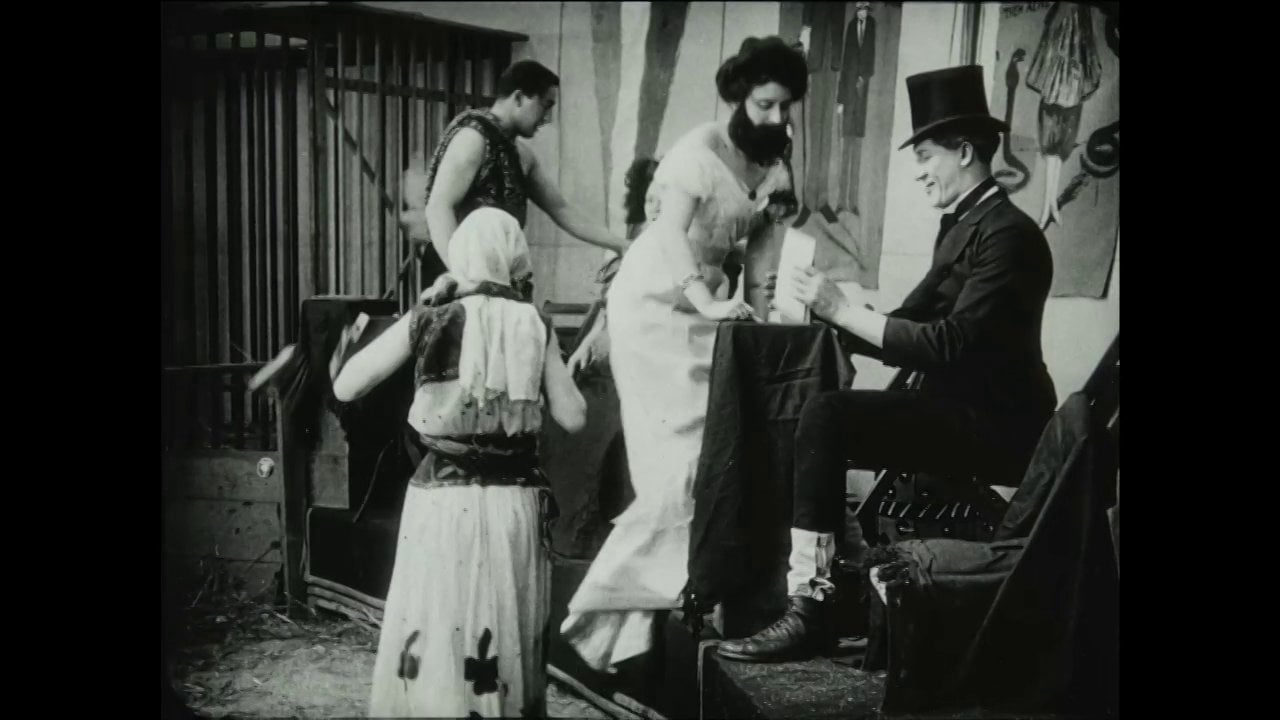
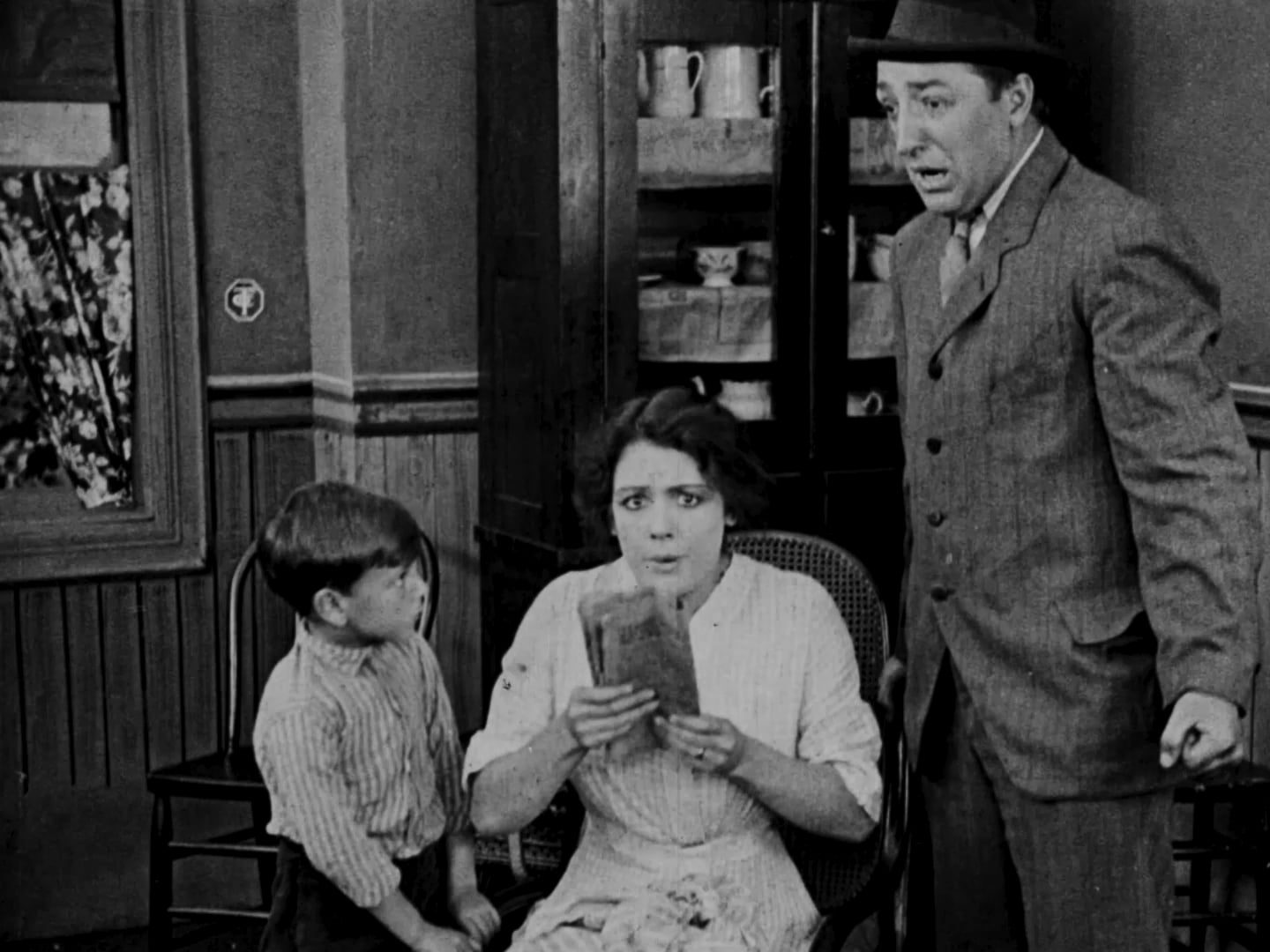
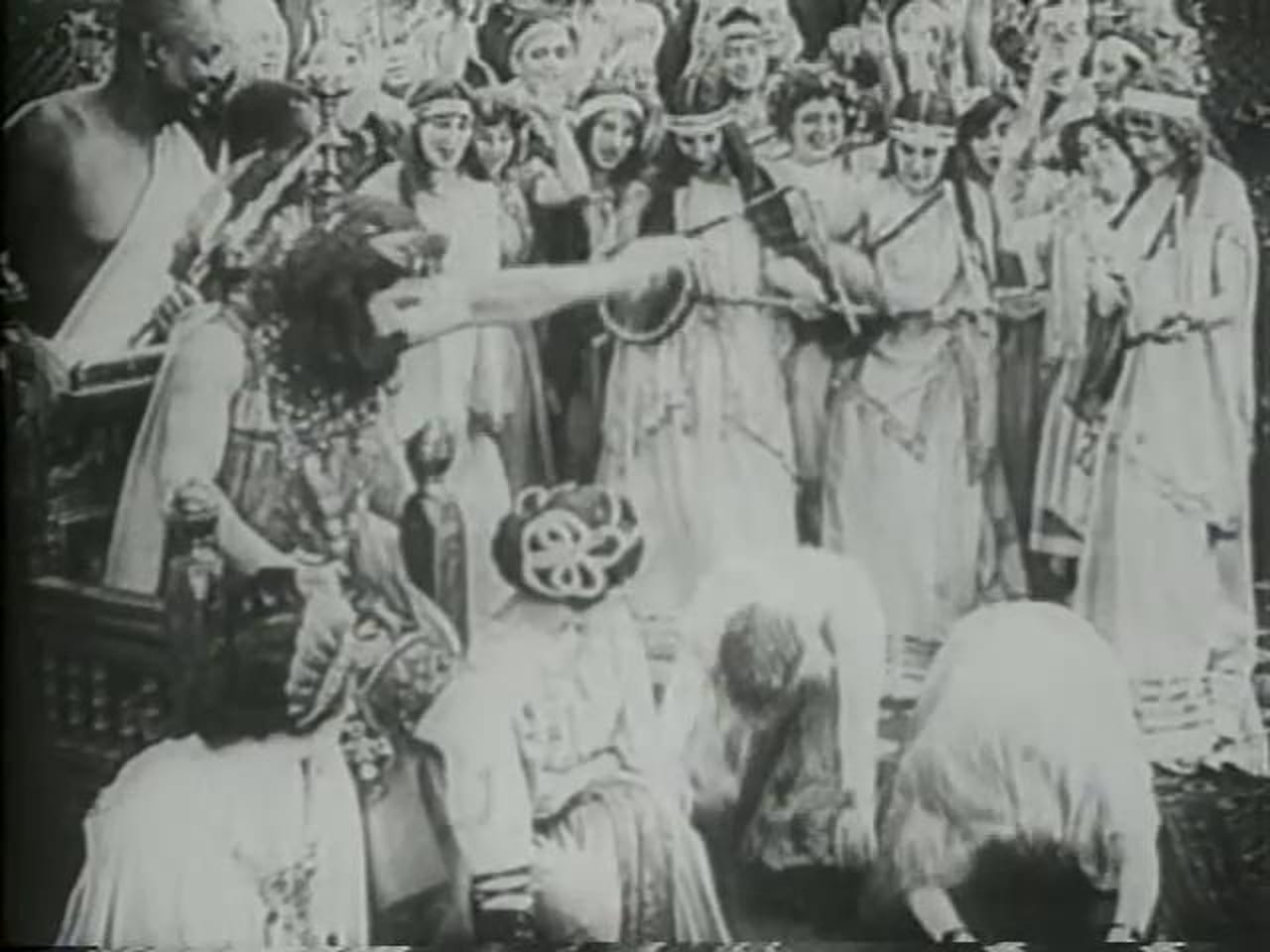
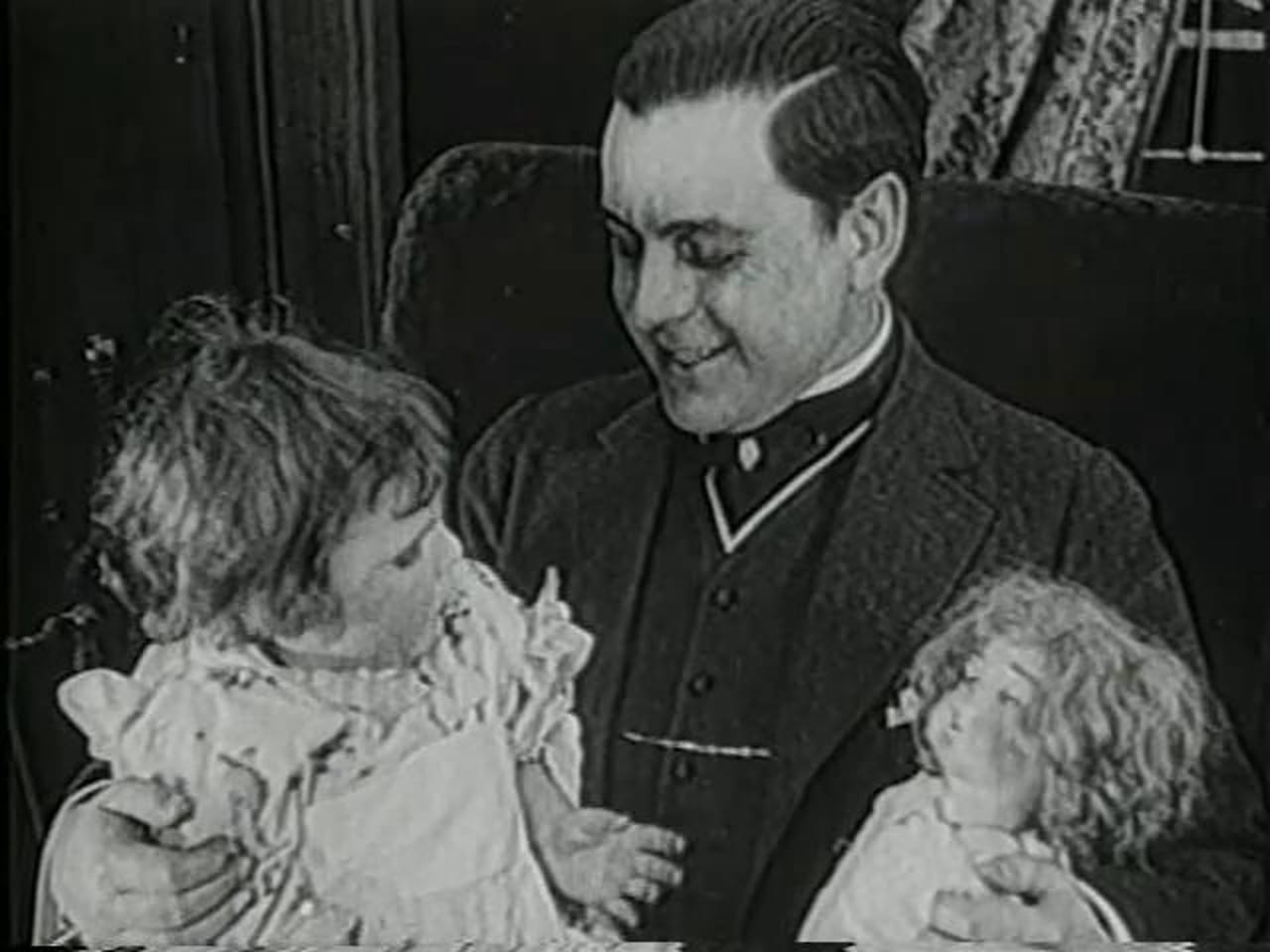
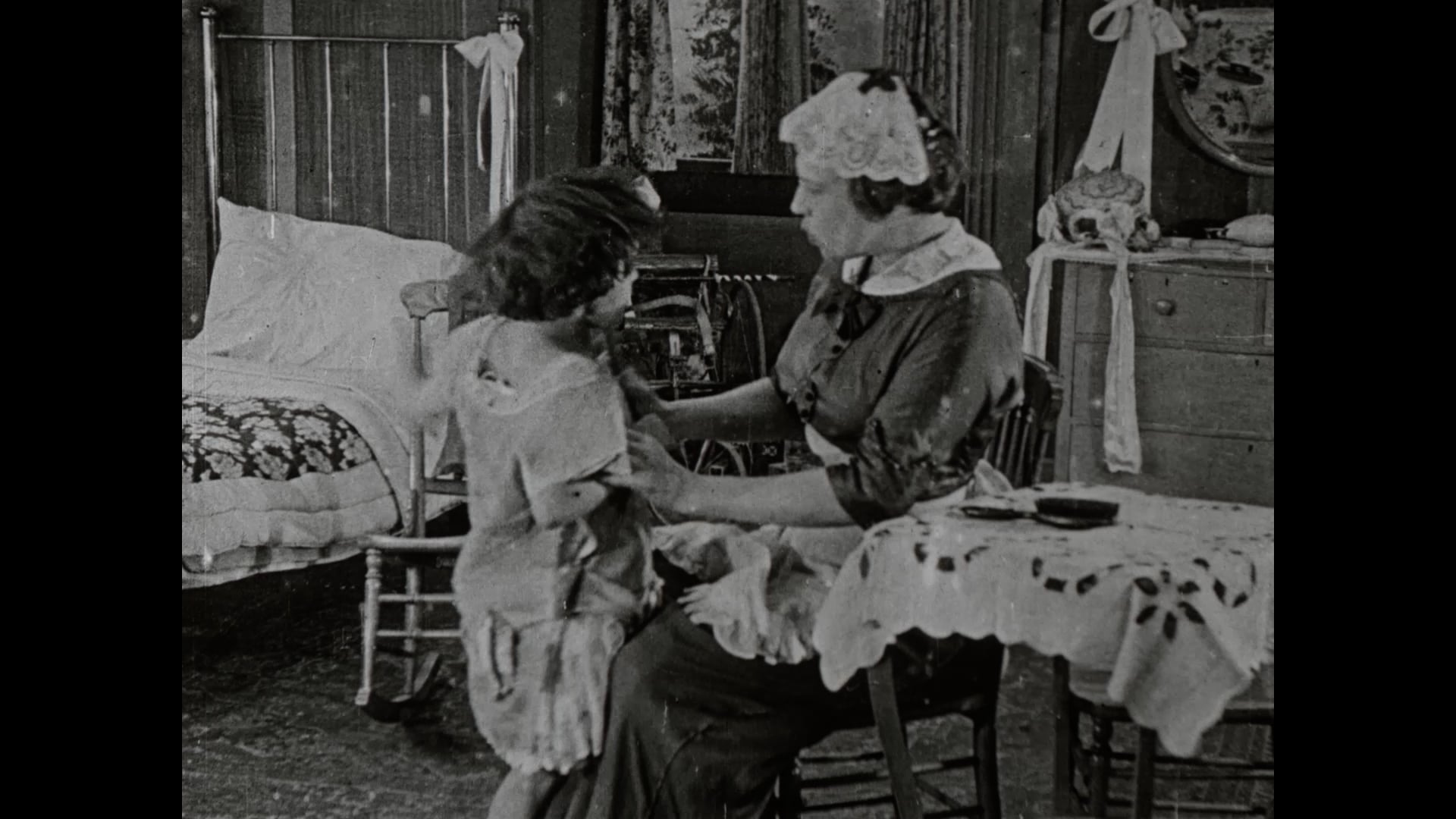
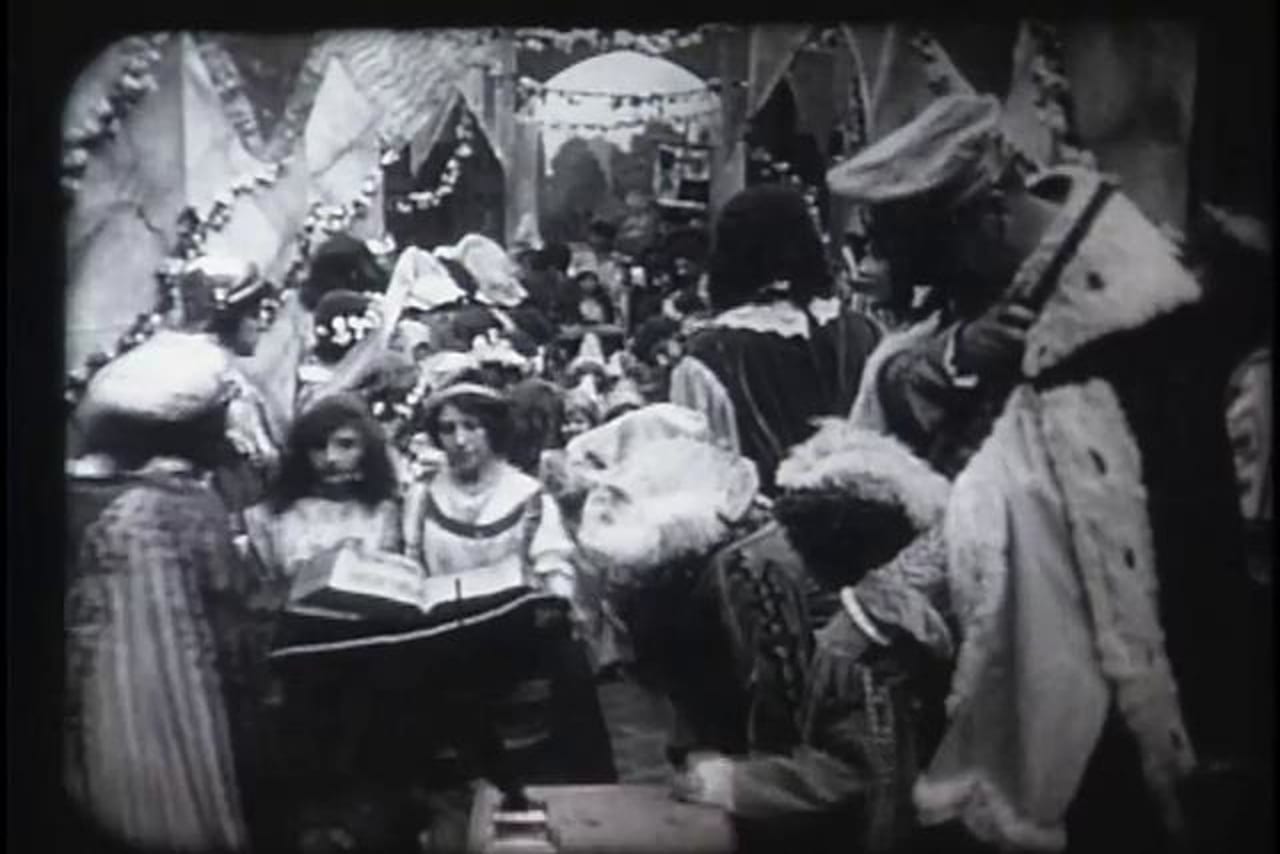
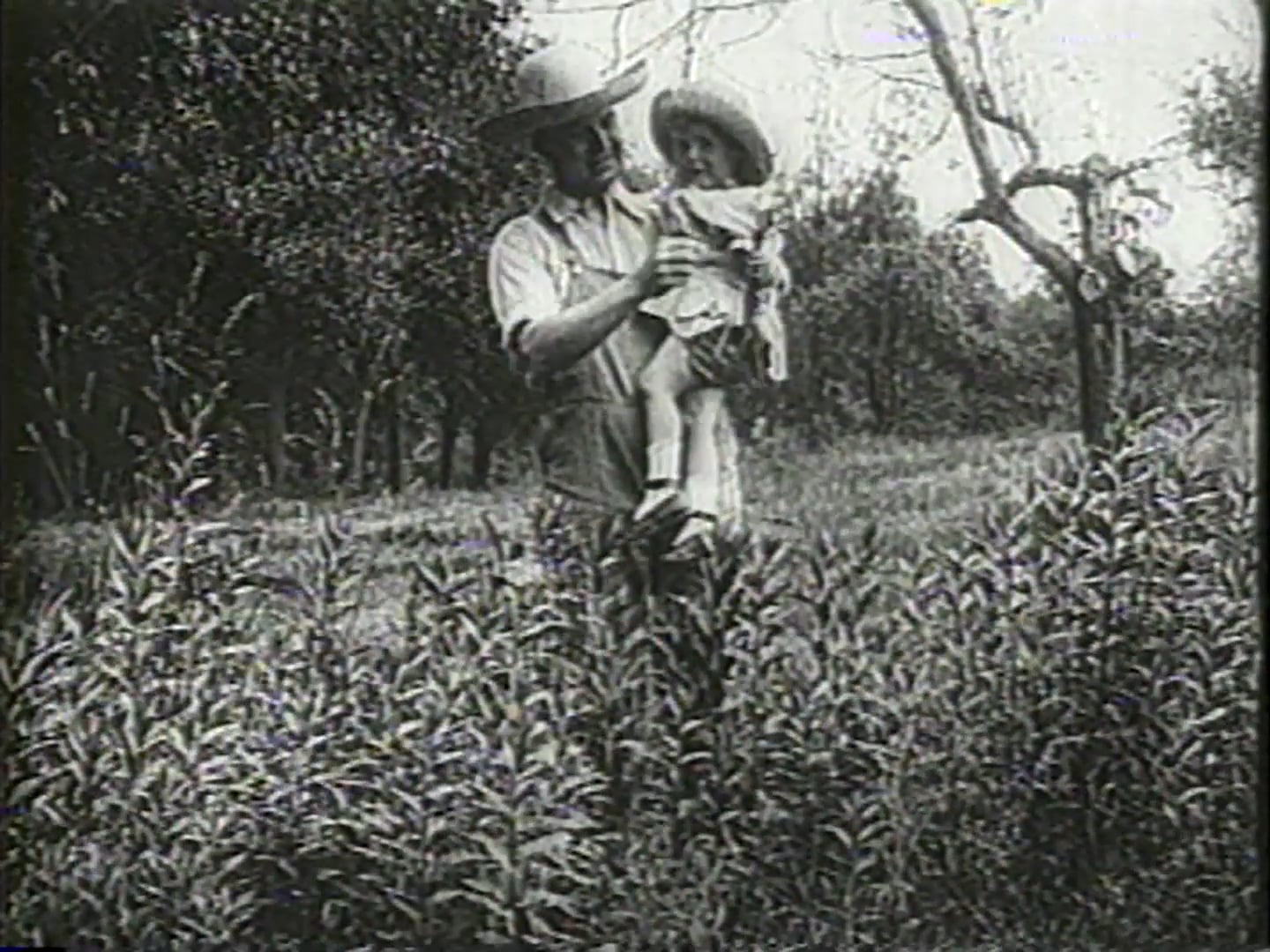
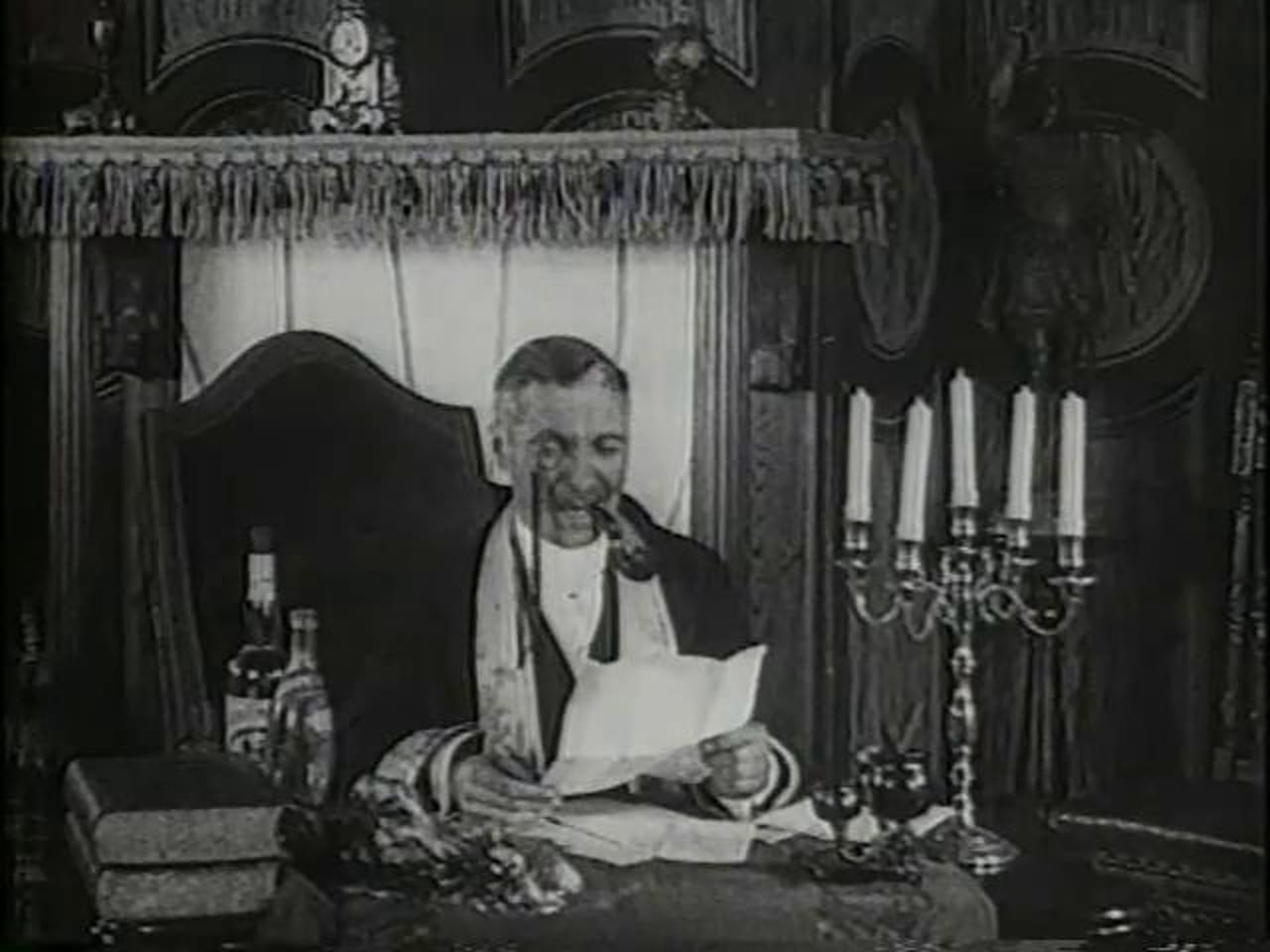
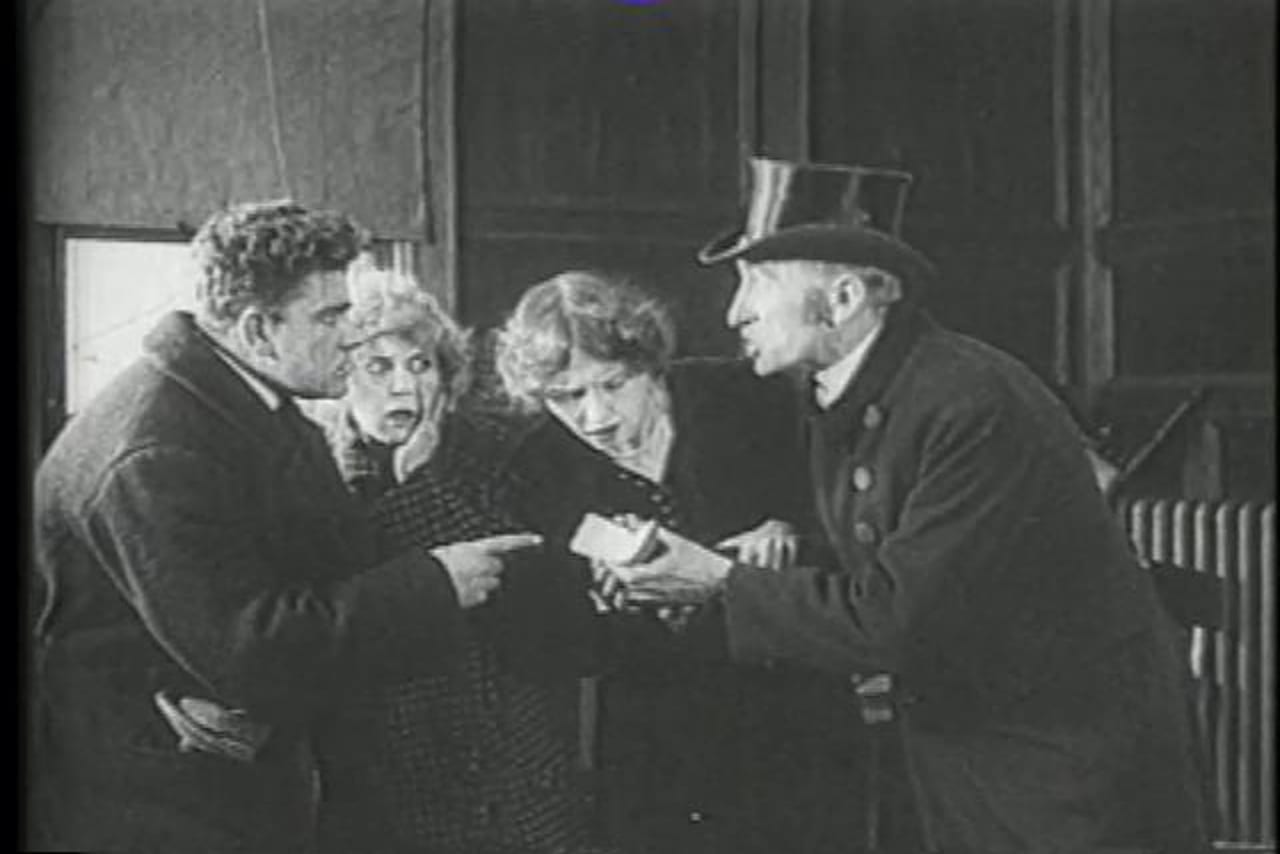
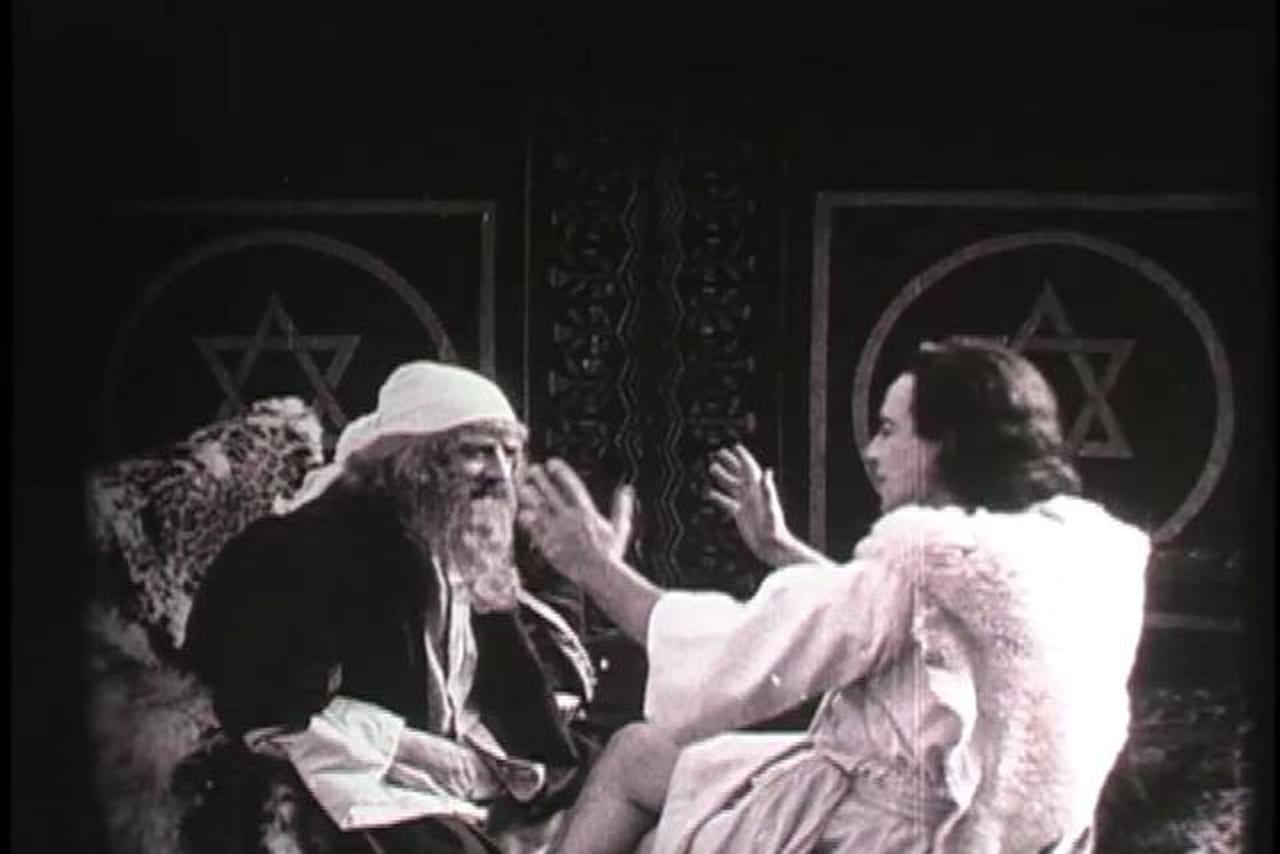
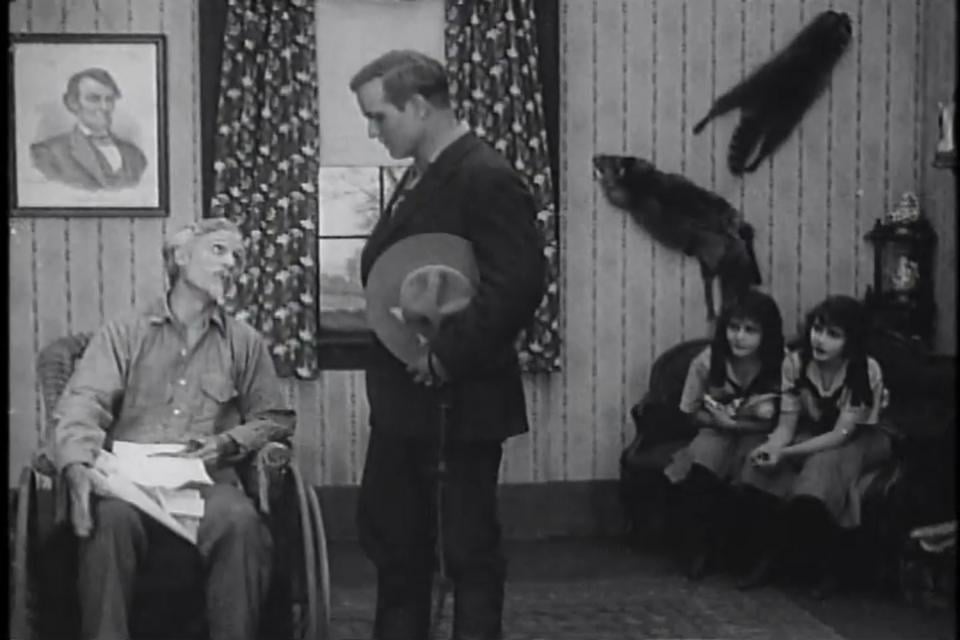
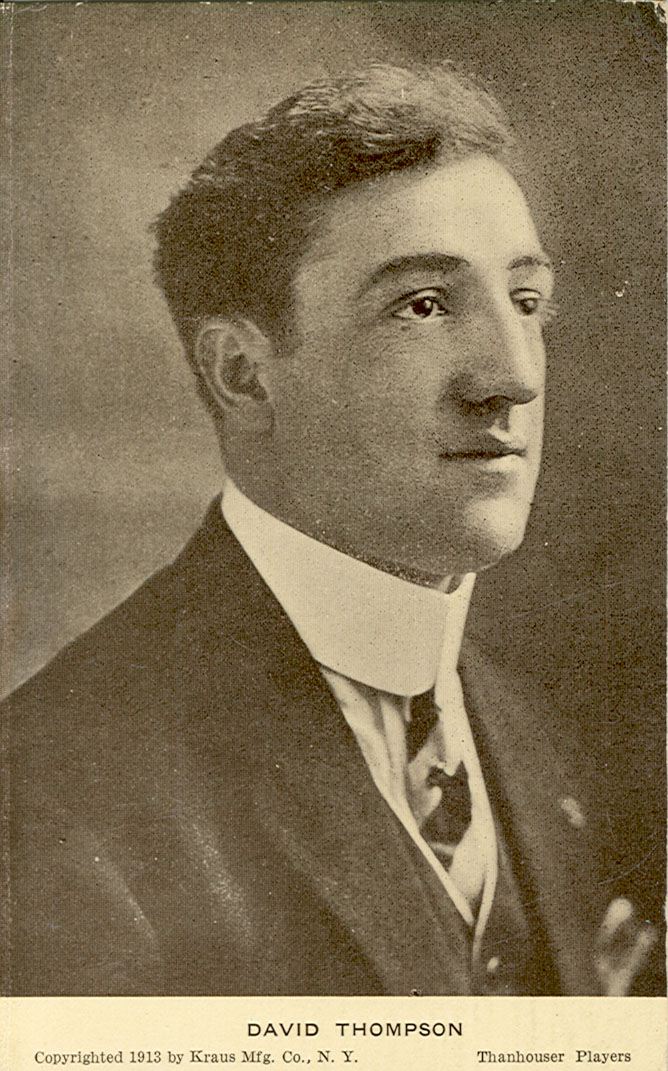
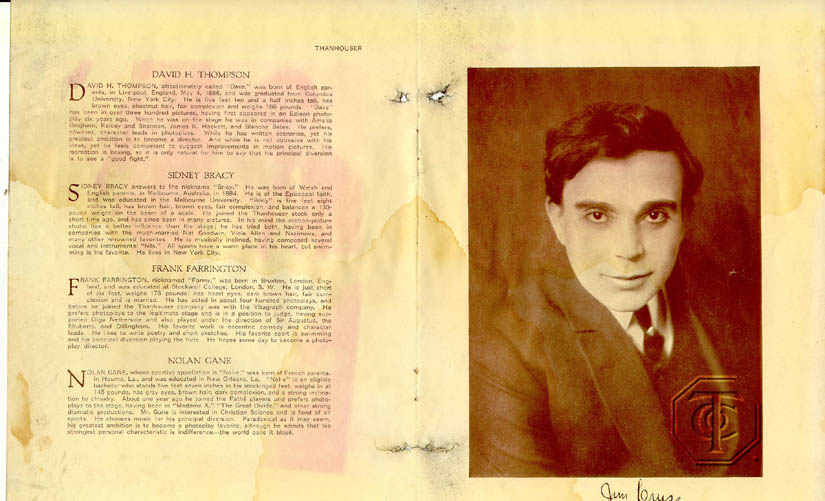
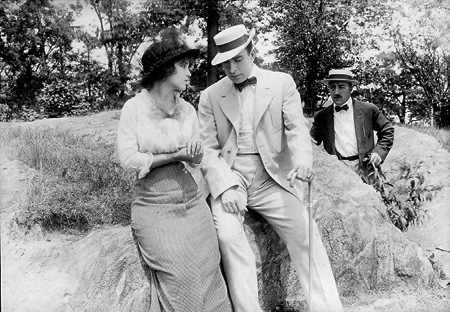
One of the relatively few early Thanhouser players with previous film experience, David H. Thompson spent a year with Edison in 1908 (according to the Photoplay Arts Portfolio) or 1910, and also a brief time with Biograph, moving to Thanhouser in 1911, an early role being that of Thomas Jefferson in the Thanhouser production of The Declaration of Independence, released on July 4, 1911. For Thanhouser he served as studio manager, although he acted in several films as well, and directed at least one, The Last Concert.
The April 3, 1912 issue of The New York Dramatic Mirror told of his intended change from studio manager to full-time actor: “David H. Thompson has resigned as studio manager of the Thanhouser Company, and on June 15 will sail with his daughter Madeline for London to tour the Continent. They will return to America in the late summer, sailing from Queenstown on August 13, after which Mr. Thompson will join the Thanhouser stock.”
His daughter, Madeline, was an actress with Thanhouser. They sailed on the Lusitania, and Mrs. Thompson’s brothers, James and Philip Brady, who were also associated with Thanhouser, went with them.
The New York Dramatic Mirror, September 4, 1912, told of his impending return to America: “David Thompson writes from Home Farm, Killarney, Ireland, that he and Mrs. Thompson and their baby daughter Madeline will sail Sunday, August 10, on the Mauritania ‘for the good old U.S.A., after a delightful trip through England, Ireland and Wales and a visit to Paris. Mr. Thompson continues: ‘I spent a most delightful time with Sid Olcott and the Kalem company here in Killarney and had the pleasure of playing the stuttering sergeant in The Kerry Gow for the Kalem company. I certainly enjoyed hearing of the nice time they had in Egypt. I met Gerald Griffin in London and he was surprised to meet me.’ Mr. Thompson looks forward with pleasure to rejoining his friends of the Edison and Thanhouser studios.”
In March 1913 he took a leave of absence to attend to his new duties as father of Denman Charles Thompson, who was named after Denman Thompson of The Old Homestead play fame, and to devote time to the New Rochelle Elks’ Lodge, of which he was the Grand Exalted Ruler. Tragedy struck, and his child died at the age of nine days. At the time, the Thompsons lived in New Rochelle at 130 North Avenue.
The Moving Picture News, January 17, 1914, told of Thompson’s frenetic activities: “Dave Thompson, the veteran Thanhouser player, is nothing if not a busy man. Recently he was appointed studio manager of the Thanhouser plant—by the way, he was Thanhouser’s first studio manager, to go back into ancient history—but he said that he wanted to go on acting. Mr. Hite, though, knew Thompson had fit himself for the post by previous experience. You see, after being the pioneer studio boss at New Rochelle, Thompson quit the job to take his family to Europe. Returning to the Thanhouser employ, he became a leading man. But President Hite, knowing the Thompson worth, arranged that he take over the managing work and play in the pictures besides. So now Dave gets all the stages in order mornings for all the Thanhouser directors, places the right people with the right producer, ‘makes-up’ and jumps into a ‘lead’ himself, finishes, washes up, orders the various stages and sets dismantled, orders used costumes returned and new ones produced, writes up the new property lists, tells the scenic artists the new ‘drops’ he wants painted and calls the people for the next day! Upon the finish of which Mr. Thompson has ‘nothing to do until tomorrow’—provided some delayed director isn’t using the studio at night!”
In August 1914 Thompson turned over the cast directorship at the Thanhouser studio to Frank Grimmer so that Thompson could return to his first love, acting. The New Rochelle Pioneer, August 29, 1914, told of the situation: “Dave Thompson [has] a chance to get back on the screen again, and its hard finding Dave now. One day you’ll locate him and he’s an English lord and the next day he’s a toiler in ditches. ‘This is the life,’ sings Dave.” In 1914, when he was with Thanhouser, the Photoplay Arts Portfolio noted: “While he has written scenarios, yet his greatest ambition is to become a director. And while he is not obtrusive with his ideas, yet he feels competent to suggest improvements in motion pictures. His recreation is boxing, so it is only natural for him to say that his principal diversion is to see a ‘good fight.’”
Reel Life, September 19, 1914, carried this item: “The Thanhouser Company announces that David H. Thompson, the popular ‘Dave’ of the Big Stage for the past year, has returned to character and heavy leads in pictures. He was unable longer to endure his exile. Mr. Thompson, because of his good judgment and knowledge of the business, was selected a twelvemonth ago to handle the extras in rehearsals, which kept him out of the films himself. But he was clever enough to tutor Frank Grimmer meanwhile, who now steps into the shoes Thompson only too gladly sheds. Everybody familiar with his work in Aurora Floyd and many other Thanhouser productions in which he has won distinction, will be delighted to see their old favorite once more on the screen.” David H. Thompson remained with Thanhouser in New Rochelle through the autumn 1914, although his tenure there had many interruptions.