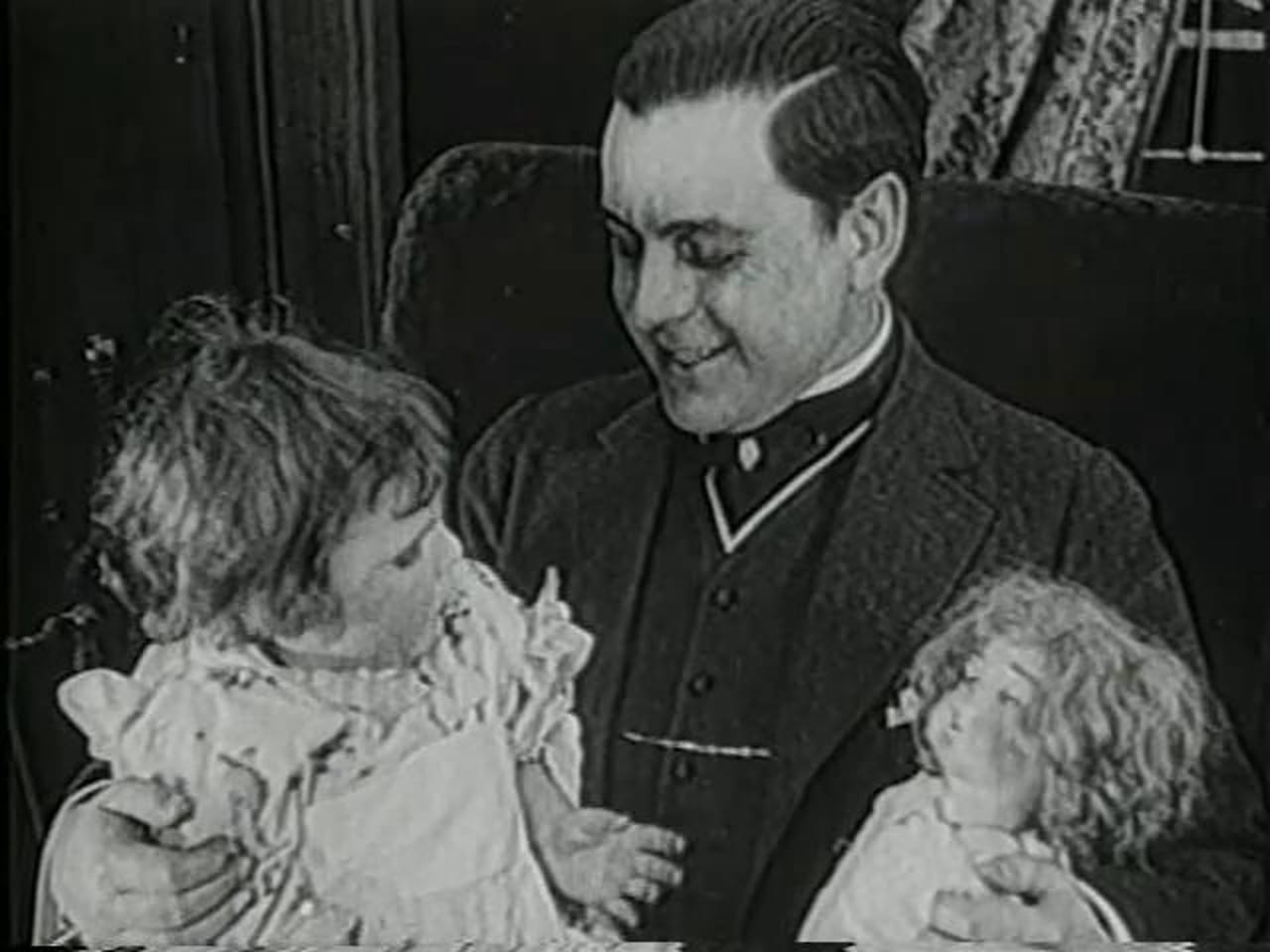
1914Thanhouser CompanyTwo reelsDrama

The Musician’s Daughter

No copy you can watch online. No print is known to survive. What follows is what does: the release, the cast, the story, and what the trade press said at the time.

The story

“The incompatibility of a true artist and a social butterfly lead to complications which result in sorrow and death and to situations which fill this photoplay with heart throbs from start to finish. After years of unhappiness for all concerned a mere stroke of fortune brings to a happy close a story of mistakes and their resultant heartaches. A wealthy violinist falls in love with a society girl. Seven years after their marriage a daughter is born, and at the age of four she is an apt pupil in her father’s art. The wife refuses to accompany the violinist on a tour and during his absence runs away with a banker, taking her daughter with her. Broken-hearted, the violinist goes to America to search for his wife and child. He fails to find them, loses interest in his playing, and years later starts a small music store. His wife, cruelly treated by the banker, realizes her mistake and dies broken-hearted, leaving her child in the banker’s care. The banker, having lost heavily in the stock market, marries a rich widow. He continues to lose and dies suddenly as the result of worry. His widow insists that the girl marry a wealthy roué, but she falls in love with a young man whom she met while playing at a school musicale. As the banker’s widow insists she marry the roué she decides to sell her violins and leave. She takes them to the store kept by her father and he recognizes one which he gave to her when a child. Identification follows, the girl marries the man she loves and father and daughter are once more together after years of separation.”

Summary from Reel Life · 11 April 1914
What the papers said

2 reviews · 2 advertisements

“Maude Fealy has written this drama, as well as acted the leading role. It is interesting and full of heart interest. A violinist and society girl marry. Then he has to leave for a Continental tour, and she and her baby are left behind. She runs away with a banker and lives to regret her rash act. On her deathbed …

Read in full · 1 min

“Maude Fealy has written this drama, as well as acted the leading role. It is interesting and full of heart interest. A violinist and society girl marry. Then he has to leave for a Continental tour, and she and her baby are left behind. She runs away with a banker and lives to regret her rash act. On her deathbed she begs the man to care for her baby. He does so, but years afterward he loses heavily in the stock market, and his second wife, left at his sudden death in straightened circumstances, tries to force the girl to marry a wealthy old scoundrel. She is in love with a young man, however, and decides to sell her violins and leave the house. She enters a small music store kept by her father, now old and broken down. He recognizes her, they are reconciled, and she marries the man she loves.”

The Morning Telegraph · 19 April 1914

“A two-part picture by Maude Fealy, who plays the lead. The incompatibility of a true artist and a social butterfly lead to complications which result in sorrow and death. The wealthy violinist falls in love with a society girl. A daughter is born and at the age of four she is an apt pupil in her father’s art. The wife …

Read in full · 1 min

“A two-part picture by Maude Fealy, who plays the lead. The incompatibility of a true artist and a social butterfly lead to complications which result in sorrow and death. The wealthy violinist falls in love with a society girl. A daughter is born and at the age of four she is an apt pupil in her father’s art. The wife refuses to accompany the violinist on a tour, and during his absence runs away with a banker, taking her daughter with her. Broken-hearted, the violinist goes to America, where fate restores his daughter to him.”

April 17, 1914 (Friday)

No Thanhouser release because of three-reel film of the preceding Tuesday.

The Moving Picture World · 25 April 1914

Advertisements2 · 11 April 1914 – 20 May 1914

11 April 1914Reel Life1 min

“Very pathetic, but a strong story of misplaced love. A happy ending brings the play to a conclusion which wipes all tears away.”

20 May 1914The New York Dramatic Mirror1 min

Reproducing a testimonial written to Maude Fealy concerning her acting: “I take the liberty to enclose you a copy of the photos which we recently had made to distribute in the Furby Theatre. Even at the present day you are Winnipeg’s favorite actress, but my only regret is that you are not appearing often enough on the screen, as there is a constant demand for pictures in which you are starring. We are presenting today The Musician’s Daughter. Your acting in this play is superb. Wishing you success and wishing to see you often on the screen in the near future,

“Yours very respectfully,

“Mgr. H.A. Morton, Furby Theatre,

“Winnipeg, Manitoba, Canada.”

Have you seen this film, or a print of it?

Prints of films thought lost still turn up in attics, private collections and archives. A record like this one is how the next one gets found.

Tell us about a print

Cast and crew

David H. Thompson as Jack, the violinist
Helen Badgley as May, age 4
Lila Chester as the wealthy widow
Maude Fealy as May, grown up, the musician’s daughter
Nan Bernard as Mrs. Van

Every name opens that person's page, with each film they appear in and which of them you can watch.

Watch instead

Films you can watch from the same company

Matched by cast, director and kind

More about this film

Bowers’ notes
  1. This was originally billed as a two-reel film, then during the editing process it was extended to three reels, according to trade notices. It is listed as two reels in various contemporary schedules, but as three reels in a series of Thanhouser advertisements, including those specifically devoted to listing the feature films of Maude Fealy. In Great Britain it was released in two reels totaling 2,017 feet. It seems reasonable that the film was actually released as a two-reeler, and that is the length given here. 2. In some schedules the release date was given erroneously as April 18th. 3. Earlier, Maude Fealy wrote the scenario for Thanhouser’s The Woman Pays (released January 27, 1914). 4. The character names of Jack and May, Lloyd F. Lonergan’s favorites, were used in this film.

From Volume II: Filmography of Q. David Bowers’ Thanhouser Films: An Encyclopedia and History, reproduced with permission and unchanged. Read the history of 1914 →

Cite as: Bowers, Q. David. Thanhouser Films: An Encyclopedia and History, “The Musician’s Daughter”. thanhouser.org/films/the-musician-s-daughter/

Where a print is held

Held by
No print known