The story
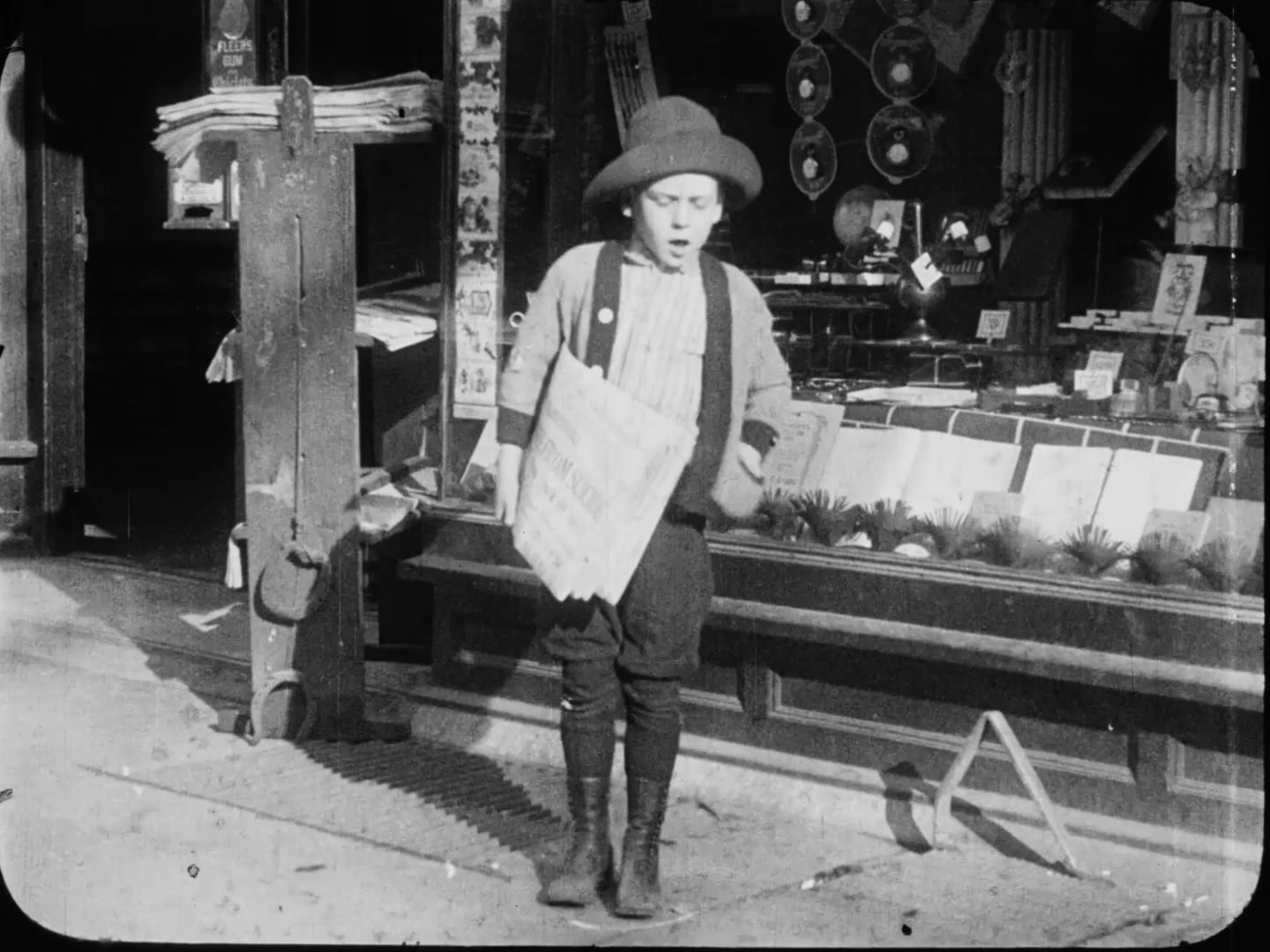
“He was a harsh and unfeeling boss, and ruled those under him with a rod of iron. His little daughter, however, was very much loved by him. In a fit of anger one day he dismissed the old clerk, who had given the best years of his life in his service, and consequently the old man faced starvation together with his grandson. He sought in vain for other employment. Straying away from her nurse one morning, the employer’s little daughter became confused and would have been run down by a motor-car but for the prompt action of the old clerk’s grandson, who, incidentally, was out on the streets selling newspapers to help grandfather. Finding that the little girl had lost herself, he took her to their own poverty-stricken rooms and fed her. The old man came home, recognized his former employer’s child, and treated her harshly. The little girl eventually won him over, and, after a bitter struggle, he sent the grandson to inform the father of the child’s whereabouts. The nurse by this time had returned home and reported that the little girl was missing. The father spent an anxious time until the messenger arrived to say his daughter was safe. His humiliation was complete when he saw who it was that had taken care of his little darling. He offered the old man money, which was proudly refused, and finally apologized for his cruelty, and asked the old clerk to commence work with him the next day. The picture closes, showing the old man and grandson celebrating; the former on the flute and the latter accompanying with the violin.”
Summary from The Cinema · 12 March 1914
Another synopsis, from Reel Life · 10 January 19141 min
“Blodgett succeeded in business simply by being heartless. He ground down all opposition. There was only one person whose wishes stood above his will—and she was his motherless baby girl, Helen. Emmet Moore, a clerk, many years in Blodgett’s employ, is discharged, merely because he is getting old—and instead of being able to support his little grandson, tables are turned, and the two become dependent upon the pennies the youngster earns by selling newspapers. One day, Moore comes into their shabby quarters to find Larrie feeding a little girl whom he has come across, lost on the streets. Moore recognizes Helen Blodgett, and angrily tells ‘the kid’ to ‘get out.’ His frowns, some way, and the new tone of voice—for she has never known anything but kindness—intensely amuse the child, who climbs into the old man’s lap and announces that she likes him. His rage vanishes—he cares devotedly for little Helen, while Larrie is sent to notify her father. When Blodgett comes, and sees the good turn his discharged clerk has done him, he is stricken with remorse. Moore receives back his old position—and his employer assures him that he has a life job.”