1913Thanhouser CompanyOne reelDrama

Psychology of Fear

No copy you can watch online. No print is known to survive. What follows is what does: the release, the cast, the story, and what the trade press said at the time.

The story

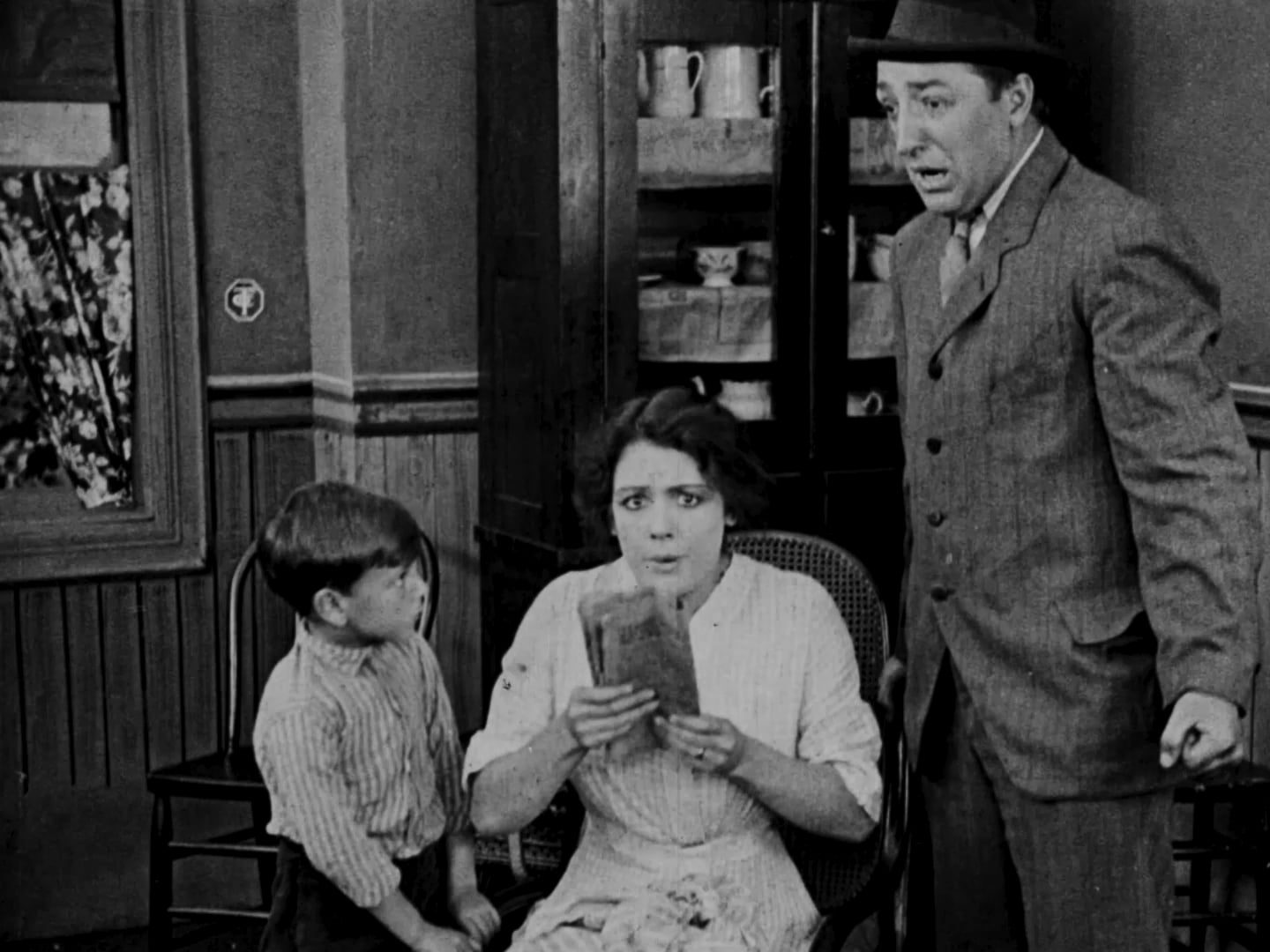
This subject takes up the problem of a sea captain who wishes to cure his ten-year-old son of a fear of the dark. The lad will not go to sleep unless the gas is left burning in his bedroom. In his effort to stamp out the boy’s fear, his father turns out the gas, paying no attention to the lad’s screams. In the night a dishonest sailor climbs through the window of the boy’s room and picks up some valuables there. The boy awakes and screams for help. The father, hearing him, thinks the boy’s calls are impelled by his fear of the dark and will not go to his room. The sailor escapes through the window, but in doing so, makes so much noise that the sea captain is aroused and captures him. Going to his son’s room the captain finds the lad in a faint. The physician who is called in examines the boy and states: ‘The boy will recover, but the fear of the dark will be with him always.’

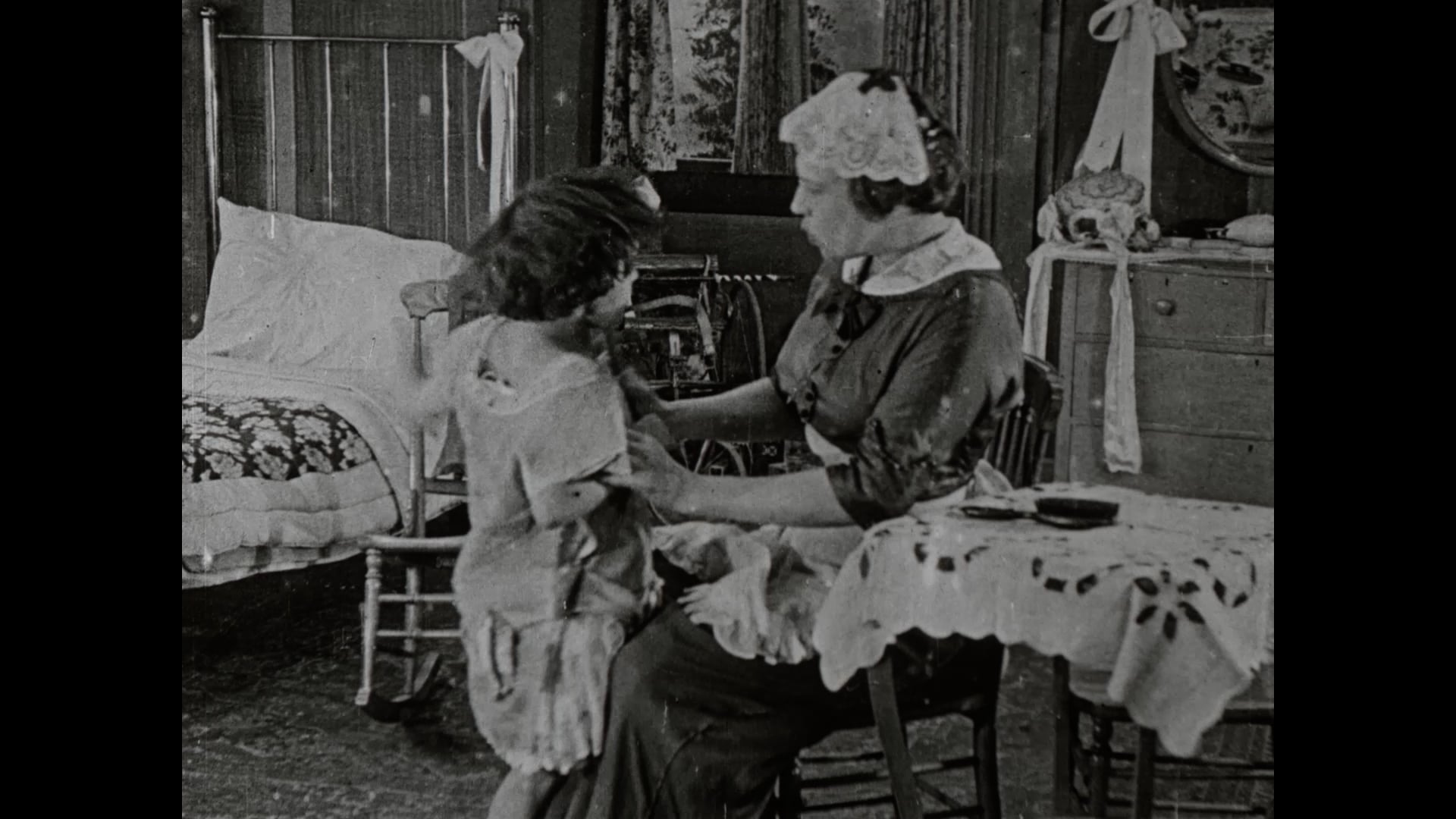
The picture then shows the boy grown up and in love. Invited to a party at his sweetheart’s home, a game of ‘blind man’s buff’ is proposed, he is selected as the blind man. He is blindfolded, the lights are turned out, and when the bandage about his eyes is removed and he finds himself in the dread dark, he cowers noticeably. The young people jeer at him and the girl, ashamed, breaks off the engagement. Then the girl meets with an accident that threatens her eyesight and she is forced to remain in a darkened room. Her sweetheart forgets her treatment of him and keeps her company in the room, where his patience does much to calm her fears of total blindness. In the end her eyesight is saved. The boy who had feared the dark finds that he had won back his love—through his vigil by her side in the darkened room—won his fight with the darkness fear.

Summary from The Moving Picture World · 1 February 1913
What the papers said

3 reviews

Underlying the story there is a depth of meaning which the average spectator may not comprehend, but nevertheless to the thinking the play is one of serious intent and one which will be remembered long after many others have long since been forgotten. A little boy has an inherent fear of the dark, and one night his father attempts to …

Read in full · 1 min

Underlying the story there is a depth of meaning which the average spectator may not comprehend, but nevertheless to the thinking the play is one of serious intent and one which will be remembered long after many others have long since been forgotten. A little boy has an inherent fear of the dark, and one night his father attempts to break him of it, but the lad screams with fright when the light is turned off and he is left alone. A burglar enters the room and the boy again screams for help, but his father thinks there is really nothing wrong and does not go to him until he hears of the burglar. The boy is found in a faint and the doctor declares that he will always have a fear of the dark. Years later at a party he is asked to play blindman’s buff, and when it is his turn to be blindfolded he acts the coward. He is made fun of, and his sweetheart breaks off their engagement. But later she is stricken temporarily blind, and here the lover overcomes his fear of the darkness and sits with her hour by hour and comforts her, and thus he conquers his own weakness and helps her at the same time.

The Morning Telegraph · 2 February 1913

A conception, not entirely new, but well acted and attractively pictured. The hero is terrorized at being in the dark, through a fright received as a child. Yet he overcomes his fear for the girl he loves and remains for days with her in the dark room while her eyes are being treated. A good photoplay of its type.

The Moving Picture World · 8 February 1913

More reviews

29 January 1913The New York Dramatic Mirror1 min

That love can be made the means of conquering the innate weakness of fear is the argument made in this photo drama. The producer and author have sidestepped the possibility of dealing with the idea as an abstract problem. Rather have they acted upon the broad hypothesis, popular in many minds, that love can conquer almost anything from scarletina to conceit in a play that is not impressive, except occasionally. At certain stages it is almost absurd in the argument it sets forth. A case in point being where the boy enters the dark room of his sweetheart. Here love is supposed to conquer fear, yet we cannot understand at the outset why the boy should be there. The girl has broken with him beforehand. Who is it that calls him at this time? Surely not the girl, and yet he acts as if her very life depended upon his entrance.

Have you seen this film, or a print of it?

Prints of films thought lost still turn up in attics, private collections and archives. A record like this one is how the next one gets found.

Tell us about a print

Cast and crew

Cast
David H. Thompson as the eye specialist

Every name opens that person's page, with each film they appear in and which of them you can watch.

Watch instead

Films you can watch from the same company

Matched by cast, director and kind

More about this film

From Volume II: Filmography of Q. David Bowers’ Thanhouser Films: An Encyclopedia and History, reproduced with permission and unchanged. Read the history of 1913 →

Cite as: Bowers, Q. David. Thanhouser Films: An Encyclopedia and History, “Psychology of Fear”. thanhouser.org/films/psychology-of-fear/

Where a print is held

Held by
No print known