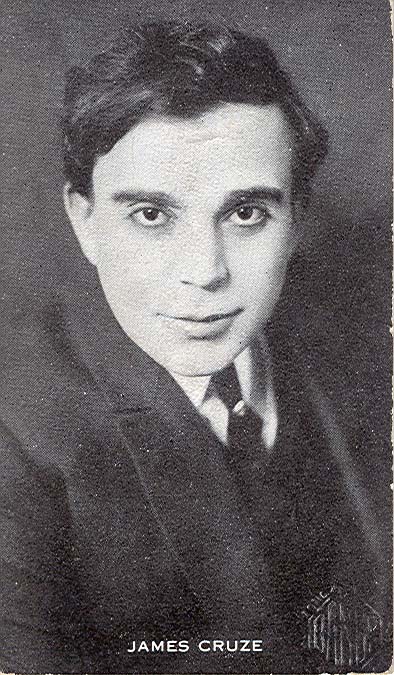
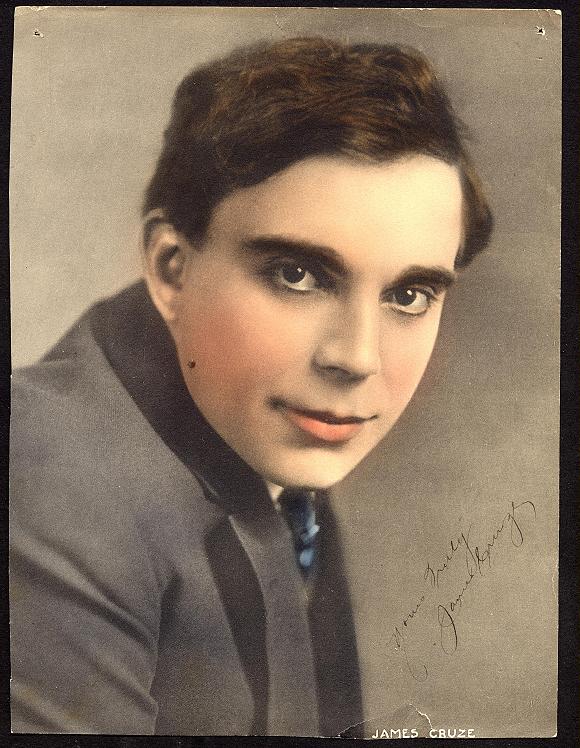
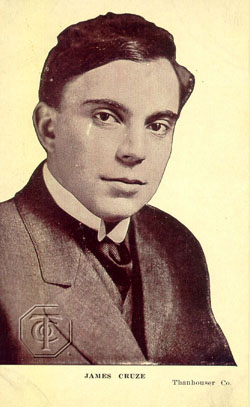
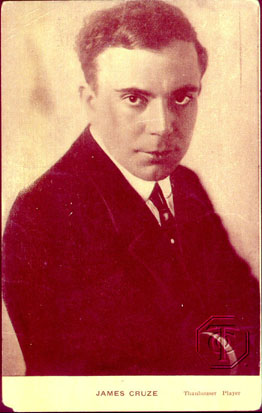
When Edwin Thanhouser returned to New Rochelle in early 1915, he made it clear to James Cruze that his services were no longer needed with the firm, and by that time the actor was seeking a change anyway. On May 15, 1915, he and Sidney Bracy, also formerly of the Thanhouser studio, left New Rochelle with mechanic Abraham A. Meltzer and a cameraman, and headed west on a self-arranged publicity tour.
The Evening Standard, May 15, 1915, told of a send-off event: “All Thanhouserville turned out last night to dance before James Cruze, Peggy’ Snow, and Sidney Bracy, who are leaving the Thanhouser force, go to California. About 300 were there, most of them in white flannels and the women in simple white ideal costumes for warm weather dancing. It was one of the jolliest affairs ever held by Thanhouserites, and through it all there was a strain of regret for the severing of ties, some of which have lasted five years or more.
“The reception was announced originally as a send-off’ to Messrs. Cruze and Bracy, but it turned out to be really a farewell party to Peggy’ Snow (Mrs. Cruze), who expects to start tomorrow for California, where she is to become leading woman for Francis X. Bushman, star of the Metro Company. Of course, her husband and his partner, Mrs. Bracy, received their share of attention, but Pretty Peggy’ was the lode star. Thanhouser people and their friends made up the company. Mr. and Mrs. Edwin Thanhouser and the heads of the concern, including scenario writers and editors, directors, laboratory and mechanical experts and their wives, were present.
“A good orchestra furnished the music. Miss Marie Dressler, the comic opera star, sang several songs. Then there were baritone solos by Bruce Weyman, a violin solo by Mrs. Morgan Jones, the sextette from Lucia by the orchestra led by Mr. Bracy, and a selection by a quintette composed of Miss Fanny Bourke, Mr. Bradley, James Dunne, Morgan Jones, and Mr. Weyman. Eugene Moore was master of ceremonies. The grand march was led by Mr. Cruze and Miss Snow, with Mr. and Mrs. Bracy next. Two large silver cups were awarded, one to Miss Rene Farrington, who had the lucky ticket, and to Miss Marguerite Zauner, who danced with Dr. Addison Jones, secretary and treasurer of the Thanhouser Film Corporation. The committee in charge of the affair consisted of Chris Krooss, John Lehnberg and Lors McKascle [Lord McCaskill].
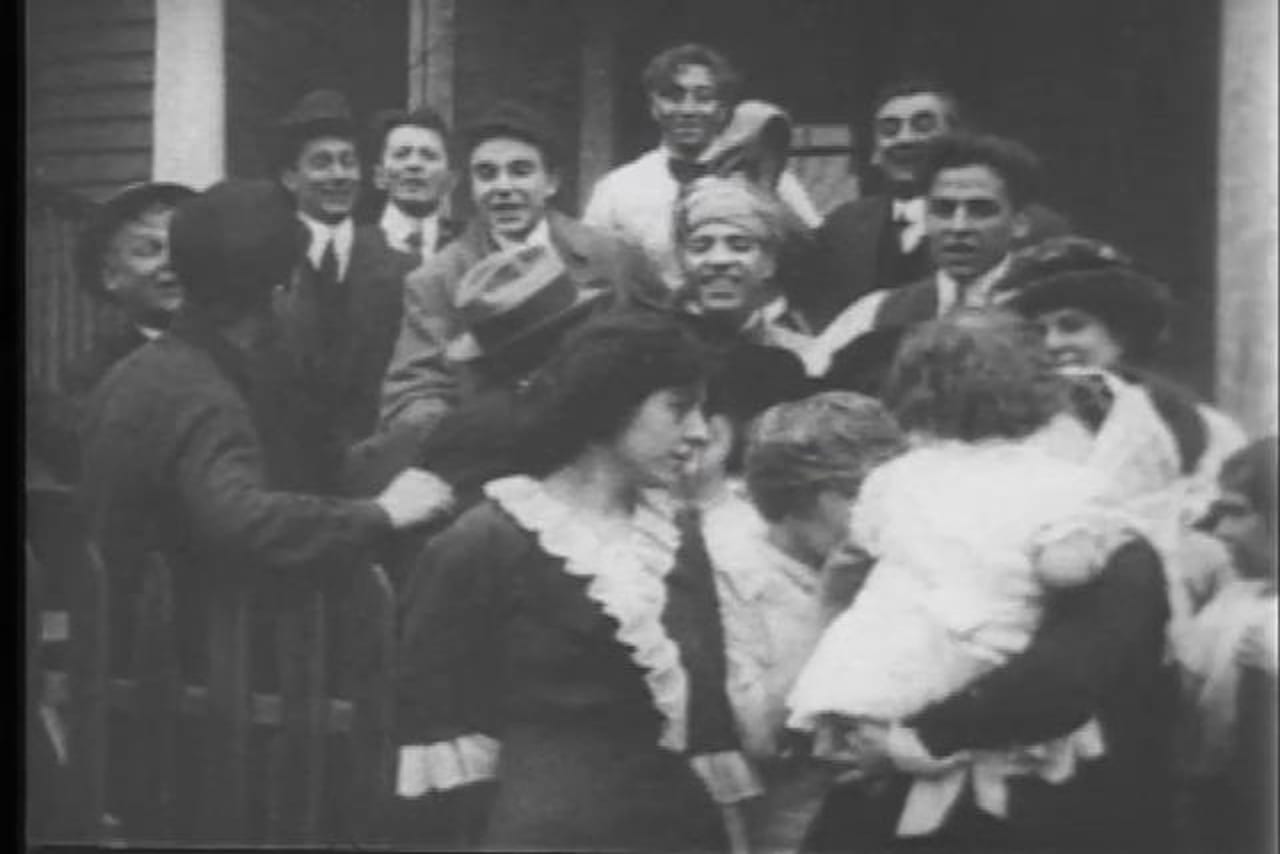
“Messrs. Cruze and Bracy, in khaki suits, puttees and white hats, started out in their gray car at 10:45 o’clock, this morning, on a trans-continental tour to San Francisco. The car is driven by Albert [sic] Meltzer, who is to accompany them all the way. A crowd of several hundred were at the studio when they started, and there was great hand-shaking, waving of hats, cheers and shouts of Good luck,’ kissing of babies and wives before the movie camera. The pictures are to be rushed to the first stop at Poughkeepsie, where they are booked to give an entertainment. On either side of the car the travelers had a blue pennant bearing the inscription: Cruze & Bracey, New Rochelle.’
“Accompanying the car for some distance rode little Doris Farrington in cow-girl costume on a gray horse. Following the car came seven-year-old Leland Benham, son of Mr. and Mrs. Harry Benham, made up as Charlie Chaplin,’ in a little push-mobile, labeled Frisco or Bust.’ He busted’ 100 feet from the studio when one of his rear wheels came off. A large silver cup called the Friendship Cup,’ was presented to him. Messrs. Cruze and Bracy are to play in 100 theatres on the way to the coast, where they expect to locate the motion picture business. Mrs. Cruze is to arrive before them. Mrs. Bracy intends to join her husband later.”
The South Bend Tribune, June 4, 1915, told of an early stop on the trip: “The visit of James Cruze and Sidney Bracy to South Bend today is an event in motion picture circles. Their appearance, talks, and reception at the LaSalle Theatre at the afternoon and evening performances, gives many an opportunity to see and meet them, who have followed their screen adventures with much interest. Probably no other two photodrama players have appeared before so many picture patrons in the same length of time as did these two clever actors during the successful run of The Million Dollar Mystery. Mr. Cruze is remembered as the fearless newspaper reporter and Mr. Bracy appeared as the faithful butler who turned out to be the father of the harassed heroine.
“They arrived from the east by automobile this morning and tomorrow will continue their journey to the Pacific Coast. While here they will visit a number of points of interest about the city. This evening the management of the LaSalle Theatre will entertain them at an informal dinner at the Oliver Hotel at which will be present a number of South Bend newspapermen.”
The following unattributed article is dated June 1915 and is preserved in the Robinson Locke Collection: “Adventure?’ queried Jim Cruze, as he shrugged his broad shoulders. Adventure—eh, Sid?’ Sidney Bracy wrinkled his brows and looked more mysterious than he did during the episodes of The Million Dollar Mystery. Maybe this little motor jaunt from New Rochelle to San Francisco is an adventure,’ Bracy admitted, but, tell the gentleman, Jim, about the aeroplane down in St. Augustine.’
“Or the hydroaeroplane over Long Island Sound,’ Cruze added. It was this way: Peggy Snow, Sid Bracy, Florence LaBadie and I were working down in Florida, and we were among the first to use aerial thrillers. I came to like the sport, and particularly as one friendly aviator had the proper amount of dare-devil pep to try anything once. Ever looked down on the sordid world from a height of a mile? Well, the horizon is up even with your eyes, and it’s just like a great bowl—with you in the middle. You stay still; the scenery moves. Sometimes it just wafts springing down the Grand Central concourse to make the nine-fifty-three. I don’t know how many times I had gazed down on historic St. Augustine—twenty, maybe. And that day—the big day—I was booked for another flight. It was getting to be regular and commonplace. But a telegram interfered at the last minute; an old dramatic friend was coming from Atlanta to see me—had wired enroute. Of course, I tarried. The birdman went up without me. I was at the railroad station when it happened. Sid, here, came racing up to me. He had a green ring around his mouth and his face twitched. He stuck out a hand and said, Congratulations, Jimmy.’ Because the train’s three hours late?’ I asked disgustedly. No,’ he responded, rather hysterically, but because the aviator made it head-on from three thousand feet—and landed head-on. They are picking up what’s left of him for the coroner now!’
“Jim would take those chances,’ Bracy admitted gravely. When they had put on their hydroaeroplane stunt for the Mystery, the aviator insisted on showing Jim some of the Lincoln Beachey stuff. He stopped his engine a mile high, and dropped straight down. When they do the big volplane, they are supposed to turn on the power. Well, the engine was dead. I saw em, and Peggy and Florence saw them, and we stopped breathing. They seemed to be almost on the water when the spark started—but they hit hard enough to hear it a thousand yards. Jim walked wobbly for two days. Had it been on land—well, it wouldn’t be Cruze and Bracy doing the transcontinental now.’
“He was one of the very best directors in the movies,’ observed James Cruze, of the Thanhouser Film Corporation and Million Dollar Mystery hero, as he and Sidney Bracy passed Greeley Square in New York, and glanced at the statue of the pioneer journalist. He said, Go West, young man, go West’—and they went, and played the original cowboy roles. My dad heeded the admonition, Cruze continued, and that gave me my start in life in Utah. Say, Sid, it would be great to go West again—in a prairie schooner—or a motor.’
“Bracy, who was Jones, the butler, as well as Hargreave, in the Mystery, sensed the spirit of adventure—and that’s how it came about. From coast to coast, winding up at the big fair in San Francisco, marks the new adventures of Cruze and Bracy—who have permitted their car to pay its respects to the Atlantic, by backing it into the surf—and who will eventually introduce the same car to the waves of the Pacific at the trail’s end. And in the meantime, Cruze and Bracy will stage an act before the white screen in picture theatres—a clever little movie act, that will be just the same as another movies, except for the patter and the absence of clicking of the projecting machine.
“But it isn’t simply a holiday affair. There are bets on—double, triple and other kinds of bets—all tied down to a schedule, and carrying with them some of the hard-earned Mystery dollars. The pair will appear locally in the near future—and just what their act is to be is shrouded in mystery. They got the mystery habit in New Rochelle, and they are sticking to it.
“On their trip, they will keep two diaries; one will be written and the other will be photographic. They will appear in more than a hundred theatres—and will not respect the clock or the weather on their journey. They have acted on Horace Greeley’s advice—and their final appearance will be at the big exposition, after which they will settle down once more in the films—just which depending on their choice of several offers tendered them by Western studios.”
The same trip was the subject of an article by Martha Groves McKelvie, in The Motion Picture Story Magazine, October 1915, which was written before Bracy had to go back to the East from the Midwest: “James Cruze and Sidney Bracy stopped in our town the other day, on their famous transcontinental vaudeville tour. Thru their manager I learnt that, if I should come to the theatre between two and three o’clock in the afternoon, they would tell me something of their trip.
“Did you ever interview a famous person? Well, if you have, you know that stage fright is milk compared to interview fright. I had a clear case of it as I approached the theater, promptly at two. The manager guided me to the rear of the theatre, and before my eyes had become accustomed to the darkened room I heard him saying: Mr. Cruze, this is Martha Groves.’ The man who arose from the dark rear seat was so big that for a moment I had to just look at him. It took a firm, honest handshake to wake me up.
“Big Jimmie’ Cruze has so excellent a handshake that methinks he would have made a good politician, except for the fact that his is an honest one. I have shaken hands with many famous politicians, have listened to I am so glad to meet you’ that I catch myself murmuring it before they say it. They never, to use slang, get it across’ with me. But I am forced to admit that James Cruze did. Honestly, I actually believed that he was glad to see me. And when he said, It is nice to have some one to talk to,’ I surrendered, and Big Jimmie’ had won another firm friend. I know that the ring lost a fighter when James Cruze decided to be a movie actor: I know that some political party lost a dandy good handshaker, and I know that the speaking stage lost something more, for to me one of the most charming things about James Cruze is his voice. You, who see him on the silent stage only, are deprived of a lot. He is so enthusiastic about motion pictures that I doubt if he will ever return to the speaking stage.
“He and Mr. Bracy are having a glorious time on their trip, in spite of the fact that in the thirty days since they left New Rochelle they have had twenty-eight of rain and hail. Nevertheless, they have not missed a single engagement at a theatre. While traveling thru Iowa they were caught in a fearful hailstorm. Mr. Cruze was inclined to believe that the hail he encountered was as large as the proverbial egg (and harder). Since it was impossible to continue until the storm abated, they stopped their car under a roadside tree. Almost immediately the tree was struck by lightning. Uninjured—but in some haste—they sought shelter in a farmhouse. I don’t think Mr. Cruze mentioned their stopping for permission to enter. He just said, We rushed into the house and found the family on their knees praying.” I guess the family thought their prayers for protection had been answered when they looked up and saw the two heroes of The Million Dollar Mystery standing in the doorway. That night they slept rolled upon their motor rugs on the farmhouse floor.
“I intimated that I didn’t believe the roads would improve as they traveled west, but they were optimistic. Now here’s a secret—James Cruze plans to play hooky’ all along the line! At least, he asked me if I knew of any good places to fish near the main road. This doesn’t mean that they are traveling slowly. On the contrary, it’s a rare morning when they don’t motor one hundred miles and get to some town in time for a matinee.
“After I broached a new subject, I understood why Jimmie’ was optimistic about the road ahead. The subject was Mrs. Cruze (Marguerite Snow) and Baby Julie, and right here I found out another thing: the husband of Mrs. Cruze and the father of Julie has an especially beautiful smile reserved just for this subject. Mrs. Cruze and Julie are now on the Coast, and Jimmie’ will probably make a new transcontinental record because of it. He mentioned an especial spot in Hollywood that he has selected for a building site; and, altho he admits that Hollywood is his future home, his other plans are secret.
“He told me something interesting about Julie. You no doubt remember that motion pictures were taken of the Cruze and Snow wedding. And now, at intervals, a film is taken of Julie. The first was a taken when she was a week old, showing her nurse bathing her. A recent one was taken, in which a frisky pup unexpectedly dashed into the picture and dragged protesting Julie, by her single garment, out of the camera range. These films and those to be taken will be joined together and sealed. And when baby Julie is of age she will see herself in all her growing stages, just as her parents have seen her. Then she will understand why they adore her. I envy Julie the possession of such a treasure. I happened to mention, during the interview, the happiness of a man I knew. James Cruze said, He should be happy—he has a wife and baby.’ This is James Cruze’s idea of perfect happiness. He is a homey kind of fellow.
“At this point in the conversation Mr. Bracy entered. Mr. Cruze called, Oh, Sid!’ and when Mr. Bracy approached, introduced us. First impressions are usually good ones, and although it has been several days since I met Mr. Bracy, I am still impressed with his sincerity. Little time was left before their act, but Mr. Bracy stopped long enough to admit that they were enjoying their trip. He said their car had changed greatly in appearance since they left New Rochelle, due to the fact that in all the towns where they have stopped, people have written, painted or carved their names on it, until at present it is literally covered. In response to my question as to what had been the greatest inspiration and help in his work, Mr. Bracy said that he had enjoyed and derived the most help from letters received from old people. Of course, he likes to receive them from young people also when they are serious in tone.
“The motion picture of their start from New Rochelle was now thrown upon the screen. Mr. Bracy immediately began criticizing his own work. An occasional Now, why on earth did I do that?’ came from his corner. I found him to be a stern critic indeed where Bracy is concerned. As it was nearly time for their appearance, I arose to say good-by, and left them with the thought that while some of the stars stay in my memory as actors first and men incidentally, I should always think of these two as men first and actors incidentally.”
More on the trip was printed in The Spokane Review, July 11, 1915, from information sent in advance by the actors. By this time, Bracy had left the westward trip and had returned to New York, although this was not reflected in the advance article: “James Cruze and Sidney Bracy, former stars of the film serials, The Million Dollar Mystery, who will be in Spokane at the Liberty Theatre for one day, July 22, are the first moving picture actors of prominence to visit the city in the flesh. In pictures they are widely known in Spokane.
“They are making a 5,000-mile transcontinental trip by automobile, accompanied by a mechanic and cameraman, and are having some novel experiences. The cameraman has caught a great many of these, and they will be shown at the Liberty during the visit. The stars will appear in a 45 minute sketch at each performance, and their offering is said to be a distinct novelty. Mr. Cruze played the part of the reporter hero and Mr. Bracy the double role of Hargreave and Jones, the butler, in the serial. A feature of their appearance will be a reception at which all film friends of the two actors will be given an opportunity to meet and shake hands with them. They left New York May 15 and the tour will terminate at the Panama-Pacific Exposition.”
The Spokane Review, July 23, 1915, told of the visit: “Burned brown and dressed in canvas khaki jacket and trousers and leather stockings, with a dusty peaked cap, James Cruze, moving picture star, best known to movie fans as Jimmy Norton, the reporter hero of The Million Dollar Mystery, arrived in Spokane at 2:15 yesterday afternoon, having been obliged to come by train from Coeur d’Alene, where his big 60 horsepower Lozier broke down yesterday morning on the transcontinental tour. Without even waiting to wash Mr. Cruze stepped on the stage at the Liberty Theatre before a crowd that packed the playhouse and filled the foyer.
“Cheers greeted him as he appeared, and hundreds shook his hand in the lobby after the performance. The matinee girls were out in force, and swarmed about the picturesque actor, the first moving picture star of the first water who has visited Spokane. Mr. Cruze smiled upon them all, chatted with many of them and kissed the babies, who were present in considerable numbers. The reception, which will be a feature of each show during his two days’ visit, was in the nature of an ovation.
“Since leaving New Rochelle, N.Y., May 15, I have shaken hands with 292,000 people, not counting the last three towns,’ said Mr. Cruze yesterday. My secretary, who stands near, has a ticker and keeps accurate count. The muscles of my right arm are almost paralyzed. My car, which I hope will be here in the morning, is the feature of our trip. It bears the signatures of 10,000 people who got near it during the various stops.’
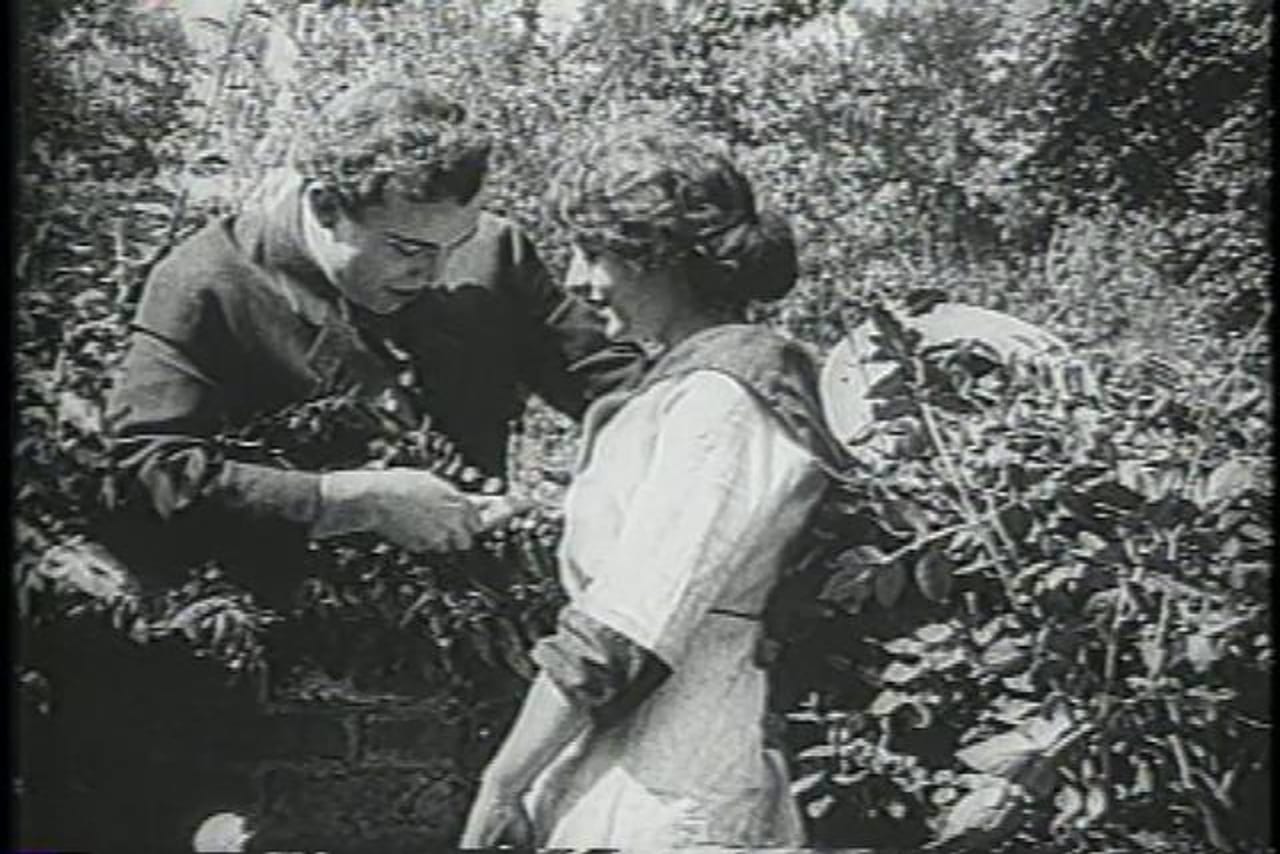
“Mr. Cruze is a virile type out of the pictures, with brown eyes, dark hair and an athletic figure, which his khaki suit sets off to splendid advantage. He shows his first scenario, In a Garden, and calls special attention to one scene in which he proposed for the first time to Margaret Snow, the countess of the Mystery, who is now Mrs. Cruze. He calls her Peggy,’ as do most of her friends. Mr. Cruze played on the Orpheum time here in On Stony Ground five years ago, just before he went into moving pictures. His home is in Ogden, Utah, and he toured the west and Spokane with his own repertory show several years ago. He played stock in Boise for a year, and calls the West his home.
“The nerviest thing I have been called upon to do in pictures was to fly an aeroplane after three days’ practice,’ said Mr. Cruze. It was in the Mystery. I took Florence LaBadie along with me and we were in the air 17 minutes. An army aviator coached me for three days beforehand, although I had frequently been up with other birdmen. The nastiest thing I had to do was to drop down a sewer manhole and float out the sewer outlet. On one occasion I had to swim the Hudson at West Point when I had to break the ice ahead of me. Some cold, believe me! In my last picture, Patriot and Spy, I had to drop from a high bridge into water when it was far below freezing.
“The only place to sell a scenario is to the producing company. The producer will take any available scenario and his editors will put it in shape for presentation if worth anything. It is not necessary for the writer to map out all the scenes, as the scene plot will doubtless have to be revised in any event. There is no hard and fast rule for writing scenarios. A clever writer may launch out on an entirely new method and score a tremendous success. Nearly all the newspapermen who have tried writing scenarios have made a success.’
“Mr. Cruze will leave the city tomorrow evening. During his stay in the city he announces that he will be glad to meet any who are interested in entering the motion picture business, either as actors or writers. He can be found at the Liberty Theatre or at the Spokane Hotel. In Los Angeles he is to join a large new company, just being organized, and expects to spend two years at Hollywood. Mrs. Cruze, he states, is now starring for the Metro company and will soon be shown in Spokane.”