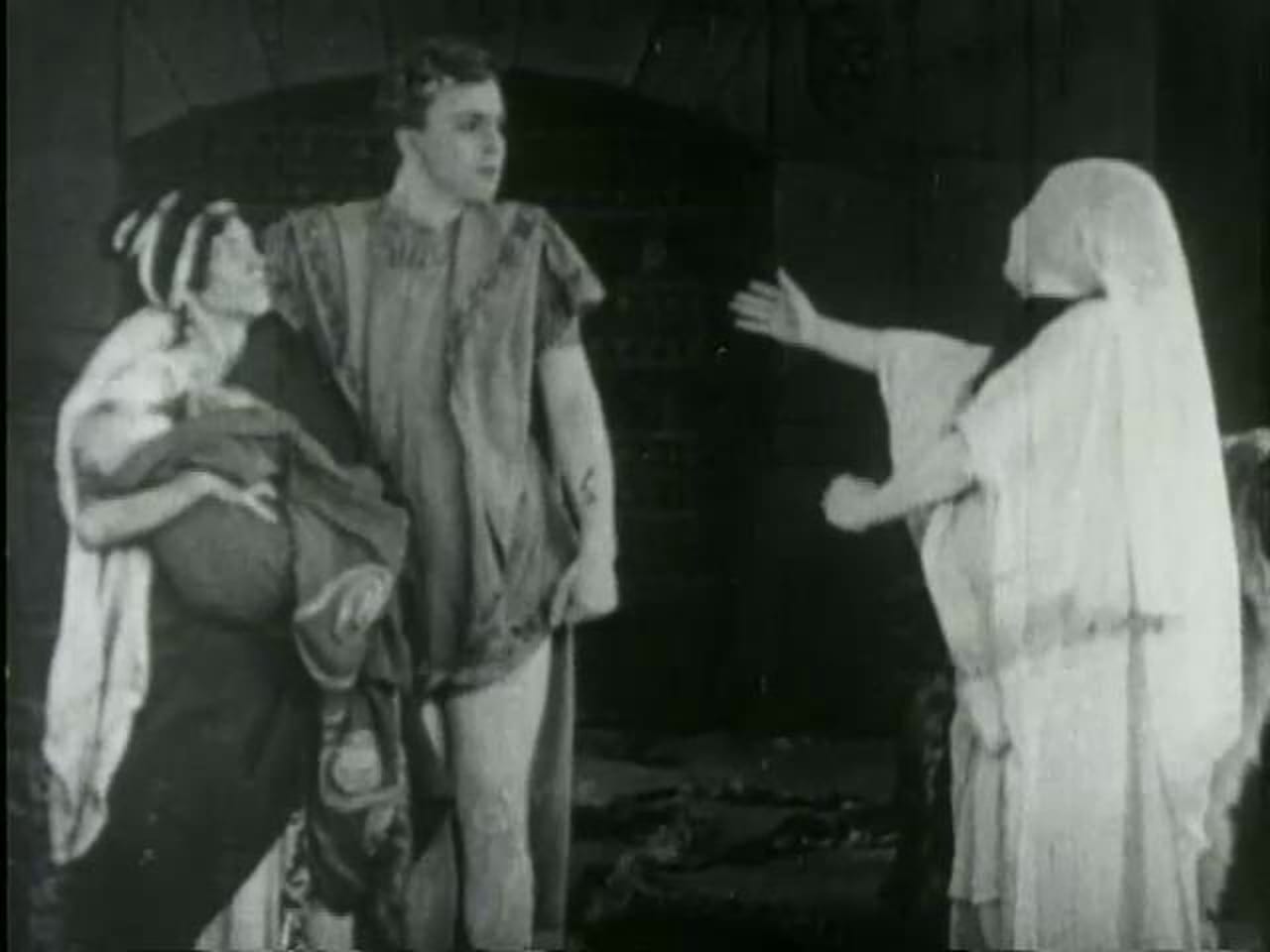
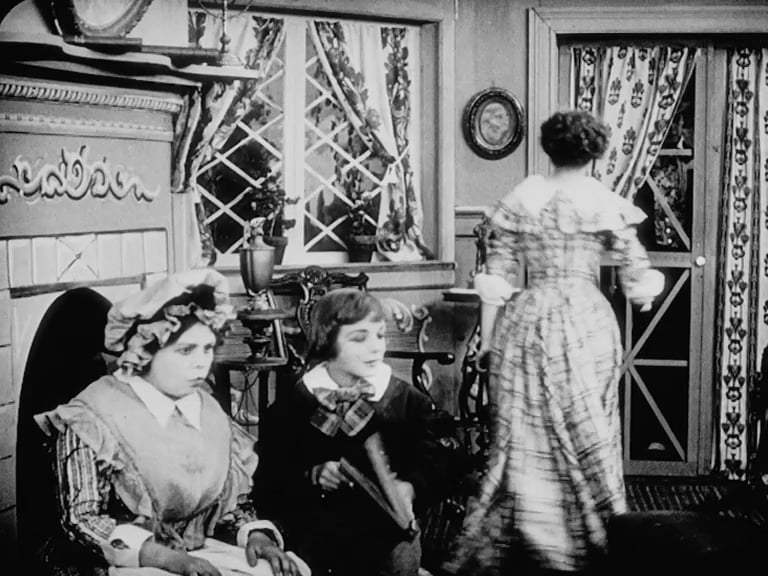
1912Thanhouser CompanyOne reelComedy

Miss Arabella Snaith

No copy you can watch online. No print is known to survive. What follows is what does: the release, the cast, the story, and what the trade press said at the time.

The story

“When Harold Hargreaves wrote the satirical society novel, Like Lowing Kine, he had achieved even more success than he had contemplated. For Harold, despite his name, was a shy, sensitive chap, and could not be a social lion, even if he had desired to be. Therefore it made him unhappy to receive invitations galore, flowers and mash notes. Also to find reporters and photographers lurking on his front door step all hours of the day or night. Under the circumstances he decided to take refuge in flight, and sought conclusion in the seashore hotel, where he modestly registered as ‘John Jones of Bayonne, N.J.’ For a time he found that he was unknown, but then exposure came. A woman, once young, unmasked him, but consented to keep it his secret at his earnest request. Under the circumstances he could not refuse to be polite to her, and she was his companion on many trips when he would have preferred to be alone.

“On one of these excursions they were unfortunate enough to be on an island and did not notice the rising tide until it was too late to return to the mainland. The woman wept, but really did not mind. Her name was Arabella Snaith and she would have preferred to change it to Mrs. Harold Hargreaves. Consequently when they had returned to safety she informed the unhappy man that she had been put in a false position and that only marriage could set her right in the eyes of the world. Hardly knowing what he was doing, he consented, but later regretted it. She had told him that only death could part them, so he decided to die—but only so far as she was concerned. There was a mock funeral, and the author, in disguise, acted as his own minister. Then to his horror, he found that the fickle Arabella Snaith had transferred her affections to him in his new incarnation. He began to feel that Arabella would annex him after all, but being a resourceful man, as all good novelists must be, he decided to hire a substitute. His choice fell upon a friend who was hard up, and ready to do anything for money, as he frequently boasted. The author gave him a chance to make good, the hardest test he could think of, but the friend ‘made good.’ Arabella Snaith changed her name, but she is not Mrs. Hargreaves. She is the wife of his friend, and the friend was happy for a time, as Harold gave him a big sum of money for a wedding present. For the beautiful curved lines of the yellow-backed bills made him forget the lack of curves which were marked in the case of the once, perhaps, fair Arabella.”

Summary from The Moving Picture News · 20 April 1912
What the papers said

3 reviews

“Arabella is an old maid visiting a Florida resort, where she meets a noted author, who goes South for a rest, incognito. But an account of his going away is printed in the newspapers and the old maid reads it, sees his picture with the account in The Morning Telegraph, and settles on his trail. At the seaside she reads …

Read in full · 1 min

“Arabella is an old maid visiting a Florida resort, where she meets a noted author, who goes South for a rest, incognito. But an account of his going away is printed in the newspapers and the old maid reads it, sees his picture with the account in The Morning Telegraph, and settles on his trail. At the seaside she reads him asleep and, the tide coming in, they are marooned on a rock until dawn, when, on their return to the hotel, she declares she will announce their engagement and thus save her maidenly honor. He decamps for home and on arriving has his cousin wire her that he has died. Anticipating her arrival, he makes up as a clergyman with side whiskers, and when she does come he consoles with her on her loss. She then decides to win the minister and asserts that she will call for consolation every day. In desperation the author asks his cousin what he would do for $1,000 cash, and the cousin replies that he would hate to say. The author tells him to marry Arabella, the cousin consents, the thousand is passed over and the author is rid of his tormentor forever. Only one small matter for criticism is discovered when all of the hotel guests are assembled at dawn to see the pair returning. Would they sit up all night? Why not have them seen by the hotel folk in place of the guests or merely by one or two early risers? It is played with zest, the Florida scenes are beautiful and the play itself is sufficiently amusing to win favor for a long time to come.”

The Morning Telegraph · 5 May 1912

“Another excellently photographed and beautiful Florida picture. Mr. Cruze plays one lead, a popular novelist taking a vacation incognito. We do not know who plays Miss Arabella Snaith, the ubiquitous and troublesome, man-hunting hotel girl, but she is a clever character comedian. After the rising tide had kept these two out on a rocky point all one night, the man …

Read in full · 1 min

“Another excellently photographed and beautiful Florida picture. Mr. Cruze plays one lead, a popular novelist taking a vacation incognito. We do not know who plays Miss Arabella Snaith, the ubiquitous and troublesome, man-hunting hotel girl, but she is a clever character comedian. After the rising tide had kept these two out on a rocky point all one night, the man had to give a funeral and pretend to bury himself, and then he had to pay a friend to marry the young woman in order to get rid of her. The backgrounds are beautiful interiors, in a big hotel and in a private house in the South; a Florida garden park, and the sea beach of a bay in Florida. Some of the humor is a little artificial, but the views are very fine.”

The Moving Picture World · 11 May 1912

More reviews

8 May 1912The New York Dramatic Mirror1 min

“This play is not only a well built farce, but it is a gentle satire in the manner in which some women deify their favorite popular novelists. With the exception of one quality in the character of the literary light, namely, his abhorrence of publicity, the portrayal by James Cruze coincides with one’s conception of a few conspicuous men of this profession. Viola Alberti in the role of the withered coquette is clever and effective without yielding to the ever present temptation to overdo. Harold Hargreaves, a popular but modest author, leaves covertly for a seaside resort, with the object of spending a few quiet weeks. An unattractive coquette conceives a strong affection for him and dogs his footsteps everywhere. In comparing his features with a photograph which she has observed in the paper, she establishes the fact in her own mind that Harold Hargreaves and the man of her heart are the same. She confronts him with the photograph clipped from the newspaper and forces him to admit his identity. To buy her silence, however, he consents to let her accompany him on strolls and excursions.

“On one of these trips they get trapped by the tide on a flat rock and he is forced to endure her company for a long wearisome night. On the following day Arabella promptly promulgates their adventures around the hotel, and then reports to Hargreaves that to silence the tongue of scandal they would have to announce their engagement. The engagement is announced and Hargreaves returns home. To circumvent her, the novelist’s brother telegraphs Arabella that her fiancé has suddenly died and that his funeral will be held on a certain day. The fake funeral is conducted successfully and Arabella mournfully departs. But she determines to call frequently on the minister who officiated at the funeral—Hargreaves himself—and chat with him. Ultimately, to entirely rid himself of her the novelist is compelled to bribe his brother to marry her.”

Have you seen this film, or a print of it?

Prints of films thought lost still turn up in attics, private collections and archives. A record like this one is how the next one gets found.

Tell us about a print

Cast and crew

Cast
George O. Nichols as clergyman
James Cruze as novelist on cruise
Photographed by
Alfred H. Moses, Jr.

Every name opens that person's page, with each film they appear in and which of them you can watch.

Watch instead

Films you can watch from the same company

Matched by cast, director and kind

More about this film

Filmed in
Florida
Bowers’ notes
  1. The unusual surname of Snaith was also used in the title of one of Thanhouser’s Princess Department films, Professor Snaith, released on June 26, 1914. Also refer to Please Help the Pore, a regular Thanhouser release of September 29, 1912, in which a character is named Henry Snaith. Finally, see the note under Young Lord Stanley, released October 25, 1910. 2. As in the case of the aforementioned Princess film, the Snaith name was occasionally misspelled in connection with the present Miss Arabella Snaith release. “Smith” was the most frequent error, but the schedule printed in the May 1912 issue of Motography suggested “Smaith.” 3. The term “kine,” used in the book mentioned in the synopsis, is archaic for cows or cattle.

ARTICLE by Gordon Trent, The Morning Telegraph, April 21, 1912:

“Don’t get gay or famous! There’s nothing to it! Thanhouser Company shows why. Of course it’s in a reel, by name Miss Arabella Snaith, but a good reel is like a good sermon. And this sermon is in a comedy aim, too! It pictures the comedy efforts of Harold Hargreaves, writer of a ‘best seller,’ to evade the foolish who follow the famous. One of the ‘foolish,’ though, was wise enough to rope Hargreaves into matrimony, what happened to the famous man you see Friday, May 3, when the film is released.” (From a Thanhouser news release)

From Volume II: Filmography of Q. David Bowers’ Thanhouser Films: An Encyclopedia and History, reproduced with permission and unchanged. Read the history of 1912 →

Cite as: Bowers, Q. David. Thanhouser Films: An Encyclopedia and History, “Miss Arabella Snaith”. thanhouser.org/films/miss-arabella-snaith/

Where a print is held

Held by
No print known