1911Thanhouser Company950 feetDrama

The Higher Law

No copy you can watch online. No print is known to survive. What follows is what does: the release, the cast, the story, and what the trade press said at the time.

The story

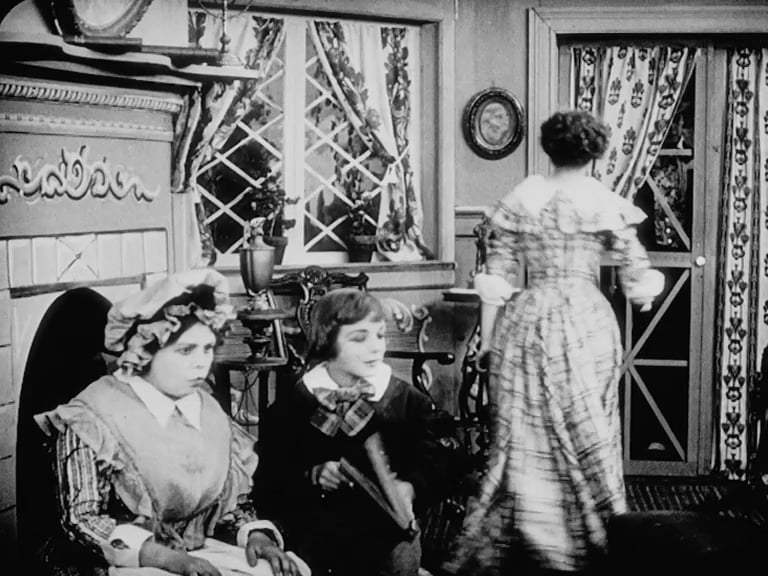
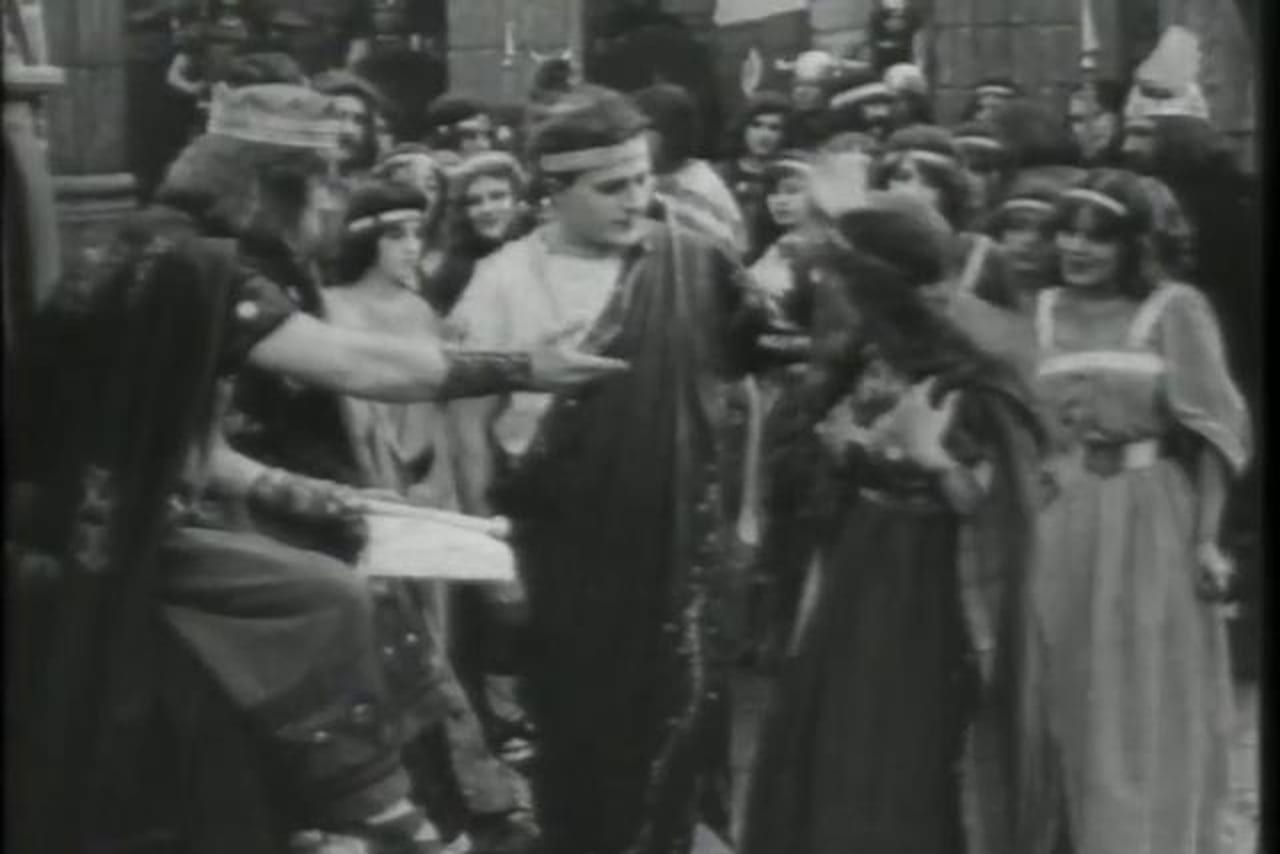
“A young minister silently loves a school teacher in the village. She, however, looks upon him merely as a friend—because a sea captain has her heart. When the captain returns from a voyage he asks his sweetheart to become his wife. She consents, and the young minister is given the ungrateful task of performing the ceremony. Soon after the wedding the captain goes off on a long voyage, from which he never returns. The news is brought back that he was drowned. The woman is left friendless and helpless with a child. It is impossible for her to live on without a source of revenue, so she decides she will hunt for a position. But first she determines to find a suitable home for her child. After mental anguish she makes up her mind that the minister will be the only proper person to whom she could entrust her baby. She then leaves the baby and a note on the doorstep of the minister’s home and later assures herself by peeping in at the minister’s study, that her child was welcome. She then wends her way into the uncertain world.

“As she is sitting near a dock with tear-stained cheeks, she makes the acquaintance of a wealthy but crippled old woman. After a few questions, the woman asks her to take the position of companion and secretary and live with her, as she has no friends or relatives. After seven years of close association, the old woman dies and bequeathed her fortune to her secretary. Now that she is rich, she returns to the country village to claim her own. The child in the meantime has grown and the minister who has been more than a father to her, loves the child. He points out that the mother has forfeited her rights because of her unnatural neglect of her offspring.

“The unexpected position of the minister nearly breaks her heart. The minister, wooed by a spirit of defiance, asks the mother to come with him to Sunday school, where she may pick out her child. Of course the mother finds this an impossible task and is forced to acknowledge the justice of the minister’s position. The mother is overcome with sorrow and remorse. With heaving breast and eyes streaming with hot tears, she finds her way to some secluded spot where she is nearly overcome by her motherly suffering. But here the great power draws the child from the church and leads her to comfort her suffering mother.”

Summary from The Moving Picture World · 7 October 1911
What the papers said

3 reviews · 1 advertisement

“Interesting from the start and sustained to the end, this photo drama is praiseworthy because of its excellent production and generally good acting. A clergyman adopts the baby of a fisher girl who weds a ne’er-do-well sailor, who leaves her a widow. She is adopted by a wealthy woman and inherits a fortune and later returns to the village for …

Read in full · 1 min

“Interesting from the start and sustained to the end, this photo drama is praiseworthy because of its excellent production and generally good acting. A clergyman adopts the baby of a fisher girl who weds a ne’er-do-well sailor, who leaves her a widow. She is adopted by a wealthy woman and inherits a fortune and later returns to the village for her child, which the minister refuses to give up until after deliberation, when he realizes that the mother has a higher claim on the little one than he. The opening scene leads one to think a shipwreck has occurred, and the break to the next scene is too sudden. The doubling of the parts of the minister’s housekeeper and the rich woman is rather bad and easily detected. Both parts are well played, however, The minister should not show anger at the young mother as he first meets her on her return, but should wait until he realizes the cause of her call and hears her demand for her child. The wedding of the girl and the sailor on the beach is a bit precipitated and tends toward uncalled for comedy.”

The Morning Telegraph · 15 October 1911

This review is reprinted in the narrative section of the present work.

The Moving Picture World · 21 October 1911

More reviews

18 October 1911The New York Dramatic Mirror1 min

“The settings and backgrounds of this story are good, as is the acting, but the action contained in the scenario is not always so satisfactory, because its conclusions are neither natural nor logical; neither does one find the character of the minister entirely consistent. Instead of marrying him she married a poor fisherman, who after a period sailed out to sea and never returned. She left her infant at the door of the minister and left for another port. Here she met a rich woman who in a rather sudden manner hired this poor fisher girl as her traveling companion. After a period of years she returned to the minister to reclaim her child. He bade her begone as he had legally adopted the child, but later relents, declaring that a higher law gives her the prior right. The mother is not much affected when the child is denied her, and very strange liberties are taken with a church service, which would never be so interrupted for an occasion like this. It is to be regretted that greater care was not taken with the scenario, at it has the making of a strong film away from beaten lines.”

Advertisement

7 October 1911The Moving Picture World1 min

“The mute appeal of a mother’s love draws to her the child from whom she has been separated. The action involves a minister, a sailor who finds a final resting place with Neptune, and the wife and child he leaves to the mercies of a mercenary world. The picture combines a healthy atmosphere of the church, the sea and a home.”

Have you seen this film, or a print of it?

Prints of films thought lost still turn up in attics, private collections and archives. A record like this one is how the next one gets found.

Tell us about a print

Cast and crew

William Garwood as minister

Every name opens that person's page, with each film they appear in and which of them you can watch.

Watch instead

Films you can watch from the same company

Matched by cast, director and kind

More about this film

Bowers’ notes
  1. The release date was erroneously listed as October 9, 1911 in certain schedules. 2. A note in the March 16, 1912 issue of The Moving Picture World stated this release represented James Cruze’s first appearance in a Thanhouser film; however, Cruze had appeared earlier in The Pied Piper of Hamelin, released on August 1, 1911. Cruze was to go on to become one of Thanhouser’s most important players.

From Volume II: Filmography of Q. David Bowers’ Thanhouser Films: An Encyclopedia and History, reproduced with permission and unchanged. Read the history of 1911 →

Cite as: Bowers, Q. David. Thanhouser Films: An Encyclopedia and History, “The Higher Law”. thanhouser.org/films/the-higher-law/

Where a print is held

Held by
No print known