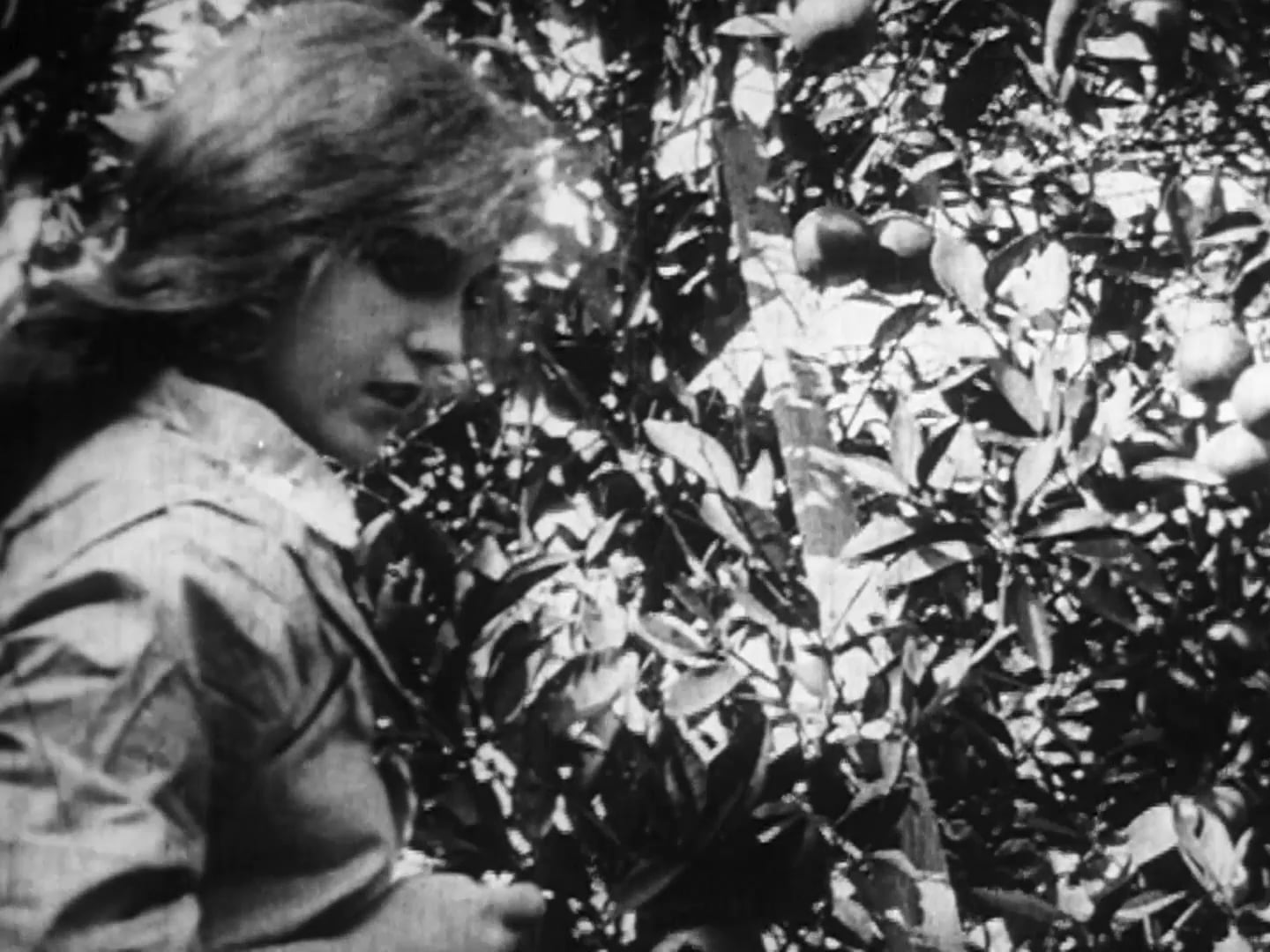
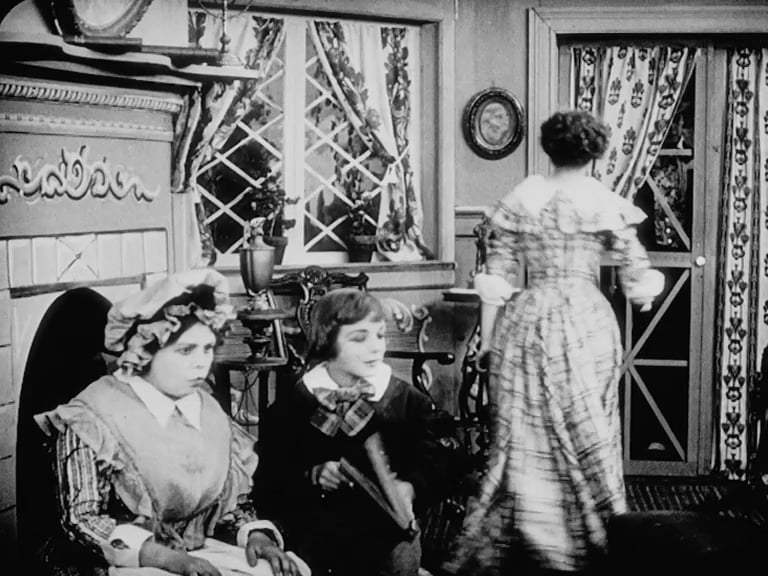
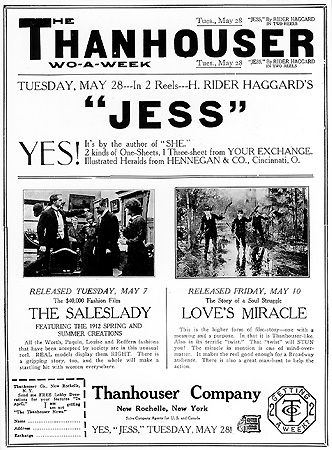
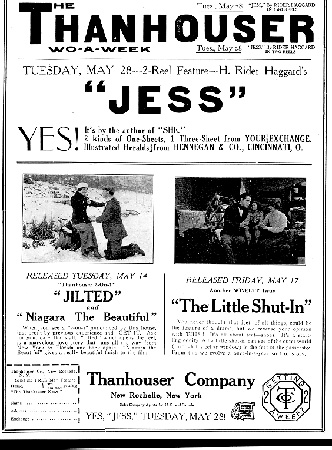
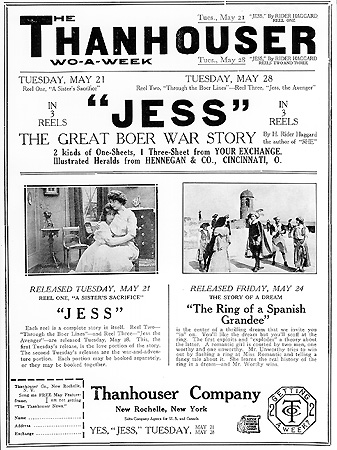
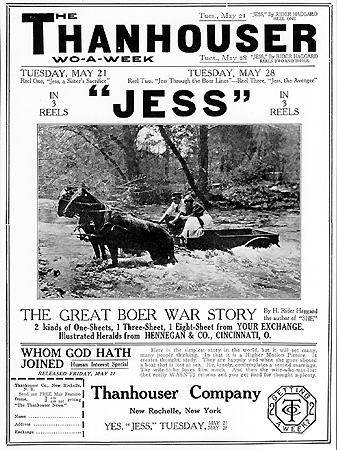
“The novels of Sir H. Rider Haggard are particularly well adapted to the requirements of the picture play, for, in most of his works the study of psychology is subordinated to the development of action, and its characterization is of that simple and direct kind which is certain of making its appeal without unduly taxing the intellectual faculties, either of the exponents or of their audience. In adapting the story of Jess the Thanhouser Company have been very successful in retaining the point of main interest, and bringing out the plot in a very effective manner. The play opens on the South African farm of Silas Croft, an Englishman, who lives there with his two nieces, Jess and Bess, between whom there is a very strong affection. An English officer, Captain John Neil, joins Croft as his partner, and it is soon evident that he has created a very favourable impression on both sisters. He is, at first, attracted towards Jess, but she, finding that her younger sister is rapidly falling in love with Neil, determines to leave the field open to her, and for this purpose goes for a long visit to a friend in Pretoria.
“It is during her absence that the first disquieting rumours of the Boer rebellion are heard, and Neil is dispatched by old Croft to escort Jess back to her home. A Boer farmer, named Muller, is an unsuccessful rival of Neil for Bess’s affections, and, in revenge for his repulse, he accuses Croft of treasonable practices, and contrives to get the old man sentenced to death. Jess arrives at the farm the night before, in spite of desperate attempts on the part of Muller to prevent her, and, overhearing a proposal from his to procure the release of Croft, on condition that Bess consents to marry him, she determines that he himself shall die. Muller is so horror-stricken at her appearance, having believed that he had caused her death by drowning, that he throws himself over a cliff, and Jess succumbs to the exhaustion following her flight from Pretoria, her sister being united to Neil over her body.
“The two sisters both give very attractive performances, and the acting throughout is entirely adequate. The author does not present a flattering picture of the Boer forces, but as the villain is necessarily on their side, treachery and disregard of the recognised rules of war must be allowed to pass as necessary to the exigencies of the plot. The flight of Neil and Jess under the fire of the Boers is exciting in the extreme, and the catastrophe at the ford, where their wagon is overturned and they are carried away by a raging stream, is one of the finest pieces of realism we remember to have seen. This episode alone should attract lovers of real sensation. We are introduced to Oom Paul Kruger at his headquarters, and the camp scenes and the attack on the farm house are carried out with dash and spirit. But surely there are some real Negroes still left in South Africa—or have they all emigrated to America? In either case, it might have been possible to procure some farm hands who might have been more convincing in appearance, though their acting is excellent, and helps to fill in the detail of a very interesting and stimulating story.”