1912Thanhouser Company1,500 feetLiterary adaptation

Miss Robinson Crusoe

No copy you can watch online. No print is known to survive. What follows is what does: the release, the cast, the story, and what the trade press said at the time.

The story

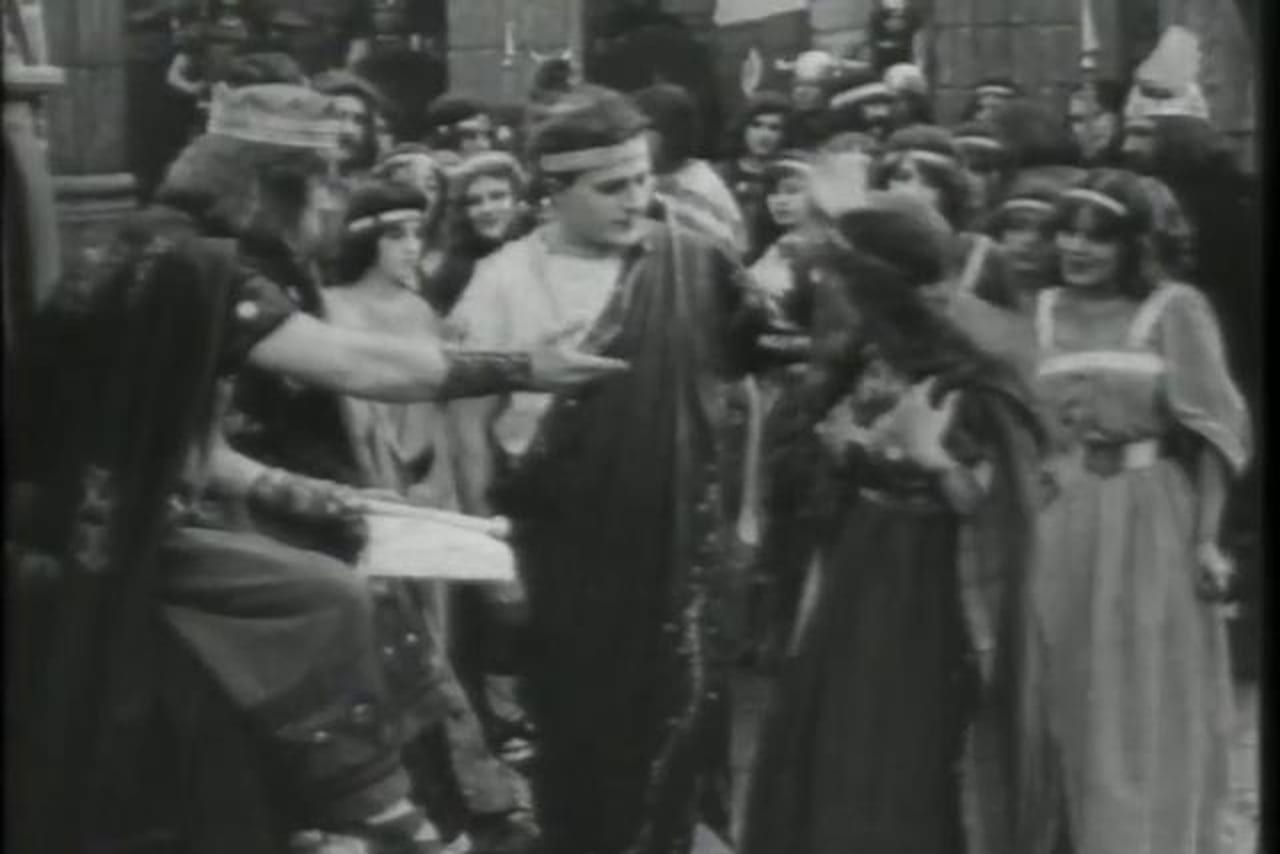
“A society woman who is traveling abroad heard with deep interest from her husband that a nobleman was deeply attentive to their only daughter. The mother, knowing that propinquity often leads to love, arranged for her daughter to take a long ocean trip, chaperoned by the young nobleman’s mother. In this way the count and the girl would have many hours in each other’s society and the girl’s mother felt sure that she would not long refuse the honor of becoming a countess. The girl was also wooed by a wealthy young American, whom the family disapproved because of his lack of noble ancestry. He grieved over their separation, and later was completely heartbroken when news reached him that the ship had been lost and the girl he loved was reported among the missing. Still he could not believe that she was dead, and dropping all business embarked on his yacht, vowing that he would search the whole world if necessary to find her.

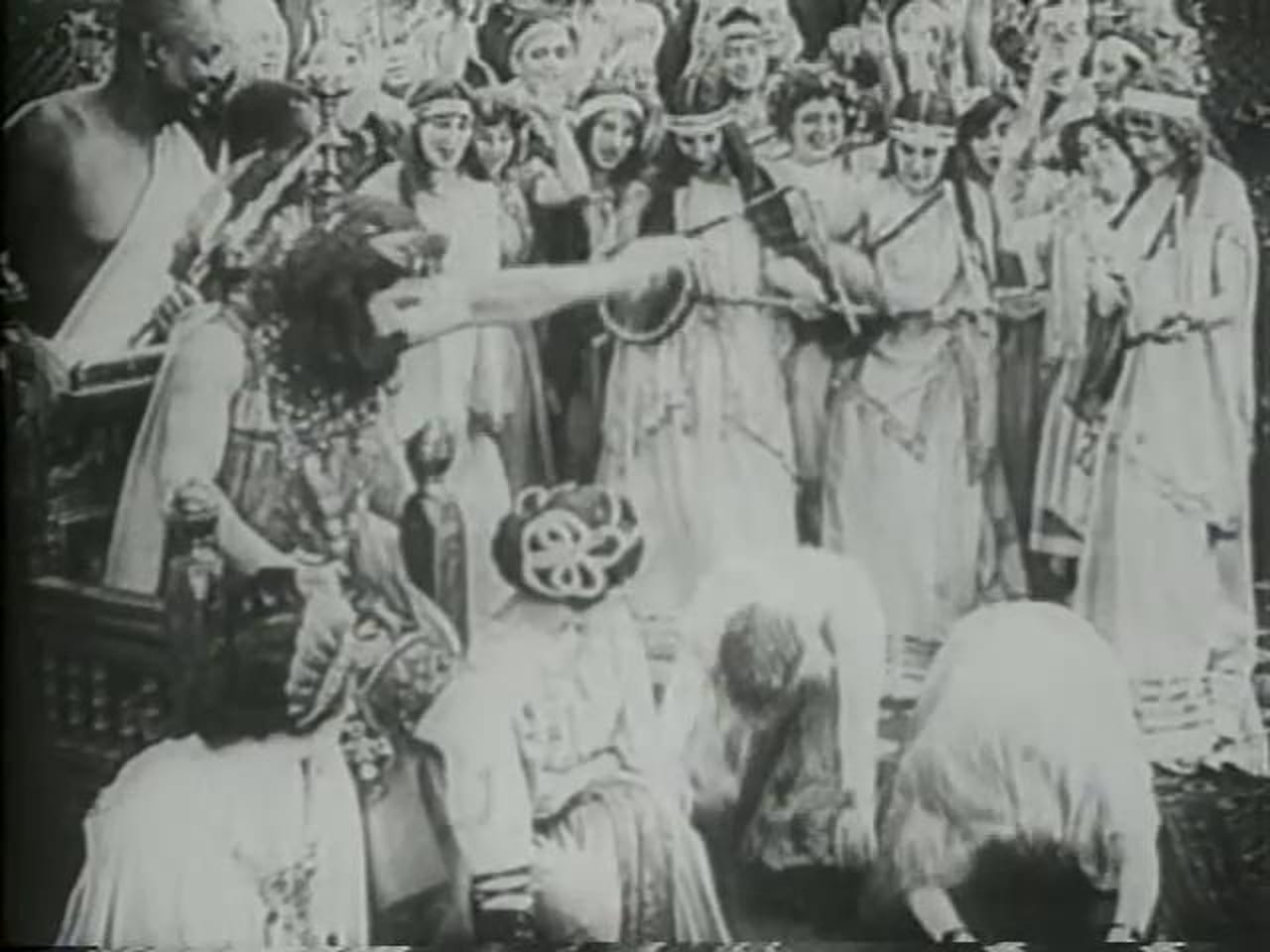
“The girl drifted to the shore of an island inhabited by a savage tribe. They would have killed her, but her miraculous escape from the attack of a venomous snake convinced them that she bore a charmed life, and instead of destroying her they worshiped her as a goddess. The young American in the meantime had carried his search into many strange lands, and all aboard except himself were convinced that the hunt was a fruitless one. He refused to turn back, however, and finally his boat reached the little island where his sweetheart was a queen and a prisoner. She was rescued after a lively battle with the savages, and the couple sailed away to their home in America. The parents, in their joy at the daughter’s return, withdrew their objections to the marriage, and the girl married the man who had braved so many dangers to rescue her from her ‘Robinson Crusoe’ existence on an island in the tropical seas.”

Summary from The Moving Picture World · 5 October 1912
Background of the scenario

The Thanhouser film was a modern adaptation of the theme of Robinson Crusoe, published in 1719, one of the most famous novels in English literature, a status it retains to the present day. Less well known is its sequel, The Farther Adventures of Robinson Crusoe. The original Robinson Crusoe work and sequel were by Daniel Defoe, born in London in 1660, a butcher’s son. Educated at Morton’s Academy, he intended to follow the ministry but instead became a hosiery merchant in 1683, the year he took Mary Tuffly as his wife. Writing and traveling became major interests, and he roamed widely. His output was tremendous, and over 560 articles, pamphlets, and novels can be traced in whole or part to his pen. At the same time he became heavily involved in politics and was jailed for his comments and views. For Robert Harley, the Tory statesman, he was a secret agent circa 1703-1714. Defoe’s death occurred at his home in 1731.

What the papers said

2 reviews

“Commencing with topical scenes, this unique photoplay is well carried out to the end, except where an excursion boat is substituted in certain deck scenes for an ocean liner. An heiress goes abroad, sailing on a big liner. The ship is wrecked and she is reported lost at sea. She is cast ashore on a tropical island, where she meets …

Read in full · 1 min

“Commencing with topical scenes, this unique photoplay is well carried out to the end, except where an excursion boat is substituted in certain deck scenes for an ocean liner. An heiress goes abroad, sailing on a big liner. The ship is wrecked and she is reported lost at sea. She is cast ashore on a tropical island, where she meets savages who regard her as a goddess, and she rules over them. Her lover believes her to be alive and sets out in his steam yacht to find her. He succeeds, rescues her from the natives after a brisk encounter, and carries her to his yacht. A reel and a half are necessary for the tale.”

The Morning Telegraph · 13 October 1912

“A very delightful and romantic story of the sea. Miss Flo LaBadie and Mr. Cruze play the leads, as two young people of great wealth. The girl is shipwrecked and cast upon an island inhabited by cannibals who think her a goddess and worship her. They have reason to think so. Her handling of a huge rattlesnake makes a most …

Read in full · 1 min

“A very delightful and romantic story of the sea. Miss Flo LaBadie and Mr. Cruze play the leads, as two young people of great wealth. The girl is shipwrecked and cast upon an island inhabited by cannibals who think her a goddess and worship her. They have reason to think so. Her handling of a huge rattlesnake makes a most startling scene. The simple islanders, as well as the audience, see this, and the audience is sure to sympathize with them in their opinion of her. She is rescued by the man who, in his big yacht, seeks her out and saves her in a well-conducted battle scene—five white men against a hoard of cannibals. In many of its scenes, it is a highly artistic picture and, where it fails to be so, it is nevertheless effective, and makes a very desirable offering.”

The Moving Picture World · 19 October 1912

Have you seen this film, or a print of it?

Prints of films thought lost still turn up in attics, private collections and archives. A record like this one is how the next one gets found.

Tell us about a print

Cast and crew

Cast
Florence La Badie as Miss Robinson Crusoe
Francis Newburgh as the nobleman
Harry Benham as the American
James Cruze as her lover and rescuer

Every name opens that person's page, with each film they appear in and which of them you can watch.

Watch instead

Films you can watch from the same company

Matched by cast, director and kind

More about this film

Bowers’ notes
  1. This film was 1,500 feet in length and was on two reels. The second half of the second reel contained Specimens From the New York Zoological Park. 2. In an interview published in the January 1913 issue of The Moving Picture Story Magazine, Florence LaBadie noted: “There is such variety to the plays that I never know what I may be called upon to do next. Not long ago I had the lead in Miss Robinson Crusoe. They left me floating on a log, so far out that, though I am a good swimmer, I really wondered if I’d ever get back to land.”

From Volume II: Filmography of Q. David Bowers’ Thanhouser Films: An Encyclopedia and History, reproduced with permission and unchanged. Read the history of 1912 →

Cite as: Bowers, Q. David. Thanhouser Films: An Encyclopedia and History, “Miss Robinson Crusoe”. thanhouser.org/films/miss-robinson-crusoe/

Where a print is held

Held by
No print known