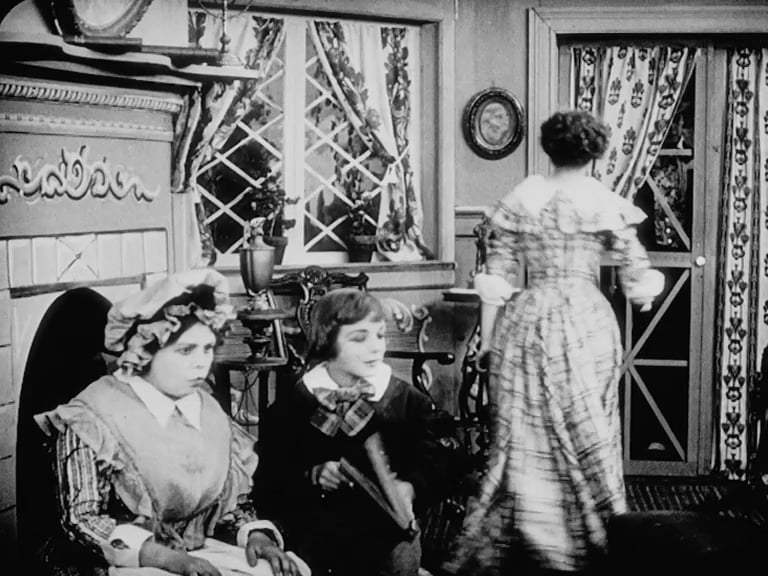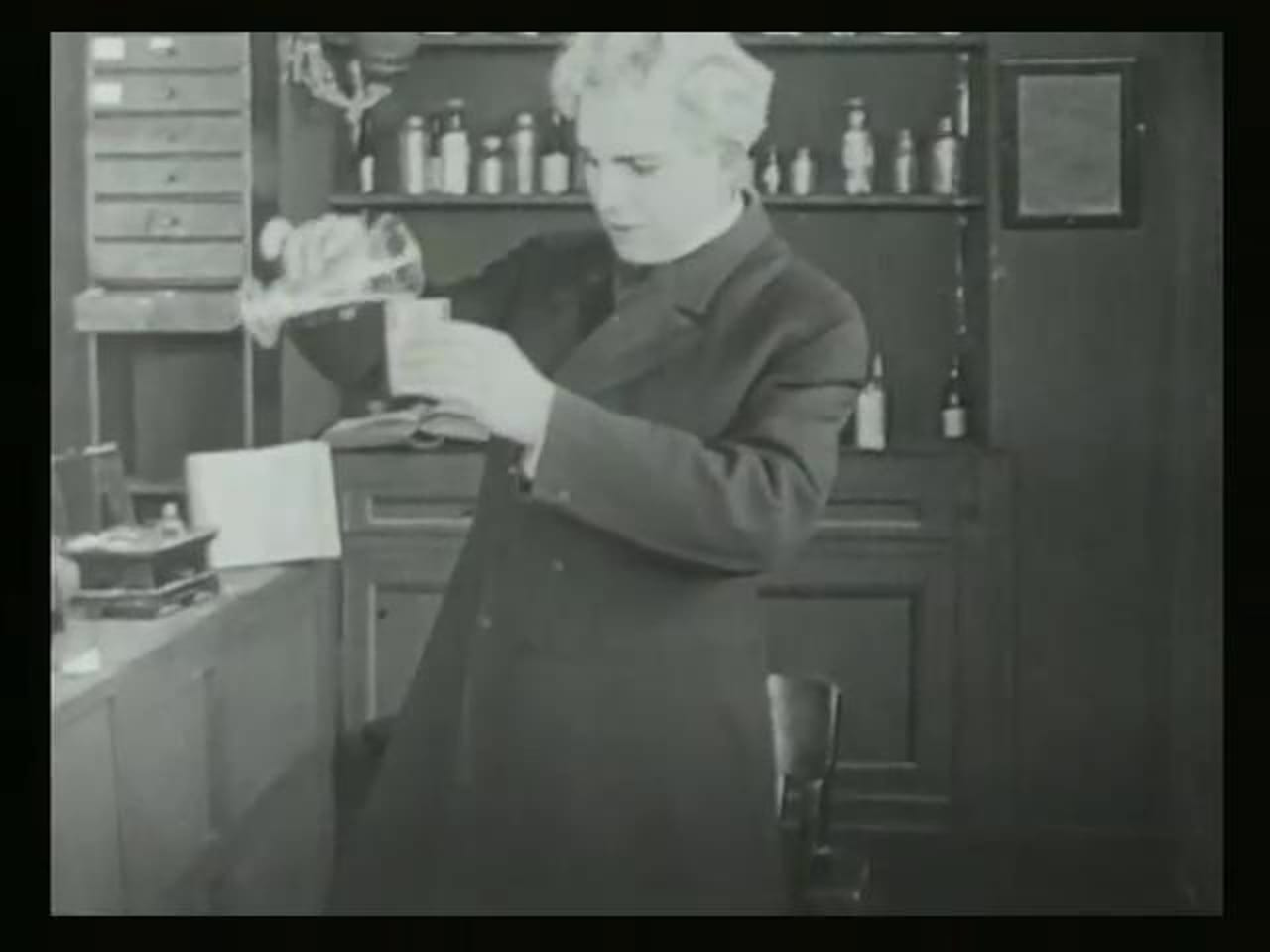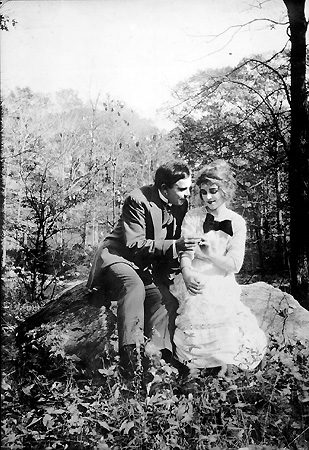
A frame from Beneath the Veil. Production still courtesy of the American Museum of the Moving Image/Lawrence Williams Collection.

1911Thanhouser Company900 feetDrama

Beneath the Veil

No copy you can watch online. No print is known to survive. What follows is what does: the release, the cast, the story, and what the trade press said at the time.

The story

“A young artist is a great lover of the beautiful and has a natural horror of anything repulsive. He falls in love with a girl who satisfies his artistic requirements. The girl’s father, a worldly wise inventor, does not approve of his daughter’s choice. He realizes the young artist has many limitations, and doubts that he will make his daughter happy. The girl, when told of his fears, first laughs them to scorn. Then she begins to doubt herself. Finally, chance comes to test the father’s theory. There is an explosion in the laboratory, and the girl, in trying to save her father, is badly injured. The artist hurries around to the house, and finds that the girl he loves is disfigured for life. She offers him his freedom and returns him his ring. The young man is not of the stuff of which heroes are made. His love cannot survive the loss of the girl’s beauty. He takes the ring and hurries away. And the fear of the father is proven.

“As time rolls on the artist finds that he cannot forget the girl he once hoped to wed. Gradually he forgets her beauty, and thinks more and more of her character and mental attributes. Humbly he returns to the house, and again pleads his suit. At first the girl repels him, finally she consents to take him back. She is heavily veiled when they meet, but she does not raise the veil, neither does he ask her to. Her physical appearance is of no importance he tells her, and so far as he is concerned, this is the truth. For he is no longer the artist, he is a sincere lover. Still wearing her veil, but her beauty regained, the girl accompanies him to the altar. When they return to his studio, the veil is lifted, and with a radiant smile she goes to his arms.”

Summary from The Moving Picture World · 25 November 1911
What the papers said

3 reviews · 1 advertisement

“The foundation of this photo-drama is laid open to question because of the way the tale is worked out. If it is a dream of the artist-lover that his sweetheart has been made blind, then it is not so shown on the screen. If, however, she is really supposed to have been blinded by the laboratory explosion, which we take …

Read in full · 1 min

“The foundation of this photo-drama is laid open to question because of the way the tale is worked out. If it is a dream of the artist-lover that his sweetheart has been made blind, then it is not so shown on the screen. If, however, she is really supposed to have been blinded by the laboratory explosion, which we take to be the intent of the author, how comes it that the producers have failed to show any cure before she later appears as beautiful as ever? There are minor matters of criticism which should be avoided in similar presentations in the future. For instance, how comes the messenger boy to enter the laboratory unannounced? And how comes it that the lover places the engagement ring on the right hand finger of the girl? The make-up of the girl’s father is bad, especially the hirsute display and the blending of the wig. The story is old, but interesting, and the offering is well staged as to settings and ably acted. Artist in love with the girl, who later is facially disfigured by an explosion in her father’s laboratory, when the lover leaves her, to return again and press his suit, discovering that, after all, and in spite of the mask she had worn, she is as lovely as ever.”

The Morning Telegraph · 3 December 1911

“A very romantic picture well acted and prettily set. The situation is developed not without dramatic effectiveness, yet there is not very much in it that is fresh and this keeps one from being very deeply interested. The heroine of the picture was married in a veil. She was very beautiful and her father feared that the artist, her sweetheart, …

Read in full · 1 min

“A very romantic picture well acted and prettily set. The situation is developed not without dramatic effectiveness, yet there is not very much in it that is fresh and this keeps one from being very deeply interested. The heroine of the picture was married in a veil. She was very beautiful and her father feared that the artist, her sweetheart, loved her only for her beauty. He was a chemist and so contrived that the artist supposed her burned in an explosion, and scarred for life. At first he is willing to break the engagement, yet later decides that he cannot live without her. She insists on being married in a veil. The artist doesn’t know that she is still beautiful until after the ceremony. Some of the photographs are full of merit pictorially.”

The Moving Picture World · 9 December 1911

More reviews

6 December 1911The New York Dramatic Mirror1 min

“From the natural, dramatic movement of the scenario and the exceptional acting that is most agreeable and convincing and shows an apt selection of cast, this film has been made a very human and appealing one. The atmosphere and characters are finely maintained. The young artist is shown to be a great lover of the beautiful and in love with the old chemist’s daughter. The old man fears the youth loves the girl only for her beauty, and an accident while in his laboratory would seem to prove it. An explosion of some gases in her face it is thought will spoil her beauty for life. She dismisses the artist for that reason, but at length he comes back, finding that he cannot live without her, only to find her as beautiful as ever. The three leading actors do admirable work.”

Advertisement

25 November 1911The Moving Picture World1 min

“She faced him and tried him. He encompassed the trial successfully and furnished this film with its great climax. She was a dashing beauty and he—an artist who loved the beautiful—loved her for her good looks alone. She lost these in a sudden accident. And with her pretty face she lost him. At least she appeared to lose him, and here came his great trial. The film describes it fittingly and prettily pictures its very dainty sequel.”

Have you seen this film, or a print of it?

Prints of films thought lost still turn up in attics, private collections and archives. A record like this one is how the next one gets found.

Tell us about a print

Cast and crew

Cast
Florence La Badie as the girl
James Cruze as the artist

Every name opens that person's page, with each film they appear in and which of them you can watch.

Watch instead

Films you can watch from the same company

Matched by cast, director and kind

More about this film

Posters and media
Still for Beneath the Veil. Production still courtesy of the American Museum of the Moving Image/Lawrence Williams Collection.

From Volume II: Filmography of Q. David Bowers’ Thanhouser Films: An Encyclopedia and History, reproduced with permission and unchanged. Read the history of 1911 →

Cite as: Bowers, Q. David. Thanhouser Films: An Encyclopedia and History, “Beneath the Veil”. thanhouser.org/films/beneath-the-veil/

Where a print is held

Held by
No print known