1911Thanhouser Company1,000 feetDrama

The Stepmother

No copy you can watch online. No print is known to survive. What follows is what does: the release, the cast, the story, and what the trade press said at the time.

The story

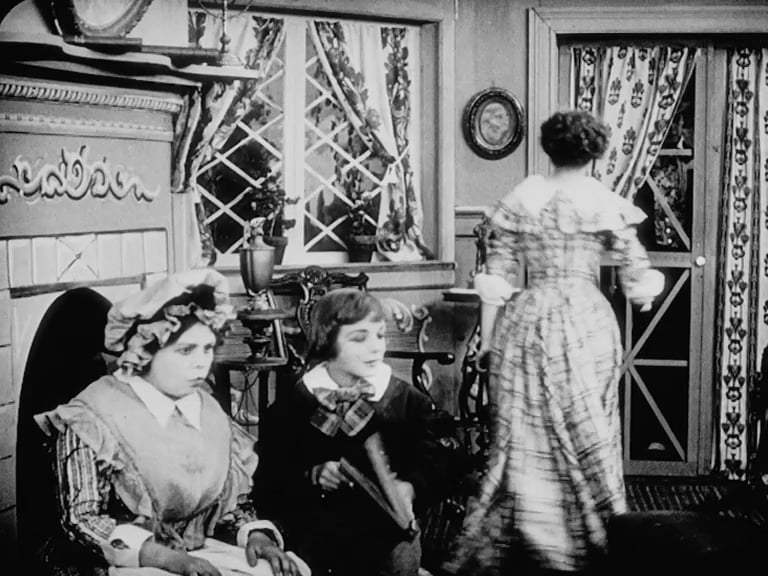
“When two little daughters of a young widower are told that he is preparing to bring up to the house to see them, a young lady who is to be their new mamma, they are at once plunged into the depths of despair. They feel that their home will be no longer bearable if they are to have a stepmother, so they run away and go out in the world to earn their own living. Their father is very much worried as well as indignant of their departure. He sets the police at work to locate them, and when they are found, determines to bring them home, and teach them once and for all that he is master in his own house. But this is where the prospective stepmother, who is a practical businesswoman and a diplomat, shows her good sense. She persuades the father to allow her to win the girls over in her own way. This she does by taking a room in the same poor lodging house to which the girls have fled. Here she introduces herself to them as the lodger across the hall, and the girls, in a short time, grow to love her dearly and to rely entirely on her judgment. She arranges with them to be reconciled with their father, and assures them that she knows he would not marry if they did not desire it. The girls go back to their home, thoroughly penitent, but full of glowing accounts of their charming new friend, from whom they exact a promise that she will come to see them often. They finally decide that home would be much happier if she were there all the time, so they sternly commend their father to marry ‘their lady’ unless he wishes to incur the everlasting displeasure of his daughters. The father, with seeming reluctance, consents, and all family discord is at an end.”

Summary from The Moving Picture World · 3 June 1911
What the papers said

4 reviews · 1 advertisement

“In short terms, this film presents a splendid story very finely acted. It surely is new in theme and likewise in mode of development, and without an inconsistency all the way through. The Thanhouser Kid acts splendidly and plays a large part. She and her sister have rebelled at the idea that her father, who is widower, is marrying a …

Read in full · 1 min

“In short terms, this film presents a splendid story very finely acted. It surely is new in theme and likewise in mode of development, and without an inconsistency all the way through. The Thanhouser Kid acts splendidly and plays a large part. She and her sister have rebelled at the idea that her father, who is widower, is marrying a lady whom they have never seen and whom they think they will never like. The story proves quite differently, but the proven forms an amusing series of events. The film is sure to be a hit.”

The Billboard · 10 June 1911

This review is reprinted in the narrative section of the present work.

The Morning Telegraph · 11 June 1911

More reviews2 · 17 June 1911 – 14 June 1911

17 June 1911The Moving Picture World1 min

“This is one of the pleasantest pictures that this reviewer has seen in a long while; it is truly delightful. It is a simple story with love and human kindness as the mainspring, and it is acted with simplicity. The situation is not new, few situations are; but it is handled so freshly that each move in it is a surprise and, from the first, it excites lively interest. Little Marie Eline takes the part of the younger sister most commendably. The whole cast was very well chosen, and the picture in every way is a fine success.”

14 June 1911The New York Dramatic Mirror1 min

“It would seem as if two scenario writers had been inspired with a very similar idea, as the picture reminds one of a recent Vitagraph release, The Winning of the Stepchildren. However, the development is not the same, and a very entertaining drama, well acted and put on, is the result. He decides to marry his stenographer, and when his two children learned of it they left home. The oldest girl attempted to earn her livelihood from painting. The father had them traced by a detective, but his fiancée decided to win them over by other means. She hired the room opposite and gained their affection and promised to intercede on their behalf with the father. She took them to him and in the last scene, at the home, exceptionally well played, he consented with protest to marry her in place of the supposed other woman.”

Advertisement

3 June 1911The Moving Picture World1 min

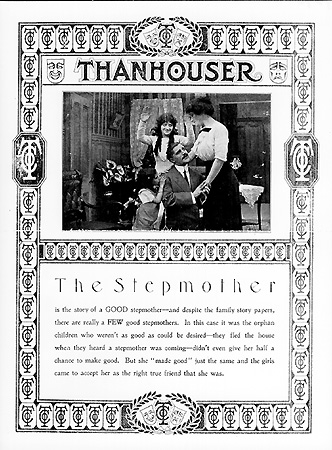
“The story of a good stepmother—and despite the stories, there are really a few good stepmothers. In this case it was the orphan children who weren’t as good as could be desired—they fled the house when they heard a stepmother was coming, and didn’t even give her half a chance to make good. But she made good just the same and the girls came to accept her as right, true friend that she was.”

Have you seen this film, or a print of it?

Prints of films thought lost still turn up in attics, private collections and archives. A record like this one is how the next one gets found.

Tell us about a print

Cast and crew

Cast
Katherine Horn as the stepmother
Marguerite Snow as the older sister
Marie Eline as the younger sister

Every name opens that person's page, with each film they appear in and which of them you can watch.

Watch instead

Films you can watch from the same company

Matched by cast, director and kind

More about this film

Posters and media
Press for The Stepmother. Advertisement from The Thanhouser News. Courtesy Ralph Graham, M.D.

From Volume II: Filmography of Q. David Bowers’ Thanhouser Films: An Encyclopedia and History, reproduced with permission and unchanged. Read the history of 1911 →

Cite as: Bowers, Q. David. Thanhouser Films: An Encyclopedia and History, “The Stepmother”. thanhouser.org/films/the-stepmother/

Where a print is held

Held by
No print known