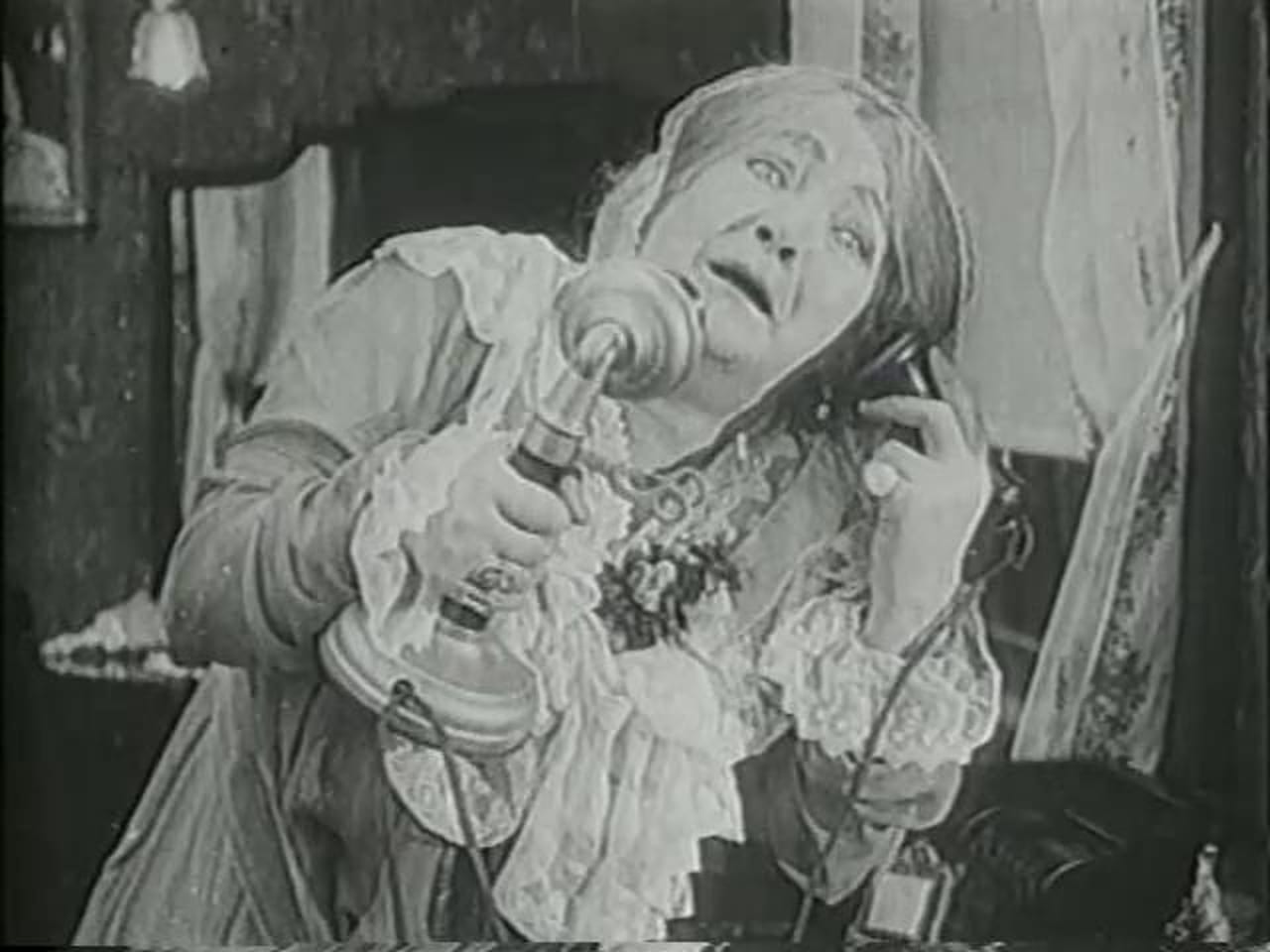
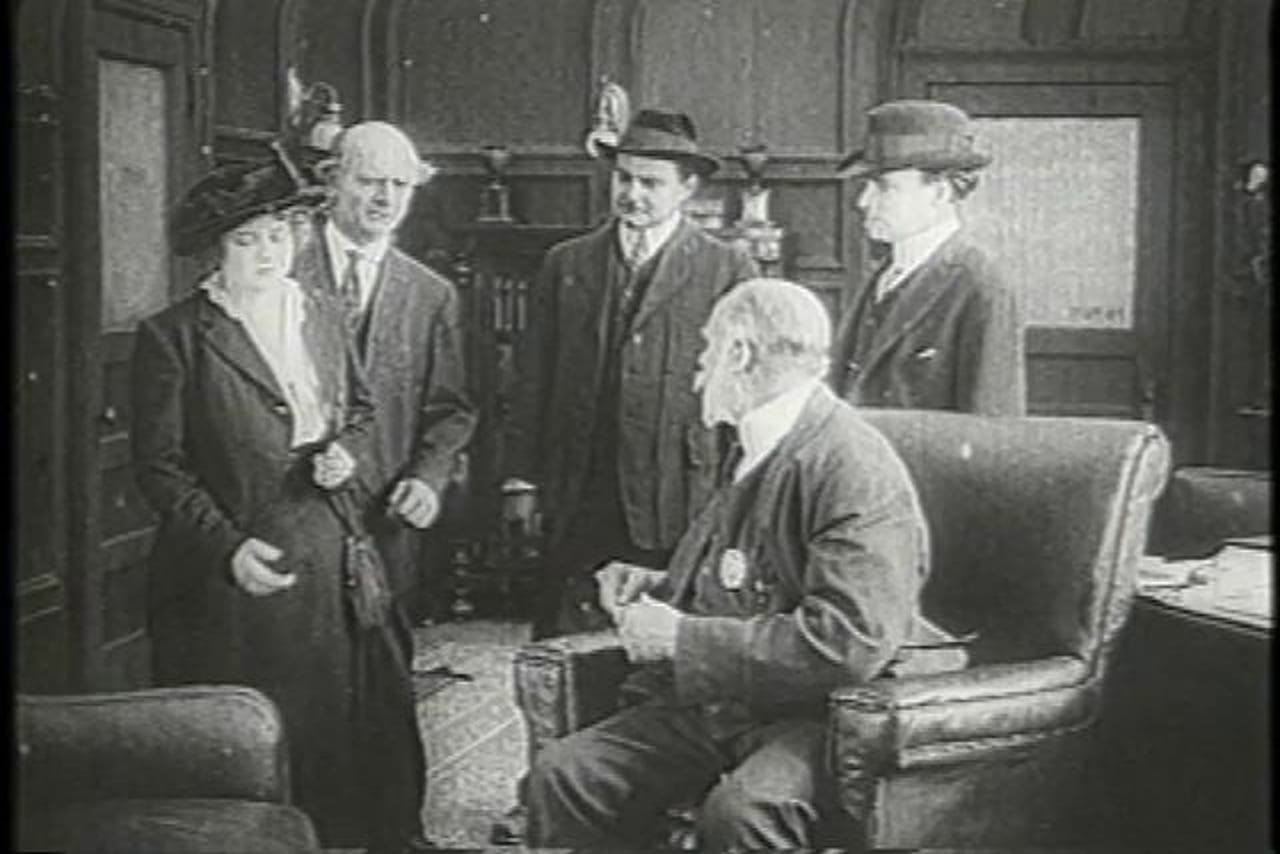
“While there are one or two minor slips in the plot construction here, it can certainly be said that this is a mystery suspense melo which will prove of decided interest and will please generally. The producer has kept his characters close to the camera and has registered many close-ups at the proper moments, and through the very intimacy thus gained, he has made the characterizations more forceful.
“The story tells of two sisters, one good and one flirtatious, who were wooed by partners for whom they worked after they had suddenly lost their fortune. The villainous partner asked the flirtatious sister to his home to take dictation and attempted to take liberties with her. Her long absence made the other sister anxious, and she reached the house just in time to see the violent struggle which ended with the employer being killed by her sister. Coming in through the window, she hurried her sister away from the house but was caught there herself by a night patrolman, who shot at her. Through a trick she locked the officer in a closet and made her escape in her sister’s coat after having hidden her own coat in some bushes near the house.
“She left for parts unknown, and the next day the authorities began a world-wide search for her, never suspecting that the sister remaining at home, who refused to talk, was the guilty one. Finally Miss LaBadie secured work in a Western city, and through stopping a panic during a factory fire, she attracted the attention of the superintendent, with the result that they were married and lived happily for five years. It became necessary then for the husband to go East. At about the same time, the guilty sister and her child were killed in an automobile accident. A pickpocket stole the husband’s watch when he arrived in New York, and the watch bore the photograph of the long-sought fugitive. The police lured the wife to New York by a telegram announcing her husband’s illness, and there she was confronted with the evidence which seemed to prove her guilt. The watchman identified her.
“Early in the film the dead man’s partner had loved Miss LaBadie. After the crime he had discovered her coat in the bushes. Now when she was confronted by the watchman in an effort to secure a confession, this partner staggered through the doorway wearing her old coat and hat and the watchman turning to him said, ‘No, there is the woman.’ The partner insisted that he had committed the crime and so Miss LaBadie was freed, the partner showing her a letter from his doctor announcing that he only had a few months to live because of heart trouble. This was decidedly convenient. It was also rather convenient that the police did not search the grounds and find the coat and hat before the partner did. Another bad spot was the situation where the husband in the West was reading a newspaper about the death of Miss LaBadie’s sister and said, ‘You remember that millionaire who was murdered in New York?’ Since the murder was five years old, there was no reason why she should ‘remember.’ This title surely did not belong. It is quite possible that several millionaires might have been murdered in the ensuing five years and the husband had no thought of his wife’s connection with the crime.
“Another scene that jarred with me was the bit at the office where the villainous partner came out into the main office to dictate and make love to his stenographer. Since he had a private office, which would have been more convenient for his purpose, why did he dictate in the main office? We found a telegram printed which should have been typewritten. This always jars. The minor slips in this, however, will not keep this production from registering as ‘very good.’ The intelligent use of close-ups and the sincerity of all the players helped decidedly in making it impressive.
“Miss LaBadie was decidedly pleasing throughout, and Ethyle Cooke, as her sister, did particularly well with her few scenes. Hector Dion was a splendid villainous partner, keeping this character within bounds at all times. George Marlo, as the junior partner, failed in some of his moments to register the proper emotion, it being particularly noticeable that he did not seem greatly surprised when informed that his partner had been murdered. Others in the cast were J.H. Gilmour, Samuel M. Niblack, Robert Vaughn, who was a pleasing hubby-hero, and little Dorothy Benham, who registered some very good little bits of business such as we generally call ‘kid stuff.’
“The Box Office Angle: I would say that this is a rather safe bet for any audience that likes suspense-mystery stuff, and surely it has been well enough done to please an average audience. It has a few weak spots in the construction of the story but surely it is interesting. Miss LaBadie has quite a following, and I believe that by emphasizing her name you can safely pull considerable business. The name of the film is a good one and I would do some advertising in advance on this with Miss LaBadie’s picture, asking, ‘Have you ever seen this fugitive?’ I would use a number of different pictures of Miss LaBadie with this caption, before I in any way connected it with the theatre. If possible use the photograph used in the film, as seen by the watchman. After getting the campaign well under way you can announce this production for your theatre on a certain date. You can safely guarantee that this is an interesting offering, well produced, depicting the danger of trusting entirely to circumstantial evidence. You might also use a line something like this: ‘If you found your wife to be a fugitive from justice accused of murder, would you stick by her? See The Fugitive.’”