The story
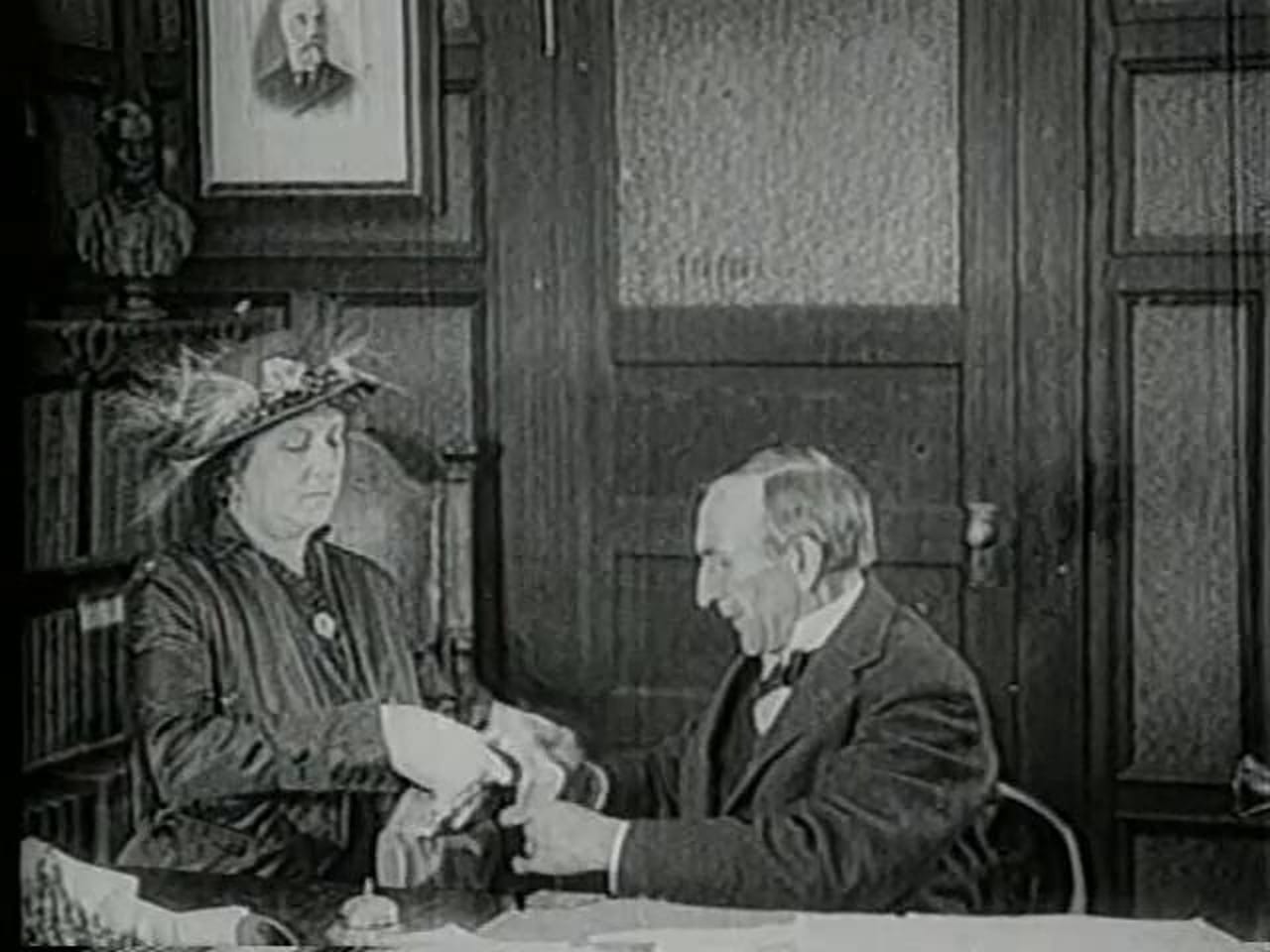
“Louie was lazy, and owing to a diet of flashy novels, he grew up to be a worthless young man. He had a job in an office, but when summer came he gave it up and hied himself to the seashore, securing a place as a lifeguard. He decided after a few days that there was one pretty girl who would suit him. She was very pretty, and was accompanied by an elderly gentleman, undoubtedly her father. Louie tried to scrape an acquaintance with her in the water, but failed. Just the same his chance came. The girl was seized with cramps, and Louie gallantly rescued her. Everything was going just the way things did in the yellow-backed novels, but he was rudely awakened, however, for the next day the broker called to thank him. Then Louie learned to his sorrow, that the ‘girl’ was the old man’s wife, and that old men are sometimes stingy with their money.”
Summary from The Moving Picture World · 11 October 1913
Another synopsis, from Reel Life · 4 October 19131 min
“A very entertaining comedy—with unusually pretty scenes along the ocean—is Mr. Lonergan’s sparkling playlet, Louie, the Life Saver. Louie was one of those young hangers-on whose ambition is to get rich without working. Added to his laziness, he had a voracious appetite for dime novels—and a job in an office was too slow for him. When summer came he threw up his place with Jones & Johnson—and bought a ticket to Mermaid Shoals. There he escaped starvation by securing a post on the bathing beach as life guard. He recalled many stories of life savers who had made very profitable matches with beautiful heiresses whom they rescued from watery graves—and there was one young lady—whom he saw daily, walking on the beach with an elderly gentleman, evidently her father—whom Louie decided would just about suit him. One morning, in the water, she was seized with cramps—and he gallantly swam out and bore her safely to shore. Everything was going just as it always did in the novels—and he dreamed of the bride, and the fortune, soon to be his. Next day, the broker called to thank him. ‘I am greatly indebted to you, my brave fellow, for rescuing by wife’—and he handed the life saver a ten-cent piece.
“’Sir,’ said Louis, ‘I had not the slightest intention of rescuing—your wife.’ He looked at the ten-cent piece—and was about to fling it in the man’s face—when he thought better of it, and put it in his pocket. And that was lucky—for that same evening he was dismissed from the life guard ‘for insolence’—and, if it hadn’t been for the munificent broker’s tip, how would he have got his next—dime novel?”