1915Thanhouser CompanyTwo reelsComedy

Monsieur Nikola Dupree

No copy you can watch online. No print is known to survive. What follows is what does: the release, the cast, the story, and what the trade press said at the time.

The story

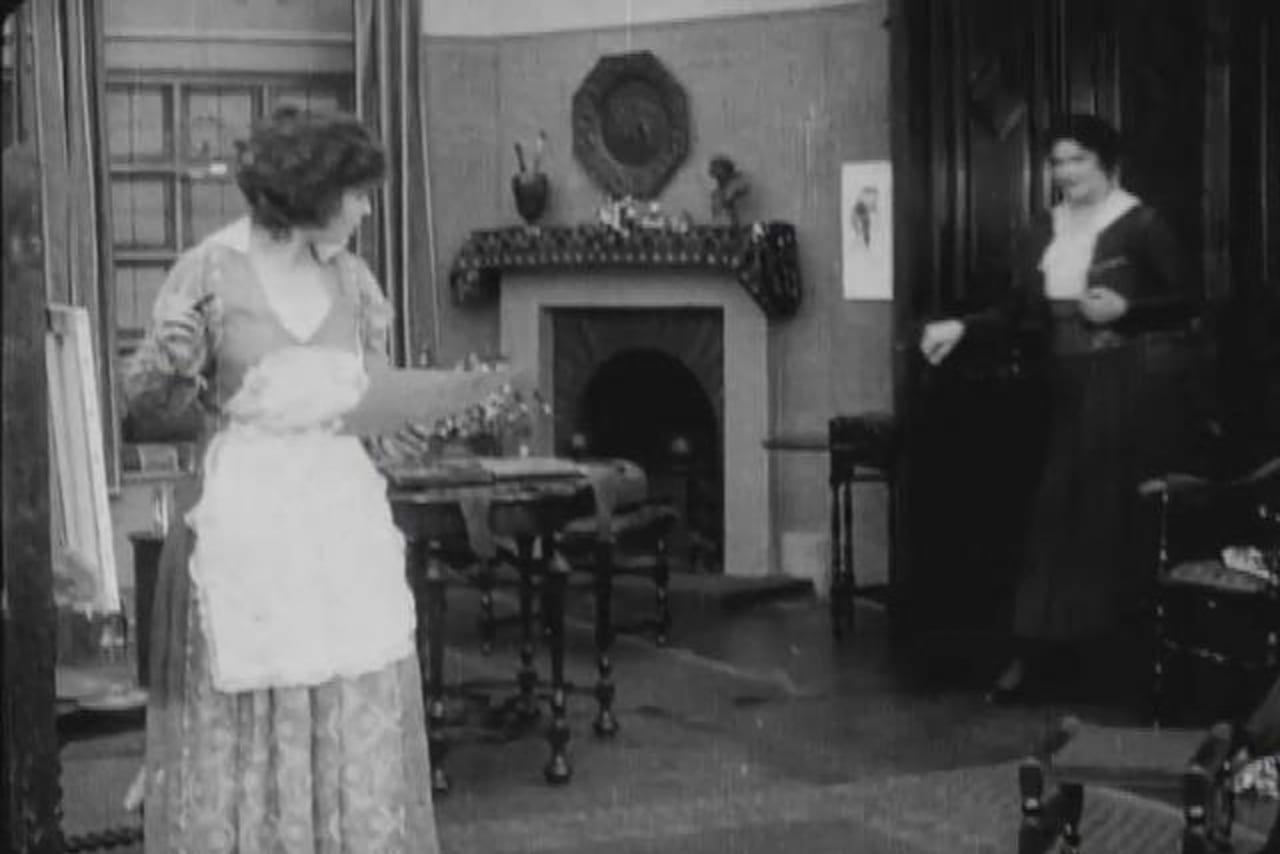
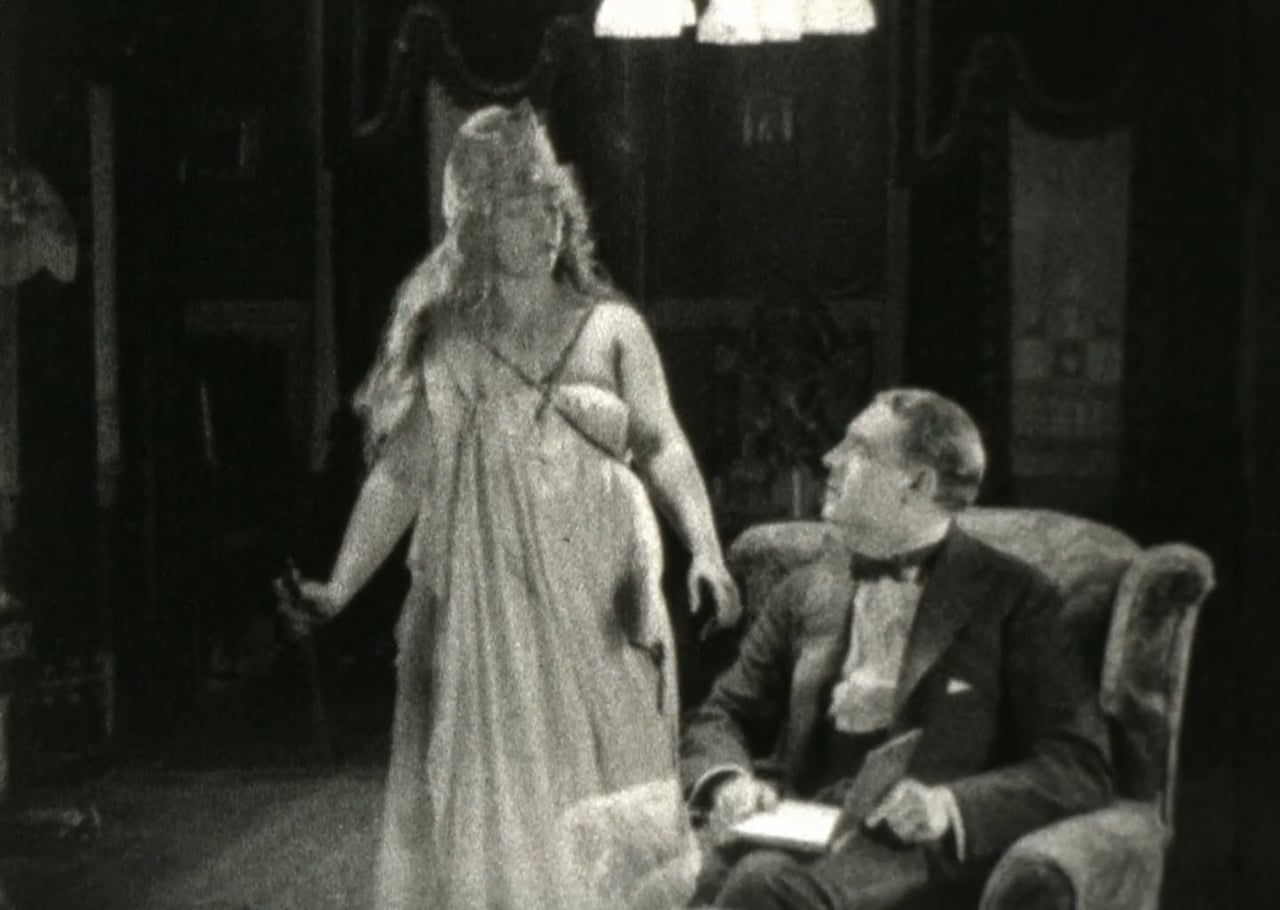
“Pierre, the artist, in his garret sits reading two letters. One is from his old mother, begging him to come back home as she needs his loving care. The other is from Maurice, a millionaire chum, urging Pierre to come and live in luxury in return for teaching him how to paint. Pierre murmurs, ‘My poor old mother!’ drops a tear on the words she has written—and promptly accepts his rich friend’s offer. Then he turns. Standing in the doorway is a slender, dark-complexioned fellow, with a pointed beard. The stranger regards him with a smile. At the millionaire’s home, both young men fall in love with Mariette, the beauty of the neighborhood. She prefers the artist because he is ‘so romantic.’ But when the millionaire proposes she says, ‘yes.’ ‘For love in a cottage,’ she tells herself, ‘has positively gone out of date.’ The artist sorrowfully resigns himself to her choice. He feels no better, however, when he happens to see the black-bearded apparition again regarding him with a sardonic grin. Pierre escapes to Monte Carlo, where he loses all his money. M. Nick (for this is the name of the apparition) lends him funds. The artist sagely wins back his losings, pays his debt and departs. He has no intention of giving the devil the mortgage on his soul. Again in Paris, he finds that Mariette has jilted the millionaire, for, after all, she loves the poor artist.

“Pierre would do anything for his bride. So he hastens to M. Nick to borrow money for the wedding trip. Arriving at the home of his peculiar guardian spirit, he is not a whit dismayed by the growling of the thunder and the blinding flashes of lightning, which seem to warn him against this reprehensible step he is taking. And then he discovers that M. Nick does not hail from the lower regions, after all. He is really Pierre’s long lost uncle who intensely approves of his nephew because he will not consent to go and live upon the savings of his old mother, because he has left the gaming-table when he has won back his money, and particularly, because he was unselfish enough to give up the girl he loved. Everything considered, M. Nick decides to make Pierre his heir. And so, it is shown, that very often a man who looks like the devil is not a devil at all.”

Summary from Reel Life · 24 April 1915
What the papers said

2 reviews

“A two-reel production resembling The Devil in plot, except that the sinister-appearing individual in this part turns out to be an agent of good instead of evil. Ernest Ward plays the lead and is assisted by Florence LaBadie, Morris Foster and Harris Gordon. The story is that of a young artist watched over by a Frenchman of Mephistophelian appearance. The …

Read in full · 1 min

“A two-reel production resembling The Devil in plot, except that the sinister-appearing individual in this part turns out to be an agent of good instead of evil. Ernest Ward plays the lead and is assisted by Florence LaBadie, Morris Foster and Harris Gordon. The story is that of a young artist watched over by a Frenchman of Mephistophelian appearance. The girl marries a millionaire, but later returns to her lover. The comedy is not seen in this until toward the close. It makes an entertaining offering. Numerous scenes are taken in Central Park.”

The Moving Picture World · 15 May 1915

“In accordance with the determination to live up to a consistent grade of films, per se, no cast is given and the story is allowed to unfold at its own merits. That it has what is generally known as a punch, which in this case means a surprise element, is sure. The principal character is a Mephisto-like figure which flits …

Read in full · 1 min

“In accordance with the determination to live up to a consistent grade of films, per se, no cast is given and the story is allowed to unfold at its own merits. That it has what is generally known as a punch, which in this case means a surprise element, is sure. The principal character is a Mephisto-like figure which flits about very much as did the leading character in The Devil some years past and recently recalled to the screen. What, however, we are persistently led to believe is the devil both by script intention and treatment on the part of the director, turns out to be quite another character, wherein lies the unexpected. Incidentally, the offering is a sort of ‘seeing New York’ picture, for it takes in a good many of the city’s prominent sights. Otherwise it is an average offering, with the work of Ernest Warde with his satanic impersonation in pleasant relief. In reality this mysterious person is shadowing a young painter, his far-off relative, to ascertain whether he is worthy to inherit the mysterious one’s large fortune. The impression that the audience gets when he lends him money at the gaming table, is that he is trying to buy his soul, on the order of what happened to Faust. It all turns out for the best, however, in that the well-meaning, if well-disguised relative also helps mend an apparently helpless love affair.”

The New York Dramatic Mirror · 28 April 1915

Have you seen this film, or a print of it?

Prints of films thought lost still turn up in attics, private collections and archives. A record like this one is how the next one gets found.

Tell us about a print

Cast and crew

Cast
Ernest C. Warde as Monsieur Nikola Dupree
Florence La Badie as Mariette
Harris Gordon as Pierre, the artist
J. Morris Foster as Maurice, the millionaire

Every name opens that person's page, with each film they appear in and which of them you can watch.

Watch instead

Films you can watch from the same company

Matched by cast, director and kind

More about this film

Filmed in
Many scenes were filmed in Central Park, New York City.
Bowers’ notes
  1. With Their One Love and The Actor and the Rube, this was one of three films screened in New Rochelle for film critics brought to the studio for a day by Thanhouser’s new publicity director, Leon J. Rubenstein. The intent was to acquaint reviewers with the forthcoming series of pictures made under the personal supervision of Edwin Thanhouser, and “guaranteed” by him to be of good quality. 2. An expanded story by Alexander Lowell, based upon the synopsis, was published in The Motion Picture Magazine, June 1915.

From Volume II: Filmography of Q. David Bowers’ Thanhouser Films: An Encyclopedia and History, reproduced with permission and unchanged. Read the history of 1915 →

Cite as: Bowers, Q. David. Thanhouser Films: An Encyclopedia and History, “Monsieur Nikola Dupree”. thanhouser.org/films/monsieur-nikola-dupree/

Where a print is held

Held by
No print known