1910Violet Gray1,000 feetDrama

Love and Law

Also released as Love and the Law

No copy you can watch online. No print is known to survive. What follows is what does: the release, the cast, the story, and what the trade press said at the time.

The story

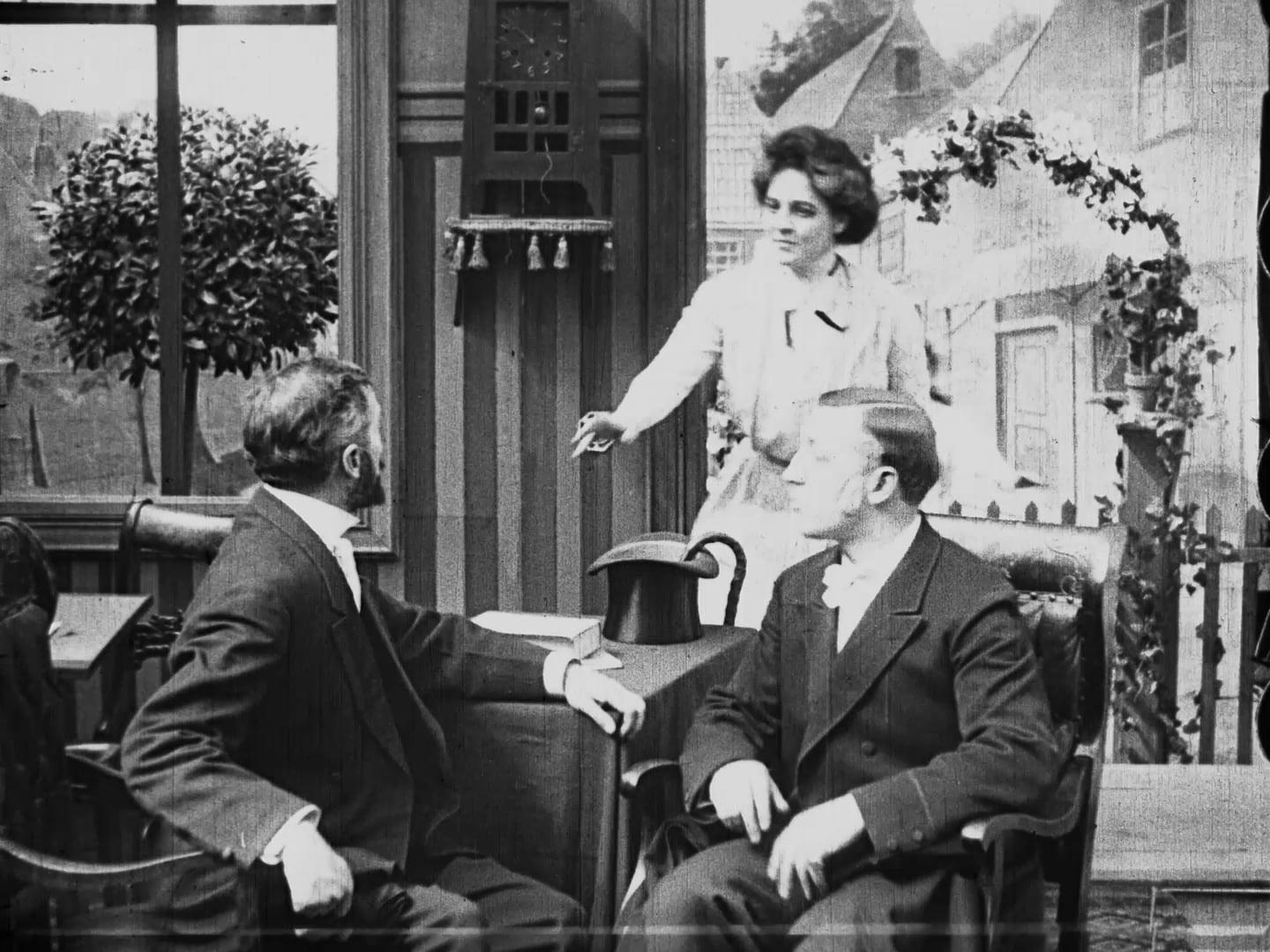
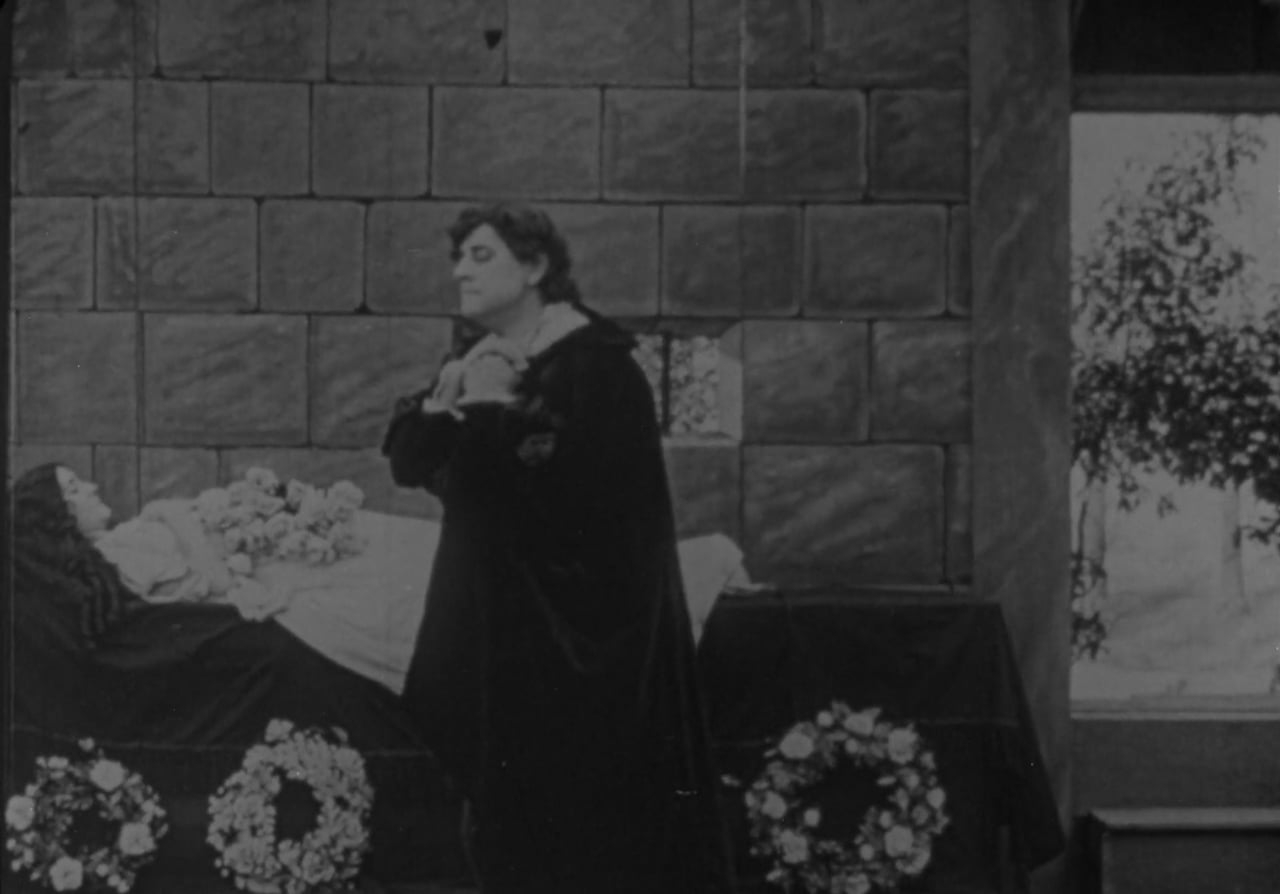
“Sue Jennings and Tom Egan have been sweethearts, Sue decides to marry another man, and holds a secret meeting with Tom, in which she returns his love letters and demands her own. On the same night, Jack Deming, a friend of Tom’s who has lost heavily in speculation on Tom’s advice, calls at the latter’s rooms, very much intoxicated, brandishing a revolver and vowing vengeance. Tom calms his excited visitor, who falls asleep on the couch, after which Tom writes a letter to his former sweetheart and dispatches it by his servant.

“When the servant returns, he discovers his master dead on the floor of his apartment and Jack just leaving the room revolver in hand. Jack is arrested on suspicion, and young Miss Marsh [sic], a bright young woman in the detective department, is detailed from headquarters to investigate the case. She does some clever work in the case, and proves Jack’s innocence in a novel way, incidentally falling in love with the man whose life she is working to save. On the strength of her evidence, Jack is set free; and with love to live for, he starts out to make a new record in life for himself.”

Summary from The Moving Picture World · 17 December 1910
What the papers said

2 reviews · 1 advertisement

“A detective story in which a woman discovers the innocence of a ne’er-do-well charged with murder and determines to marry him after he is reformed. That is the whole story, but in the working out many interesting situations are developed, particularly where she proves the innocence the accused man in a novel manner. In all respects the film is up to the Thanhouser standard and should not fail to interest a large number of people.”

The Moving Picture World · 24 December 1910

“If this bride, like a good many others in stageland and life, had stayed at home where she belonged, she might have avoided trouble. On the eve of her wedding she went to break off an old love affair and left a button from her dress behind. In the midst of his dejection and despair the former lover was confronted …

Read in full · 1 min

“If this bride, like a good many others in stageland and life, had stayed at home where she belonged, she might have avoided trouble. On the eve of her wedding she went to break off an old love affair and left a button from her dress behind. In the midst of his dejection and despair the former lover was confronted by an old associate, whom he had ruined in some stock operations. After threatening his life and relenting, the fellow fell into a drunken stupor. At this the forsaken lover conceived the unpleasant idea of committing suicide, with the evidence of the act directed toward the sleeping man, and forthwith wrote a letter to the girl telling her that he had so arranged things that no one would ever know that he had killed himself. At the sound of the shot the man awoke from his stupor and was found with the revolver and charged with the deed.

“Violet Gray, a woman detective, arrived on the scene. She discovered the button from the bride’s dress, and after questioning the man, she believed him guiltless. On returning to the police station, notwithstanding she had a murder case on hand, she was sent out to watch the presents of a bride. It proved all right, however, for the bride was no other than the lady who was responsible for all that had happened. She discovered that the buttons matched the girl’s dress, and then the bride showed her the letter written by the suicide. All was cleared up by the appearance of the respective parties at the police court, and the freed man fell in love with the lady whose endeavors had saved him. The lead did not sustain the seriousness of the theme, and the improbable succession of incidents failed to be convincing.”

The New York Dramatic Mirror · 21 December 1910

Advertisement

10 December 1910The Moving Picture World1 min

“Love and Law is a lovely yarn that you ought to go to law for, if need be get it! Seldom has a love theme been hitched to a detective theme so neatly—generally the two won’t mix. But we mix them here as skillfully as a druggist ever mixed a compound, and the result we hand you will be like a medicine to your box office. The film shows the fallacies of the circumstantial evidence system as it now exists and will come as a gift to the many who feel such a system pernicious.”

Have you seen this film, or a print of it?

Prints of films thought lost still turn up in attics, private collections and archives. A record like this one is how the next one gets found.

Tell us about a print

Cast and crew

Cast
Julia M. Taylor as Violet Gray, detective

Every name opens that person's page, with each film they appear in and which of them you can watch.

Watch instead

Films you can watch from the same company

Matched by cast, director and kind

More about this film

Bowers’ notes
  1. This film was one of those later billed as the “Violet Gray, Detective” series, which consisted of the following: Love and Law (December 13, 1910), The Vote That Counted (January 13, 1911), The Norwood Necklace (February 10, 1911), and The Court’s Decree (July 7, 1911). However, advertising for the first in the series, Love and Law, simply stated in a headline, “Another subject of the Thanhouser Detective Series,” with no mention of Violet Gray (cf. The Moving Picture World, December 10, 1910). 2. A copycat title of a sort can be found in a Lubin film released several years later, in June 1913: Violet Dare, Detective. Isabel Lamon, earlier with Eclair, played the lead role. 3. Checkmate, released February 17, 1911, and The Sinner, released May 5, 1911, also treat the shortcomings of circumstantial evidence, as do other Thanhouser films of the era.

From Volume II: Filmography of Q. David Bowers’ Thanhouser Films: An Encyclopedia and History, reproduced with permission and unchanged. Read the history of 1910 →

Cite as: Bowers, Q. David. Thanhouser Films: An Encyclopedia and History, “Love and Law”. thanhouser.org/films/love-and-law/

Where a print is held

Held by
No print known