1915Mutual MasterpictureFour reelsDrama

Milestones of Life

Also released as The Four Seasons

No copy you can watch online. No print is known to survive. What follows is what does: the release, the cast, the story, and what the trade press said at the time.

The story

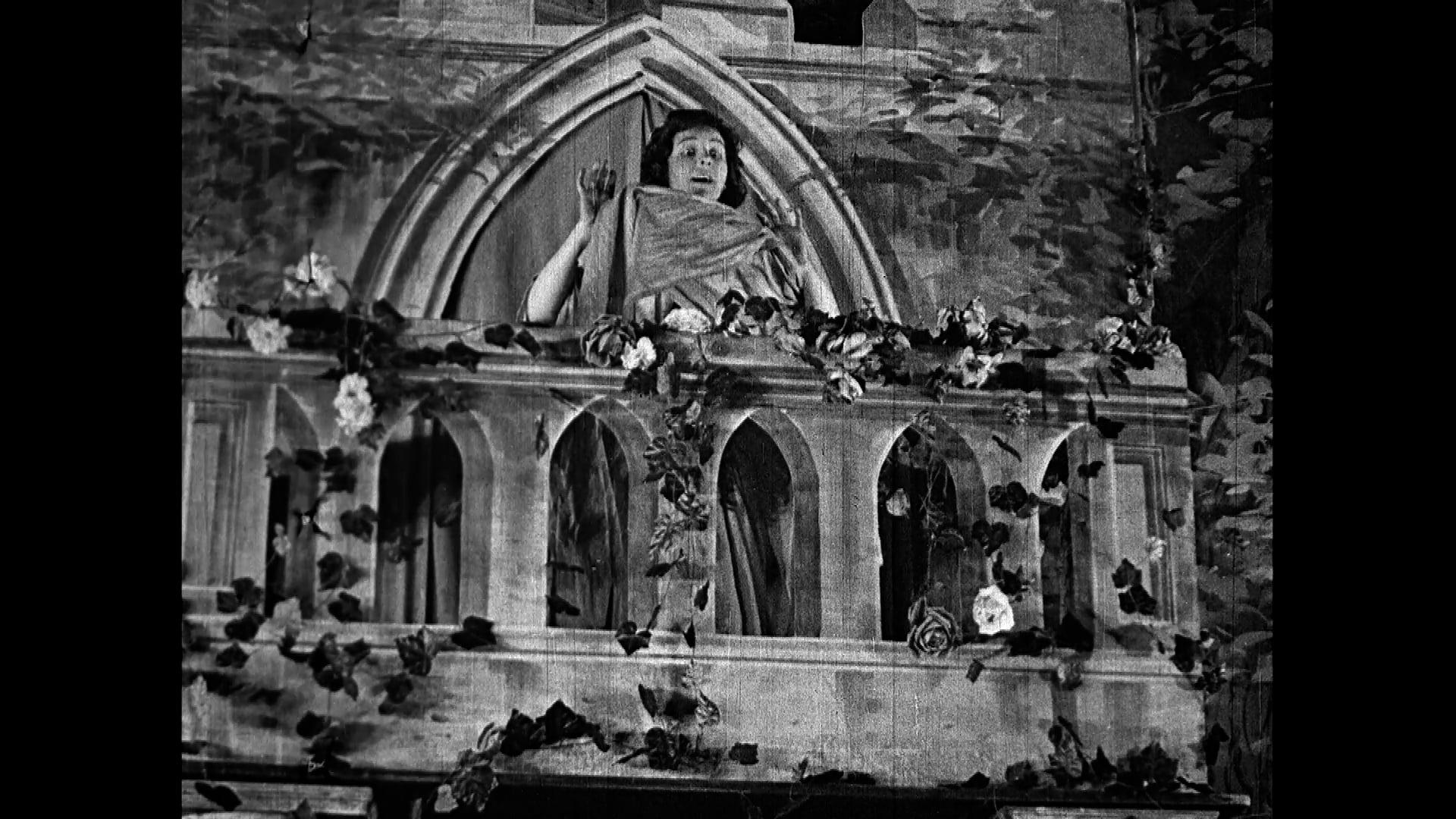
“The things which happen to people in early childhood are more than likely to have a singular influence over them in later life. Most of us do not realize this. We make a point of forgetting certain experiences—but this is just where, some persons claim, a mysterious, ‘sub-conscious’ self gets the better of us. This other self, they say, stores away our experiences like wax cylinder records. And years later, when circumstances jar them up, these buried impressions make us think and do strange things. Little Pauline Avon and Will Hallett, playing together long ago in Dr. Avon’s garden, knew nothing of theories of ‘psycho-analysis.’ Their world was filled with innocent romance, with the love of out of doors, of flowers and pets and games. Will had told Pauline that when he was a man he would surely marry her. And she had accepted this, as she accepted everything that he told her. Adam himself had not such simplehearted obedience from Eve. But always to the Eden of mortals, sooner or later, comes the serpent. And even Dr. Avon’s garden was not proof against the incursions of the historic Evil One. Only, this story being true, and punctiliously up to date, it was not Eve, but Adam who yielded to temptation, coming to him, of course, in the form of a fair creature of the opposite sex.

“Her name was Frances, and she was 17. It is doubtful whether at that time, she had any notion that she was the serpent. She could not help being tall and lily-like, like the ladies in the Book of Chivalry. She might, it is true, have dispensed with those trailing silken skirts, which rustled so deliciously across the grass. Such grandeur placed Pauline, in abbreviated ginghams, plainly at a disadvantage. Still, we must believe, that it was a complete surprise to Frances when nine-year-old William laid his heart at her feet. Frances always kept his note, written with evident effort with a blunt lead-pencil on a scrap of paper. It had amused and touched her deeply. But she told her little lover that she had given her promise already to Mr. John Pomeroy. A sense of personal dignity at stake saved Will from making a baby of himself. Grown men were always getting the better of little boys. He put Frances from his thoughts forever—and devoted himself assiduously to Pauline.

“Pauline, deep down in her heart, never quite forgave, nor forgot Frances. On her wedding day—conscious that her childhood rival was present—she was just a trifle less happy than a bride should be. But several years passed before she saw or heard of Frances again. Then they moved to the city where the Pomeroys lived. The gulf of years between a child of eight and a girl of seventeen is great. But between the wife of twenty-five and the young matron of thirty-four the difference in ages may be minimized. Pauline had lost her baby boy a few months before. Her grief had made her older. Frances’s charms were, perhaps, at their zenith. It was whispered, also, that she was not entirely happy with her husband. She took up William and his wife, socially.

“Little by little, the estrangement between the Pomeroys grew. Frances, unknown to most people, was losing her grip on health. The change affected her way of thinking. Trifles assumed, in her eyes, exaggerated proportions. The scrap of paper filled with William’s childish handwriting now seemed a document of subtle significance. Then, one day, Mrs. Pomeroy overheard her doctor tell her hired companion that their patient might not live long. Frances saw herself as a woman who had been cheated out of her birthright of love and happiness. William Hallett was leaving that day on a business trip to the West. She would follow him. She would fling herself upon his mercy.

“Perhaps never was a man so utterly taken aback as Hallett, when Frances, as the Chicago Limited pulled out of the station, poured out to him her passionate hallucinations. With a few stern words of denial, he silenced her and hurried back to the house of John Pomeroy. The note which the fleeing wife had left her husband was mysteriously intercepted. In an accident to the Limited Frances was killed. Some time later Pauline learned of the meeting on the train between her husband and the woman whom, always, she had instinctively hated. She left William. They were no longer young. Pride, however, would permit no reconciliation. But, mercifully, an odd human coincidence, before many years, flung these two together again. Time had whitened their hair and softened their hearts. In the love of their old age Pauline and William found again the Eden they had lost in youth.”

Summary from Reel Life · 17 July 1915
What the papers said

1 advertisement

Advertisement

31 July 1915The Moving Picture World_3 min

“No more enthralling story has ever been told than this. The sunshine and shadow that now enraptures, now saddens the heart of man! Of the summer of life, when each bird song is of gladsome years to come, and tomorrow is but a ripple of laughter. Of the winter of life, when the bird song is hushed, the pall of the grave descends silently on the fading panorama of bitter years. Together with its symbolic beauty, this picture carries a dramatic force that fairly stuns the senses in its overwhelming truth and realism. A consistently competent cast contributes to an offering of distinctive qualityp Floor) (Episode 4 of The Million Dollar Mystery) (July 13, 1914)

Top of New York, The (July 25, 1913)

Touch of a Little Hand, The (working title: One Little Touch) (Princess) (October 16, 1914)

Toy Shop, The (Princess) (June 12, 1914)

Tracked by the Secret Service (a.k.a. Norton Makes a Discovery) (Episode 14 of The Million Dollar Mystery) (September 21, 1914)

Tracked Through the Snow (July 11, 1915)

Traffic Cop, The (April 8, 1916)

Trail of the Love-Lorn, The (September 29, 1914)

Train Despatcher, The (A spot to see that the blaze did not damage the surrounding property. The house was isolated on a wide lot, the nearest houses being 100 feet away.

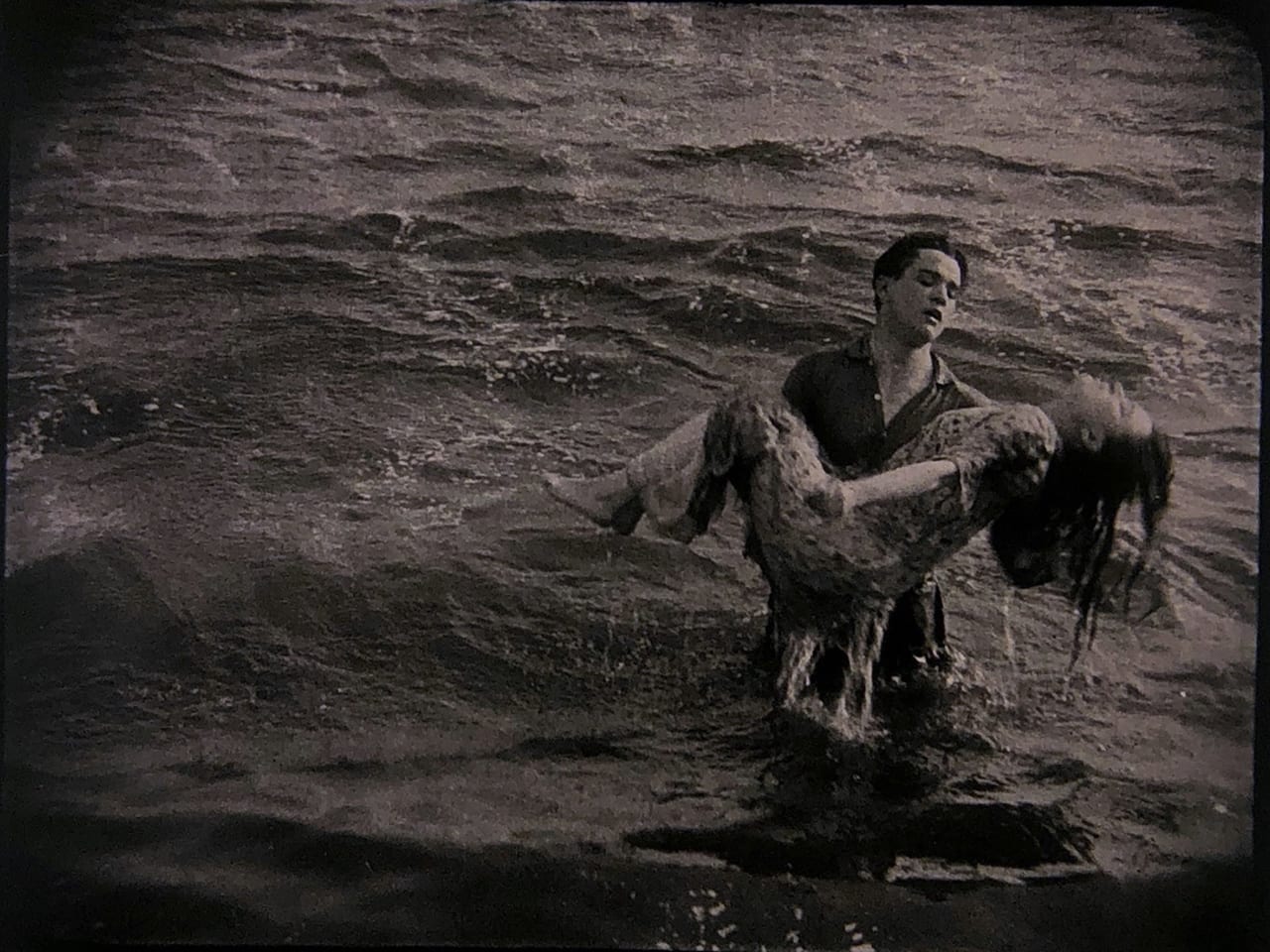
“The spectacle began with the burning of smoke pots inside the house, which produced a bright yellow smoke which shows up well on the film but which is not injurious to breath. Torches were used for the flames inside the house before the actual burning. Suddenly Miss Anderson appeared in front of the house and rushed to the door. She tried to open the door, but it was locked. In her hands was a package of clothing for the baby of a poor family in the house. Unable to open the door, she dashed from the porch and returned with a large stone with which she shattered the lock and then disappeared inside through a cloud of smoke that rolled out when the door was opened.

“A moment later Harris Gordon rushed up to the house and dashed inside. Then he and Miss Anderson appeared at an upper window and climbed out on the rickety roof of the porch. Miss Anderson, who had rescued the baby, handed it to Gordon, who passed it down to the members of the Neptune Fire Company. Then he helped Miss Anderson over the edge of the porch roof, and she was received in the arms of a husky volunteer fireman in the midst of the thick smoke. As she staggered away between two kind women Gordon swung over the edge of the porch roof and dropped to the ground, just as long tongues of flame shot out of the windows behind the spot he had just left.

“These scenes were done twice as were several others in which the mother and relatives of the rescued baby showered blessings upon the heroic Miss Anderson and Mr. Gordon. There was a physician also who attended to the supposed injuries of some of the actors. After this was done her home was set afire. Gordon made another jump from the roof after the house had been fired with oil. As he leaped, flames shot out of the lower windows and curled up over the porch roof and he was forced to jump through them. W. Eugene Moore was the director and his assistant was Lee Wirth. The cameras were operated by Albert Moses and Lawrence Williams. Dave Keleher was location manager.”

Have you seen this film, or a print of it?

Prints of films thought lost still turn up in attics, private collections and archives. A record like this one is how the next one gets found.

Tell us about a print

Cast and crew

Director
Eugene Moore
Cast
Arthur Bauer as John Pomeroy, her husband
Harris Gordon as William Hallett, as a man
Helen Badgley as Pauline Avon, as a child
Leland Benham as William Hallett, as a boy
Louise Rutter as Frances Britton, the other woman
Mignon Anderson as Pauline Avon, as a woman; the wife
Photographed by
Alfred H. Moses, Jr.

Every name opens that person's page, with each film they appear in and which of them you can watch.

Watch instead

Films you can watch from the same company

Matched by cast, director and kind

More about this film

Filmed in
New Rochelle, New York; Long Island City, New York
Bowers’ notes

During the filming of this picture, Harris Gordon was said to have been injured while leaping from the roof of a burning building (the Dillon house in New Rochelle) and, in another incident, narrowly escaped an accident in the yards of the Long Island Railroad.

From Volume II: Filmography of Q. David Bowers’ Thanhouser Films: An Encyclopedia and History, reproduced with permission and unchanged. Read the history of 1915 →

Cite as: Bowers, Q. David. Thanhouser Films: An Encyclopedia and History, “Milestones of Life”. thanhouser.org/films/milestones-of-life/

Where a print is held

Held by
No print known