1910Thanhouser Company1,000 feetLiterary adaptation

Pocahontas

No copy you can watch online. No print is known to survive. What follows is what does: the release, the cast, the story, and what the trade press said at the time.

The story

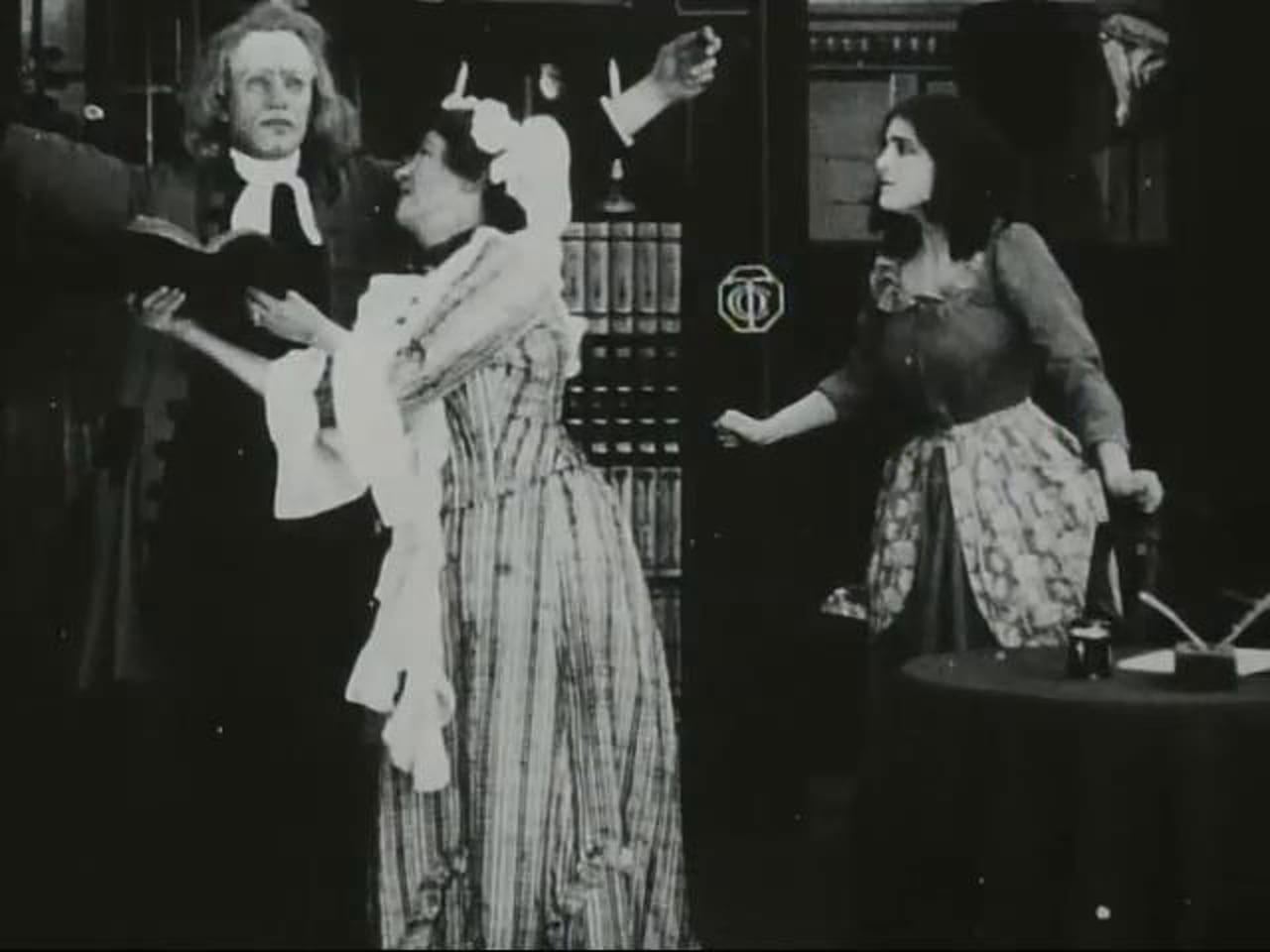
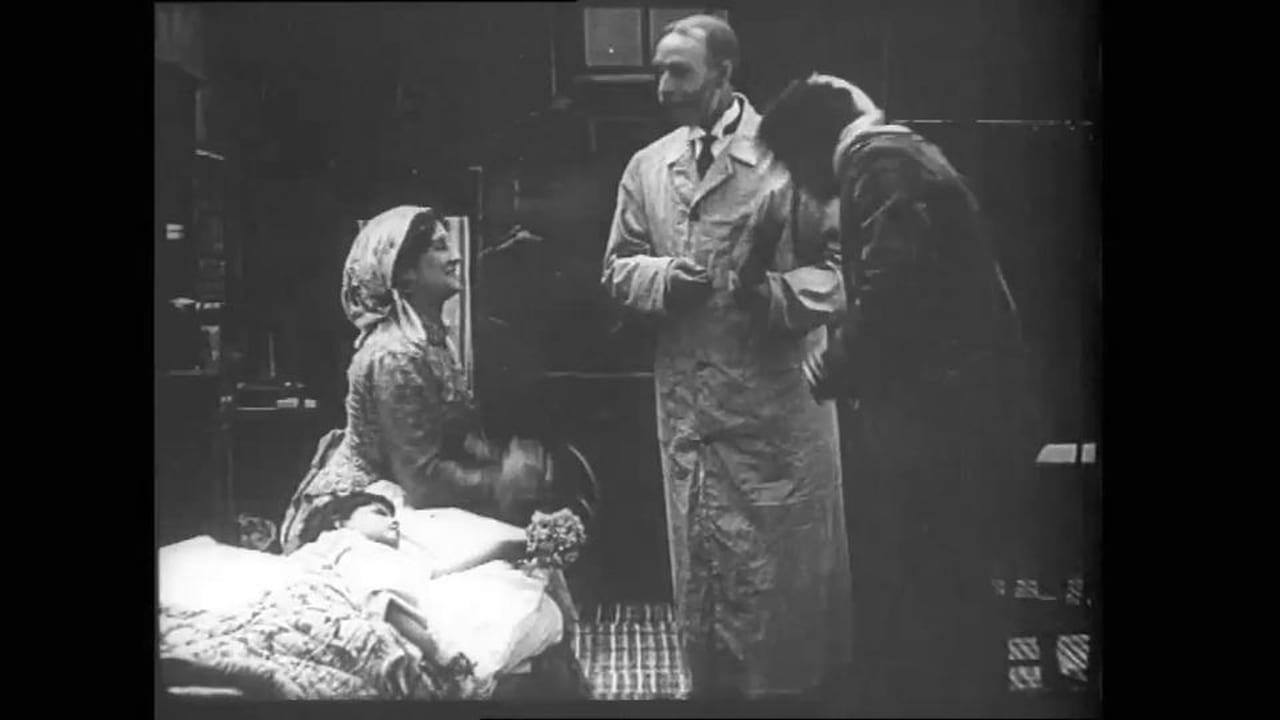
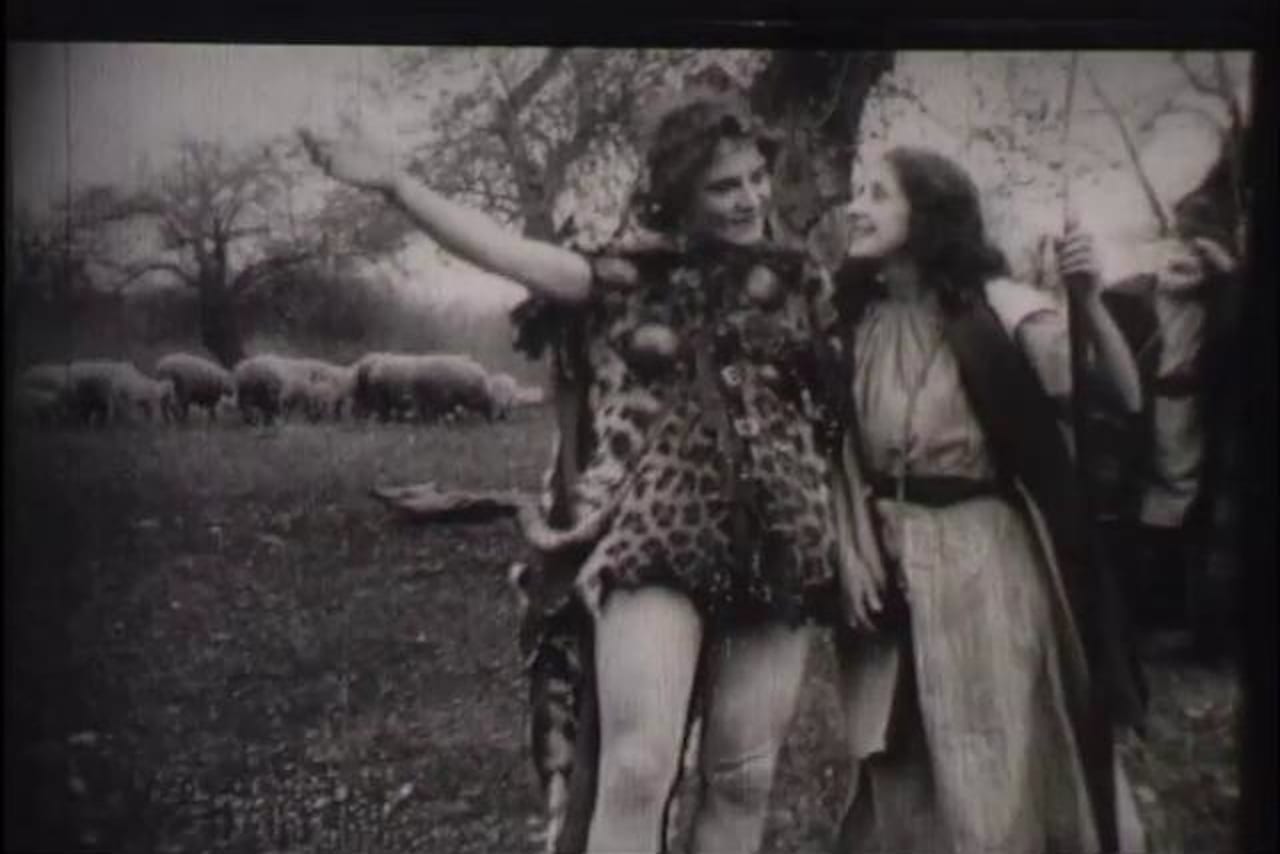
“Captain John Smith comes to America as the head of a band of English colonists and settles in Jamestown, Virginia. While at the head of the colony Smith makes a trip of exploration into the interior and is captured there by King Powhatan, the acknowledged head of all of the red men in Virginia. Powhatan orders his prisoner’s execution. Just as the fatal club is about to descend, Pocahontas, the favorite daughter of the King, throws herself before her father. She begs so fervently that the white man’s life be spared that Powhatan relents and orders his release. Captain Smith returns in safety to his friends. Later Pocahontas is taken prisoner by the English and held as hostage. While a prisoner, she is converted to Christianity, and falls in love with Rolfe, a handsome young Englishman. They are married in a rude little church at Jamestown, and the Indian princess sails away with her husband to England. There she is received with royal honors by King James I, but the foreign flower cannot stand transplanting. She soon sickens and dies, and in her last hours is visited by visions of the home in the wilderness that she would fly back to if she could.”

Summary from The Moving Picture World · 15 October 1910
Background of the scenario

Mrs. Lydia Howard (Huntley) Sigourney was born in 1781, the only child to gardener Ezekiel Huntley and his wife Zeniah in Norwich, Connecticut, where she subsequently began her education, later completed in Hartford in the same state. From 1811 through 1813 Lydia ran a small school with a friend, after which she established her own school in Hartford in 1814. She wrote moral books for her students and had a good albeit brief teaching career until 1816, when it was cut short by her marriage to the widower Charles Sigourney. Although Charles was in business as a hardware merchant in Hartford, he had a background of classical education. The couple experienced monetary problems, and Lydia sought to mitigate them by writing. By 1830 she was a success and had contributed anonymously to more than 20 periodicals. Her earlier and later works were of a varied nature and ranged from “How to be Happy” and “Letters to Young Ladies” in 1833 to a history of Marcus Aurelius, Emperor of Rome (1836). She virtually deluged numerous popular magazines and periodicals for the next twenty years. Edgar Allan Poe criticized her sharply for over-imitation for the styles of others, but as an editor continued to solicit her work. Lydia Sigourney went abroad in 1840 and had numerous works published, including Pocahontas and Other Poems in 1841. Her return to America in 1842 saw the publication of memoirs, nicely titled Pleasant Memories of Pleasant Lands, in which she reproduced passages from the work of the mentally disintegrating poet laureate’s wife, Mrs. Robert Southey. She was harshly criticized for this but never attempted a serious correction or explanation. Lydia Sigourney spent the rest of her years living a charitable, modest, quiet life in Hartford, continuing to produce articles until her death in 1865. When Thanhouser dramatized it for the screen in 1910, the story of Pocahontas was well known, but few people had ever read Mrs. Sigourney’s long and somewhat tedious poem about her.

What the papers said

4 reviews · 1 advertisement

This detailed review-article, written by a reporter who visited the New Rochelle studio and saw the film there, is reprinted in the narrative section of the present work.

The Moving Picture World · 8 October 1910

“We all saw Pocahontas last Tuesday, and after seeing it we knew the Thanhouser Company had lived up to their advanced billing when they called it their masterpiece. Never did any Licensed manufacturer turn out a better picture, and seldom have they turned out one that’s equal. The details, the settings, the staging and the acting, not neglecting the photography, …

Read in full · 1 min

“We all saw Pocahontas last Tuesday, and after seeing it we knew the Thanhouser Company had lived up to their advanced billing when they called it their masterpiece. Never did any Licensed manufacturer turn out a better picture, and seldom have they turned out one that’s equal. The details, the settings, the staging and the acting, not neglecting the photography, put this picture way above par.” (by J.J.S. in the “Chicago Letter” column)

REVIEW by Walton, The Moving Picture News, November 5, 1910:

“This is a delight from one end to the other; the scenery splendid, the acting of a very high order. The story moves on smoothly so that everyone can follow the plot. There are points, historical ones, that need attention, but the whole is such an excellent production one forgets everything but the pleasure of simply enjoying the reel. Such films as these lift moving picturedom into the higher plane, where its most enduring successes will be won. The presentation, in such a worthy form as this, of the timber from whence our nation has been hewn, cannot but meet with commendation. I feel sure England will welcome this stately production with as hearty a welcome as it has received, and merited, in New York.”

The Moving Picture News · 22 October 1910

More reviews2 · 22 October 1910 – 19 October 1910

22 October 1910The Moving Picture World1 min

“It is an achievement of note to get so famous a character as Pocahontas on the films, and this company has accomplished it with fidelity to legend. In other words, the story as it is understood is faithfully depicted in this picture. It is needless to go over it. Perhaps, too, it is not well to look too closely at its production. Probably no one could tell exactly what or was not done, if indeed, the story is anything more than a romance. In producing the picture the actors have represented scenes as they are understood, and in doing that they have pleased a majority of those who will see it.... The Thanhouser people are particularly happy in reproductions of this character and their reputation is gained by this latest addition to their list.”

19 October 1910The New York Dramatic Mirror1 min

“Great pains have been taken in this film to give a dignified historical allegory in a series of scenes telling the story of John Smith, Pocahontas, and Rolfe, but somehow the scenes are too crowded for pictorial beauty and too stiffly acted for dramatic effect. The picture, therefore, falls short of the mark aimed at, although it is not unworthy of some praise. The details of some of the costuming evince considerable care, and the scenes are well selected with an eye to consistency if not to artistic finish. One scene shows the copy of Henry Hudson’s vessel used in the Hudson-Fulton celebration, and it is supposed in the film to represent the ship that brought John Smith and his party to America. It was not as convincing as might have been supposed. There are a number of flaws in the costuming that should not go unnoticed—the cloth trousers worn by some of the Indians, the iron hatchets carried by at least two of them, the corsets and tailor-made fancy Indian costume worn by Pocahontas.”

Advertisement

8 October 1910The Moving Picture World1 min

“Pocahontas is a magnificent portraiture of court and colony life as lived in the long ago by an Indian girl and the persons who, to the mere fact of acquaintanceship with her, have passed down into time as big historical figures....”

Have you seen this film, or a print of it?

Prints of films thought lost still turn up in attics, private collections and archives. A record like this one is how the next one gets found.

Tell us about a print

Cast and crew

Cast
Anna Rosemond as Pocahontas
Frank Crane as Rolfe
George Barnes as Captain John Smith

Every name opens that person's page, with each film they appear in and which of them you can watch.

Watch instead

Films you can watch from the same company

Matched by cast, director and kind

More about this film

Bowers’ notes

It is believed that a reproduction of Hendrik Hudson’s ship, Half Moon, made for the Hudson-Fulton Centennial celebration observed in 1909, was used in certain scenes of this film.

From Volume II: Filmography of Q. David Bowers’ Thanhouser Films: An Encyclopedia and History, reproduced with permission and unchanged. Read the history of 1910 →

Cite as: Bowers, Q. David. Thanhouser Films: An Encyclopedia and History, “Pocahontas”. thanhouser.org/films/pocahontas/

Where a print is held

Held by
No print known