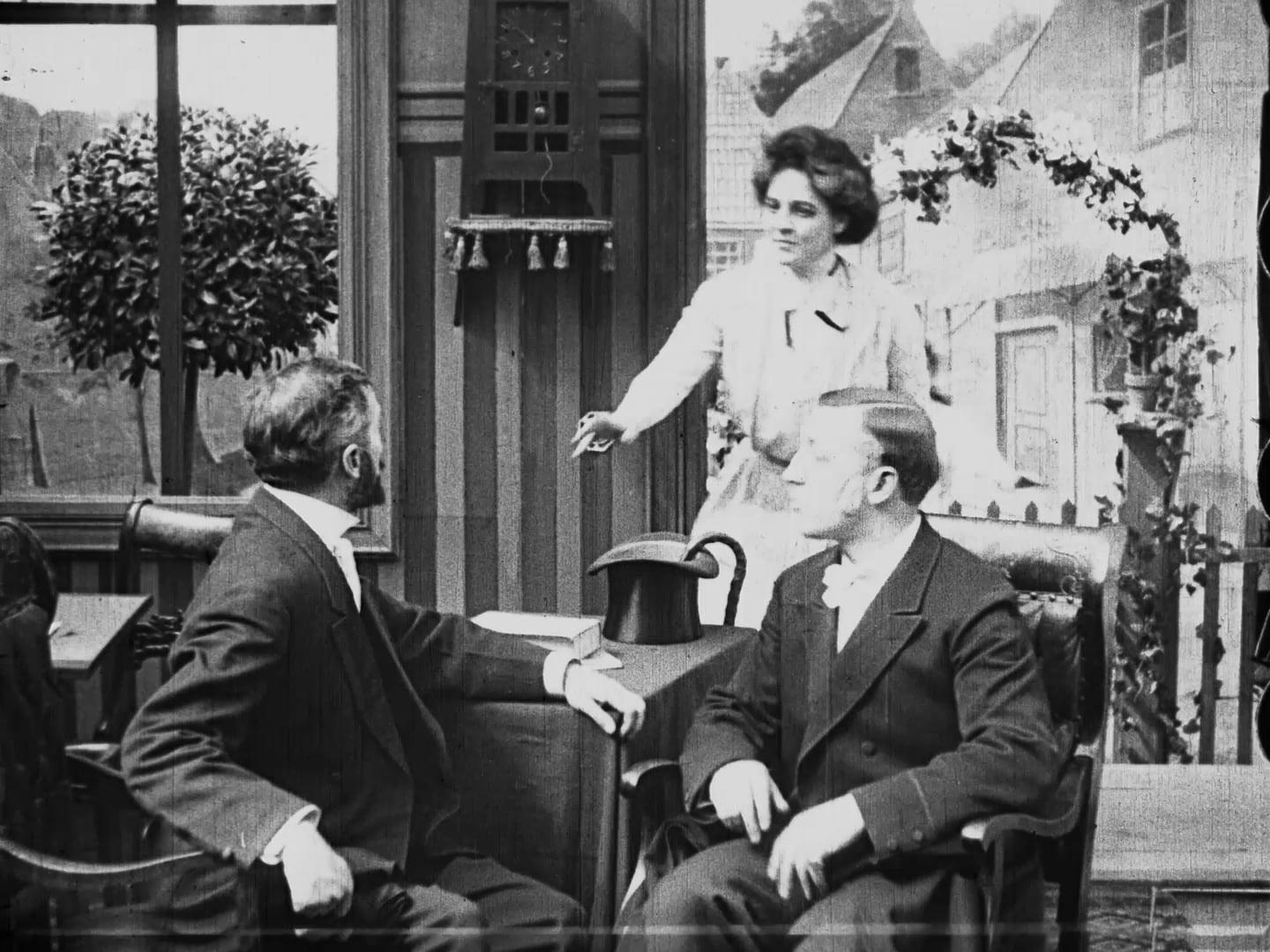
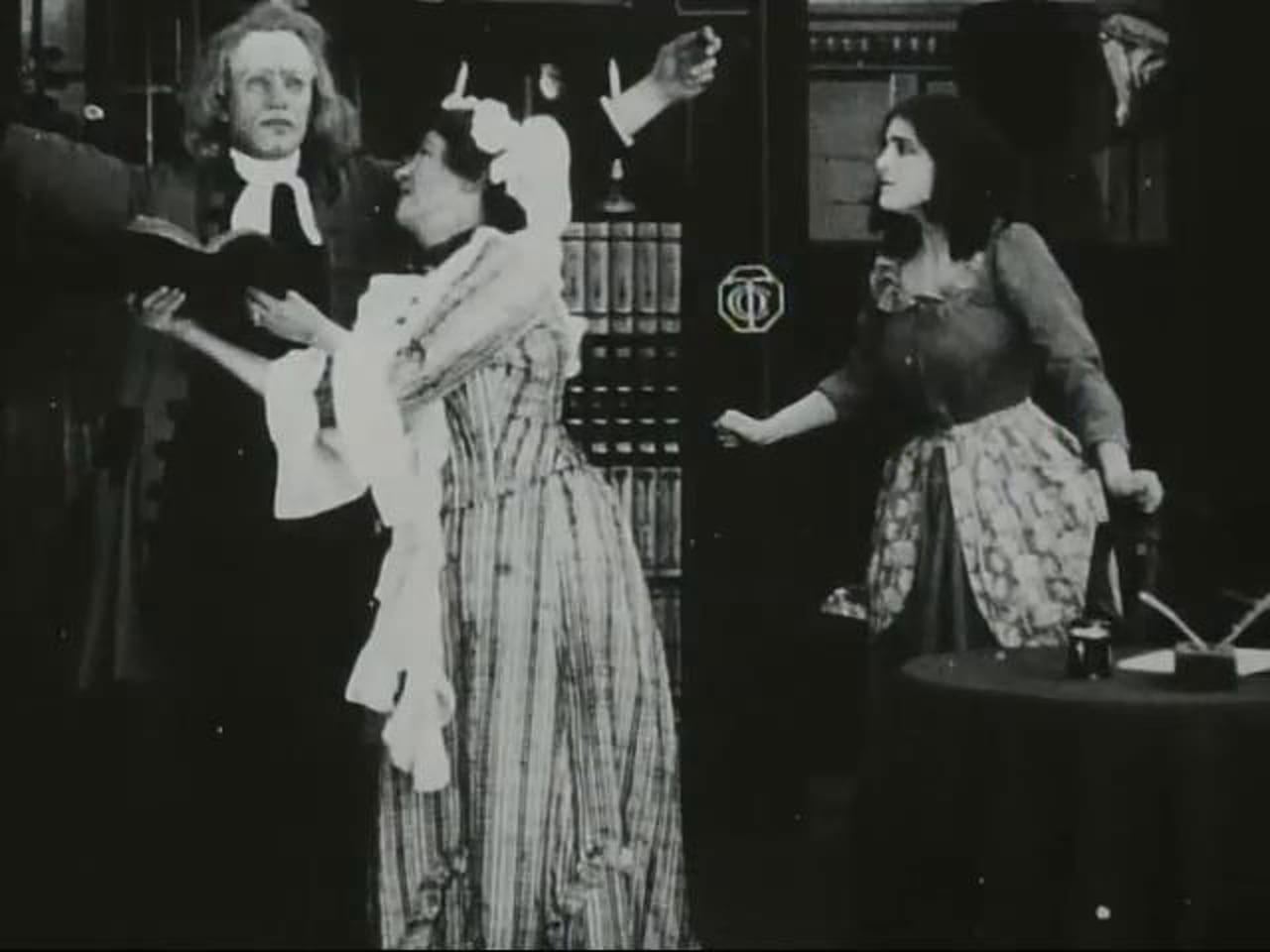
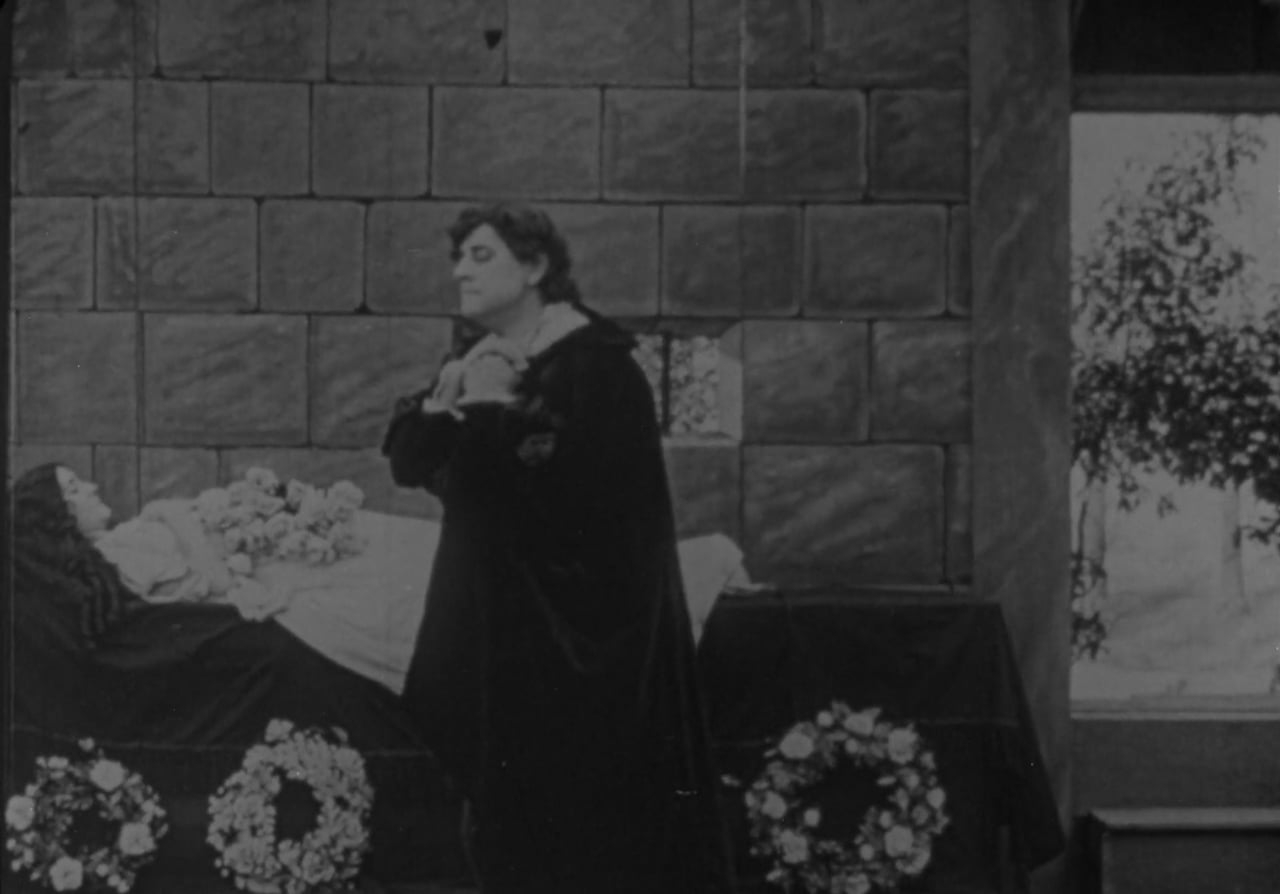
The Thanhouser film, Robert Emmet, was inspired by poetry written by Thomas Moore (1779-1852), the son of an Irish grocer, who was born and raised in Dublin. His education was secured at Trinity College, where he was a contemporary of Robert Emmet, and where the latter became inspired by Moore’s song, Let Erin Remember. The two were close friends, and Moore used Emmet’s love affair with Sarah Curran as the basis for two songs, She is Far From the Land Where Her Young Hero Sleeps and Oh, Breathe Not His Name, but young Miss Curran was not to wed Emmet, and eventually she found greater love with another suitor. Moore’s primary work, Irish Melodies, was created over a long span of years, 1801-1834, and included the preceding. The lyrics therein earned him the sobriquet “The Bard of Ireland.” A good musician with a knack for rhyme and writing, he also wrote satires, epistles, biographies, odes, and miscellaneous poems. A number of Moore’s songs achieved prominence in America and were heard in music and concert halls, Chautauquas, and other places where people gathered to sing. Included were The Harp That Once Through Tara’s Halls and the more familiar Believe Me, if All Those Endearing Young Charms. In 1817 his narrative poem, Lalla Rookh, was published and was acclaimed as a masterpiece, only to fall into oblivion decades later, but not before it became the theme of a pageant later in the century by noted American showman P. T. Barnum.
Robert Emmet, the subject of the Thanhouser film and of certain of Moore’s lyrics, was born in Dublin in 1778, the son of Robert Emmet, physician to the lord lieutenant. Although he distinguished himself academically at Trinity College in Dublin, he ordered that his name be stricken from college records in April 1798, as a protest to the activities of Lord Clare, chancellor of the University, who interfered with the students’ political activities. By April 1799 a warrant for his arrest was issued, after which he went to France, remaining there through 1802, where he met with members of the United Irishmen who had been exiled in 1798 and had enlisted French support for a new political effort. Meeting with Napoleon in Paris in October 1802, Emmet was led to believe that the accord of Amiens would be violated soon and that French forces would invade England in August 1803. Dissention among the Irish insurgents in France resulted in uncertainty on the political scene. Emmet went to Ireland and in 1803 marshaled forces there and laid plans for a revolt. In the meantime his brother, Thomas, was in Paris enlisting the aid of Napoleon and Talleyrand. While Robert was gathering munitions and enlisting confederates to his cause, the government discovered his arms cache, forcing him to act quickly. Poorly organized, his hastily arranged insurrection was a complete failure. For the next several weeks he remained in hiding, not far from Sarah Curran, to whom he was engaged. The end came on August 25, 1803, when he was captured. Subsequently he was convicted of treason, and on September 20, 1803 he met his death on the gallows. His enthusiasm, brash fighting for a lost cause, and reckless gallantry earned him the position of a romantic hero in Irish history, inspiring not only Moore but numerous others as well.