The story
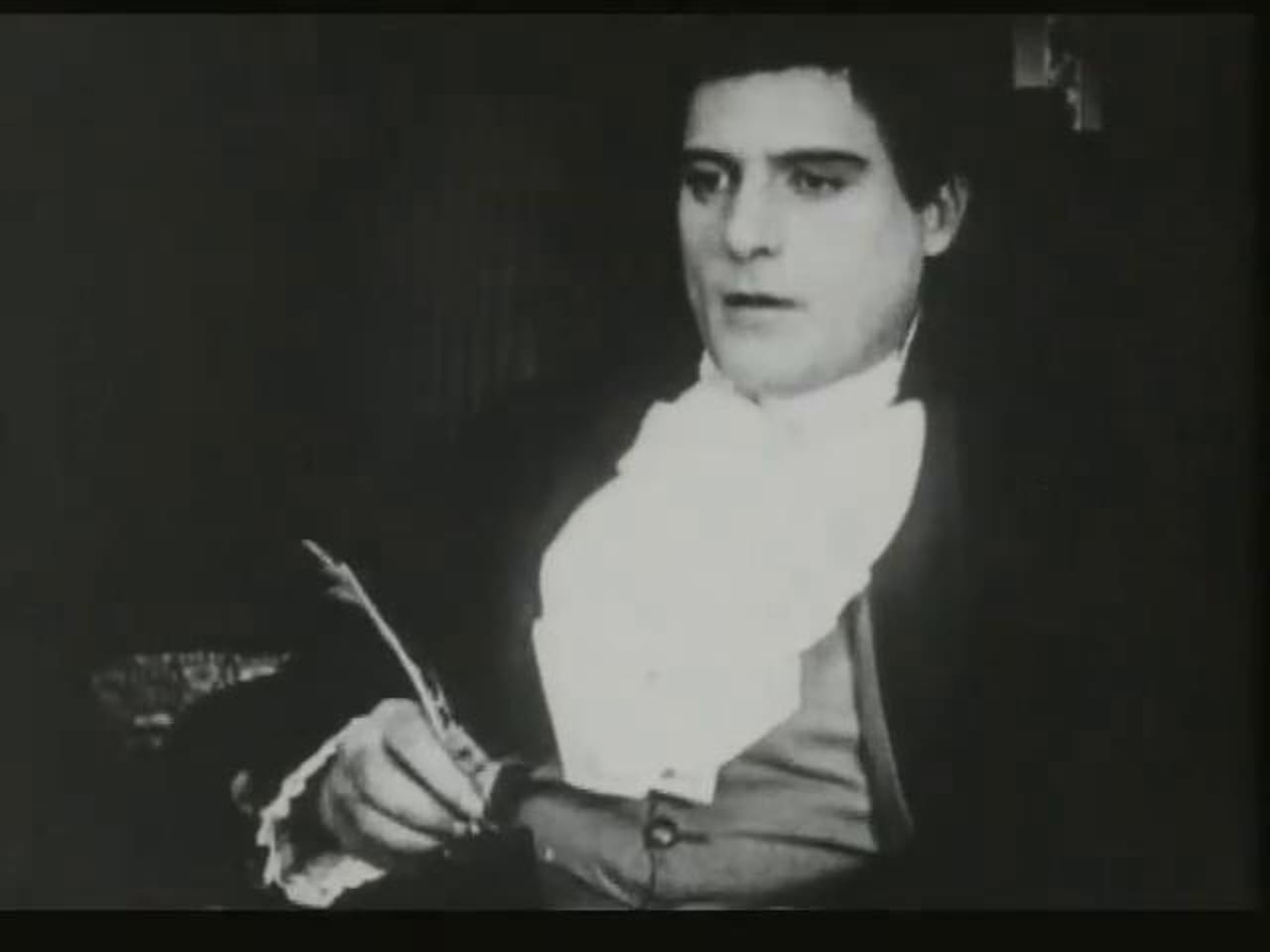
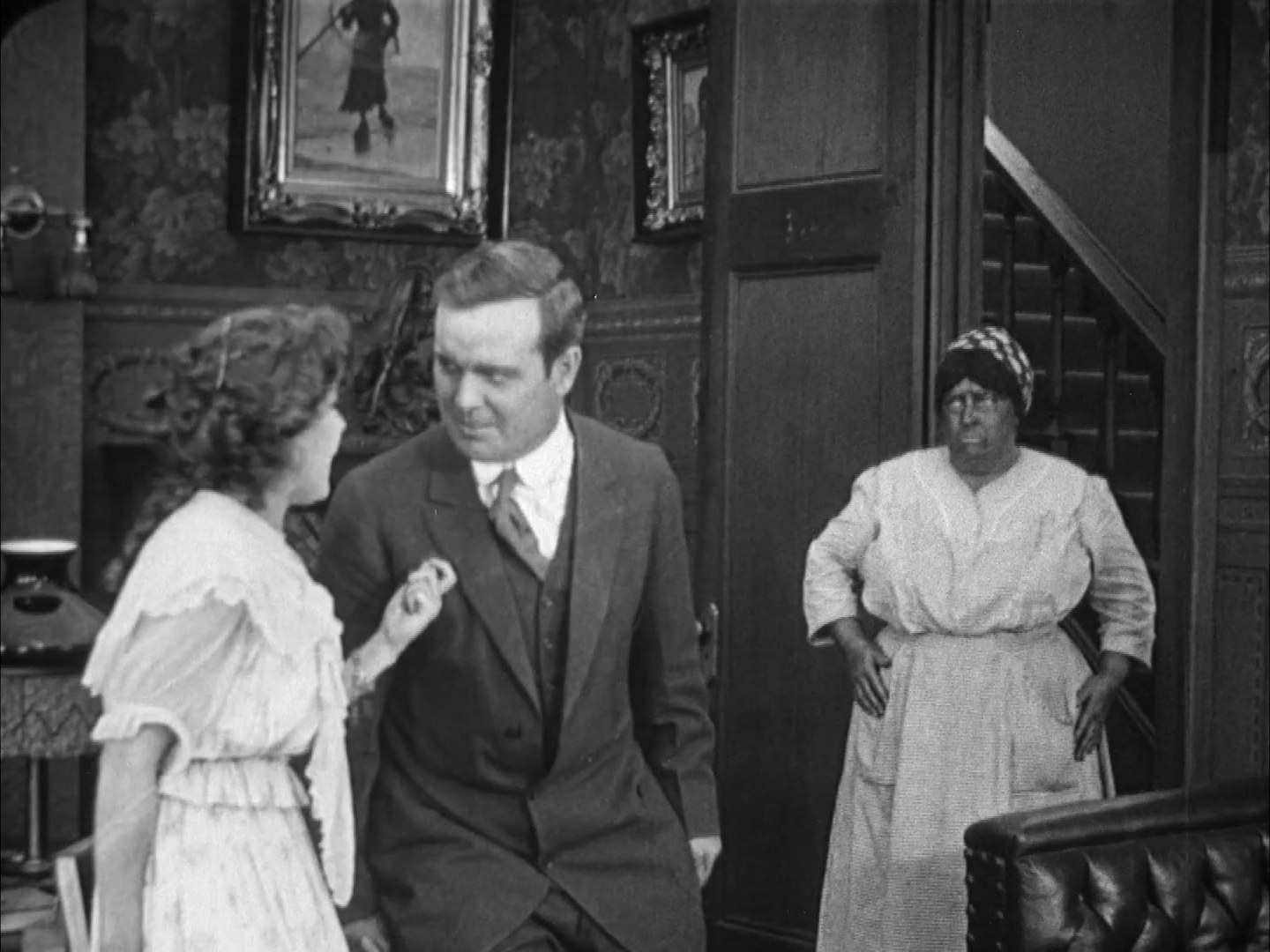
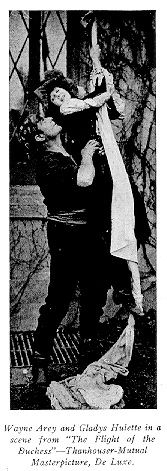
“The Thanhouser Film Corporation has found in Browning’s poem, The Flight of the Duchess, the theme for one of the most interesting and picturesque comedy-dramas ever produced upon the screen. Being extremely popular in literature, it will be equally popular in motion pictures, where the mixture of medieval and modern settings, with the outdoor life of gypsying, gives the broad range to the artistic imagination of the producer. Gladys Hulette, the charming little Thanhouser star, makes an exquisite little duchess-gypsy, with her glowing dark eyes and hair, her vivacity and her good taste. She is supported in this picture by Robert Gray as the Earl, the young Duchess’ guardian; Barnett Parker as the Duke, Nellie Parker Spaulding as the Duke’s Mother, Wayne Arey as the Gypsy Blacksmith, and Caroline Lee as the Gypsy Queen.
“In the beginning, the trouble in the duchy started when the old Duke, satiated with hunting and other diversions, dies, leaving his ‘sick, tall, yellow Duchess with the infant in her clutches.’ The Duchess then takes to traveling, with her young son. Returning with the idea that it should be romantic in the northern land where he lives, just as he had been told it would be in Paris, the Duke, now a grown man, orders that all the servants and yeomen dress as in medieval days, and he commands that his learned men look up the books of laws and of customs during that time. The Duke’s orders are carried out, and his duchy is turned into great discontent. Soon his ‘plan admits a wife, to meet his eye with the other troubles, to sit thus, stand thus, see and be seen.’ Straightway a young girl, suitable to be his wife, is found. She is young and in a convent, without much thought of the serious things of life.
“The old Duchess is displeased at the idea, but she can do nothing. So she resolves, therefore, to make it unpleasant for the little Duchess who shall supplant her. It was the Duke’s oldest retainer who went for the lady. The gaily bedecked palfrey which he brought for her in lieu of the motor car which she had probably expected, pleased the young girl, who took the whole matter as a huge joke. On the way to the castle where the betrothal party was to be made a gala occasion, the prospective duchess first saw the gypsies who were later to be her life companions. While the gypsy blacksmith fixed the shoe her palfrey had thrown, the gypsy queen told her fortune. With one long look into the eyes of the handsome blacksmith whose own eyes shone with ardor, and, with a sigh, the lady rode on to the castle and the waiting Duke.
“With true medieval pomp he welcomed her, but her first shock came when he merely smirked when advancing to meet her clad in the ancient armor of his forebears. That was only the beginning. Within the first hour she was in the castle, the lady learned that she as to be subdued and sat upon and treated with all the scorn and contumely that the Duke and his mother believed should be the portion of brides of the Middle Ages. There was no escape, it seemed, but the climax came when the Duke, preparing for a hunting party with the aid of his librarian and books, demanded that his betrothed take part in the ceremony, her role being to ride forth with a bowl of water and wash the hands of her liege lord. That was where she rebelled. Instead of washing his hands, she merely threw the bowl of water at his lordly head, and got a proper trimming from his yellow mother for her sacrilege.
“Realizing that arguments were of no avail, the Duke started off on his party without having his hands washed. The delay so occasioned was quite long enough for the gypsies to arrive, the gypsy queen having it in mind that the Duke would give her the money his ancestors had always considered right. The Duke could not see the matter in exactly this light though, but he did give the gypsy queen a promise of a purse if she would go into the castle and give his promised bride a good scare. The old crone assented. It was the chance for which she had been looking since she had first seen in the eyes of her beloved grandson, the blacksmith, the look of hopeless longing for the lady he believed could never be his. So they all rode away, and the gypsy queen went in to the lady—but not to frighten her. Instead she drew for her a picture of the wild, free life of a gypsy; she told her of love that was waiting for her, and finally she persuaded her to flee from all the terrors the castle held and go with the gypsies as their child. It was easy to go away—for there was no one left about the castle to prevent, and at the foot of the hill they found, as though by premeditation, the old priest who had said prayers for the Duke. Perhaps it was a somewhat hurried wedding of the blacksmith and the lady out there on the highway. However, she never regretted it.”
Summary from Reel Life · 26 February 1916