1914Thanhouser CompanyTwo reelsDrama

The Messenger of Death

No copy you can watch online. No print is known to survive. What follows is what does: the release, the cast, the story, and what the trade press said at the time.

The story

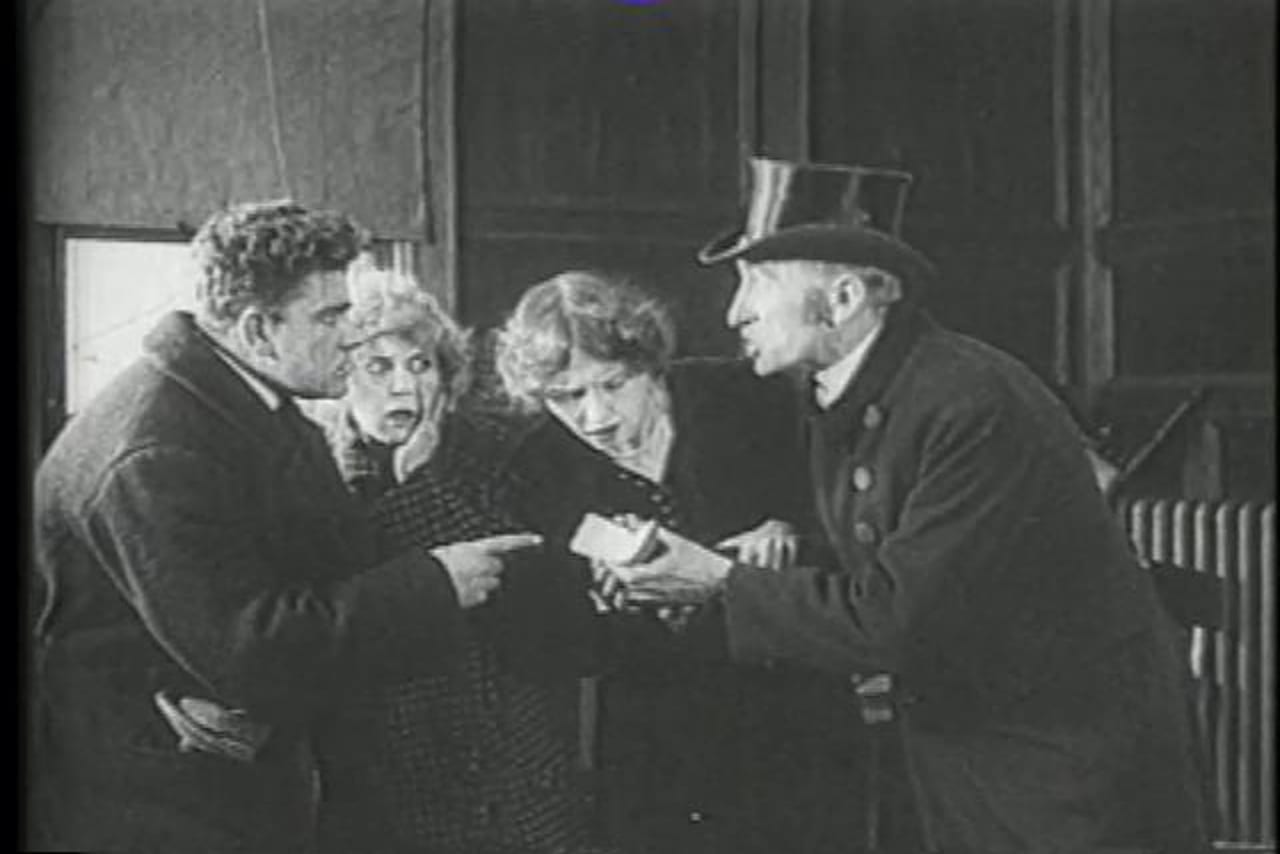
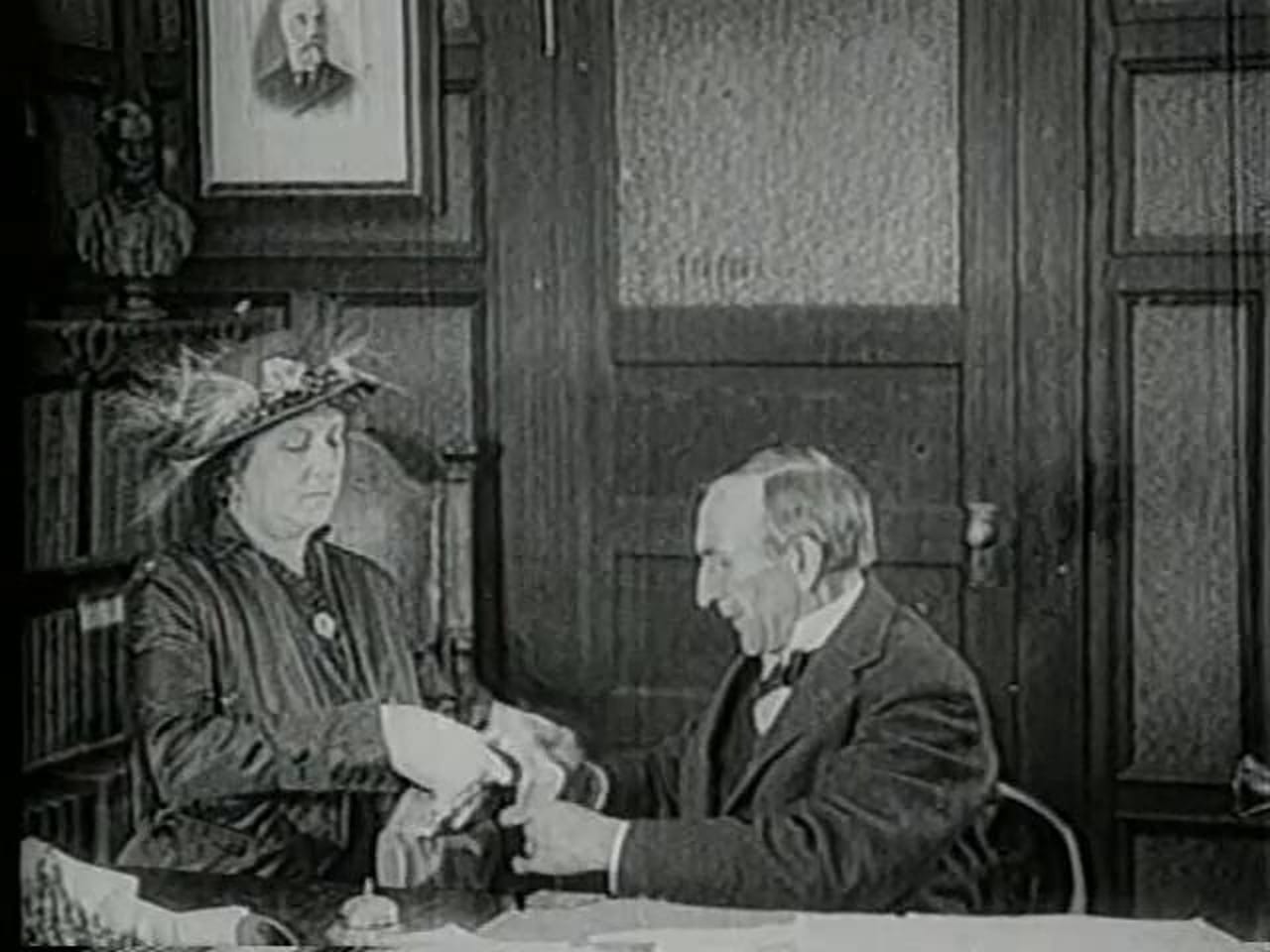
“Jack Tennant, a young English officer stationed with his wife at a post deep in the wilds of India, leaves on tour of inspection of his district, entrusting his wife to the care of a faithful old sergeant. While the officer is away Raj, a villainous native chief who has long coveted Tennant’s wife, makes an attack on the post. Mrs. Tennant keeps a diary of the siege. Upon Tennant’s return he finds his wife, the faithful old sergeant and several of his soldiers dead. The last entry in Mrs. Tennant’s diary seems to indicate that she has killed herself rather than be dishonored, but no powder marks are found on her body. From the fact that no bullets in Mrs. Tennant’s revolver are exploded the physician arrives at the real solution and concludes that the old sergeant had determined to save her from a fate worse than death. The physician keeps his discovery to himself and the young officer’s wife is duly buried with all the honors due a heroine.”

Summary from Reel Life · 25 July 1914
What the papers said

4 reviews · 1 article

“An American producer who sets out to reproduce the scenic characteristics of so remote a land as India is obviously working against considerable odds, and it may be said, therefore, that the present film, which deals with Indian life, is quite surprisingly successful in the circumstances. Apart from its very fairly effective Indian scenery, it possesses a satisfactory plot full …

Read in full · 1 min

“An American producer who sets out to reproduce the scenic characteristics of so remote a land as India is obviously working against considerable odds, and it may be said, therefore, that the present film, which deals with Indian life, is quite surprisingly successful in the circumstances. Apart from its very fairly effective Indian scenery, it possesses a satisfactory plot full of incident and rapid actions and is exceedingly well acted by those two excellent players, Mignon Anderson and Irving Cummings. The numerous military episodes gain considerably in realism and effectiveness by the presence in the film of a detachment of smartly uniformed mounted troops. It is a well presented melodrama of Anglo-Indian life and is pretty certain to be popular with the average audience.”

The Bioscope · 25 February 1915

“During her husband’s absence the wife of a young English officer in charge of a post in India is attacked by a villainous native. When the man returns he finds that she and the old sergeant, left to protect her, and the servants have all been killed. From the note which she leaves it appears that rather than surrender she …

Read in full · 1 min

“During her husband’s absence the wife of a young English officer in charge of a post in India is attacked by a villainous native. When the man returns he finds that she and the old sergeant, left to protect her, and the servants have all been killed. From the note which she leaves it appears that rather than surrender she has killed herself, but the company surgeon finds no powder marks on the body and comes to the conclusion that her guard has shot her to save her from a fate worse than death.”

The Morning Telegraph · 26 July 1914

More reviews2 · 8 August 1914 – 5 August 1914

8 August 1914The Moving Picture World1 min

“A two-reel picture of the Indian frontiers in which the hill people attack the compound left in the care of a sergeant (Irving Cummings) with a handful of men and the sister of the captain to the guard. There is very little dramatic action in it, hardly enough to fill out one reel, and the ending is tragic without the deep significance that makes tragedy worthwhile. A weak offering.”

5 August 1914The New York Dramatic Mirror1 min

“Capable work on the part of the players is perhaps the best thing that can be said for this unduly long script. Mignon Anderson and Irving Cummings, trapped by an uprising of the Indians and with but a few cartridges between them, decide to shoot themselves rather than be taken by the brown men. As she lacks courage he shoots her. There is really little more action to the entire two reels than this. The sight of the numerous hillsmen of India and the British soldiery who take some of the scenes at a smart canter will hardly prove engrossing, especially when their actions, as here, seem to some extent deftly introduced padding. The country in and around Westchester, however, has given some worthwhile scenes, and the film throughout bears the careful work on the part of the camera. The troops leaving the fort to quell a threatened uprising, the treacherous natives attack and hem the sergeant and the captain’s daughter in the house with a few faithful ones. A messenger escapes and brings the troops back, but they arrive just too late to avert the tragedy described above.”

Article

22 August 1914Reel Life1 min

“A picturesque scene presented itself outside the new studios of the Thanhouser Company at New Rochelle not long ago, at the hour of nine in the morning, when comes the daily call to rehearsal. Through the lane between the commodious new buildings of cement came a troop of mounted Arabs on black horses. In their gold-braided uniforms and snowy turbans they were a striking cavalcade, and many of the natives gathered to admire. Heads were thrust out of studio windows as the Oriental riders drew rein below. There were about a dozen beautiful horses, all black except one which was snowy white. Then word was passed round that the Arabs were a feature of the new drama in process of production, The Messenger of Death. The New Rochelle directors certainly believe in putting realism into pictures, and no subject is too ambitious to attempt, according to C.J. Hite, who has even used as his mise-en-scene the bottom of the sea.”

Have you seen this film, or a print of it?

Prints of films thought lost still turn up in attics, private collections and archives. A record like this one is how the next one gets found.

Tell us about a print

Cast and crew

Cast
Charles Mather as Jack Tennant, in charge of an English agency in India
Edward Ward as Mahal, another native
Eugene Moore as Khan, a native
Irving Cummings as Jones, a faithful old sergeant
John Lehnberg as Raj, a villainous native
Mignon Anderson as May, his wife
Mr. Shay as lieutenant

Every name opens that person's page, with each film they appear in and which of them you can watch.

Watch instead

Films you can watch from the same company

Matched by cast, director and kind

More about this film

Filmed in
Westchester County, New York
Bowers’ notes
  1. Some notices state May is Jack’s daughter or sister, rather than his wife. 2. One trade notice gave the film length as 2,630 feet.

From Volume II: Filmography of Q. David Bowers’ Thanhouser Films: An Encyclopedia and History, reproduced with permission and unchanged. Read the history of 1914 →

Cite as: Bowers, Q. David. Thanhouser Films: An Encyclopedia and History, “The Messenger of Death”. thanhouser.org/films/the-messenger-of-death/

Where a print is held

Held by
No print known