The story
“It will be remembered that the Countess Olga had darted up the stairs during the struggle between Braine and his captors. The police who had followed her were recalled to pursue one of the lesser rogues. This left Olga free for a moment. She stole out and down as far as the landing. Servan, the Russian agent, stood waiting for the taxicab to roll up to the porte cochere for himself, Braine, and Vroon. Norton had taken Florence by the hand, ostensibly to conduct her to the million. Suddenly Braine made a dash for liberty. Norton rushed after him. Just as he reached Braine a shot was heard. Braine whirled upon his heels and crashed to the floor.
“Olga, intent upon giving injury to Norton, whom she regarded equally with Hargreave as having brought about the downfall, had hit her lover instead. With a cry of despair she dashed back into Florence’s room, quite ready to end it all. She raised the revolver to her temple, shuddered, and lowered the weapon; so tenaciously do we cling to life.
“Below they were all stunned by the suddenness of the shot. Instantly they sought the fallen man’s side, and a hasty examination gave them the opinion that the man was dead. Happily a doctor was on the way, Servan having given a call, as one of the Black Hundred had been badly wounded. But what to do with that mad woman upstairs. Hargreave advised them to wait. The house was surrounded; she could not possibly escape save by one method, and perhaps that would be the best for her. Hargreave looked gravely at Norton as he offered this suggestion. The reporter understood: the millionaire was willing to give the woman a chance.
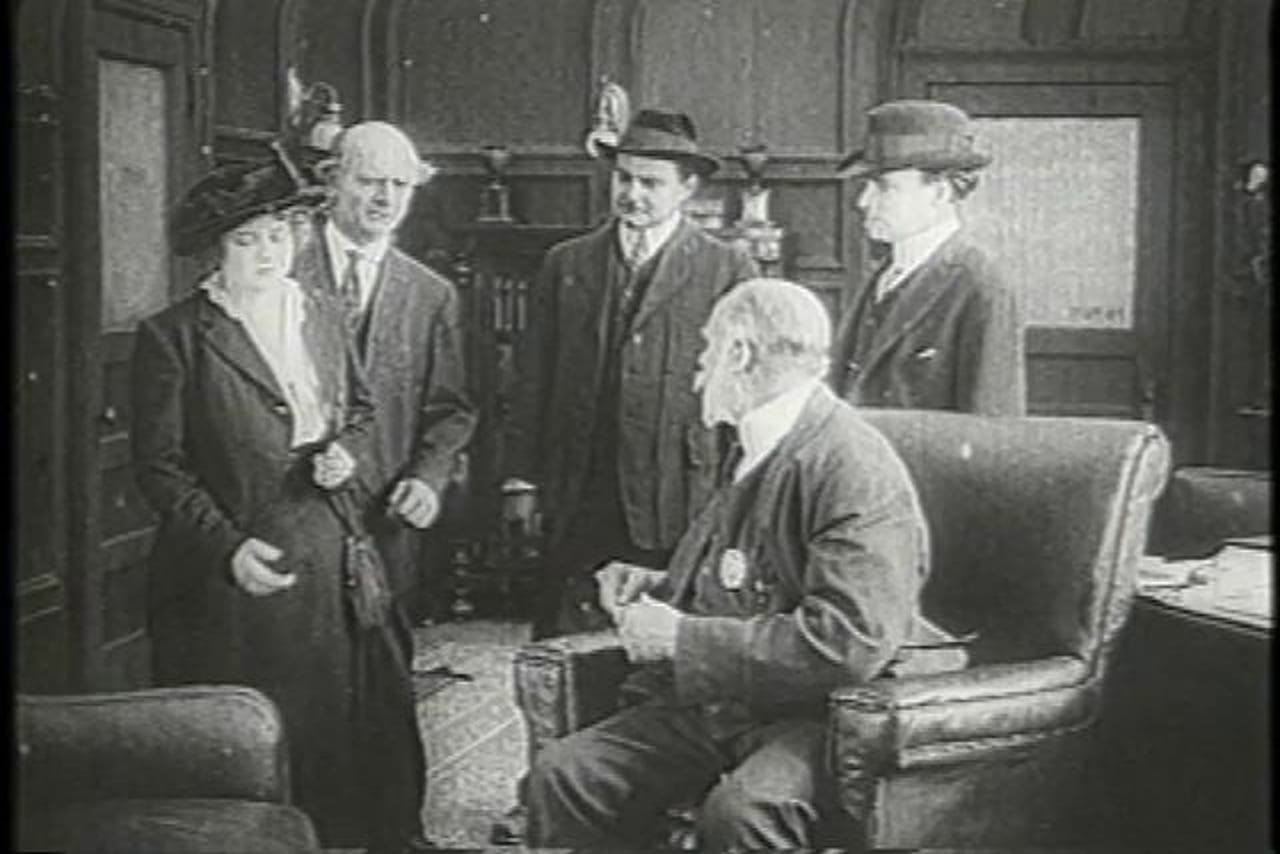
“’And you are my father?’ said Florence, still bewildered by the amazing events. ‘But I don’t understand!’ her gaze roving from the real Jones to her father. ‘I don’t doubt it, child,’ replied Hargreave. ‘I’ll explain. When I hired Jones here, who is really Jedson of Scotland Yard, I did so because we looked alike when shaven. It was Jedson here who escaped by the balloon; it was Jedson who returned the five thousand to Norton; it was Jedson who was wounded in the arm; it was he who watched the doings of the Black Hundred and kept me reasonably well informed. I myself guarded you, my child. Last night, unbeknown to you, I left, and the real Jones—for it is easier to call him that—took my place.’
“’And I never saw the difference?’ exclaimed Florence. ‘That is natural,’ smiled the father. ‘You were thinking of Norton here instead of me. Eh?’ Florence blushed. ‘Well, why not? Here, Norton!’ The millionaire took Florence’s hand and placed it in the reporter’s. ‘It seems that I’ve got to lose her after all. Kiss her, man; in heaven’s name, kiss her!’ And Norton threw his arms around the girl and kissed her soundly, careless of the fact that he was observed by both enemies and friends.
“Suddenly the policeman who had been standing by the side of Braine ran into the living room. ‘He’s alive! Braine is alive! He just stirred!’
“’What!’ exclaimed Norton and Hargreave in a single breath. ‘Yes, sir! I saw his hands move. It’s a good thing we sent for a doctor. He ought to be along here about now.’ Even as he spoke the bell rang, and they all surged out into the hall, forgetting for the moment all about the million. Olga hadn’t killed the man, then? The doctor knelt beside the stricken man and examined him. He shrugged. ‘Will he live?’
“’Certainly. A scalp wound that laid him out for a few moments. He’ll be all right in a few days. He was lucky. A quarter of an inch lower and he’d have passed in his checks.’
“’Good!’ murmured Servan. ‘So our friend will accompany me back to good Russia? O’, we’ll be kind to him during the journey. Have him taken to the hospital ward at the Tombs. Now for the little lady upstairs.’
“A moment later Braine opened his eyes and the policeman assisted him to his feet. Servan with a nod ordered the police to help the wounded man to the taxicab which had just arrived. Braine, now wholly conscious, flung back one look of hatred toward Hargreave; and that was the last either Florence or her father ever saw of Braine of the Black Hundred—a fine specimen of a man gone wrong through greed and an inordinate lust for revenge. The policeman returned to Hargreave. ‘It’s pretty quiet upstairs,’ he suggested. ‘Don’t you think, sir, that I’d better try that bedroom door again?’
“’Well, if you must,’ assented Hargreave reluctantly. ‘But don’t be rough with her if you can help it.’ For Braine he had no sympathy. When he recalled all the misery that devil’s emissary had caused him, the years of hiding and pursuit, the loss of happiness that had been rightfully his, his heart became adamant. For 18 years to have ridden and driven and sailed up and down the world, always confident that sooner or later that demon would find him! He had lost the childhood of his daughter, and now he was to lose her in her womanhood. And because of his implacable hatred the child’s mother had died in the Petrograd prison fortress. But what an enemy the man had been! He, Hargreave, had needed all his wits constantly; he had never dared go to sleep except with one eye open. But in employing ordinary crooks Braine had at length overreached himself, and now he must pay the penalty. The way of the transgressor is hard, and though this ancient saying looks dingy with the wear and tear of centuries, it still holds good.
“But he felt sorry for the woman up above. She had loved not wisely but too well. Far better for her it she put an end to life. She would not live a year in the God forsaken snows of Siberia. ‘My kind father!’ said Florence, as if she could read his thoughts.
“’I had a hard time of it, my child. It was difficult to play the butler with you about. The times that I fought down the desire to sweep you up in my arms! But I kept an iron grip on that impulse. It would have imperiled you. In some manner it would have leaked out, and your life and mine wouldn’t have been worth a button.’ Florence threw her arms around him and held him tightly. ‘That poor woman upstairs!’ she murmured. ‘Can’t they let her go?’
“’No, dear. She has lost, and losers pay the stakes. That’s life. Norton, you knew who I was all the time, didn’t you?’
“’I did, Mr. Hargreave. There was a scar on the lobe of your ear; and secretly I had often wondered about the likeness between you and the real Jones. When I caught a glimpse of that ear then I knew what the game was. And I’ll add that you played it amazingly well. The one flaw in Braine’s campaign was his hurry. He started the ball rolling before getting all the phases clearly established in his mind. He was a brave man anyhow; and more than once he had me where I believed that prayers only were necessary.’
“’And do you think that you can lead Florence to the million?’ asked Hargreave.
“’For one thing, it is in her room and has always been there. It never was in the chest.’
“’Not bad, not bad,’ mused the father.
“’But perhaps after all it will be best if you show it to her yourself.’
“’Just a little uncertain?’
“’Absolutely certain. I will whisper in your ear where it is hidden.’ Norton leaned forward as Hargreave bent attentively. ‘You’ve hit it,’ said the millionaire. ‘But how in the world did you guess it?’
“’Because it was the last place anyone would look for it. I judged at the start that you’d hide it in just such a spot, in some place where you could always guard it and lay your hands on it quickly if needs said must.’
“’I’m mighty glad you were on my side,’ said Hargreave. ‘In a few minutes we’ll go up and take a look at those packets of bills. There’s a very unhappy young woman there at present.
“’It is in my room?’ cried Florence. Hargreave nodded.
“Meantime the Countess Olga hovered between two courses: a brave attempt to escape by the window or to turn the revolver against her heart. In either case there was nothing left in life for her. The man she loved was dead below, killed by her hand. She felt as though she was treading air in some fantastical nightmare. She could not go forward or backward, and her heels were always within reach of her pursuers.
“So this was the end of things? The dreams she had had of going away with Braine to other climes, the happiness she had pictured, all mere chimeras! A sudden rage swept over her. She would escape, she would continue to play the game to the end. She would show them that she had been the man’s mate, not his pliant tool? She raised the window and in slipped the policeman who had patiently been waiting for her. Instantly she placed the revolver at her temple. A quick clutch and the policeman had her by the wrist. She made one tigerish effort to free herself, shrugged, and signified that she surrendered.
“’I don’t want to hurt you, miss,’ said the policeman, ‘but if you make any attempt to escape I’ll have to put the handcuffs on you.’
“’I’ll go quietly. What are you going to do with me?’
“’Turn you over to the Russian agent. He has extradition papers, and I guess it’s Siberia.’
“’For me?’ She laughed scornfully. ‘Do I look like a woman who would go to Siberia?’
“’Be careful, miss. As I said, I don’t want to use the cuffs unless I have to.’ She laughed again. It did not have a pleasant sound in the officer’s ears. He had heard women, suicide bent, laugh like that. ‘I’ll ask you for that ring on your finger.’
“’Do you think there’s poison in it?’ ‘I shouldn’t be surprised,’ he admitted. She slipped the ring from her finger and gave it to him. ‘There is poison in it, so be careful how you handle it,’ she said. The policeman accepted it gingerly and dropped it into his capacious pocket. It tinkled as it fell against the handcuffs. ‘Before you take me away I want you to let me see...my man.’
“’I can do that.’ At that moment the other policeman broke in the door. ‘All right, Dolan; she’s given up the game.’ ‘She didn’t kill the man after all,’ said Officer Dolan. ‘He’s alive?’ she screamed. ‘Yes; and they’ve taken him off to the Tombs. Just a scalp wound. He’ll be all right in a day or two.’
“’Alive!’ murmured Olga. She had not killed the man she loved then? And if they were indeed taken to Siberia she would be with him until the end of things. With her handsome head proudly erect she walked toward the door. She paused for a moment to look at the portrait of Hargreave. Somehow it seemed to smile at her ironically. Then on down the stairs, between the two officers, she went. Her glance traveled coolly from face to face and stopped at Florence’s. There she saw pity.
“’You are sorry for me?’ she asked skeptically. ‘Oh, yes! I forgive you,’ said the generous Florence. ‘Thanks! Officers, I am ready.’ So the Countess Olga passed through the hall door forever. How many times she had entered it with guile and treachery in her heart? It was the game. She had played it and lost, and she must pay her debts to Fate the Fiddler. Siberia! The tin or lead mines, the ankle chains, the knout, and many things that were far worse to a beautiful woman! Well, so long as Braine was at her side she would suffer all these things without a murmur. And always there would be a chance, a chance!
“When they heard the taxicab rumble down the driveway to the street Hargreave turned to Florence. ‘Come along, now, and we’ll have the bad taste taken off our tongues. To win out is the true principle of life. It takes off some of the tinsel and glamor, but the end is worthwhile.’ They all trooped up the stairs to Florence’s room. So wonderful is the power and attraction of money that they forgot the humiliation of their late enemies.
“Hargreave approached the portrait of himself, took it from the wall, pressed a button on the back, which fell outward. Behold! There, in neat packages of a hundred thousand each, lay the mystic million! The spectators were awed into silence for a moment. Perhaps the thought of each was identical—the long struggle, the terrible hazards, the deaths that had taken place because of this enormous sum of money. A million, sometimes called cool; why nobody knows! There it lay, without feeling, without emotion; yellow notes payable to bearer on demand. Presently Florence gasped, Norton sighed, and Hargreave smiled. The face of Jones (or Jedson) alone remained impassive.
“A million dollars is a marvelous sight. Few people have ever seen it, not even millionaires themselves. I daresay you never saw it, and I’m tolerably certain I never have, or will! A million, ready for eager, careless fingers to spend or thrifty fingers to multiply! What Correggio, what Rubens, what Titian could stand beside it? None that I thought of.
“’Florence, that is all yours, to do with as you please, to spend when and how you will. Share it with your husband to be. He is a brave and gallant young man and is fortunate in finding a young woman equally brave and gallant. For the rest of my days I expect peace. Perhaps sometimes Jones here and I will talk over the strange things that have happened; but we’ll do that only when we haven’t you young folks to talk to. After your wedding journey you will return here. While I live this shall be your home. I demand that much. Free! No more looking over my shoulder when I walk down the streets; no more testing windows and doors. I am myself again. I take up the thread I laid down 18 years ago. Have no fear. Neither Braine nor Olga will ever return. Russia has a grip of steel.’
“Three weeks later Servan, the Russian agent, left for Russia with his three charges—Olga, Braine, and Vroon. It was a long journey they went upon, something like 10 weeks, always watched, always under the strictest guard, compelled to eat with wooden forks and knives and spoons. Waking or sleeping they knew no rest from espionage. From Paris to Berlin, from Berlin to Petrograd, then known as St. Petersburg; and then began the cruel journey over the mighty steppes of that barbaric wilderness to the Siberian mines. The way of the transgressor is hard.
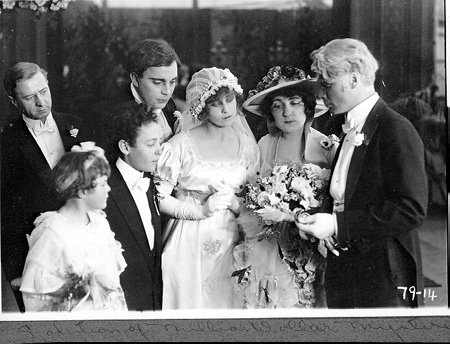
“On the same day that Olga, Braine, and Vroon made their first descent into the deadly mines Florence and Norton were married. After the storm the sunshine; and who shall deny them happiness? Immediately after the ceremony the two sailed for Europe on their honeymoon; and it is needless to say that some of the million went with them, but there was no mystery to it!”
Summary from The Photoplay Magazine, April 1915. The following appeared as an article, "The Solution of The Million Dollar Mystery," by Harold MacGrath, in The Photoplay Magazine · 1 April 1915