1911Thanhouser Company1,000 feetDrama

The Regimental Ball

No copy you can watch online. A print survives in an archive but has not been digitised, so what follows is the record rather than the film.

The story

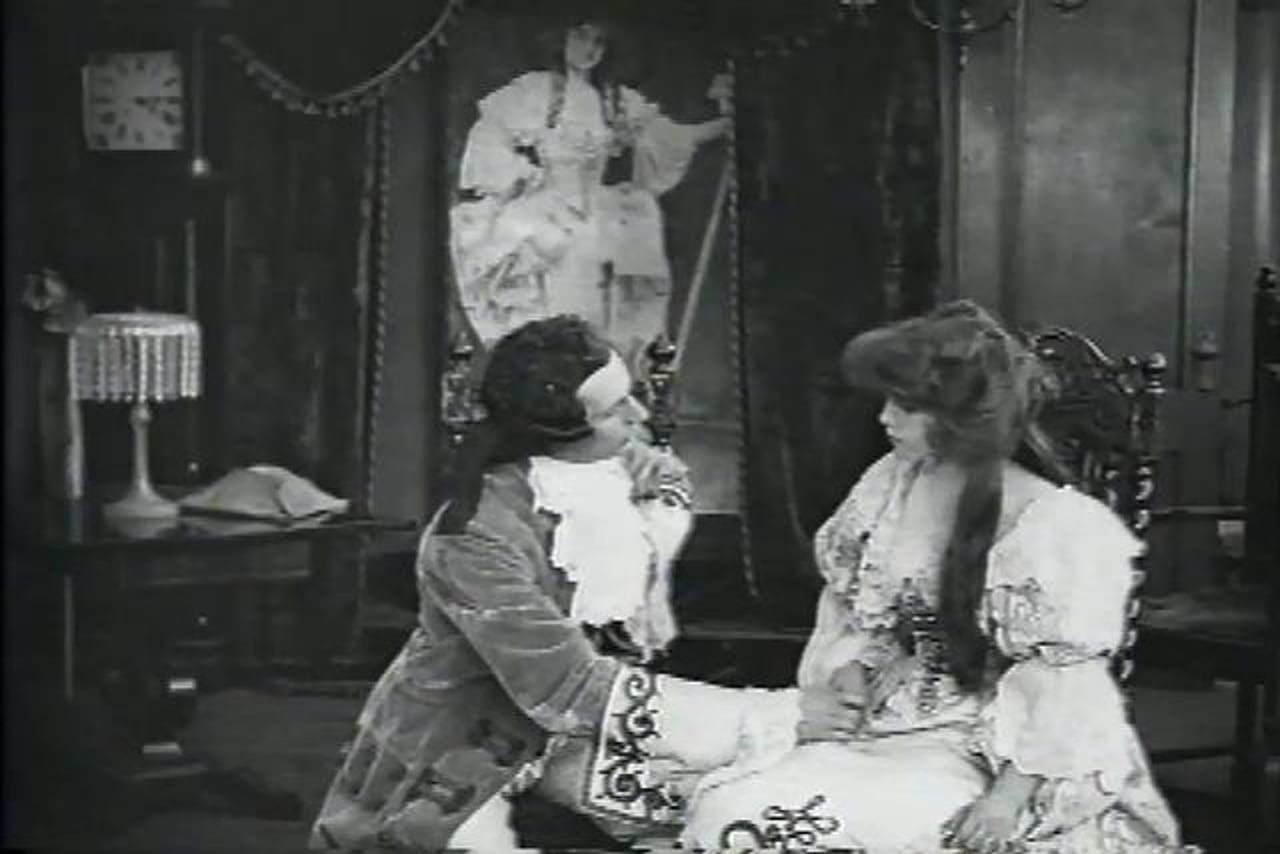
“A prosperous young man, with an independent fortune, receives an invitation to a regimental ball, and there loses his heart to the daughter of the colonel. He dances with her and pays her most devoted attention. It is love at first sight on his part, the girl is greatly pleased with his attention. The young man wants to see the girl often, and in his ignorance of the line of the caste that exists in the army, decides to enlist, so that he can be near the object of his affections. It never strikes him that by his act he has cut himself off the list of her acquaintances, for a colonel’s daughter moves in an entirely different sphere from that in which a raw recruit uneasily gravitates. There is a lot of hard work in the army, and little time for anything else—that is, so far as the enlisted men are concerned. And the young man finds that life is hardly a bed of roses. His cup of sorrow is filled to the brim when he learns from one of the enlisted men that the colonel’s daughter and her cousin, the lieutenant, are engaged.

“While passing the colonel’s quarters one day, the young soldier hears them receive a report that the lieutenant has been stricken with smallpox, and that his condition is grave. It is impossible to find a man who will volunteer to nurse him, the colonel does not like to give orders that may send another man to death. The recruit hesitates for only a moment. Then he thinks of the girl. The man he believes that she loves is dying, it is a manly thing what he can to save the life that belongs to her. He volunteers to nurse the patient, and brings him back to health again. Then, his duty done, and his love hopeless, he decides to leave the army. He buys his discharge, and prepares to leave the post. First he writes a letter to the girl, telling her why he is going away, that for the love of her, he had saved her sweetheart. This letter he gives to his former patient, now his friend, and asks him to deliver it after he has left the post.

“The lieutenant easily figures out what the note is about. He knows that the girl does not love him and that she does love the brave nurse. So, to partially settle the debt of gratitude that he owes the other man, he delivers the note at once, giving a chance for explanations before the recruit can leave the post. The colonel’s daughter acts in military promptitude. She does not propose to have her own life wrecked by any foolishness. She loves the young man who became a soldier for her sake, and convinced that a sweetheart so unselfish would make a husband worth having. So his sorrows are swept away and his devoted love rewarded.”

Summary from The Moving Picture World · 13 May 1911
What the papers said

4 reviews · 1 advertisement

“This is a medium good story, showing some very realistic scenery where one might expect fakey scenes. A civilian attends a regimental ball and there makes quite a hit with the colonel’s daughter, who snubs another admirer, a lieutenant. The civilian wishes to be near the girl, so he joins the army. He finds it hard work and also that …

Read in full · 1 min

“This is a medium good story, showing some very realistic scenery where one might expect fakey scenes. A civilian attends a regimental ball and there makes quite a hit with the colonel’s daughter, who snubs another admirer, a lieutenant. The civilian wishes to be near the girl, so he joins the army. He finds it hard work and also that he is at a great disadvantage trying to outwit the lieutenant when he is only a private. The lieutenant is stricken with fever and nearly dies. The former civilian nurses him to health, despite the fact that they are rivals. When the lieutenant is well, the other man writes the girl a note stating that he has brought his rival back to health and is going to quit military service. She runs after him, and it is evident that she has made up her mind as to which one of the men she prefers.”

The Billboard · 13 May 1911

“A civilian meets the daughter of the colonel of an army post at a regimental ball and falls in love with her. He learns that she is engaged to a young lieutenant (after he has enlisted as a private in the same regiment in order to be near her), and shortly after this officer is stricken with smallpox. The citizen-soldier, …

Read in full · 1 min

“A civilian meets the daughter of the colonel of an army post at a regimental ball and falls in love with her. He learns that she is engaged to a young lieutenant (after he has enlisted as a private in the same regiment in order to be near her), and shortly after this officer is stricken with smallpox. The citizen-soldier, for the sake of the girl, volunteers to act as nurse and he successfully guides the patient through his illness, for which act the affections of the heroine are made to suddenly shift from the one to the other man. Before learning this, however, the civilian-trooper, tired of army routine, buys his release and gives a note to the lieutenant to deliver to her. She rushes to him and the film ends in a picture that would move the heart pulse of the most callous reader of romantic fiction.

“The story is well told and the military scenes, evidently taken at some military school or post, are correct in uniform and the little army etiquette that is of a necessity revealed. The work of the leading woman is deserving of especial note of appreciation. It is really quite seldom that such sentimental scenes as she is obliged to play close up to the camera in this picture, are acted with so little apparent realization of the fact that she is being photographed. Each expression of face, gesture and abandon of girlish coquetry had all of the freedom of real naturalness without any of the consciousness of ‘acting.’ It is too bad that the lieutenant in the story could not seem to forget the fact that he was an actor. Aside from this fact he was capable in every scene. The film is one worth seeing.”

REVIEW in “Film Charts,” The Moving Picture News, May 13, 1911:

“Start: Enlistment

“Finish: Engagement

“Moral: The way to the heart is sometimes through the sick room

“Reception: Fine

“Biggest moment: The recruit going to the side of the smallpox patient”

The Morning Telegraph · 14 May 1911

More reviews2 · 27 May 1911 – 17 May 1911

27 May 1911The Moving Picture World1 min

“The object of this story is to give a picture of romantic love with a realistic background. It shows, for its setting, life in a army post. It is remarkably successful. Not only is it true to human nature, or made to seem so by good acting, but it is true to military etiquette and to army life as nearly as possible. In the first scene the lieutenant is a bit too flighty, but he amply makes up by excellent characterization later. The colonel’s daughter and Jack show as two sensible human beings. It is a very good film, well photographed and interesting.”

17 May 1911The New York Dramatic Mirror1 min

“There is sufficient military atmosphere about this film to make it realistic and interesting, and while the story is somewhat over-romantic, it is pleasing and does not challenge credulity, although one wonders that he can buy his discharge from the army so easily. It is pleasingly enacted. At the regimental ball the young man falls in love with the colonel’s daughter, who is already claimed by a lieutenant. He joins the army that he may be near her, only to learn that she is engaged to the lieutenant. This young fellow is stricken with smallpox, and the new recruit offers to become his nurse, and brings him back to health, all for his love of the colonel’s daughter. He, then, not knowing that the girl really loves him, buys his discharge from the army and writes her that he is leaving. She hastens after him, and all is well.”

Advertisement

6 May 1911The Moving Picture World1 min

“The Regimental Ball tells of the test a code of army ethics were put to and how splendidly they came through it. It is an unusual story of the comradeship of two young officers and of the bitter rivalry that succeeded it, all on account of a girl. An entire United States fort, with its barracks, battlements and garrison, give the picture ‘local color’ of the truest sort and make it educational in its accuracy.”

Know where this print is, or another copy?

Prints of films thought lost still turn up in attics, private collections and archives. A record like this one is how the next one gets found.

Tell us about a print

Cast and crew

Every name opens that person's page, with each film they appear in and which of them you can watch.

Watch instead

Films you can watch from the same company

Matched by cast, director and kind

More about this film

From Volume II: Filmography of Q. David Bowers’ Thanhouser Films: An Encyclopedia and History, reproduced with permission and unchanged. Read the history of 1911 →

Cite as: Bowers, Q. David. Thanhouser Films: An Encyclopedia and History, “The Regimental Ball”. thanhouser.org/films/the-regimental-ball/

Where a print is held

Completeness
Unknown