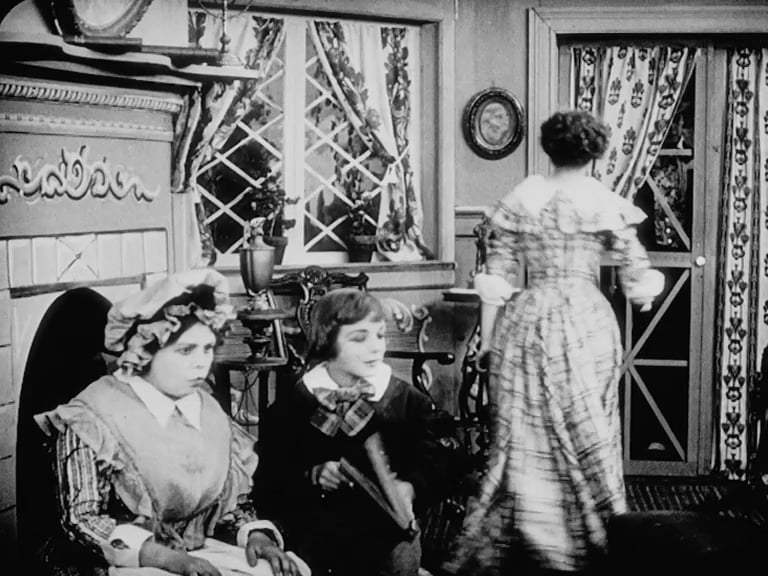
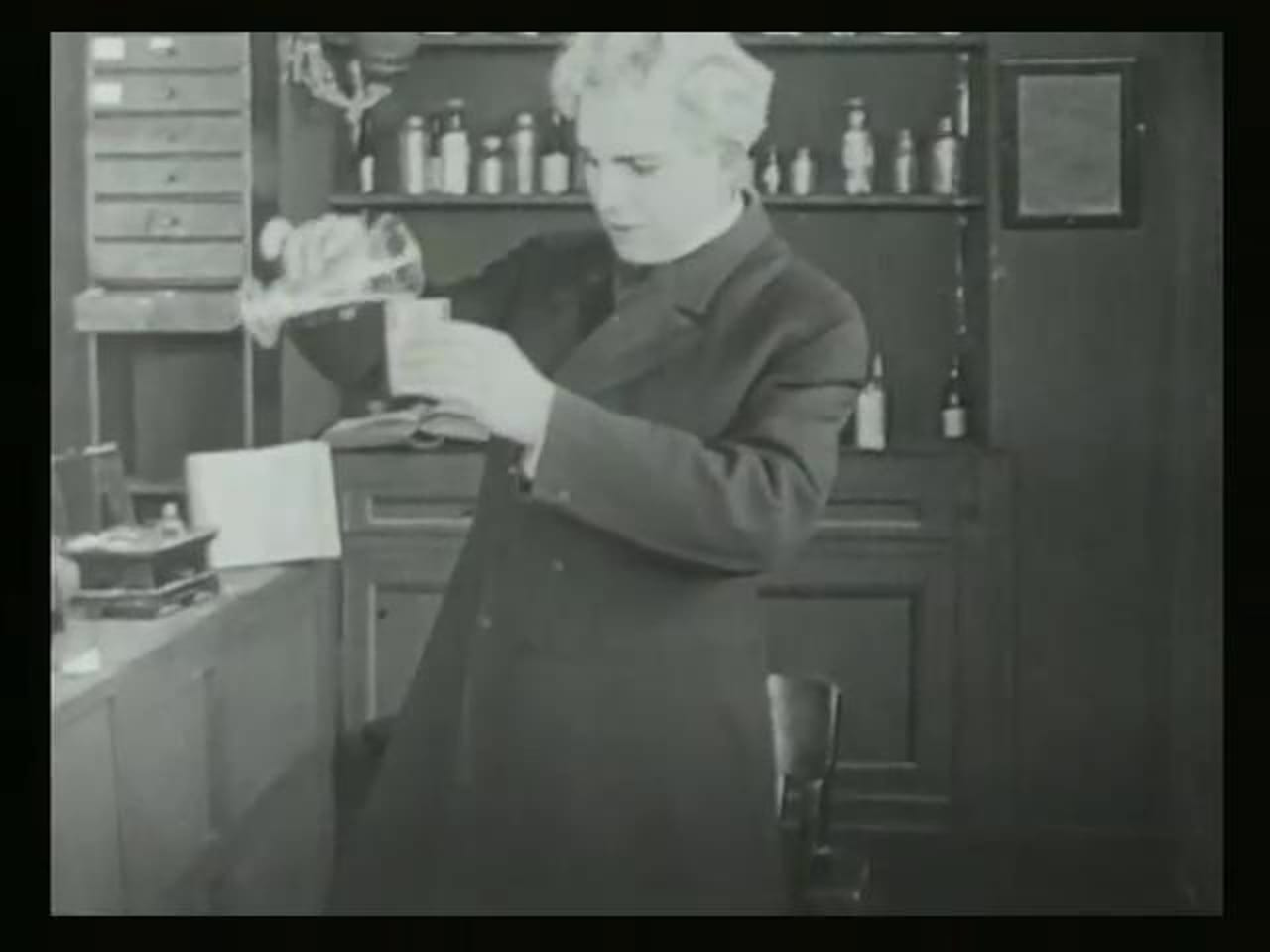
1911Thanhouser Company900 feetLiterary adaptation

The Tempest

No copy you can watch online. No print is known to survive. What follows is what does: the release, the cast, the story, and what the trade press said at the time.

The story

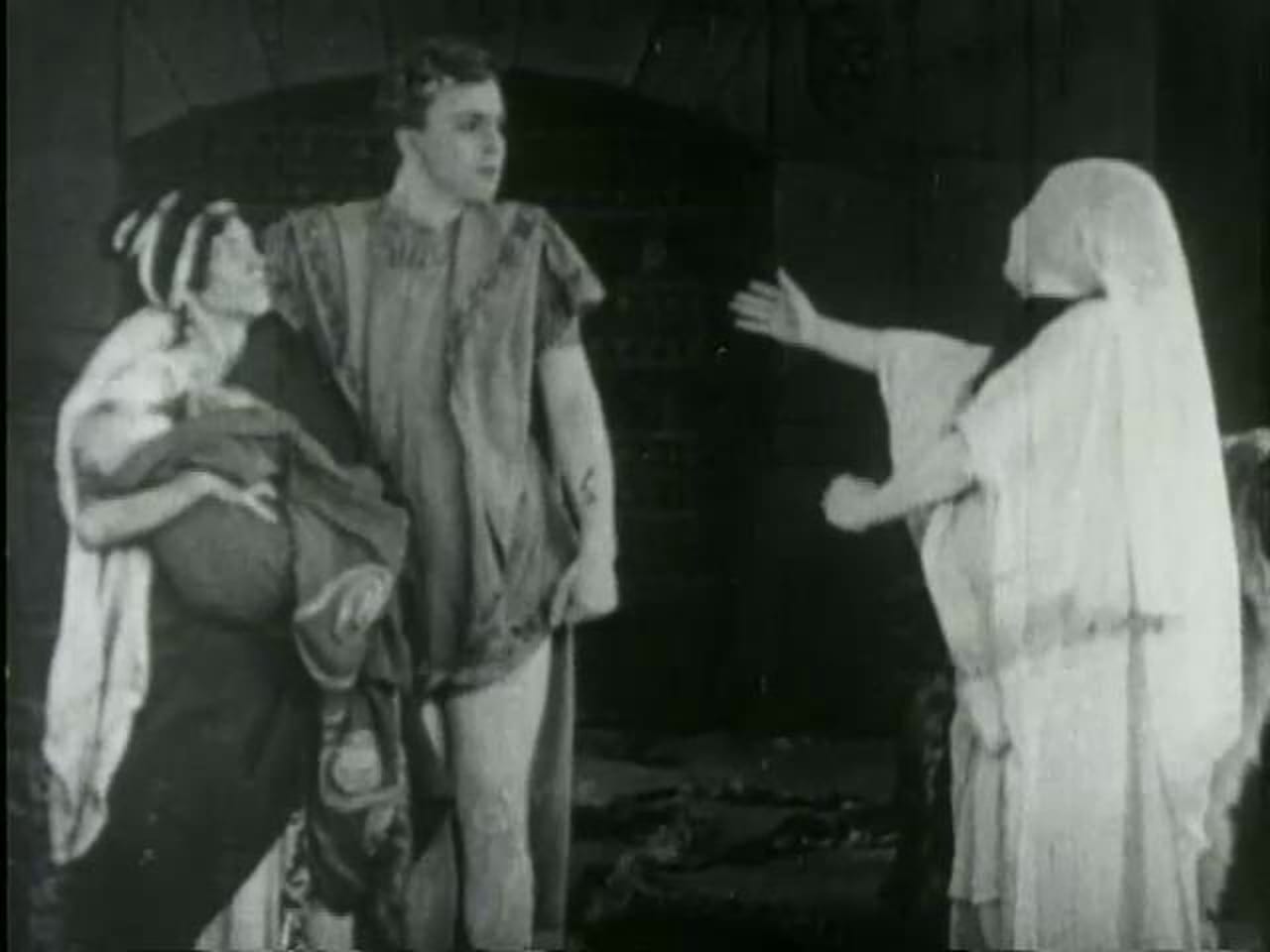
“Prospero, the rightful Duke of Milan, is a kindly man, but a student. His fondness for literature gives his enemies a chance to plot against him, and through the machinations of his own brother, Antonio, the King of Naples, Prospero is dethroned and Antonio assumes his throne. The conspirators are afraid to execute Prospero, who is beloved by the people, so they take him to sea, and set him adrift in an open boat with his little daughter, Miranda, expecting that they would never be heard of again. Fortunately for Prospero and the child, they drift ashore on an island. It is inhabited solely by good fairies and wicked sprites. Prospero wins a favor of the former, and is able to subdue the latter and make them subservient to his will. On this island, father and daughter reside for 12 years. Then Prospero learns by his magic that his brother, the King of Naples, and the latter’s son are passengers on a ship that is sailing near the island. By aid of his powers he is able to draw the ship to the island, where it is wrecked, but Prospero so arranges it that no lives are lost. His enemies now being in his power, he proceeds to punish them.

“Antonio and the King of Naples are forced to wander around the island, while Ariel, a good but mischievous fairy, plays all manners of pranks upon them. Ferdinand is conducted to the presence of Prospero, and set to menial work. He meets Miranda, and falls in love with her, the very thing that Prospero had set himself to bring about. In the end, Prospero forgives the two men who have wronged them on condition that they relinquish their thrones to Miranda and Ferdinand, who have agreed to marry and live happily ever afterward.”

Summary from The Moving Picture World · 25 November 1911
What the papers said

4 reviews · 1 advertisement

“Few American producing companies have ever succeeded in the best presentations of fantastic or fairylike subjects, and Shakespeare’s The Tempest is little else than a fantasy, and of the most difficult sort to produce, either in dramatic or other form. So it was a bold attempt of the Thanhouser Company to make a pictureplay of this so-seldom seen offering, and …

Read in full · 1 min

“Few American producing companies have ever succeeded in the best presentations of fantastic or fairylike subjects, and Shakespeare’s The Tempest is little else than a fantasy, and of the most difficult sort to produce, either in dramatic or other form. So it was a bold attempt of the Thanhouser Company to make a pictureplay of this so-seldom seen offering, and there is small wonder that it falls short of the mark of excellence this company has attained in other works. Like their David Copperfield, it is not much more than a pantomimic series of tableaux explained by preceding subtitles. But these tableaux are not as well made as might be wished for, some falling short in costuming as well as in properties and scenic selections. As an instance of the first fault, the costume of Caliban is all too fresh and well made to simulate the garb of a semi-wild man; and of the second, the boat is nothing but a modern row boat with up-to-date metal oar locks; and of the third, the interiors are cramped and some of the exteriors hardly in keeping with the requirements. The story of the play is followed as closely as possible, beginning with the visit of the King of Naples to Prospero, to the return of the latter after his long exile and the romantic joining of the king’s son and Prospero’s daughter.”

The Morning Telegraph · 3 December 1911

“Thanhouser again comes to the front with specimens of beautiful photography and artistic conception of the theme. Of that quaint play of Shakespeare, The Tempest, so full of the freshness of youth, and the old, old story of simple love, surrounded by a rustic atmosphere, so rustic that one could almost imagine that the odor of the leaves and the …

Read in full · 1 min

“Thanhouser again comes to the front with specimens of beautiful photography and artistic conception of the theme. Of that quaint play of Shakespeare, The Tempest, so full of the freshness of youth, and the old, old story of simple love, surrounded by a rustic atmosphere, so rustic that one could almost imagine that the odor of the leaves and the fragrant grasses comes floating on the air, Thanhouser has made a very pretty production indeed, keeping the heart interest which permeates the entire story intact.”

The Moving Picture News · 18 November 1911

More reviews2 · 9 December 1911 – 6 December 1911

9 December 1911The Moving Picture World1 min

“This photoplay has a sketchy outline of the scenario of Shakespeare’s play. At times there is much commendable suggestion in the scenes, some of which are very pretty. It now and then seems crude. The player who takes Miranda’s part fills it, so far as physical requirements went, very well indeed. But Ariel is, perhaps, the only truly well-acted part in the picture. It is taken by a young lady who has put something of sprightliness and mystery into it, with the help of some well-chosen backgrounds. As a whole, the film will please, not only because of its subject, but for the sake of the prettiness of parts of it.”

Note: Typical of this publication during this period, the reviewer does not know the identities of the players.

6 December 1911The New York Dramatic Mirror1 min

“Shakespeare’s play of this name is here put into picture form, but the result is not up to Thanhouser standard. The two skiffs seen in the pictures were sadly modern, and the fairy Ariel’s cotton tights did not lend the ethereal effect desired. Neither did the scenes chosen for backgrounds appear appropriate to the theme. They were too commonplace and bleak. The acting was fairly good but in no way distinguished. Much of the action was told by captions, but even these failed to inform us how the King of Naples and the usurping Duke of Milan reached the island where Prospero and his daughter lived with the fairies. Indeed, we are shown nothing of the storm at sea, except a very weak vision, with a miniature craft storm-tossed and sinking. According to the play the ship doesn’t sink.

“The picture commences with a scene in Milan, where the rightful duke is ousted by the plot of his brother and the King of Naples, whereas the play begins at sea and on the island where Prospero had taken refuge. However, this liberty with the text is good picture practice, as a motion picture story must begin at the beginning. Ferdinand, son of the king, becoming separated from the father’s stranded party, joins Prospero at his cell on the island, falls in love with Miranda, Prospero’s daughter, and the union of these two brings peace between the families. It would seem that a much clearer version would have been possible.”

Advertisement

25 November 1911The Moving Picture World1 min

“Here is another in the Thanhouser Shakespearean series that you better get busy featuring. The storm effects are exquisite—easily better than ever seen in the stage production of this play. The subject gives chances aplenty for pretty settings, and you’ll see that our producers utilize them to the extreme. The story is a very smooth-running, simple and familiar one. It will be relished in all corners of the house.”

Have you seen this film, or a print of it?

Prints of films thought lost still turn up in attics, private collections and archives. A record like this one is how the next one gets found.

Tell us about a print

Cast and crew

No cast or crew is credited in the surviving sources for this film. Bowers records the title and the release; the names did not come with them.

Watch instead

Films you can watch from the same company

Matched by cast, director and kind

More about this film

Bowers’ notes

For biographical information concerning Shakespeare, refer to the Background of the Scenario entry under The Winter’s Tale, released May 27, 1910.

From Volume II: Filmography of Q. David Bowers’ Thanhouser Films: An Encyclopedia and History, reproduced with permission and unchanged. Read the history of 1911 →

Cite as: Bowers, Q. David. Thanhouser Films: An Encyclopedia and History, “The Tempest”. thanhouser.org/films/the-tempest/

Where a print is held

Held by
No print known