1914Thanhouser CompanyOne reelDrama

Guilty or Not Guilty

No copy you can watch online. A print survives in an archive but has not been digitised, so what follows is the record rather than the film.

The story

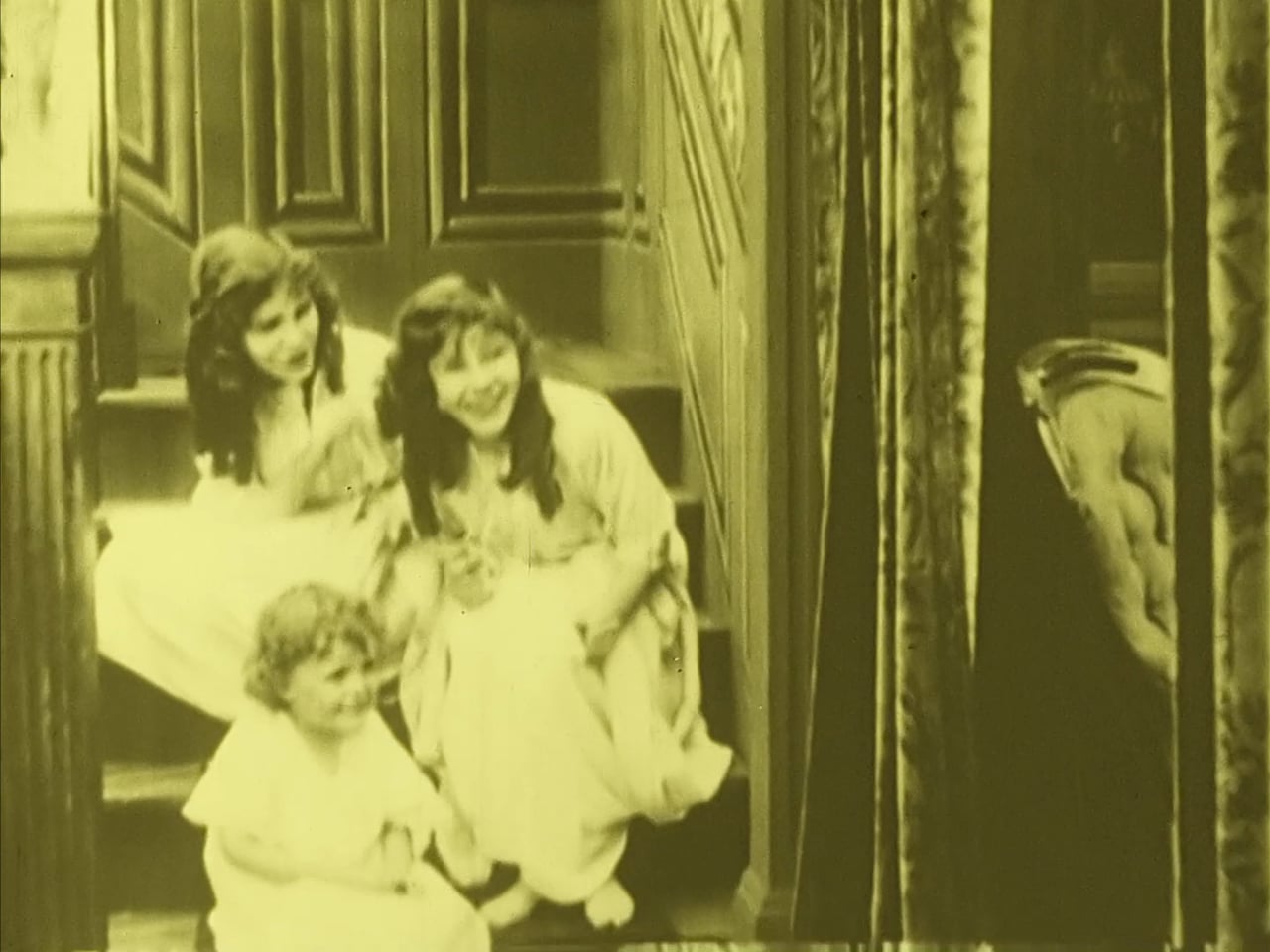
“Arraigned in court for having stolen three loaves of bread, May McGuire, a fifteen-year-old girl, pleads that she is the support of three children, the youngest of whom is but four years of age. Her father and mother are dead, she sobs, and since their death she has been the sole support of the children. She begs for clemency and explains that she would not have stolen the bread if it had not been for the fact that she but recently lost her position, and with no money in her purse she was forced either to steal or to see her tiny charges starve. Sentence is deferred and a purse made up for the young woman.”

Summary from Reel Life · 7 March 1914
Background of the scenario

This poem, unattributed and undated, has been included in many anthologies. The verse told of Mary McGuire, age 15, who stole three loaves of bread. “You look not like an offender; And I hope that you can show; The charge to be false. Now, tell me; Are you guilty of this, or no?” queried the judge. “I will tell you just how it was, sir; My father and mother are dead; And my little brother and sisters; Were hungry and asked me for bread; At first I earned it for them; By working hard all day; But somehow times were bad, sir; And the work all fell away; I could get no more employment; The weather was bitter cold; The young ones cried and shivered; (Little Johnny’s but four years old;).” Tears came from the eyes of the onlookers, as they took out their wallets and made a contribution for the young girl. The judge deferred her sentence, “And no one blamed him or wondered; When he went to her and smiled....”

What the papers said

4 reviews · 2 advertisements

“An old story, pointing an obvious moral, this charming little picture is nevertheless immensely effective and quite certain to prove popular, especially with working class audiences. It deals with the well-worn tale of a child whom hunger compels to commit a small theft. We are shown the police court whither the little one has been haled to answer for her …

Read in full · 1 min

“An old story, pointing an obvious moral, this charming little picture is nevertheless immensely effective and quite certain to prove popular, especially with working class audiences. It deals with the well-worn tale of a child whom hunger compels to commit a small theft. We are shown the police court whither the little one has been haled to answer for her crime; her simple story is visualized for us as she repeats it; and then we see how Mercy triumphs over the letter of the Law when justice is humanely administered. As a film, it may be a trifle over-sentimental for some tastes, but is is presented with such strict realism and so keen a regard for natural sincerity that there is nothing mawkish in the picture. One may be pardoned for wondering whether a police court collection is a very usual proceeding, but even if it is not its introduction in the present piece is not a very serious instance of dramatic license. The picture is founded upon a poem, various lines from which serve as sub-titles. Guilty or Not Guilty is likely to be very successful.”

The Bioscope · 21 May 1914

“This drama is based upon the poem of the same name and is especially interesting in this day of the juvenile court. Mignon Anderson, as a 15-year-old girl, is arraigned for having stolen three loaves of bread. She explains that she is the sole support of three children, all younger than herself, and the youngest is only four years old. …

Read in full · 1 min

“This drama is based upon the poem of the same name and is especially interesting in this day of the juvenile court. Mignon Anderson, as a 15-year-old girl, is arraigned for having stolen three loaves of bread. She explains that she is the sole support of three children, all younger than herself, and the youngest is only four years old. Her story is so pitiful and she tells it to such good purpose that sentence is deferred and a purse is made up by spectators and court attendants. It comes at a time when there are so many unemployed walking the streets of every city in the land, and is sure to make a strong appeal wherever shown.”

The Morning Telegraph · 15 March 1914

More reviews2 · 21 March 1914 – 18 March 1914

21 March 1914The Moving Picture World1 min

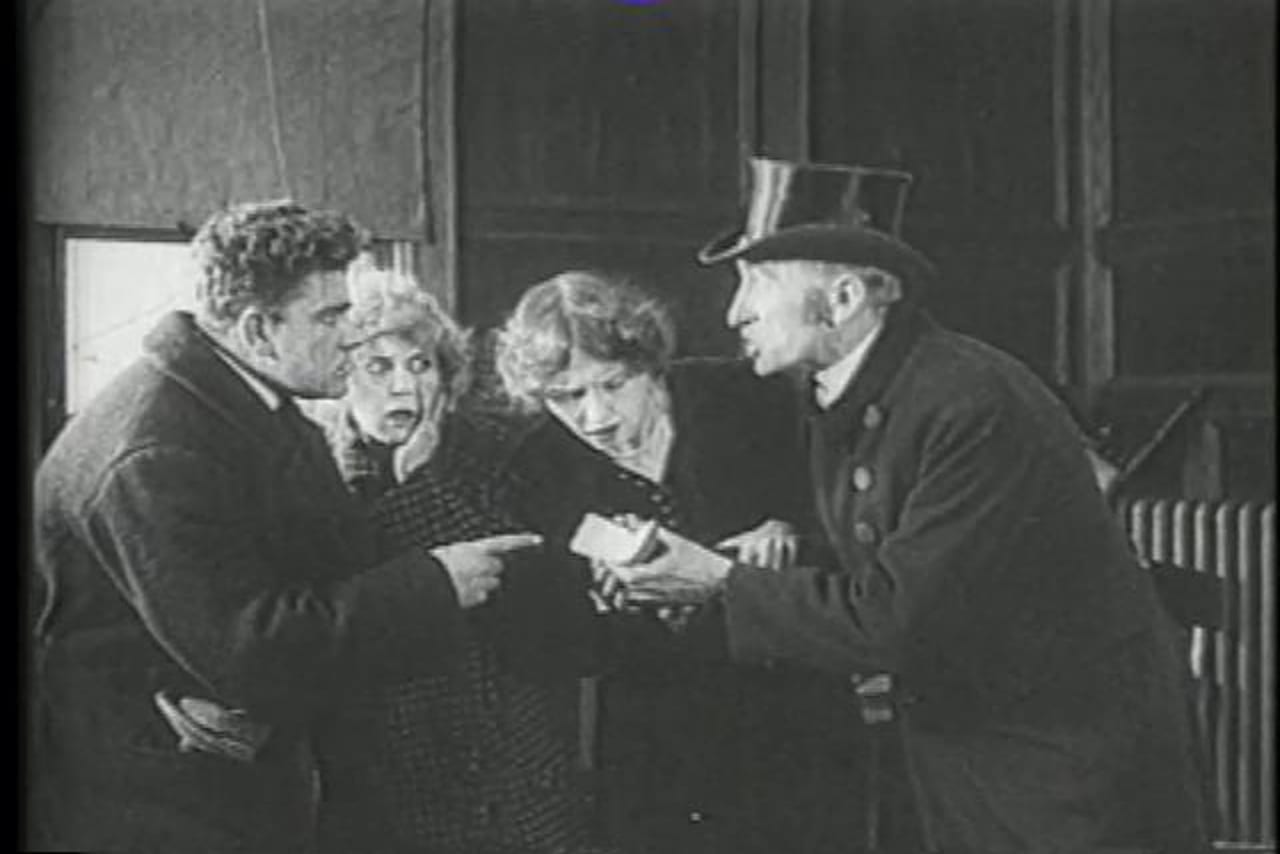
“From the celebrated but not very emotional ‘poem’ of the same name, this picture presents to us the poor girl who has too hard a time trying to keep her little family of brothers and sisters alive and steals three loaves of bread from the open wagon of a baker. She tells the police justice her sad tale and a collection is taken up for her, then the judge and the policeman go home with her and carry a big basket filled with good things to eat. Mignon Anderson is appealing as the principal character, but the picture, though well staged, is most unconvincing at this period of the business, and it is hardly effective.”

18 March 1914The New York Dramatic Mirror1 min

“This is a one-reel drama offering presented as illustrating the poetic lines, tear-suffused, of the sad, pathetic story of a little girl who stole loaves of bread for her terrible hunger. The poetry is of the kind that will appeal to the populace, and has been illustrated in tinted film with a high degree of artistry. This sort of a subject will at once catch the throat of the onlooker and carry his sympathies to the end. The little girl steals bread for her family, which consists of four smaller sisters and brothers. She tells her story in court and the kindly policeman passes the hat, while the judge himself goes home with her. Happier days are in store for her family. Needless to say the verdict is Not Guilty.”

Advertisements2 · 7 March 1914 – 14 March 1914

7 March 1914Reel Life1 min

“Guilty or Not Guilty, is a Mignon Anderson dramatic feature—you’ll cry for her when she faces Judge Charles Horan! For the first time in picture history one of the Thanhouser Twins appears in a film without the other—which one we leave you to puzzle out! Other of the marvelous Thanhouser juveniles who take part in this picture are the Kidlet, Leland Benham and Roy Hauck.”

14 March 1914The Moving Picture World1 min

“For the first time in picture history one of the Thanhouser Twins appears in a film without the other—which one we leave you to puzzle out!”

Know where this print is, or another copy?

Prints of films thought lost still turn up in attics, private collections and archives. A record like this one is how the next one gets found.

Tell us about a print

Cast and crew

Cast
Charles T. Horan as the judge
Leland Benham as Leland, her crippled brother
Madeline Fairbanks as Marian, her invalid sister
Mignon Anderson as May McGuire, the guilty girl
Mr. Bodine as Casey, a policeman
Roy Hauck as another of May’s brothers) Helen Badgley (Helen, a sister; see note

Every name opens that person's page, with each film they appear in and which of them you can watch.

Watch instead

Films you can watch from the same company

Matched by cast, director and kind

More about this film

Bowers’ notes
  1. Thanhouser noted in its advertising that it was up to the viewer to determine which of the Thanhouser Twins was featured. However, Reel Life, March 7, 1914, informed trade readers that the twin featured was Madeline, to whom, confusingly, was assigned the role of “Marian,” a slight variation on the spelling of the name of Marion, the other twin. On March 15th, the other twin, still unspecified for theatregoers, was featured in The Eugenic Boy. 2. In Reel Life, March 7, 1914, Helen Badgley was called Helen “Barclay” and was assigned the role of a sister to May McGuire. However, the accompanying synopsis states that May was caring for three young children, therefore if Helen Badgley was a sister then she constituted a fourth child. In the same publication, Charles Horan was identified as “Carl” Horan. A review in The New York Dramatic Mirror, quoted below, states that the girl had a family of four smaller brothers and sisters.

From Volume II: Filmography of Q. David Bowers’ Thanhouser Films: An Encyclopedia and History, reproduced with permission and unchanged. Read the history of 1914 →

Cite as: Bowers, Q. David. Thanhouser Films: An Encyclopedia and History, “Guilty or Not Guilty”. thanhouser.org/films/guilty-or-not-guilty/

Where a print is held

Format
9.5mm safety print
Completeness
Unknown