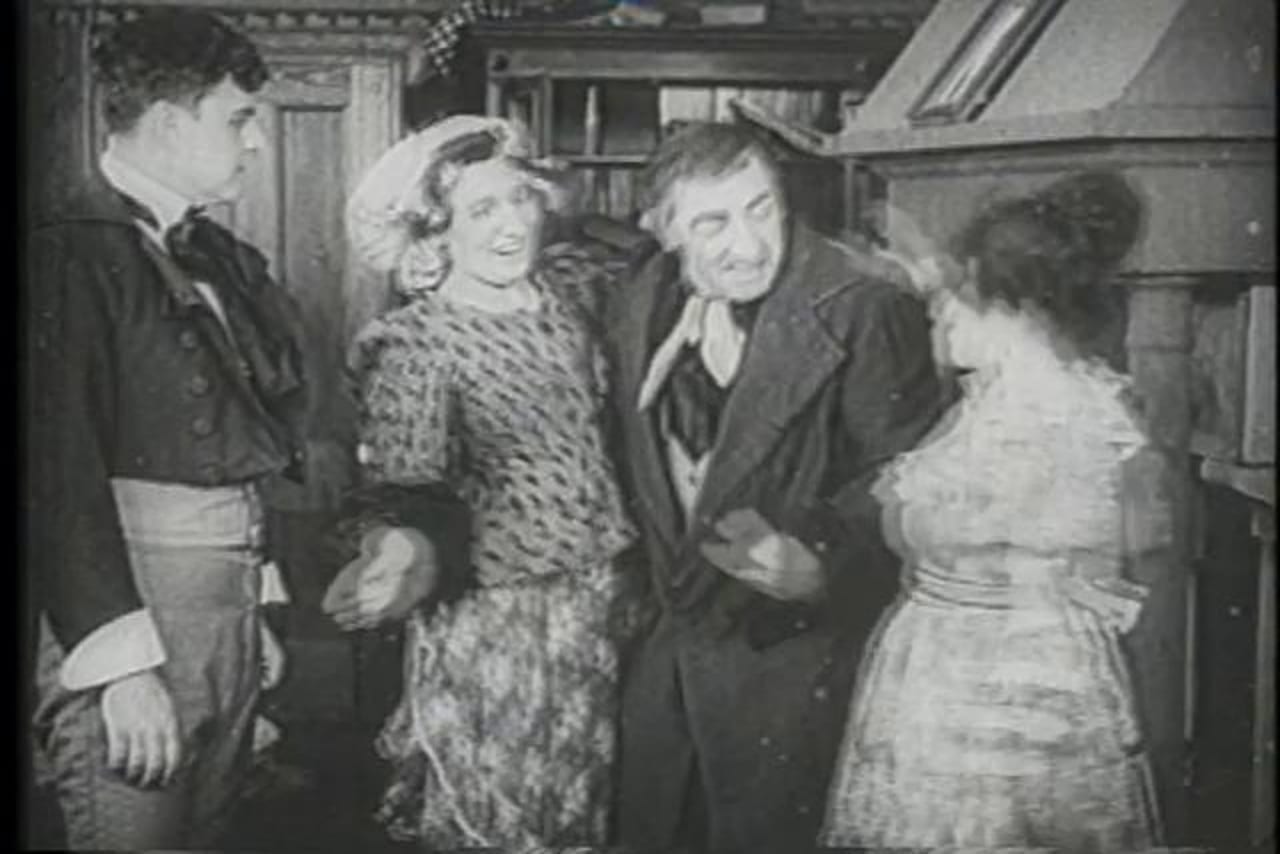
1913Thanhouser CompanyOne reelComedy

He Couldn’t Lose

No copy you can watch online. No print is known to survive. What follows is what does: the release, the cast, the story, and what the trade press said at the time.

The story

“He was a young clerk with very little ambition and even less money. In the directory he figured as a resident of the great and glorious metropolis, but his home was in a back room in a dingy boarding house. One morning fortune smiled upon him, for he received word from a firm of lawyers that his uncle had died, leaving a most peculiar will. Under its provisions the young man was to receive $50,000 outright, and if he succeeded in losing this money in foolish investments within six months, he could inherit $1,000,000 more. Why the old uncle made such a will is not explained, but as the lawyer said, he had a perfect right to dispose of his money in any way he saw fit. The young man believed it to be easy to get rid of $50,000 within the time limit, but the fates seemed to be against him. He made any number of foolish investments, but each time he scored success. Even when he received a straight tip that a plot was afoot to cripple one of the boats in an exciting yacht race, he was unable to lose money by following the information. Finally an excellent chance came his way, for in one of the city parks he met a tramp who had a borax mine to sell. The young man purchased a half interest in the borax mine, giving up all of the money he had and was thoroughly confident that he would never hear from the tramp again. On the day the six months were up, he called up his lawyer and claimed to have fulfilled the conditions, but just as he was about to receive the legacy a telegram arrived from the faithful tramp, saying that while the borax had petered out, the two were the owners of a wonderful gold mine, which was worth millions, yet as the young man said himself, ‘He Couldn’t Lose.’”

Summary from The Moving Picture World · 22 November 1913

Another synopsis, from Reel Life · 15 November 19131 min

“This comedy of the young man who, to save his soul, couldn’t lose fifty thousand dollars—is laughable from start to finish. Just to meet such a lucky fellow does one’s heart good. His erratic uncle left the money to him under the condition that he should squander the entire fifty thousand in foolish investments within five months [sic; inconsistent with six months mentioned in the preceding synopsis]—and then he would come into the heritage of one million dollars more. The young man plunges in merrily—but every deal he makes, however rash, more than doubles his investment. At last, he meets a tramp with a borax mine to sell, and buys a half interest. At the end of five months, he calls on his lawyer, and is about to receive the legacy, when a telegram arrives—announcing that although the borax prospect has indeed failed, Rusty and his partner are in possession of gold in enormous quantities. Consternation is written all over the young man’s face. Then he flings back his head, and laughs heartily. ‘Why, I don’t need your old million dollars, confound it! I’m a rich man for the rest of my life!’”
What the papers said

3 reviews · 1 advertisement

“Many persons would be glad to help the hero of this story, as he is trying to lose $50,000. However, he has a lot of trouble doing so and the result is some very lively comedy. Harry Benham plays the part of the youth who has to get rid of that amount of money in order to inherit a million. …

Read in full · 1 min

“Many persons would be glad to help the hero of this story, as he is trying to lose $50,000. However, he has a lot of trouble doing so and the result is some very lively comedy. Harry Benham plays the part of the youth who has to get rid of that amount of money in order to inherit a million. The stipulation of his uncle’s will is that he must lose the money by foolish investments within five months. He plunges in, but everything he buys turns out so well that he cannot get rid of the cash. Finally he buys a borax mine from a tramp, and thinks he is saved, as there is no borax on the place. Just before the time is up a telegram informs him that a great deposit of gold has been found on the borax property. He fails to get his uncle’s million, but has more than that himself from his gold mine.”

The Morning Telegraph · 23 November 1913

“Another of the ‘money-spending’ stories fathered by Brewster’s Millions, in which the hero must get rid of a large sum in order to inherit another. In this case his hazardous adventures win him millions. This is well pictured and nicely handled, but the edge has been taken off of this style of story pretty much.”

The Moving Picture World · 29 November 1913

More reviews

3 December 1913The New York Dramatic Mirror1 min

“A one reel comedy based on the idea behind Brewster’s Millions but with a more dramatic climax. The story is interesting and amusing, the acting good, the reproduction clear. Nicholas [sic] was a ten-dollar-a-week clerk until a fortune of $50,000 was left him, with the added proviso that if he managed to spend the mere $50,000 foolishly within five months he would inherit a million. Most unfortunately, everything that Nicholas ventures into turns out favorably. His clothes must have cost him a good part of the fortune, but he still has some left, and proceeds to bet on the ‘long shot’ horse at the races. Long shot wins, and an honest ‘bookie’ insists upon paying our hero his gains. Nicholas gets similar results betting on a motorboat race. In desperation he buys a borax mine from a crooked promoter. On the day he goes, penniless, to collect his million, a telegram comes to him, saying that the borax petered out, but that gold was discovered, and pleased to accept the present dividend of $1 million. Whereupon he politely tells the lawyer ‘I don’t need your old money.’”

Advertisement

15 November 1913Reel Life1 min

“He Couldn’t Lose—he had to, in order to win a fortune under the terms of an odd will—but he couldn’t!”

Have you seen this film, or a print of it?

Prints of films thought lost still turn up in attics, private collections and archives. A record like this one is how the next one gets found.

Tell us about a print

Cast and crew

Cast
Al Russell as Green’s clerk
Cassius Quimby as Carey, a bookmaker
George Grimmer as messenger boy
Harry Benham as Jack [or Nicholas], a clerk
Justus D. Barnes as Green, a lawyer
N.S. Woods as Rusty Snow, a tramp

Every name opens that person's page, with each film they appear in and which of them you can watch.

Watch instead

Films you can watch from the same company

Matched by cast, director and kind

More about this film

From Volume II: Filmography of Q. David Bowers’ Thanhouser Films: An Encyclopedia and History, reproduced with permission and unchanged. Read the history of 1913 →

Cite as: Bowers, Q. David. Thanhouser Films: An Encyclopedia and History, “He Couldn’t Lose”. thanhouser.org/films/he-couldn-t-lose/

Where a print is held

Held by
No print known