The story
“Her Father’s Gold, a Thanhouser drama, to be released as a Mutual Masterpicture, DeLuxe Edition, as a mystery drama with a punch in every foot that holds the interest of the spectator from the first scene until the very dramatic ending. The acting, directing, the settings, the suspense and the power places Her Father’s Gold in the forefront of present picture play dramas. Harris Gordon, Barbara Gilroy and Louise Emerald Bates are the stars, and they excel the standard they set for themselves in The Oval Diamond. The action of the film is gripping in its intensity and a synopsis cannot possibly do justice to it.
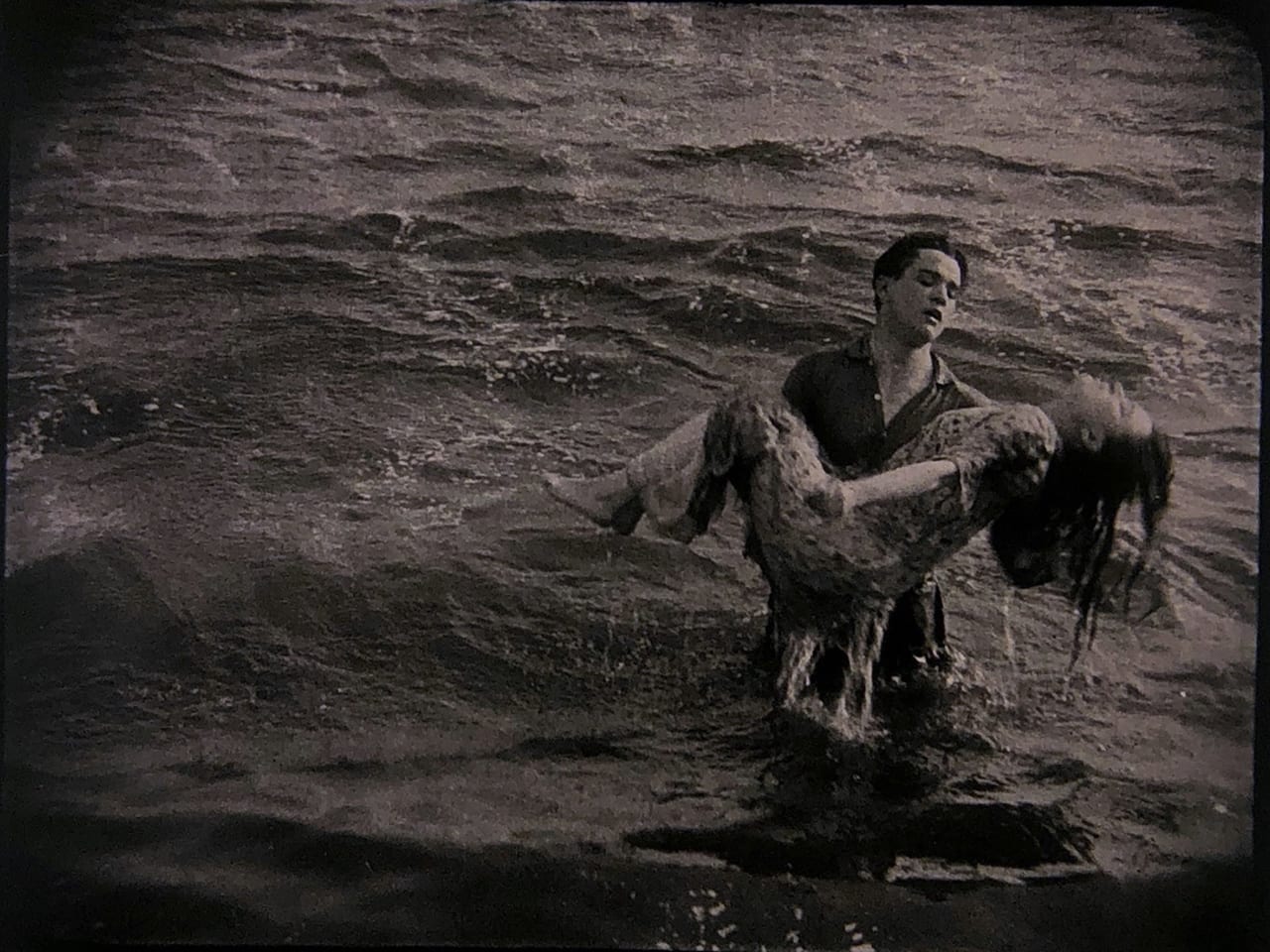
“’Beware of the water devil,’ was the editor’s parting word to the star reporter, the story reveals, as he sent him to Florida to investigate the mysterious water denizen that had been creating a panic among the residents on the shores of Crystal Lake. The reporter laughed, for his assignment took him to the home of his sweetheart and to the spot where he suspected that a great treasure stolen from her father lay hidden. Four crooks had stolen the gold from the mine of the [word missing] father in Mexico, and had carried it to Florida,where one of them, attempting to doublecross his pals, marooned them on an island, buried the bullion, and fled north. He expected to meet his wife and disappear with her to return to the treasure later, but the other crooks escaped sooner than he expected and besieged him in his home.
“Cut off from help, he drew a map, showing where he had hidden the treasure, painted it over with water color, hung the picture on the wall and wrote a note to his wife explaining what to do. In the fight that followed he was injured and taken to the hospital. There the wife of one of the crooks had followed him, and pretending to be his friend, she attempted to get the secret, but failed. His wife [words missing] at last and, dying, he gasped, ‘The blue picture—the blue picture.’ Out of funds and unable to solve the mystery of the picture, the wife wrote the mine owner, offering to divide the gold if he would help her find it. The owner was away and before his daughter could answer the letter, the crooks had done away with the writer and stolen the blue picture. The reporter met the girl at the scene of the killing, and immediately falls in love with her. From the efforts of the sole surviving crook to obtain a piece of the picture, which accidentally falls into his possession, the reporter suspects its importance. He allows the crook’s wife to steal it, and follows her to Florida. In the shack where she lives with her husband the reporter finds the whole picture, and hesitating to carry it he photographs it, only to find out that blue color does not photograph. His sweetheart, who has developed the film, comforts him for his failure. They throw aside the film as useless, and it falls into the hands of the woman who has the picture, and astonished, she sees faint lines and writing that give the secret after being viewed with a magnifying glass.
“She is surprised by the reporter’s sweetheart, who takes the film away from her and locks her up in a closet before she can communicate with her husband and dig up the [word missing]. The mine owner’s daughter reaches the reporter with her glad tidings while he is in the company of the imprisoned woman’s husband. He offers to take the pair to the island where the gold is hidden in his own boat, and then help them dig it up. Unsuspecting, they accept his offer, and he rows them to the island. After locating the treasure and uncovering it, the crook calmly tells the girl and the reporter that the gold is his, and that they are going to die and be buried in the spot where the gold came from. Just at the moment when the ruffian standing in the center boat raises his rifle to shoot, the water devil rose from the water behind him and carries him off to a watery grave. The girl, happy in having restored her father’s fortune, finds peace and contentment in the life-long love of the young reporter, whose bride she consents to be.”
Summary from Reel Life · 29 April 1916