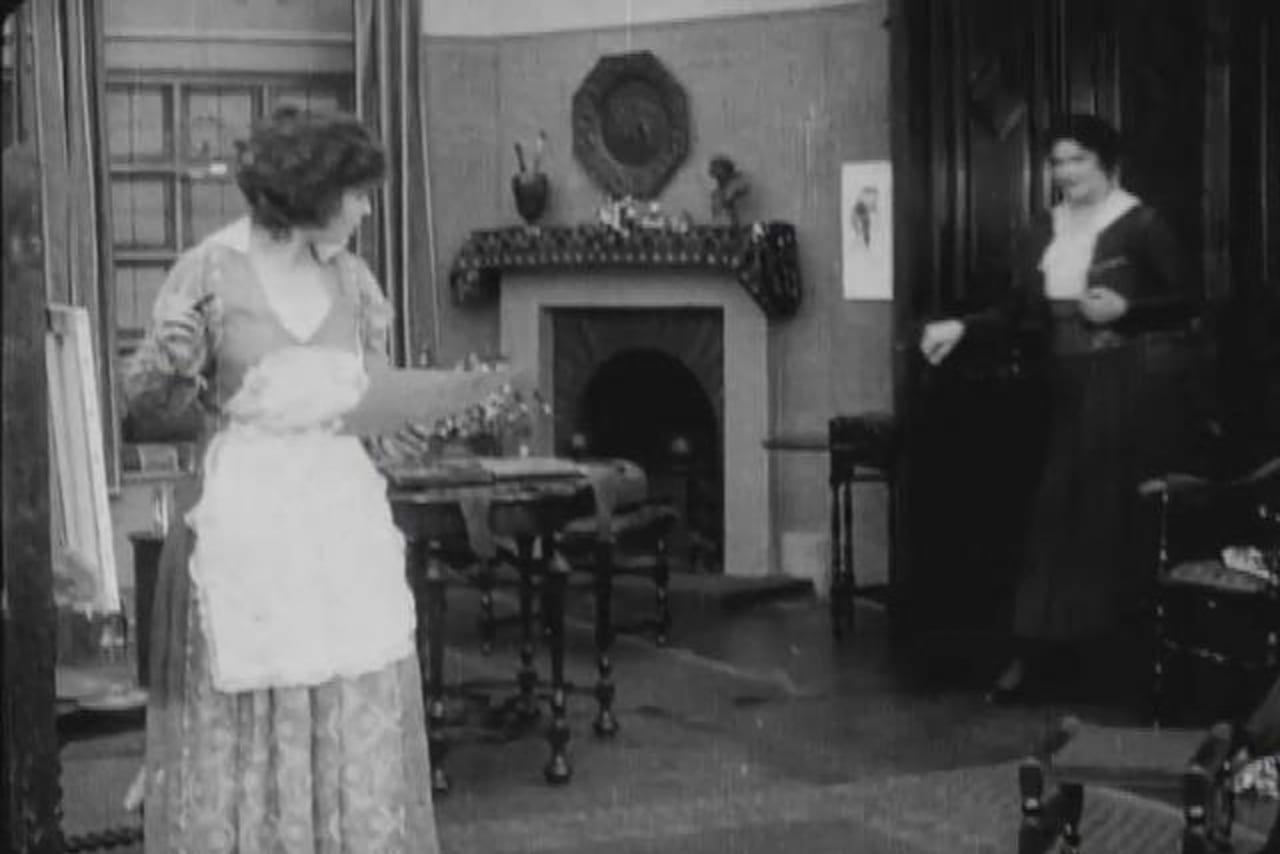
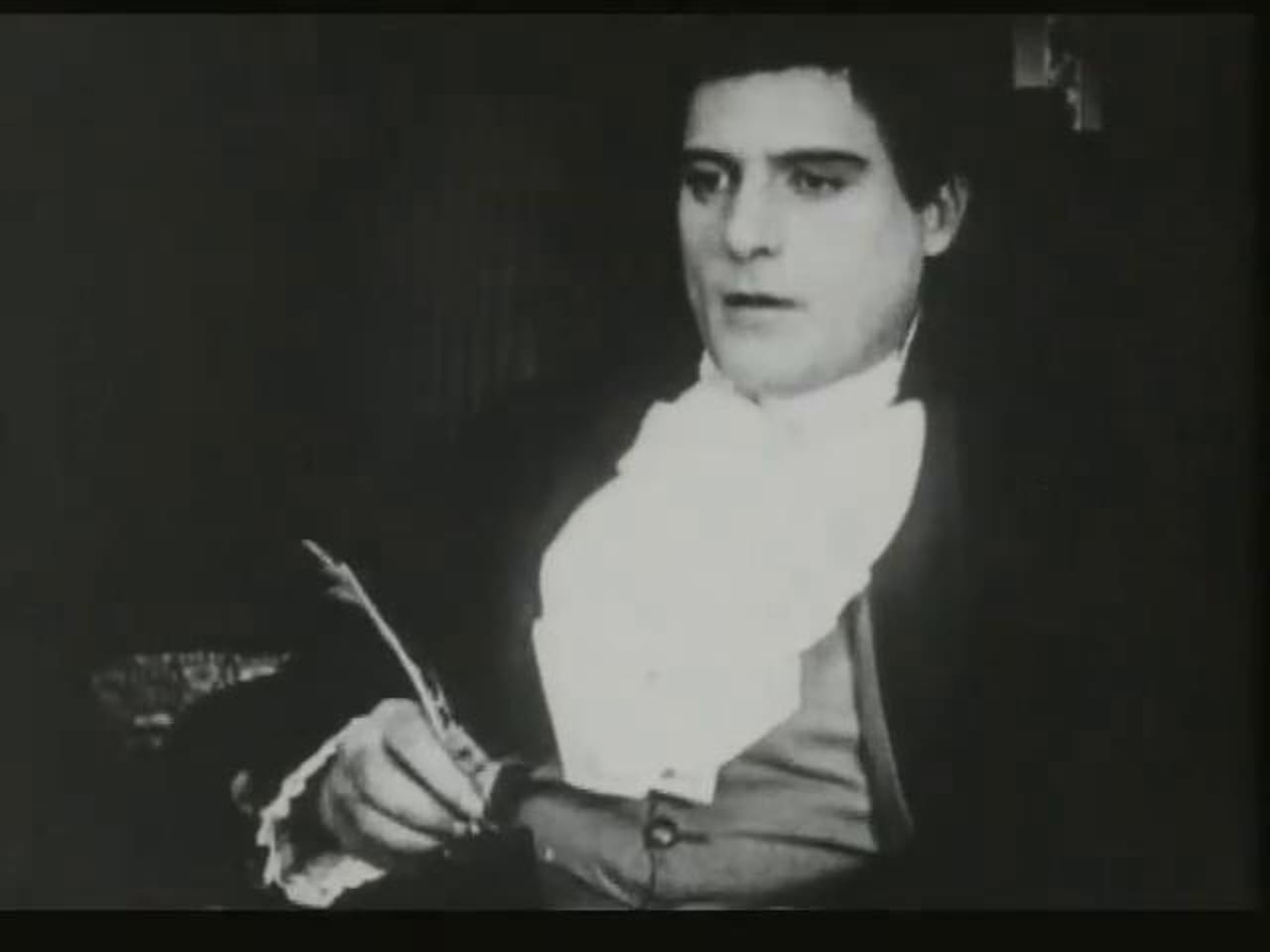
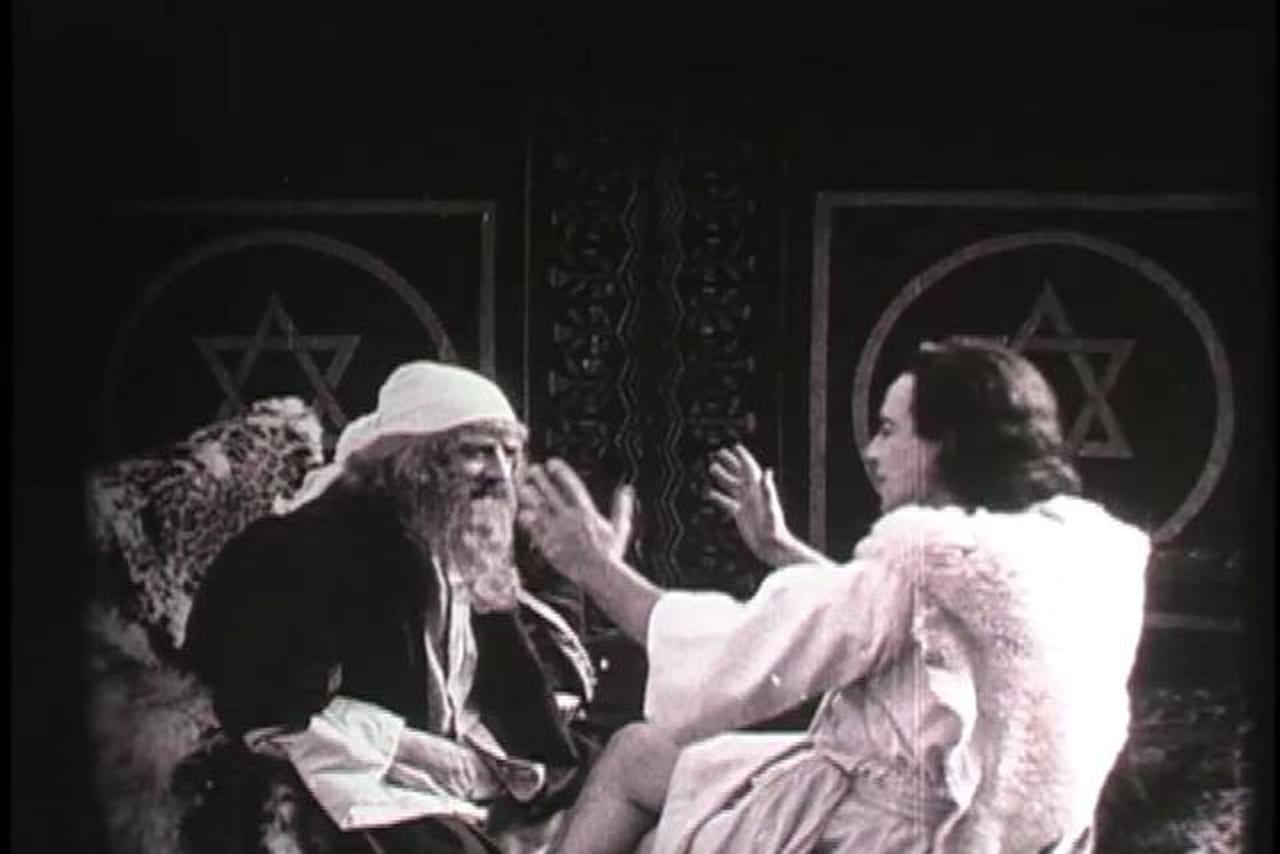
“In Hinton’s Double, the latest offering from the Thanhouser studios, there are two noteworthy features that cause this release to stand out as an exceptional screen offering. They are a thoroughly interesting and entertaining story and remarkable character portrayal by Frederick Warde in the dual role of Hinton and Stevens. Through the five reels there is unfolded a story that is convincing and appealing with a certain touch of pathos that reaches the hearts of all. Aside from its interest it is well seasoned with thrills and the suspense is well sustained from the first to the very last. The smoothness of the story speaks well for the direction, for the photography is of the very best. But the point that must be considered more than anything else is the artistic touch given the production by the acting of Frederick Warde. Following closely upon the success achieved in The Vicar of Wakefield, Mr. Warde presents two characters of distinctly opposite emotions that demand much of the versatility of the veteran actor, and at no time does his portrayal drop below the high standard of artistic excellence. As the lovable Stevens, forced to sacrifice his liberty for the sake of his child and granddaughter, and then as the arrogant and selfish Hinton, Mr. Warde reaches an epoch in his motion picture career. The very success of the production lies in Mr. Warde’s power of appealing to the hearts of the audience. Another character that does much to enhance the value of the production is Kathryn Adams as his daughter. Miss Adams work is pleasing throughout and blends very well with the artist she supports. Wayne Arey makes a very appealing detective hero. Hinton’s Double is a picture that should receive the exhibitor’s attention. Aside from the drawing power of the star, the play itself is one of exceptional interest and will do much toward upholding the high standards set by Thanhouser productions during the past six months.”
REVIEW by Frances Agnew, The Morning Telegraph, April 22, 1917:
“Hinton’s Double has more than the average film concerning two people (impersonated by one player) who are alike in appearance but different in character and in their positions in life. It has an interesting story and the situations leading to an exchange of names are plausibly presented and well carried out. The early scenes run along beaten tracks showing how the old man who has given years of life to his employer is discharged for a younger man. Crushed, Stephens if finally driven to begging in an effort to get money for the support of his widowed daughter and her little girl. He meets Hinton, a crooked financier, who sees the resemblance and agrees to give him $500 a month if he will take his place in court the next day and serve the jail sentence to be imposed for unscrupulous business deals. For the sake of his loved ones, Stephens agrees, telling them he is going to Australia on business. After a year in prison he is pardoned for saving the life of Detective Clancy. He comes out to find that Hinton has not sent the money to his daughter and that she has been forced to put the child in an asylum and take work herself in a restaurant, where she has met Clancy. Hinton, who has been living quietly, now wishes to go back to business as in the eyes of the world he is the one who had been pardoned. By getting the child from the asylum, he and his lawyer win the old man’s faith again, and they are given a comfortable living on a nearby farm. Clancy hesitates when told to watch Hinton, who is again mixed up in crooked deals. Realizing he is suspected, Hinton and his lawyer attempt to make their getaway after sending an anonymous letter saying the fugitive can be found in the country. Clancy goes to arrest Stephens but latter’s story of his double leads to Hinton’s arrest.
“The two Wardes—father and son—have made another success in this film, the former giving two well-drawn characterizations and the latter represented by his excellent direction. Kathryn Adams is appealing as the daughter. We are glad that practically all the interest centers around the double role and that there is little of the inconsistent love story. Little Eldean Steuart is another bright spot in the cast as the baby granddaughter.”
REVIEW by Edward Weitzel, The Moving Picture World, May 5, 1917:
“Here’s a five-reel photoplay that is well worthwhile. Hinton’s Double should prove one of the most successful screen dramas made by the Thanhouser Company. The scenario is a skillful bit of work, the production has been cleverly handled by Ernest Warde. The biggest factor in the play’s abilities to win encomiums, however, is the ripe art of Frederick Warde, which enables him to act a dual role with such authority and ease and lend to both characters so distinct a personality that it is difficult to recall any finer specimen of acting for the screen. Hinton’s Double has all the elements that go to make an absorbing drama. First of all, it is well supplied with heart interest. The development of the plot moves briskly and entertainingly, and the triumph of courage over adverse circumstances is achieved with unconscious heroism by the simple old clerk who is forced to see his family face hunger and want after his long years of faithful service. His resemblance to a notorious get-rich-quick operator is the means of his serving a term in prison in place of the swindler, who has run afoul of the law. For doing this, Hinton is to receive a stated sum for every month he serves.
“The various steps of the story are followed with keen interest, thanks to the sharp line of demarcation drawn between the two men by Frederick Warde. The gentle, trusting nature of the one is contrasted with the bold assurance of the other. Save for the strong facial resemblance, the two men have nothing in common. The walk, tricks of gesture and movements of the head are as distinct as the souls within them. Frederick Warde’s technical grasp of his art and the lucidity of his method of expression are the result of a thorough schooling in the best the dramatic stage has had to offer in the last 40 years, controlled by an alert intelligence that is now at its highest efficiency. Mastery of the screen by an actor grounded in the great dramas of Shakespeare and the other makers of standard plays lends a force and dignity that can be obtained in no other way. Kathryn Adams, Eldren [sic] Steuart and Wayne Arey, the leading members of the supporting company, are more than satisfactory.”