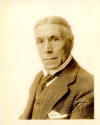
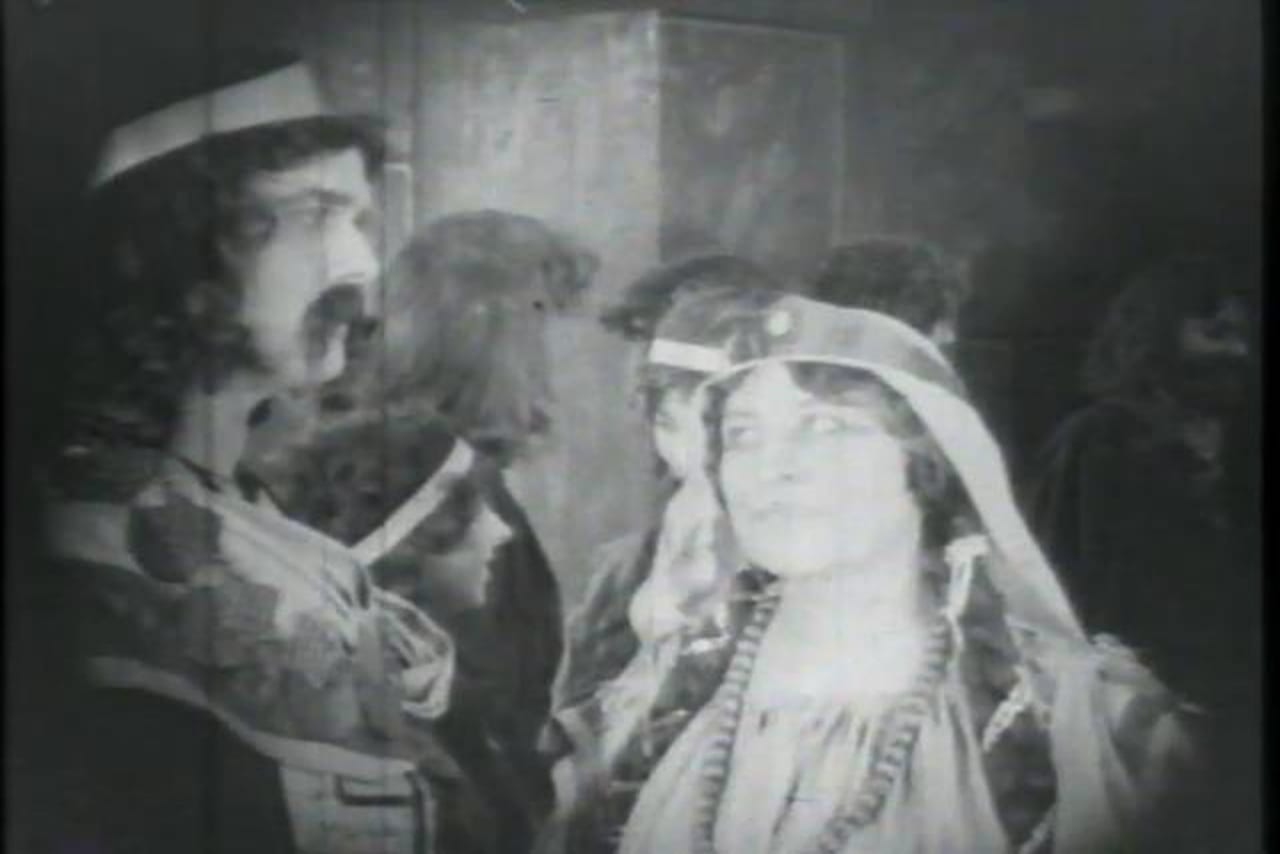
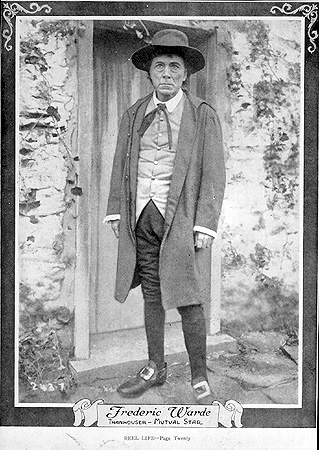
The following article by Jerome Beatty, Thanhouser’s director of publicity, appeared in the January 1917 issue of The Photoplay Magazine and gives Frederick Warde’s commentary concerning his own acting: “I had just seen King Lear in the projecting rooms at the Thanhouser studios in New Rochelle. Frederick Warde, star of the production, sat behind me through the five reels, watching the action intently, frequently mumbling approval, once or twice giving vent to a slight murmur when he saw something that displeased him. A distinct hum of praise came from the spectators. The lights were flashed on and Mr. Warde arose. The picture had ended. Someone beside him murmured something conventional about ‘what a wonderful thing it is to be able to perpetuate your art upon the screen. How proud you must be to think that a hundred years from now your King Lear will still be shown!’
“Mr. Warde turned quickly and bowed in his courtliest manner. ‘Thank you, madame,’ he said, ‘but I sincerely hope, for the sake of my memory, that none of my photoplays will be shown 100 years from now. Perpetuate my art in motion pictures? Never! One hundred years from now, aye, 10 years from now motion pictures will have advanced by such tremendous strides that were King Lear the most wonderful photoplay that has been produced to date—‘
“’It is!’ someone insisted. ‘You said something then,’ said someone else. ‘—a decade from now,’ Mr. Warde continued. ‘It would be merely a curiosity, valuable only as rare antique.’ Here was a famous actor who took a new view of motion pictures. Most of those who have had great success upon the speaking stage consider that they step downward when they enter the films; they patronize the art and their apology for entering is that they ‘owe it to coming generations’ that their wonderful histrionic abilities shall be inscribed in celluloid.
“I spoke later with Mr. Warde, this sturdy actor with 49 years of stage experience, whose success on the screen has dispelled the superstition that all leading men must be young and handsome and that a ‘costume piece’ is inevitably doomed to failure. ‘King Lear’s a great picture,’ I began. ‘It will be great for—‘
“’It will be great,’ he said firmly, ‘until men come along with new ideas about photography, new scenic effects and different methods of direction. Suppose I had made a King Lear five years ago, putting into it all the thought that I put into this production. What would it have been?’
“’Your acting,’ I began, ‘would have been the same and—‘
“’Acting? Some of it. In the first place it probably would have been a one-reeler—in two reels at the most. The photography would not have been so good. It would have been as out of date now as a ‘sky-scraper’ built 25 years ago. What has become of the picture Sarah Bernhardt made some years back? It is lost—lost because the methods of production are antiquated, not because of any fault in the acting. I didn’t go into motion pictures to perpetuate my art. I am in the films because motion picture actors can live at home, because motion pictures are made upon a larger scale than is possible upon the stage, and because they test an actor in the most difficult of all arts—pantomime. I have not left the stage for good. I expect to return, for the spoken drama is my first love.
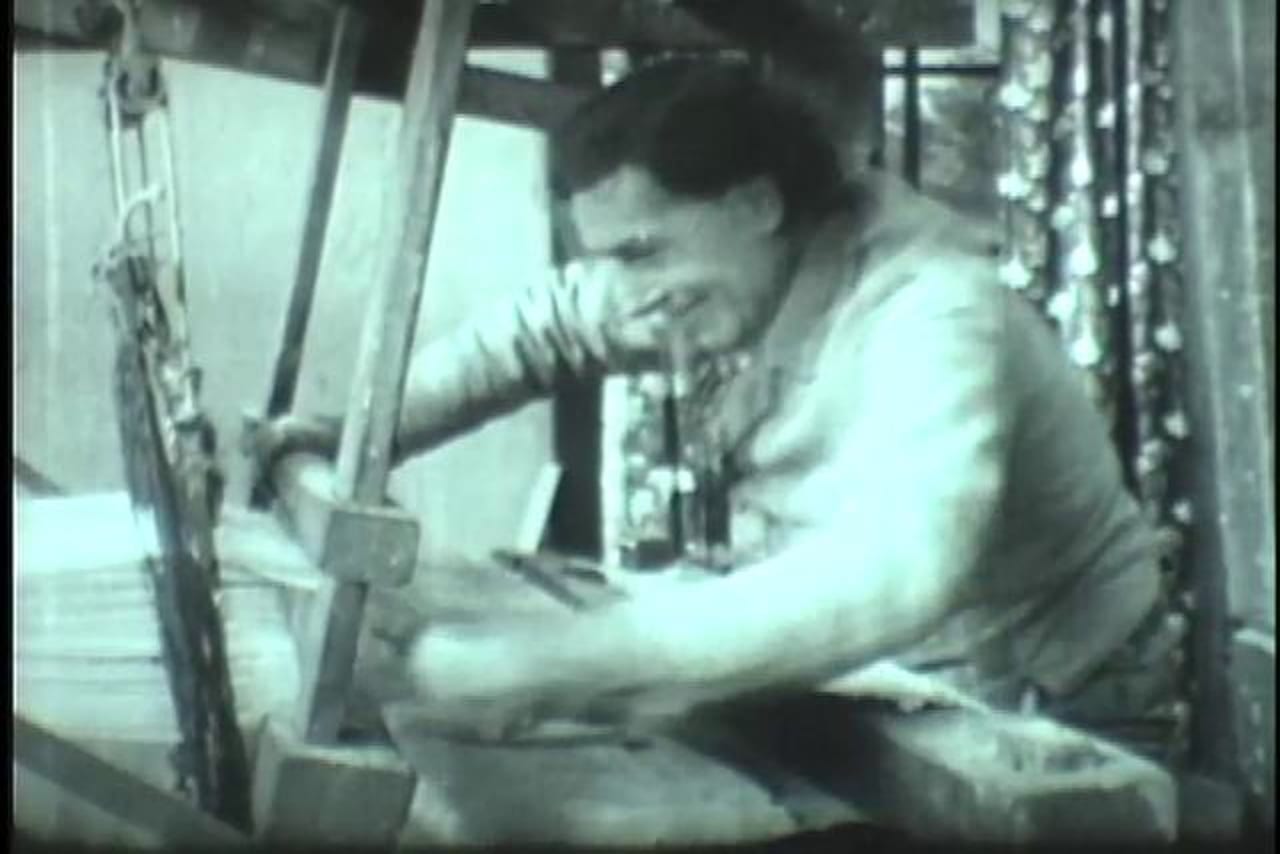
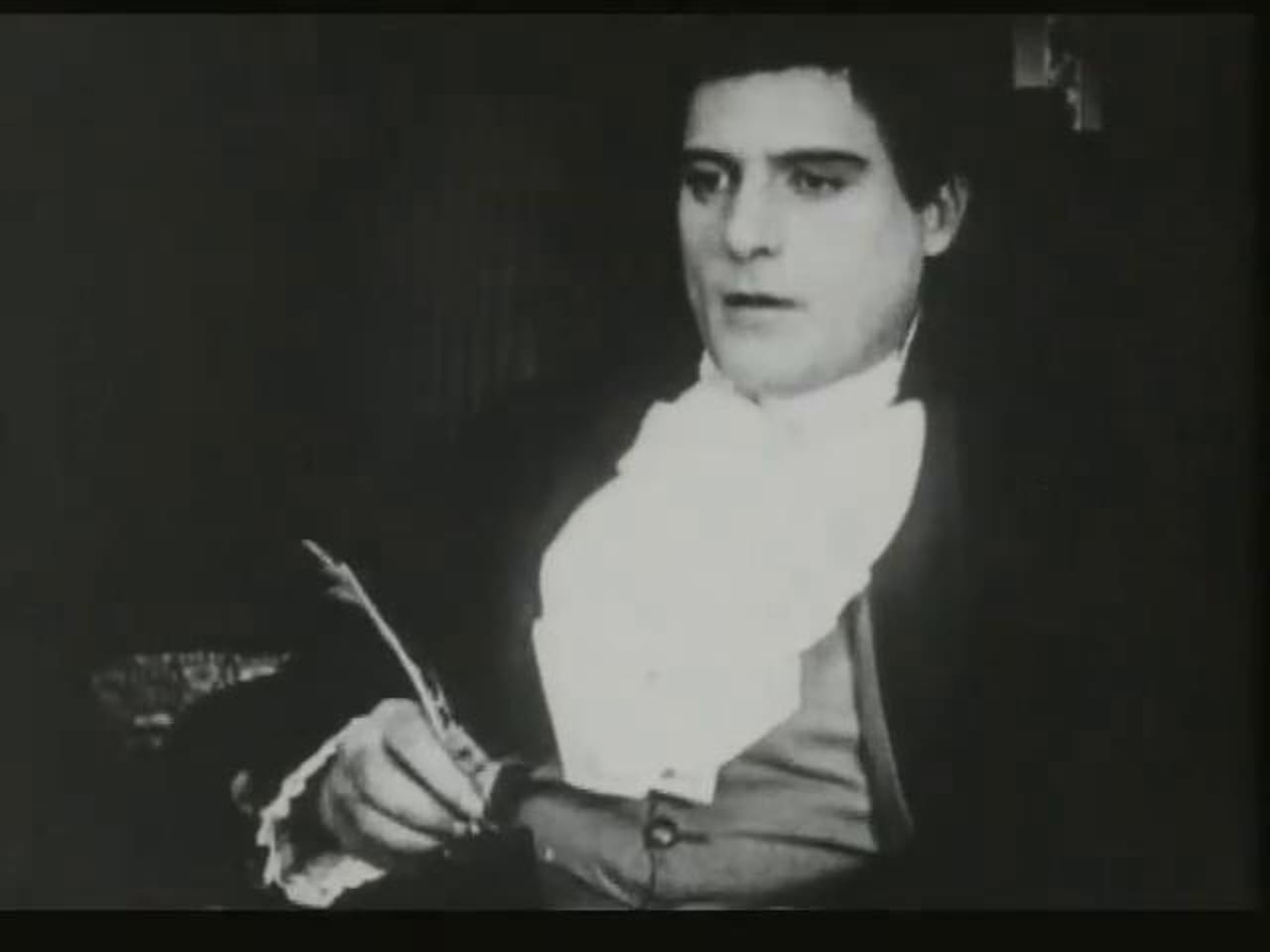
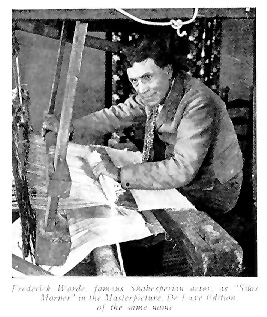
“’I am told that so-called ‘costume pieces’ are in disfavor among the motion picture patrons. Yet I appeared in Silas Marner and I understand it has been a success. They tell me that King Lear is, as they say, ‘going to go big’ and we are now at work upon The Vicar of Wakefield. I think that perhaps the aversion to costume pieces is caused by the fact that so few of them are based upon a genuinely human story. You can spend thousands of dollars to please the eye, but unless you please the heart, unless you create human sympathy, your play is a failure. My hobby always has been worthwhile plays, and I have found that no play without heart interest ever was worthwhile. I find that I can exercise my hobby to greater advantage and with more personal comfort through the medium of the screen. So here I am. But to perpetuate my art? Bosh!’”