1913Thanhouser CompanyTwo reelsLiterary adaptation

Sherlock Holmes Solves the Sign of the Four

No copy you can watch online. No print is known to survive. What follows is what does: the release, the cast, the story, and what the trade press said at the time.

The story

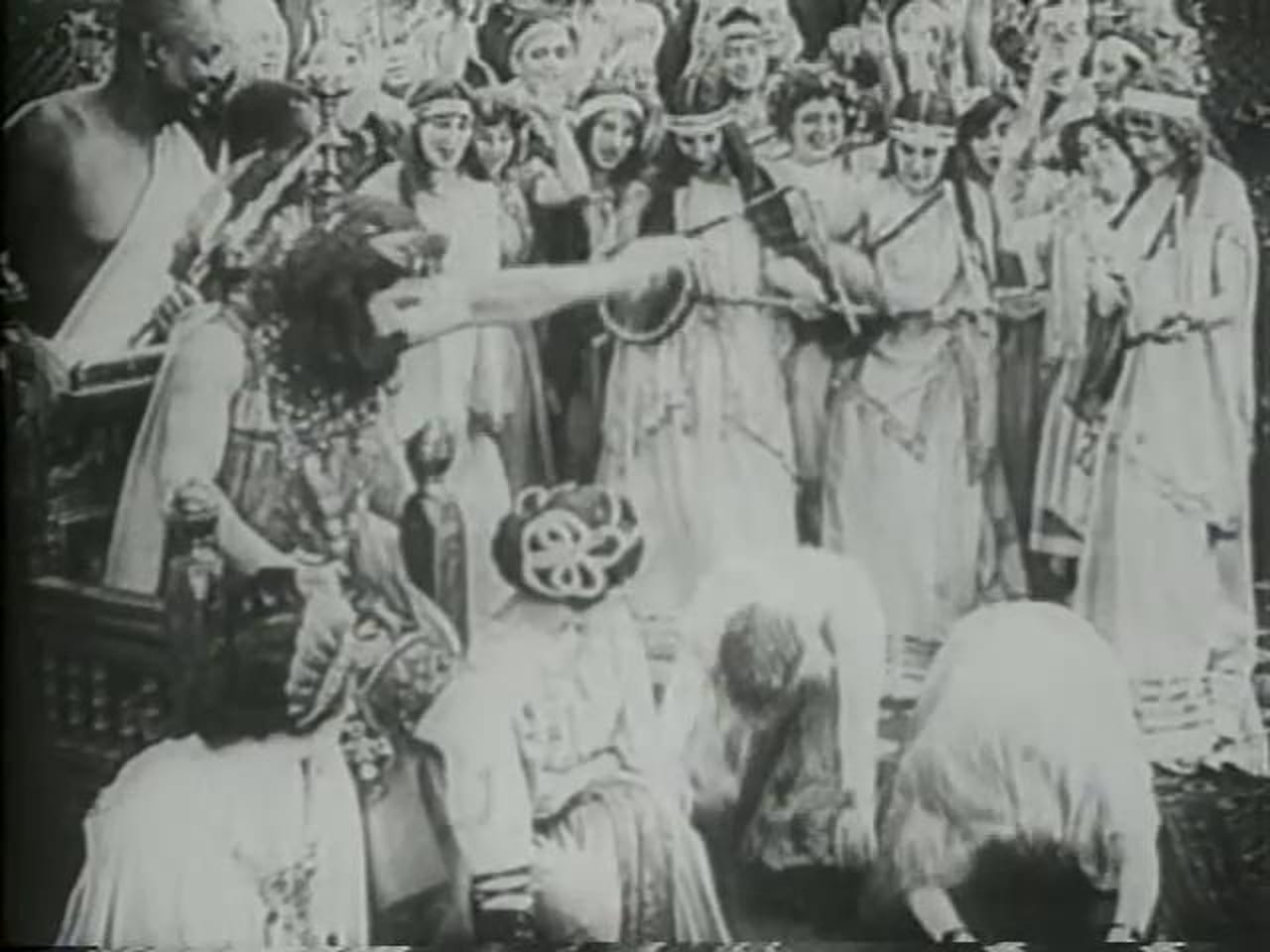
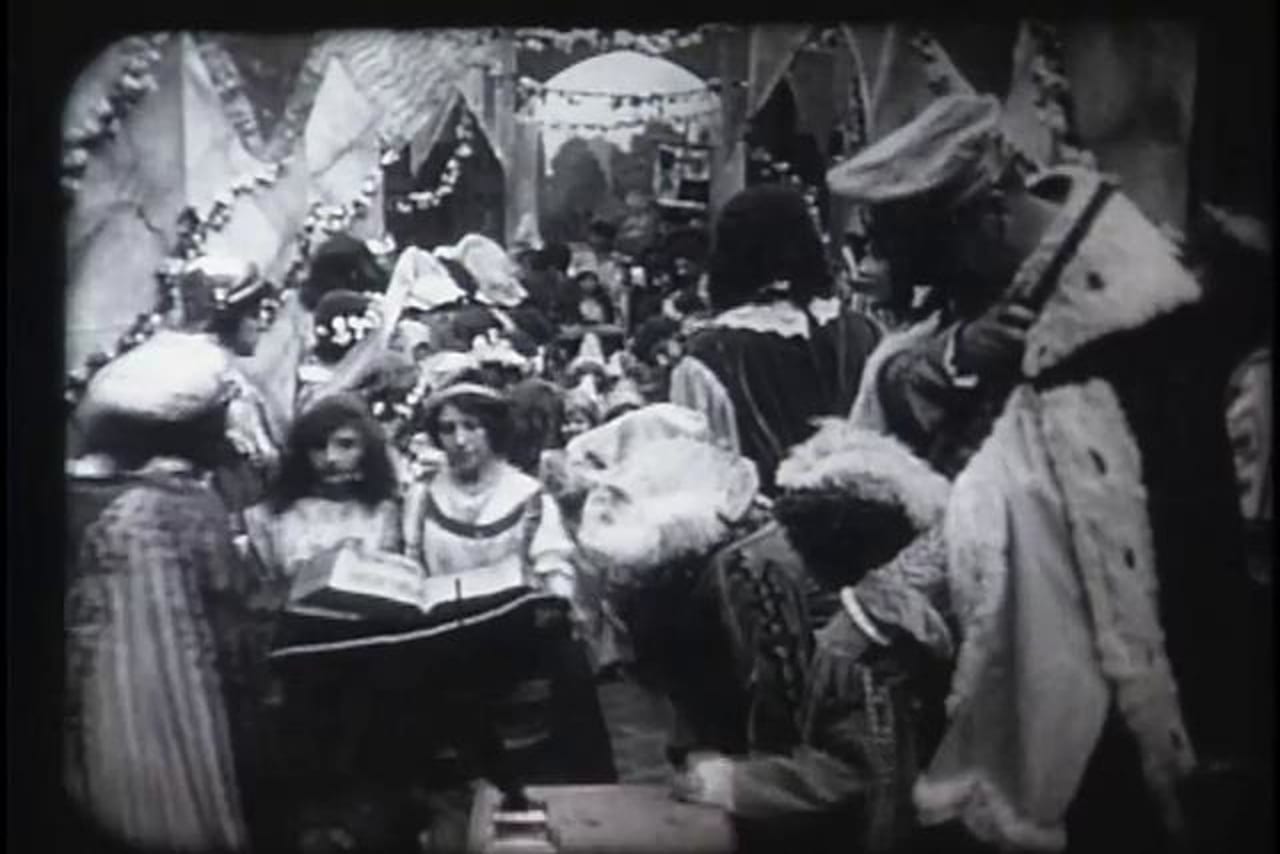
Major Sholto, a retired British army officer who had amassed wealth in India in a very mysterious manner, died suddenly, and his two sons were unable to find any trace of the wealth which they knew their father had possessed. But they searched the house patiently and at last, in an attic, concealed by a secret panel, they discovered a brass-bound box. Eagerly they opened it, and to their delight they beheld jewels of almost fabulous value. But besides the gems, they found a letter telling them that Mary Morstan, the orphan daughter of one of Sholto’s brother officers in India, was entitled to an equal share in the treasure. Thaddeus, the younger brother, was willing to carry out his dead father’s wishes but Bartholomew, the elder, insisted that they alone should possess the jewels. Finally, Thaddeus, unable to persuade his brother to relent, wrote Miss Morstan an anonymous letter telling her that she had been wronged and naming the place where they should meet. Miss Morstan, perplexed by this strange communication, consulted Sherlock Holmes, the celebrated detective. Holmes and Dr. Watson, his associate, kept the appointment with Miss Morstan and were led by Thaddeus Sholto to his home. Thaddeus told Miss Morstan of her inheritance, and explained that he intended to force his brother Bartholomew to surrender her share of the treasure. They reached the Sholto mansion, and Thaddeus Sholto went to his brother’s room to summon him, but soon he came dashing downstairs, pale and terror-stricken. One glance at his face was enough. Holmes and Watson dashed up the stairs, burst open the door leading to Bartholomew Sholto’s room, and rushed in. There huddled in his chair, was Bartholomew Sholto, and on his breast was a torn sheet of paper, with five words scrawled upon it, ‘The Sign of the Four.’ And the treasure was gone!

One of the secrets of Holmes’ great success was that he lost no time following a clue. A quick examination showed that the man had been killed by a poisoned thorn which had lodged in his head; then the detective, realizing that the murderer must have escaped by the roof, hurried up the ladder leading to the roof. In the garret Holmes came upon fresh evidence of intruders. In the heavy dust which had gathered upon the garret floor were impressions of a man’s boot and the ferrule of a wooden leg, and the imprint of two little bare feet. The detective hurried to the roof, where he found, dangling to the ground below, a heavy rope, the means by which the criminals had escaped. Sherlock Holmes, securing a bloodhound, tracked the fugitives down, the chase finally leading him and his co-worker, Dr. Watson, to a little shipyard, where he learned that a man with a wooden leg, accompanied by a little East Indian, had hired a motor boat and sailed up the river. Holmes, in another boat, pursued. The fugitives were captured, but not before they had thrown the treasure overboard. Then Jonathan Small, the man with the wooden leg, and his faithful follower, little Tonga, whose deadly blow pipe had killed Sholto, were brought to Holmes’ rooms and the casket opened. The jewels were not there. And Jonathan Small, with the prospect of a long prison term before him, laughed grimly, for the treasure had disappeared forever.

Summary from The Moving Picture News · 22 February 1913
Background of the scenario

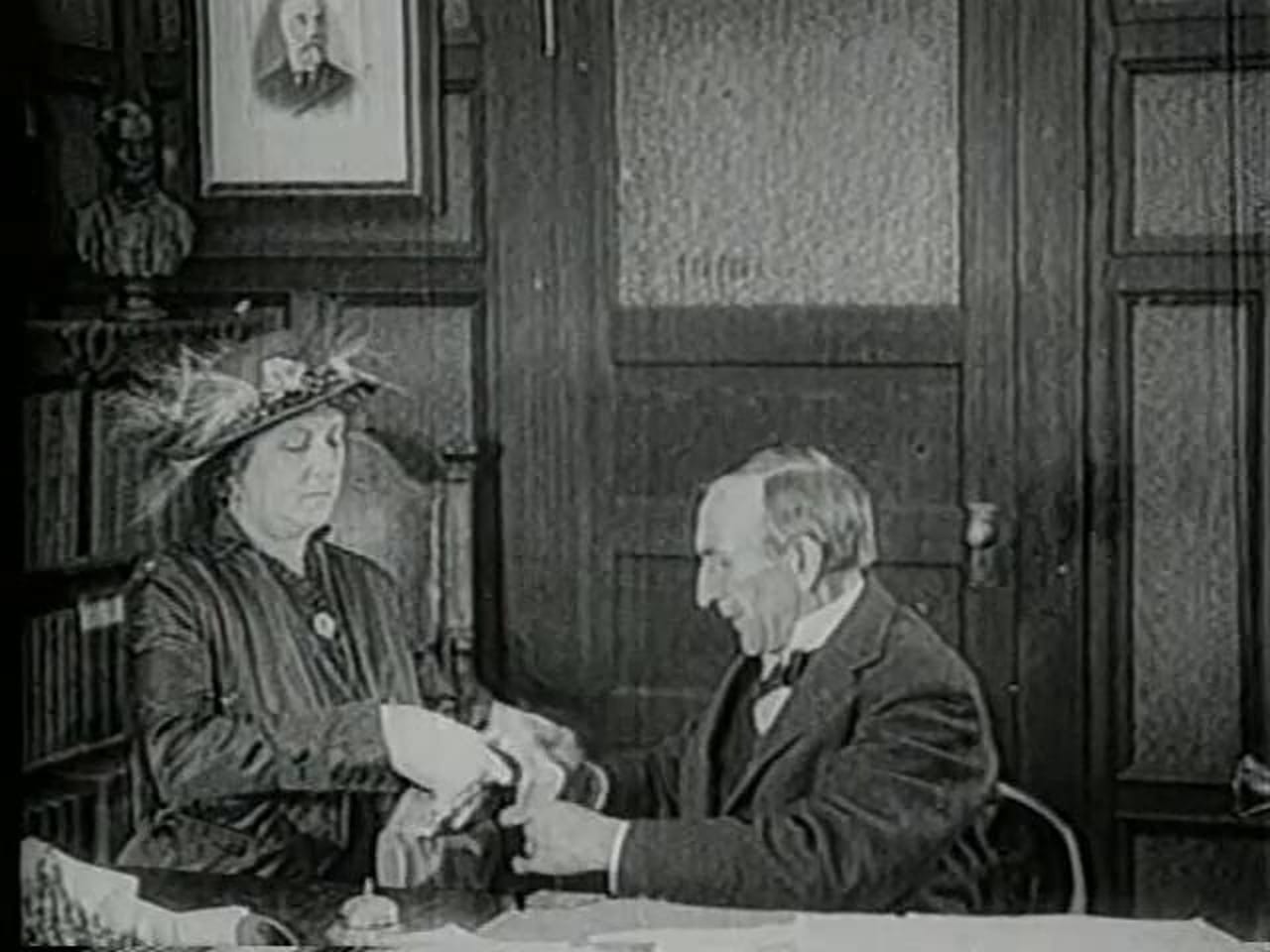
This work was adapted from Arthur Conan Doyle’s (1859-1930) work, The Sign of the Four, which first saw print in the February 1890 issue of Lippincott’s Magazine. Subsequently it was republished in book form numerous times, continuing to the present day. The work was one of four book-length novels featuring Sherlock Holmes, the first being A Study in Scarlet, released in 1887, and the others being The Hound of the Baskervilles and The Valley of Fear. In addition to his four novels and numerous short stories featuring arch detective Sherlock Holmes, Doyle created numerous historical novels, patriotic pamphlets, and other works, most of which are not widely remembered today. The Sherlock Holmes stories have outlived their creator and still have a wide circle of friends.

What the papers said

3 reviews · 2 articles · 1 advertisement

An exceedingly interesting release of the detective order. The story, which is told in two reels, is intensely interesting, and hinges around a box of treasure which has been stolen from an Indian Rajah. By foul means the treasure has become the property of Major Sholto, a British army officer. At the death of the officer, a letter is left …

Read in full · 1 min

An exceedingly interesting release of the detective order. The story, which is told in two reels, is intensely interesting, and hinges around a box of treasure which has been stolen from an Indian Rajah. By foul means the treasure has become the property of Major Sholto, a British army officer. At the death of the officer, a letter is left which states that the treasure must be divided between his two sons and a Miss Morstan, a niece of the Major’s. Trouble ensues over the division of the treasure, and one day the eldest brother is found dead with a note pinned to his chest with the Sign of the Four, and the jewels gone. Reel two tells the true story of the gems and how they were stolen and misappropriated and the confession of those who killed and robbed the son of Major Sholto.

The Moving Picture News · 8 March 1913

This two-reel film gives us a new kind of Sherlock Holmes, a younger and heavier built man than we usually see in the part. But once the story gets into action, with its weird, Oriental atmosphere, we forget everything else. The story of the Agra treasure is pictured for us in an intensely fascinating manner. The one-legged man, the East …

Read in full · 1 min

This two-reel film gives us a new kind of Sherlock Holmes, a younger and heavier built man than we usually see in the part. But once the story gets into action, with its weird, Oriental atmosphere, we forget everything else. The story of the Agra treasure is pictured for us in an intensely fascinating manner. The one-legged man, the East Indian, with his blow pipe, the Sholtos, the Baker Street lodgings, the scenes in India, and the various exciting episodes combine to make this a successful offering. The treasure never comes into the hands of the rightful owner, Mary, as it was cast into the river. A strong production of a famous narrative.

The Moving Picture World · 8 March 1913

More reviews

26 February 1913The New York Dramatic Mirror1 min

This review is reprinted in the narrative section of the present work.

Articles2 · 30 January 1913 – 2 February 1913

30 January 1913The Evening Standard (New Rochelle)1 min

printed a commentary which may have pertained to this film

The sands of the desert grew cold yesterday while members of the Thanhouser Company were working at Fort Schuyler on a photoplay, the scene of which is laid in India. The American fortification was transformed for the time being into an English fortress. Officers and men of His Majesty’s Service were lolling about in the burning heat of the tropical sun. The tiger was about to eat the heroine and the hero was galloping into sight on a cloud of dust when it began to snow. Bert Adler would have made the snow flurry do for a sand storm, but the cameraman was not so inventive and stopped the performance until better weather. Another motion picture troupe was at the same spot making a Cuban picture. The same snow storm turned their tropical legion into bleak Labrador.

2 February 1913The Morning Telegraph1 min

The Thanhouser Company is using the Comet Studio to produce some of their pictures since the fire. Sherlock Holmes is underway now. This was started in New Rochelle but was burned and had to be done over again.

Advertisement

1 March 1913The Moving Picture World1 min

In two reels, a mystery masterpiece…. The story is a famous one about the jewels of fabulous value found in the home of Major Sholto after his mysterious death. A pretty girl is told in an anonymous letter that she is entitled to a share in the treasure; the letter naturally perplexes her; she goes to Sherlock Holmes about it—and that is about as much as we can tell you here.

Have you seen this film, or a print of it?

Prints of films thought lost still turn up in attics, private collections and archives. A record like this one is how the next one gets found.

Tell us about a print

Cast and crew

Cast
Charles Gunn as Dr. Watson
Harry Benham as Sherlock Holmes

Every name opens that person's page, with each film they appear in and which of them you can watch.

Watch instead

Films you can watch from the same company

Matched by cast, director and kind

More about this film

Filmed in
Begun in New Rochelle; redone at the sets of the Comet Film Co. and in various locations in New Rochelle
Bowers’ notes
  1. A variance in the last word of the title appeared in several Thanhouser advertisements, including one in The Moving Picture World, March 1, 1913, where it was given as Sherlock Holmes Solves The Sign of the 4. A review of the film in the August 1913 issue of The Motion Picture Story Magazine shortened the title to The Sign of the Four. A review in The New York Dramatic Mirror, February 26, 1913, gave the title as Sherlock Holmes and the Sign of the Four, a title also used in the synopsis printed in the February 22, 1913 issue of The Moving Picture News. 2. Negatives of this film were being processed at the Thanhouser studio in New Rochelle when the disastrous fire of January 13, 1913 occurred. All negatives were destroyed. The players then went to the Comet Film Co. studio and started over. The negatives for the second attempt were processed by the Carlton Motion Picture Laboratories. 3. Attribution of Charles Gunn to the role of Dr. Watson is from The Motion Picture Story Magazine, May 1913 (not necessarily a reliable source).

From Volume II: Filmography of Q. David Bowers’ Thanhouser Films: An Encyclopedia and History, reproduced with permission and unchanged. Read the history of 1913 →

Cite as: Bowers, Q. David. Thanhouser Films: An Encyclopedia and History, “Sherlock Holmes Solves the Sign of the Four”. thanhouser.org/films/sherlock-holmes-solves-the-sign-of-the-four/

Where a print is held

Held by
No print known