The story
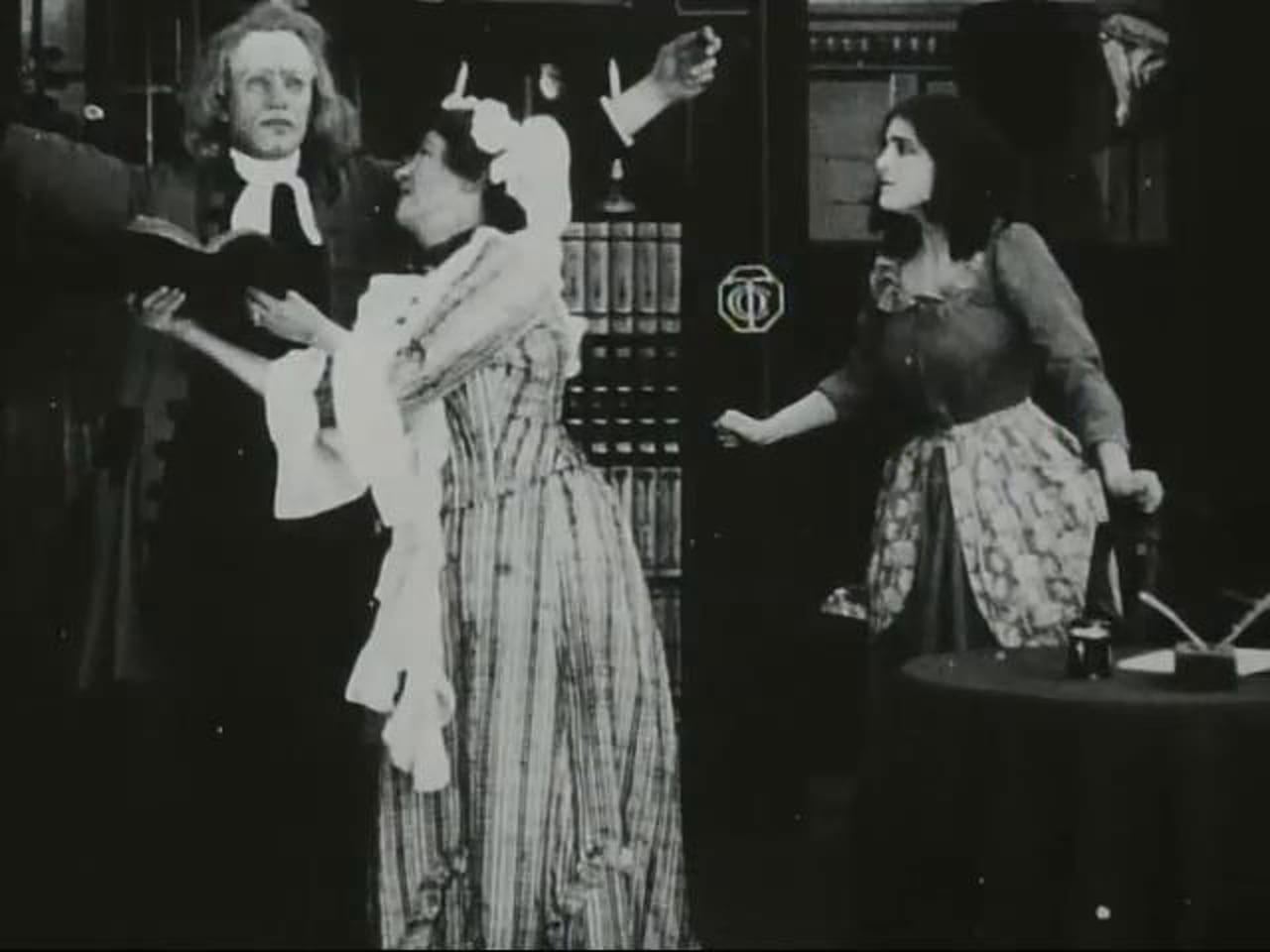
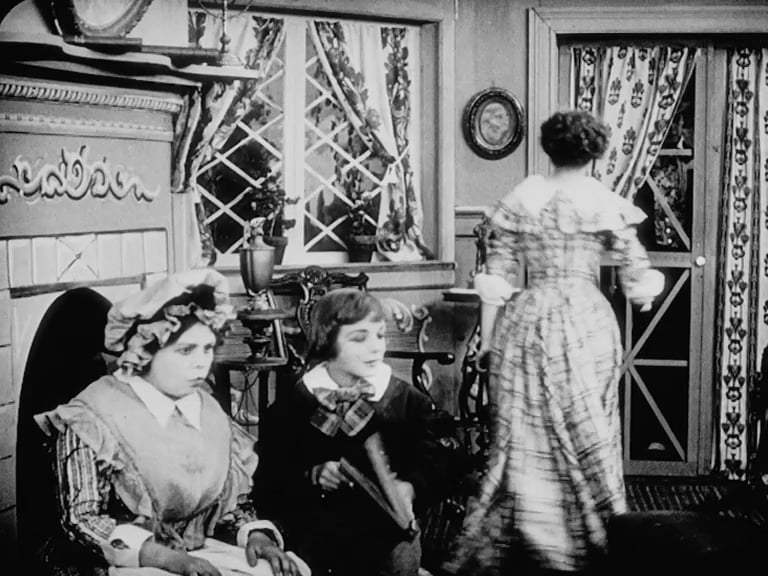
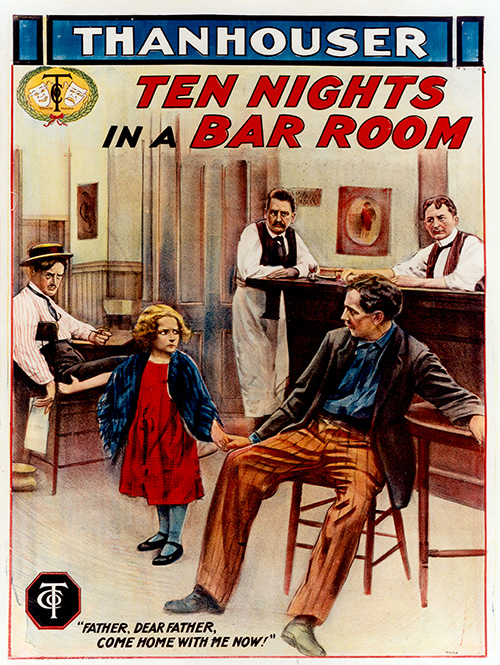
“Despite the fact that he is a loving husband and father, Joe Morgan ruins his life by his fondness for drink and finally becomes a seemingly hopeless drunkard. He spends his time and money in the saloon kept by Slade, the man who took away Joe’s mill and largely caused his financial ruin. Slade’s saloon, when he first opened it, was well furnished, the landlord courteous and well groomed, and the customers happy and seemingly unaffected by their surroundings. But as time passed, a change for the worse was noted in everything. Probably this escaped Joe’s notice, for a sharp shot, indeed, was needed to reform him. That shock came.
“Joe’s only daughter, Mary, was in the habit of going to the saloon and piteously urging her father to come home. She knew that no matter how intoxicated he might be, he would never harm her. But one evening when she appeared her father and Slade had been quarreling, and the saloonkeeper threw a bottle at Morgan, who dodged. The missile struck the child, entering. The blow resulted fatally, but before Mary died, she extracted a promise from her grief-stricken father that he would never drink again, a promise which he ever-afterward kept. In later years Joe became wealthy and respected, and influenced by the thought of his daughter in heaven he kept in the straight and narrow path. The saloon keeper who killed Mary was never punished by the law—but through the irony of fate his taking off was much like that of Joe Morgan’s helpless child.”
Summary from The Moving Picture News · 29 October 1910
Background of the scenario
Timothy Shay Arthur (1809-1885), the grandson of a Revolutionary War officer, was born on a farm in New York and lived for a time near West Point. He eventually finished his childhood in Baltimore, where he was to remain in later life. Found to be a “dull” student by his teacher in school, he was apprenticed to a watch maker, but his eyes could not take the bench work in combination with his passion for late night reading. His next job was as a clerk in a counting-house, which gave him the opportunity to read as much as he liked. During this time he began to write, and soon adopted writing as his profession. He concentrated on temperance pieces for various journals and became a self-proclaimed enemy of saloons, eventually establishing himself as a leading figure in one of the greatest social movements of the mid-19th century.
His fame rested primarily on his extremely popular novel, Ten Nights in a Bar Room, and What I Saw There. Sensational and full of lurid episodes, with the backing of numerous members of the clergy the tale was second in sales during the 1850s only to Harriet Beecher Stowe’s Uncle Tom’s Cabin. Ten Nights in a Bar Room opened as a play in New York City in 1858 and soon became a classic. By the turn of the century it was a staple on the stage, along with other such favorites as East Lynne, Uncle Tom’s Cabin, and Hazel Kirke. Ten Nights in a Bar Room narrates the shameful ruin of a small town brought about by the Sickle and Sheaf, a tavern owned by one Simon Slade, who was later murdered by his own son in a drunken quarrel. Other characters of note are Joe Morgan, the town drunk; his noble wife Fanny and angelic daughter Mary; gambler Green, who meets a horrible death; and Judge Hammond, also destroyed by alcohol.