The story
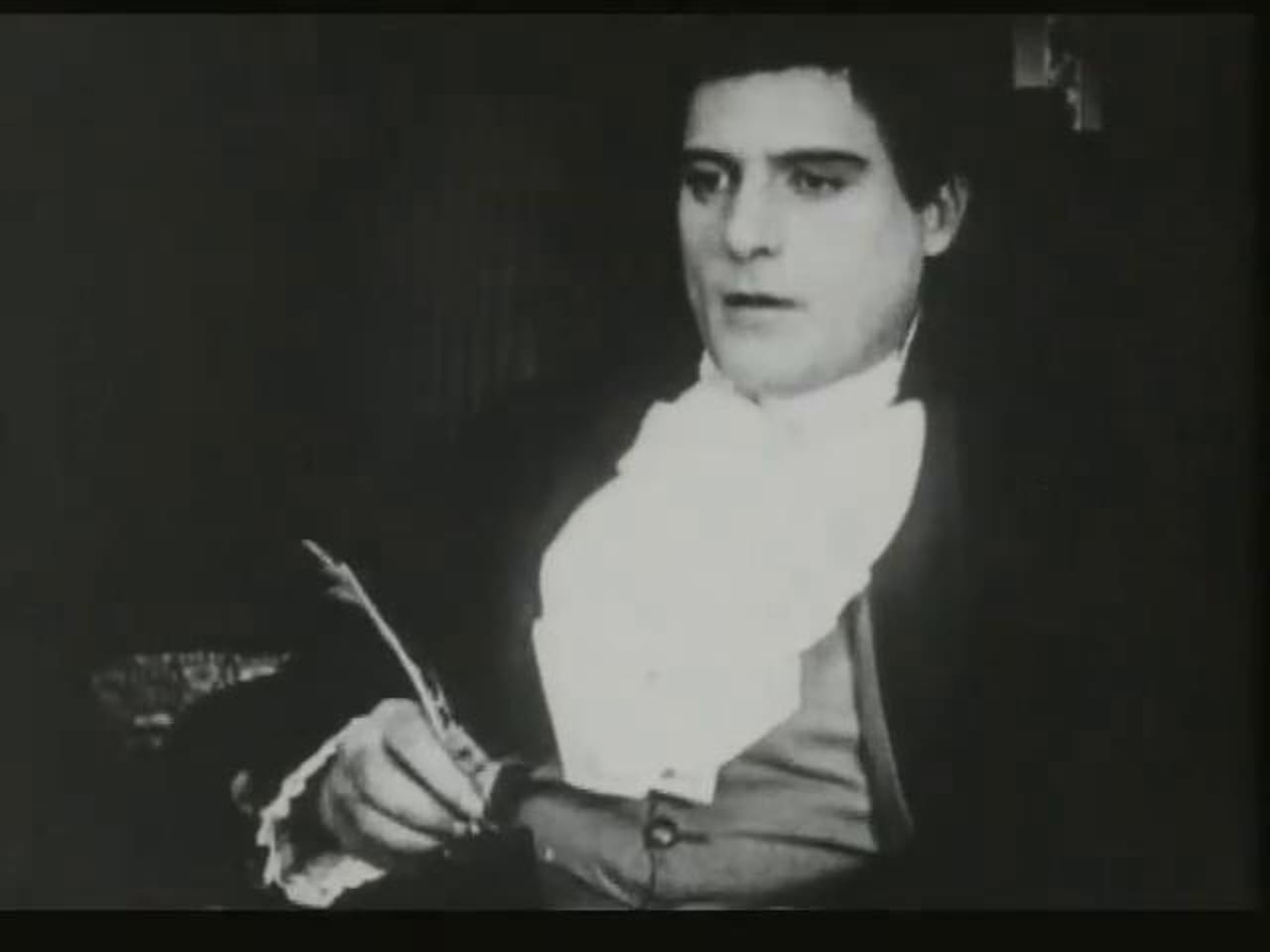
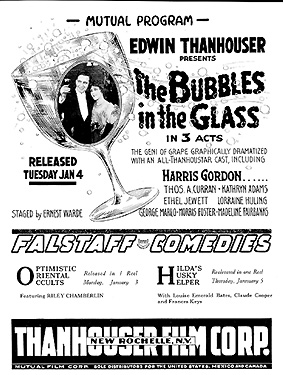
“Not a preachment, but an eloquent warning against extravagance and a cowardly attitude toward life, is the deeply affecting three-act Than-O-Play Feature, The Bubbles in the Glass, released by the Mutual Film Corporation January 4th. Harris Gordon is excellent in the role of the disconsolate young man who has failed in the financial world, and who has yet to learn the saving power of love.
“The play opens in a fashionable restaurant where Kenneth Rintool is giving a select dinner to Barbara Adams, his fiancée, and a few friends. Rintool refuses to accompany the party to the opera. He takes farewell to Barbara, saying that he has business to attend to, and later that night intends ‘going on a journey.’ All through Lohengrin the girl is haunted by the sense that something is wrong with her fiancé. Meanwhile, Rintool sits alone in the deserted cafe over an almost empty bottle of champagne. He will sip that, and then end it all! Ruined by his own extravagance—there is little for him to live for. The costly wine before him typifies his chief fault. These few drops remaining shall be his last. He pours the champagne into a glass, and the bubbles wink at him. Then, in the iridescent globules appear tragedies of the vineyard and of the wine presses—after that, his own career passes slowly in review. ‘I am insignificant enough!’ muses the would-be suicide. ‘I mean no more to any living soul than one of these bubbles!’
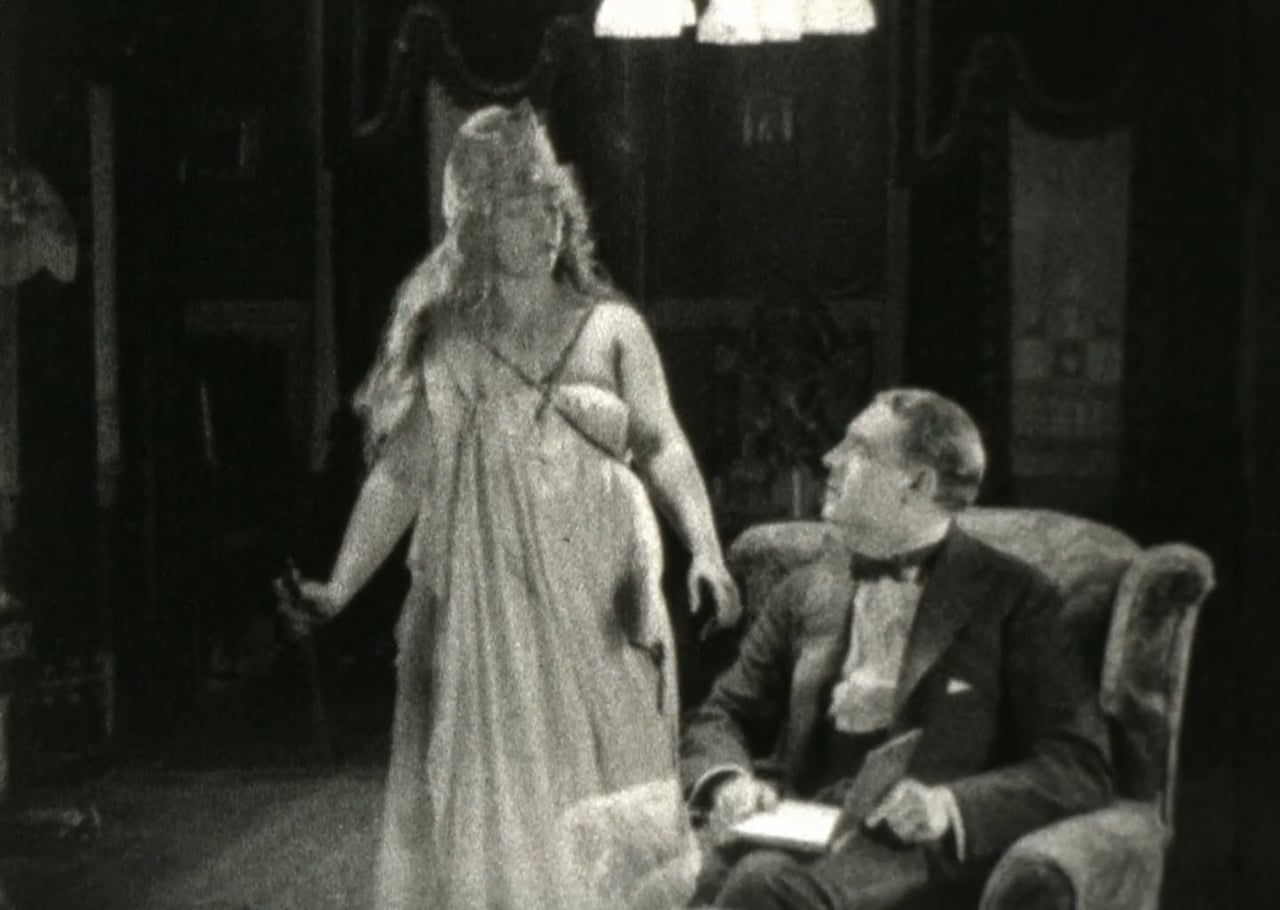
“He draws from his pocket the fatal powder, and nerves himself to take ‘the journey.’ A soft arm finds its way about Rintool’s neck, pleading eyes and a sweet, imploring voice recalls him to himself. Barbara has slipped away from the opera—and now she finds her fears justified. His money is gone? But health and love remain. When they are married she can help him fight his way back to fortune. Realization of his folly, and of the suffering he would have caused to this loyal, loving woman, sweep over Rintool. Seizing Barbara in his arms, he learns for the first time how love has the power to make a man live.”
Summary from Reel Life · 4 January 1916