
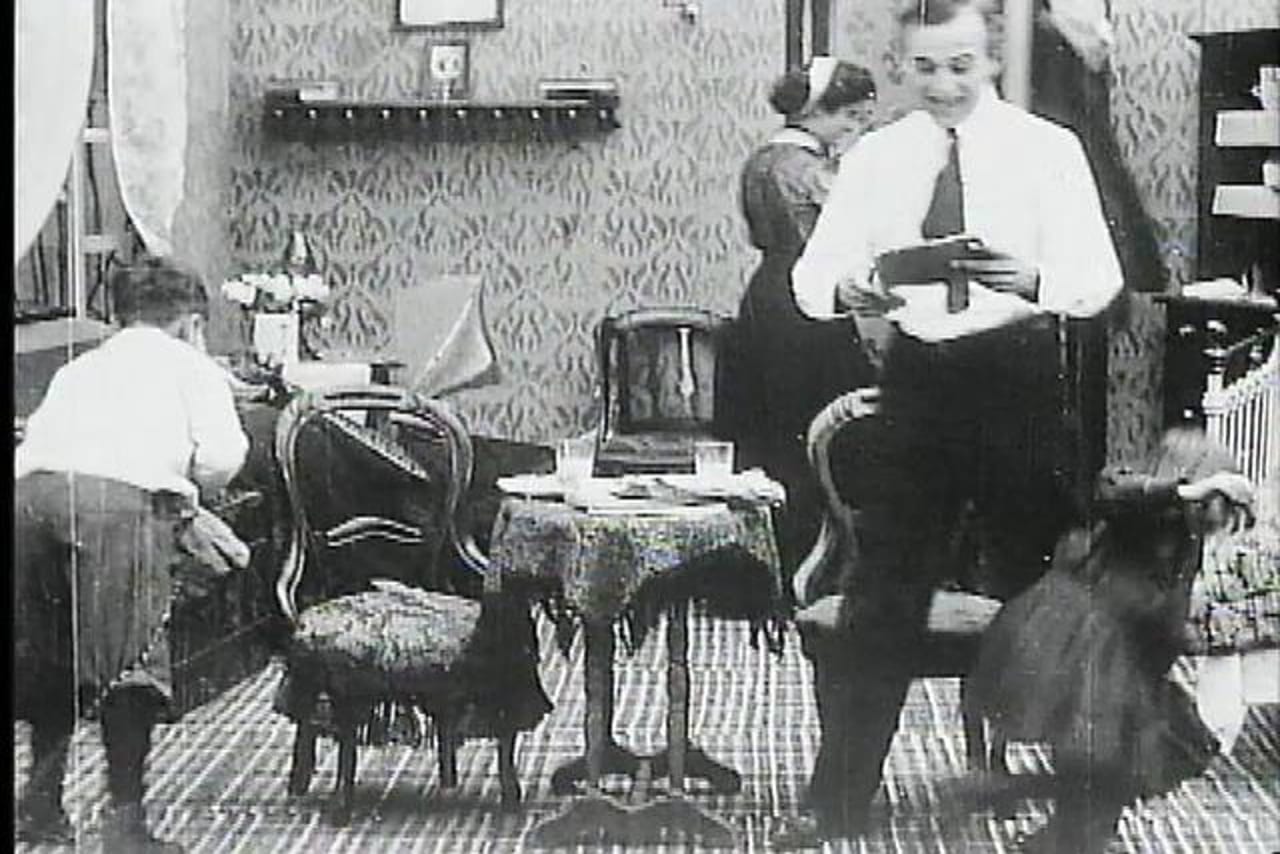
Barry O’Neil (the stage name of Thomas J. McCarthy) was one of two directors with Thanhouser at the beginning of the company’s activities. He directed the first Thanhouser release, The Actor’s Children.
Barry O’Neil
A Thanhouser Company director, credited on 9 Thanhouser films, 3 of which you can watch free online.
Watch a film Barry O’Neil directedOpens The Actor’s Children (1910)
Biography
From Bowers’ encyclopedia entry. Read the full biography below ↓
Filmography
Films you can watch
Other Thanhouser films
- 1910St. ElmoLost
- 1910The Writing on the WallLost
- 1910Uncle Tom’s CabinLost
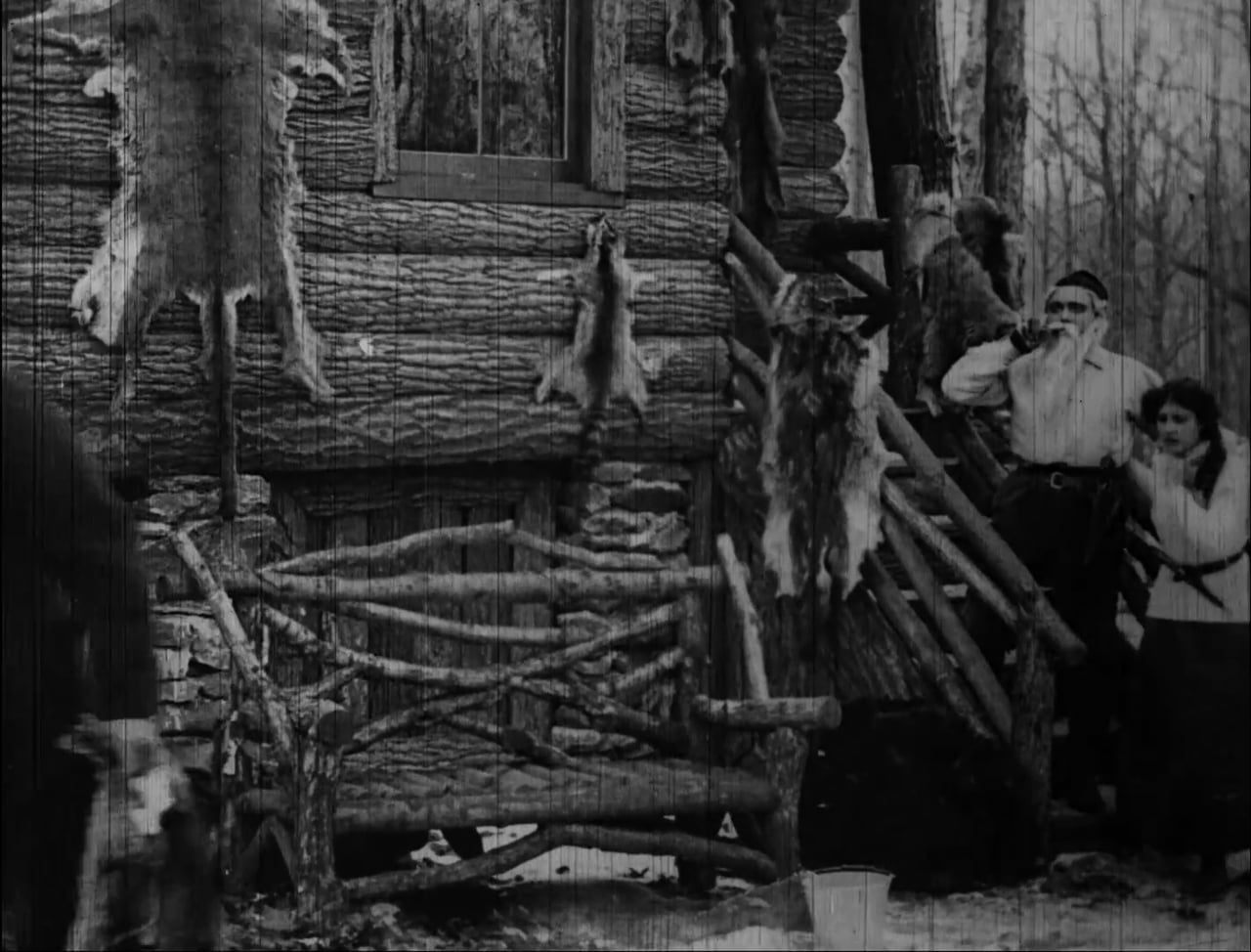
- 1910The Mad HermitLost
- 1911The Old Curiosity ShopNo online copy
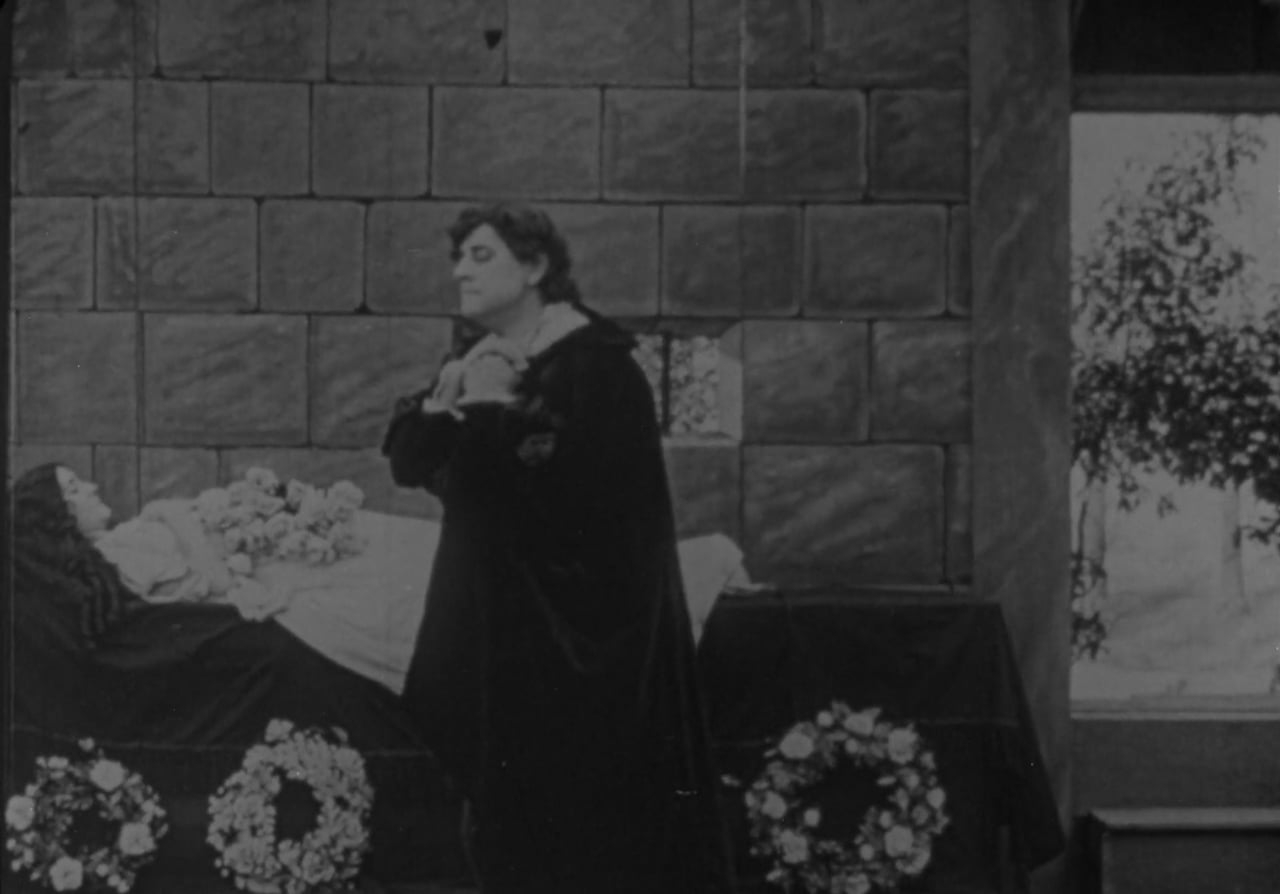
- 1911Romeo and Juliet—Part ILost
These have no online copy. Each page says what is known about where a print is held.
From the encyclopedia
The full biography
From Volume III: Biographies of Q. David Bowers’ Thanhouser Films: An Encyclopedia and History, reproduced with permission and unchanged. 751 words.
Born Thomas J. McCarthy, of Irish parents, in New York on September 24, 1865, Barry O’Neil was educated in the same city. He followed a career as an actor in Irish roles and as a stage director for Keith and Proctor, Klaw & Erlanger, Joseph Brooks, and other companies. In 1907 he was stage director for Edwin Thanhouser at the Bush Temple Theatre, Chicago. When Edwin Thanhouser began producing films in New Rochelle in 1909, O’Neil, with Lloyd B. Carleton, was one of two directors employed. O’Neil directed the first Thanhouser release, The Actor’s Children, which made its appearance on March 15, 1910. Around this time he maintained his residence at 5 Locust Avenue in New Rochelle.
An article in The New York Dramatic Mirror (March 19, 1910) stated that he and Carleton “like the ‘picture game,’ but neither can get reconciled at the idea that every cop on the beat must receive his five-spot every time a street scene is taken.” Another article in the same publication, issue of September 30, 1914, told how he began work with Thanhouser films in October 1908 (the date should have been 1909). Barry O’Neil directed many of Thanhouser’s 1910 and 1911 releases, including the firm’s first two-reel production, Romeo and Juliet. However, only those films for which independent verification has been found are listed in the appended filmography.
Continue reading
By 1912 he was an important director for Lubin, and by 1914 O’Neil had directed numerous multiple-reel films there. Film historian Linda Kowall wrote to the author in 1988: “Barry O’Neil, one of Lubin’s main directors, was reported by all who remembered him as quite a pompous, know-it-all fellow who fancied himself a DeMille before there was a DeMille—complete with puttees, megaphone, and the whole bit. For the making of the 1914 Lubin feature The Wolf, he put cast and crew through a nightmarish experience at Saranac Lake in midwinter in the name of ‘realism.’ O’Neil was fond of putting his company at risk to achieve striking results.” From Lubin he went in July 1915 to World, in Fort Lee, New Jersey. The August 11, 1915 issue of The New York Dramatic Mirror contained a full-page advertisement by the World Film Corporation, which stated that Lewis J. Selznick had engaged O’Neil to produce special features. A notice in The New York Dramatic Mirror, September 28, 1915, stated that he terminated his contract with Lubin by mutual consent, although the contract had a year remaining. On November 1, 1915 his Shubert Film Co. production, Bought, was released by World.
His wife, Nellie Walters O’Neil, known professionally as Nellie Walters, died on November 21, 1915. Mrs. O’Neil, born in Glasgow, Scotland, had a career on the stage but had retired when Barry O’Neil went into motion pictures with Edwin Thanhouser. She was the daughter of Mr. and Mrs. George Walters. At one time her mother was a Thanhouser actress. Barry O’Neil stayed with World for several years, where, by autumn 1916, his films included Husband and Wife, A Woman’s Way, The Unpardonable Sin, The Weakness of Man, and others. From this era until the end of his life he gave his mailing address as the Lambs Club, New York City.
The 1918 edition of the Motion Picture Studio Directory noted that among the pictures he had directed lately for World were Husband and Wife, The Revolt, and The Hidden Scar. An article in The New York Dramatic Mirror, April 6, 1918, noted that in his films, “he incorporated may original spectacular effects which greatly enhanced their dramatic value. Realism was always Mr. O’Neil’s objective, and an instance is recorded where he took his company over a thousand miles north to procure the atmosphere he desired. His method of directing was firm but tempered with kindness, and he produced his best results without the friction which so often handicaps the work of more excitable stage managers.” Barry O’Neil died of a stroke of apoplexy in New York City on March 23, 1918, at the home of his brother, Dr. Frank J. McCarthy, 113 West 49th Street. Interment was in Woodlawn Cemetery.
Notes: His surname sometimes appeared in print as O’Neill. He is not to be confused with Barry O’Neill, an entertainment personality of the 1920s who at one time was a close friend of Jeanne Eagels.
Bowers’ own filmography list is left out here: the filmography above lists the same films. Cite as: Bowers, Q. David. Thanhouser Films: An Encyclopedia and History, “O’NEIL, Barry.” thanhouser.org/research/people/barry-o-neil/