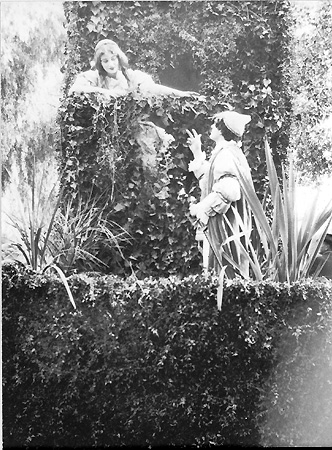
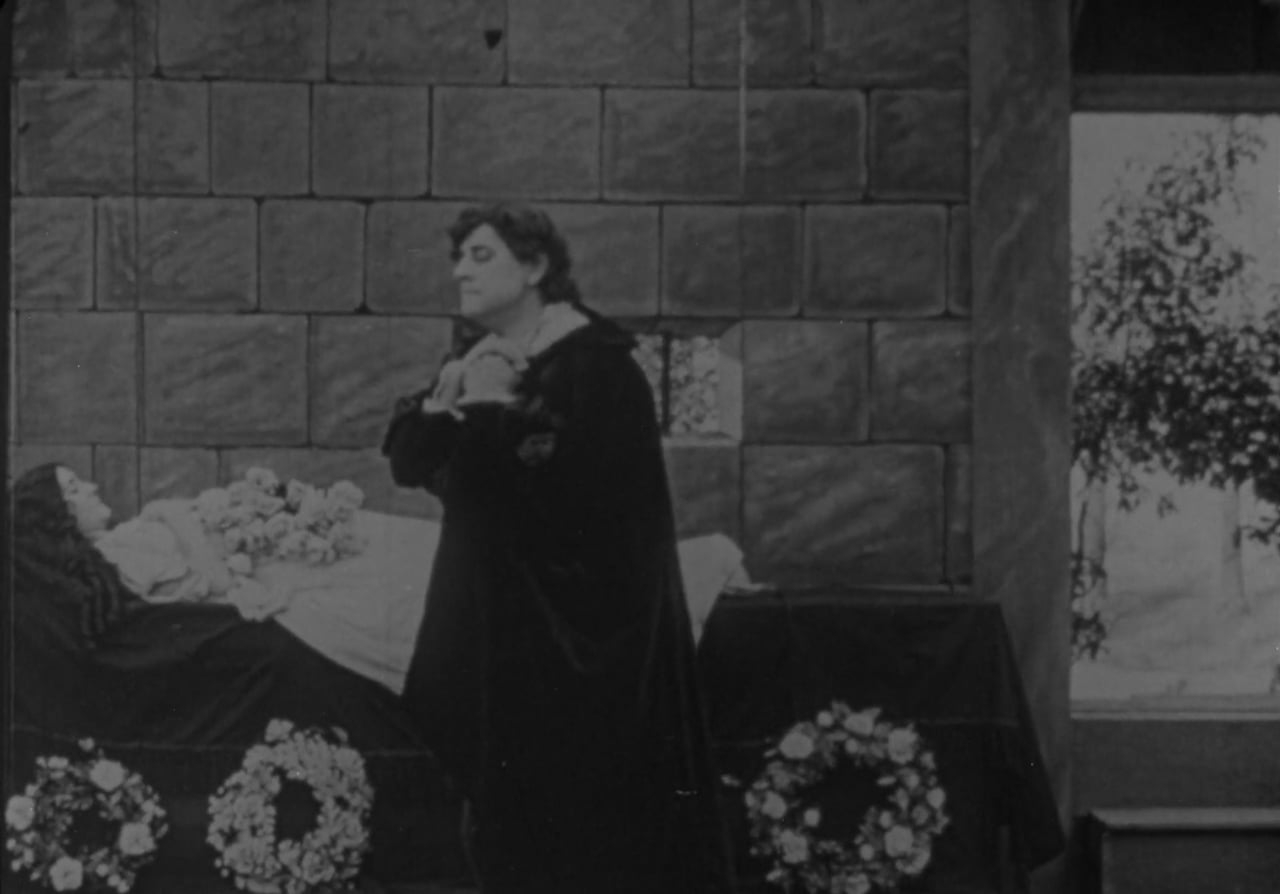
“Such a production is deserving of praise. The film has been divided into two parts that will be released on consecutive Fridays. Part I takes these lovers of rival houses up to the consummation of their marriage. The backgrounds, costuming and stage management are altogether impressive and in keeping and follow in action and general treatment the usual stage business. The quarrel between the two families is seen, the ball, the arranged meeting of the lovers by the old nurse, the balcony scene, and the marriage in the priest’s cell. The nurse is especially well acted, and all members of the cast bring grace and intelligence to bear on their respective roles. Mercutio, however, it would seem, might have been a more delightful Romeo than as Mercutio.”
MUSICAL ACCOMPANIMENT. From the “Music for the Picture” column by Clarence E. Sinn, in The Moving Picture World, September 16, 1911:
“The Thanhouser people had a chance to issue a picture with music, but they passed it up, which is much to be regretted. They gave us a picture all right—Romeo and Juliet, and they are to be complimented on their work throughout. But such a fine production deserves fitting surroundings of which music is not the least important. The opera of the same title (and story) would furnish ample material for a competent musician to make a score from. I saw the picture at several houses and at each case the house was crowded to capacity and a long line was waiting for the next show. That and the fact that each seemed to thoroughly enjoy the picture and heartily applaud at each reel would seem to indicate that the general public appreciates high-class films and will show such appreciation in the way it counts the most; i.e. money at the door and applause for the show.
“I had the good fortune to hear the picture accompanied by very creditable music at a couple places—notably at Sittner’s Theatre, Chicago. I did not learn the pianist’s name, but desire to compliment her for good work. I’m offering a few suggestions for music for this picture which is selected mostly from popular catalogues, for the reason that this music is likely to be familiar to the majority of my readers. I am not offering this as the best selection, but as the most practical inasmuch as it is within the immediate reach of many. And of those who have not got the numbers mentioned, I believe they are sufficiently known to substitute music of a like nature. But I hope the next time anyone issues a splendid classic like this one they will include music in the production.” Sinn’s suggestions follow:
ROMEO AND JULIET (THANHOUSER)
PART I.
-
Martinique intermezzo (or allegretto) until subtitle: “Capulet and Montague,” etc.
-
Heroic until combat, then -
-
Agitato until end of combat.
-
Gavotte until “Romeo is Persuaded,” etc.
-
Allegretto (similar to number one) until “Romeo and Juliet Meet.”
-
Valse Lento until they form for dance.
-
Minute slow and well marked until dancers exit, then:
-
La Cinquantine until “His Name Is Romeo,” etc.
-
Valse Lento until “But, Soft, What Light Through Yonder Window.”
-
Intermezzo from Cavalleria Rusticana or something similar until “Romeo Entreats the Good Friar,” etc.
-
Vesper bells until “Juliet’s Old Nurse Acts as Messenger.”
-
Reverie (The Rose’s Honeymoon) until change of scene.
-
Gavotte until “Then Hie You Hence,”
-
Valse Lento until “Holy Church Incorporate.” Then:
-
Religioso until garden scene,
-
Light pretty waltz movement or semi-sentimental. (I heard one pianist use Oh Promise Me with good effect.)
-
Swell or change to sentimental for finish.
PART II
-
Semi-mysterious until next scene.
-
Agitato at duel until they stop fighting, then:
-
Short plaintive until second duel.
-
Agitato until end of scene.
-
Religioso all through scene. At change:
-
Pathetic until “Juliet’s Father Not Knowing,” etc.
-
Waltz movement until Juliet is alone with her father.
-
Reverie (The Harvest Moon) until Friar opens door for her.
-
Semi-religious until Juliet appears in the garden.
-
Reverie (Heart’s Ease) until “Believing Juliet to be Dead.”
-
Pathetic until “Paris, Who Loved Juliet.”
-
Pathetic (minor key—suggestive of funeral) until “Stop Thy Unhallowed Toil.”
-
Agitato pp. swell for combat. Then:
-
Plaintive until “The Friar Learns That His Letter To Romeo.”
-
Mysterious until Juliet rises.
-
Plaintive until change of scene.
-
Mysterious until Friar enters the tomb.
-
Plaintive (minor key) until end.
Note: Suggestions for musical accompaniment also appeared in The Moving Picture News, October 6, 1911.