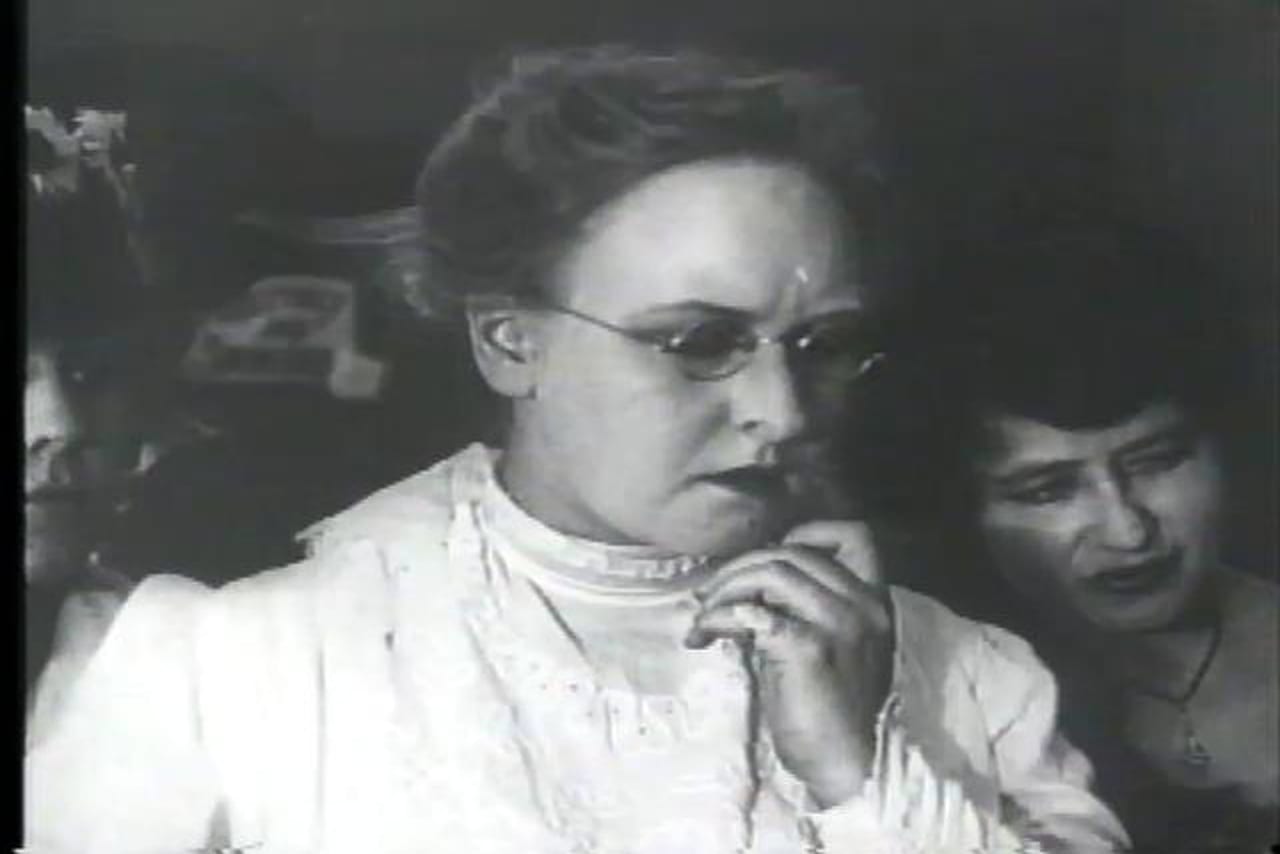
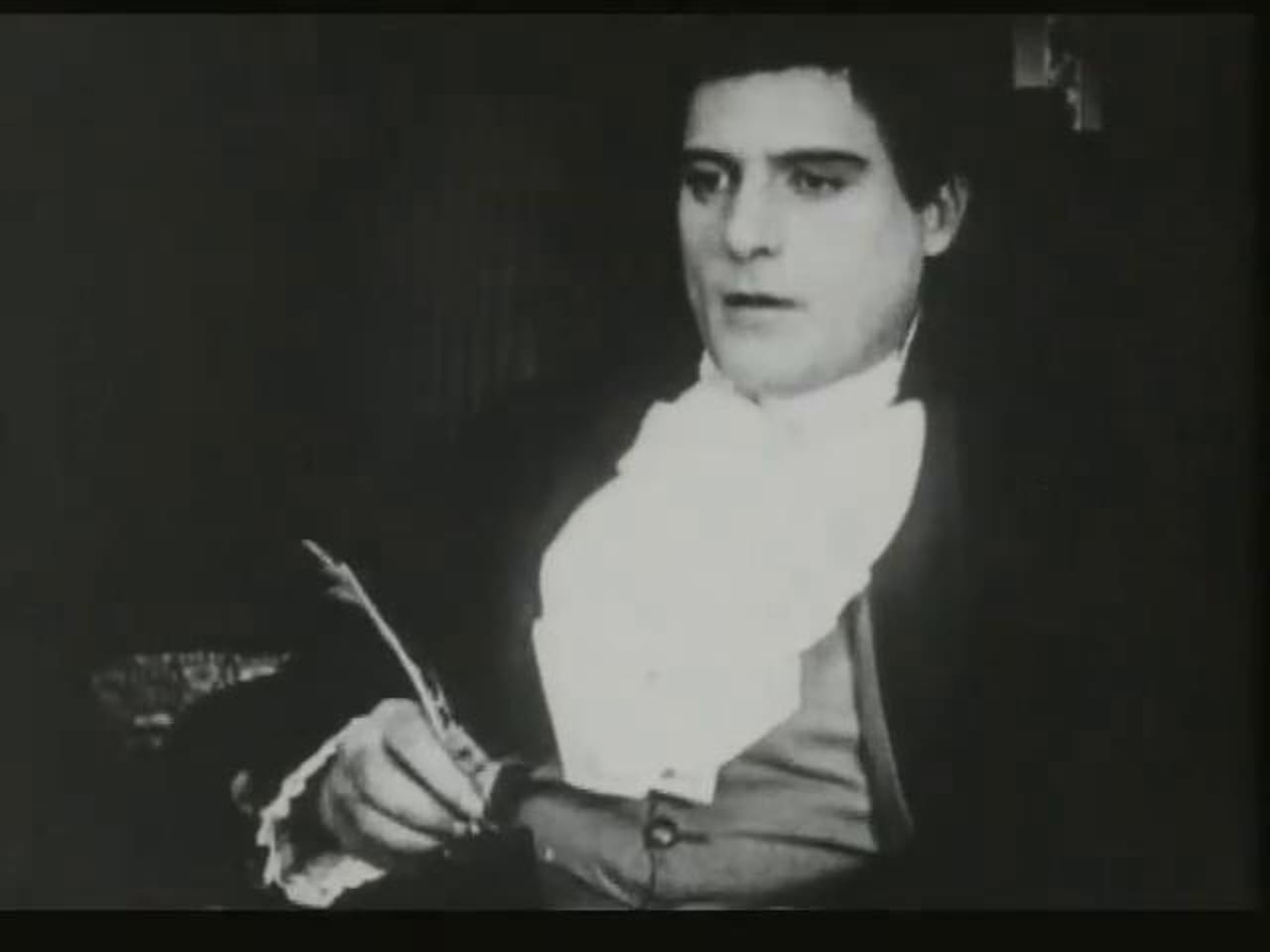
The following interview, published in the May 1977 issue of Maine Life, gives much information concerning Miss DeCarlton and life at the Thanhouser studio during her tenure there years earlier:
“Grace DeCarlton’s sparsely furnished one-room apartment is located in one of Portland’s less elegant neighborhoods. The dull gray paint on the outside of her building is cracked and peeling and the sidewalk out front is heaved and broken into jagged chunks. It’s not the kind of place where one might expect to find an ex-movie star who has appeared in nearly a hundred films. It just doesn’t fit the Hollywood image. That’s because the lady that lives there was a star 60 years ago, when Hollywood was little more than a cow pasture in Southern California and movie stars weren’t stars at all, just working people like the rest of us.
“Grace, now 87, is a small, thin woman with a beguiling smile and large, brown eyes. She is as fiercely independent person who, despite her past retirement age, continues to push herself as a strenuous pace. In addition to teaching modern dance at a downtown studio, she participates in community theatre productions and lectures at a local college. Much of the little spare time that she has is spent filling small, black notebooks with her observations on dance and acting. Often she will read to visitors from them in her soft, melodious voice.
“She seldom speaks about her years as a movie actress. She has been away from films for 60 years, and many of her memories of those years have faded. In many ways, she says, that time seems like a dream to her now. From 1916 to 1918 [actually 1915-1917] Grace was a featured player with the Thanhouser Company, an Independent film studio based in New Rochelle, New York. Although her career in films was short, her output was prodigious. In those days a full length feature took only about a week to complete. Of the nearly one hundred films she appeared in, none, to her knowledge, survives today.
“She describes the Thanhouser studio as a large warehouse-like building with one glass wall and a glass roof (to let in the daylight which was their principal source of light for shooting). Actors and actresses worked from dawn until sunset, churning out pictures like factory workers. It was hard work, but it was steady and it paid well. At the peak of her movie career Grace was only 26 years old. Born in Boston in 1890, she gravitated to New York at an early age in hopes of starting a career as a dancer. When no jobs were forthcoming, she took work as an actress in a traveling stock company, which led to a start in films. Although untrained as an actress, she was creative and her career flourished. However, dance still remained Grace’s first love. She abandoned her film career in 1918, when forced to choose between it and acting. Her choice never brought her the fame and riches that films could have, but she was successful and it brought her happiness.
“The following interview was a difficult one to conduct. Grace doesn’t like talking about her past; there is too much about the present that she would rather discuss. And she is more than a little mystified by the interest that people take in her film years. ‘It didn’t seem as important then,’ she says, ‘as it does now.’
“Question. ‘When you were young motion pictures were a brand new phenomenon. How were you introduced to them?’
“Answer. ‘The first moving pictures I ever saw were a part of a vaudeville show at the Keyes Theatre in Boston. I was just a young girl. One of the films was called The Pillow Fight. It showed two children having a pillow fight with the feathers going all over. Then they reversed the film and all the feathers went back in. We loved that. The other film was a frightening one about a train. It was shot from track level and you saw the train coming right at you. The films had no stories, they were just episodes, a kind of novelty.’
“QUESTION. ‘When and how did you begin acting in films?’
“ANSWER. ‘The next time I can remember hearing about films I was 26 and on the road with a stock company. I had always wanted to be a dancer but there was no work at the time. I had to earn a living so I took acting jobs. There were many opportunities to act if you didn’t mind traveling. We went on the road in the winter and returned to New York for the summer. Just before we got back to the city this time someone told me about the Thanhouser Film Company. I wasn’t particularly interested in films, I just wanted a job. I was tired of traveling.
“’When I got to the studio the casting director told me I would have to submit a photograph of myself. I didn’t have one so I went to get one taken. I had the feeling that I should do something different, so I went to an ordinary photo studio and said I wanted some very simple pictures of myself. This was the era of Mary Pickford and everyone had fluffy ruffles and curls. So I put on a dark dress and pinned my hair back, all very sedate in comparison to what the others were doing. I told the photographer I wanted the lighting like that of a Rembrandt painting and he did it. It served its purpose. I went back to the casting office and left the pictures, which the casting director pinned up with the others on the wall. When Thanhouser came by, my picture stood out and he told the director to send for me.’
“QUESTION. ‘Did you start by doing bit parts?’
“ANSWER. ‘No I went right into leading roles. You had to be an actor to work in films. There was no growing into lead roles gradually. It wasn’t a school in any sense, there was no training process at all.’
“QUESTION. ‘What kind of stories did your films have? Were they based on current fiction or original scenarios?’
“ANSWER. ‘I had a rather sad expression so I was given parts in sad stories. It’s difficult for me to remember more than a few titles. Her Father’s Sin [actually The Man’s Sin—Ed.], The Little Captain of the Scouts,The World and the Woman, and The Window of Dreams were a few of them. One of the only films in which I didn’t play the lead was The Vicar of Wakefield. Frederick Warde had the lead in that one, I played a bride.
“’The stories were very corny. Most of our films played in the small theatres in the small towns. We did some classics, but most of our stories were written by our staff writer, Philip Lonergan, who was always on the set. Our movies had no strict moral code, but we never even thought about portraying sex or extreme violence. The stories just didn’t run in those directions.’
“QUESTION. ‘Did your scripts contain a detailed plot line and precise dialogue?’
“ANSWER. ‘Well, only the leading people were actually given scripts. The rest of the players were given a brief coaching as to what was going on. There weren’t many lines to learn; the only lines you had to say were the one’s that were to go into the captions. Those had to be incorporated into the scenes. If you wanted to, and were creative, you could write your own dialogue.’
“QUESTION. ‘What sort of direction were you given?’
“ANSWER. ‘Many of our directors were theatre people who had hired on for engagements in films. They gave us very few exact instructions and there was seldom any blocking out of the action before filming, unless there was some particular effect the director wanted. It was spontaneous, very improvised. Often there was more than one film being made at a time in the same studio and the directors would collaborate on each other’s films. Some directors you liked to work for and some you didn’t.’
“QUESTION. ‘What would be a reason for not enjoying working with a particular director?’
“ANSWER. ‘I was always sincere about my work, but not all of the movie people took their jobs seriously. Some of them weren’t so much interested in careers as they were in picking up a day’s pay, which at the time was $5 a day for extras. They were very flippant about their work and would say all kinds of crazy things on camera, spoofing the stories and even cursing. Before very long the word came back that this was to cease. There was a protest because many people in the audiences could read lips and they were shocked. And even to those who couldn’t read lips the actors’ insincerity came across clearer than they thought it would. When you’re sincere it shows, and when you’re not that shows too.’
“QUESTION. ‘What other feedback did you get from the studio?’
“ANSWER. ‘We worked continually. In the two years that I was with the studio we didn’t layoff at all. We would turn out a film every two or three weeks. It was good steady work.’
“QUESTION. ‘Was most of your acting done in the studio or on location?’
“ANSWER. ‘We did a lot of outside work. We went to different places around New York and New Rochelle, down to the shore and upstate. Once we went all the way up to Maine or Canada to do some scenes with snow. They didn’t attempt many special effects in the studio. I think going on location was cheaper than trying to recreate scenes in the studio.
“’Location shooting was hard work sometimes. Once, I remember, a script called for me to hang from the side of a railroad bridge as a train approached. Just as the train was about to run me over I was supposed to fall into the arms of my leading man, who was standing far below. The shot of me clutching the bridge was filmed on location in Connecticut somewhere. The bridge was very high and all I had to stand on was a narrow platform that they had built. It would have been a long drop had I gotten nervous. The frame included only from my shoulders up, so that the viewer saw just my arms holding the bridge, my facial expression, and the sky above my head. The rest of the scene was completed in the studio. To show me falling past the camera they hooked me up to a wire and harness and dropped me from the ceiling of the building. They used the same method to show me being caught.
“’Another time I was supposed to nearly drown, so they took me out in a boat and threw me overboard. I remember my head going under water more than once before another actor reached me and dragged me choking to shore. I can tell you, I didn’t have to act very much in that scene, I was petrified!
“’In another picture I played an Indian girl. I wore a black wig and dark eye make-up. It looked awful. I was supposed to ride a runaway horse, but the problem was, I couldn’t ride a horse and he wouldn’t run away. Finally they had to throw apples at him to get him to move. Fortunately for me there was a man stationed down the road out of range of the camera to catch us as we went by. One time they set off an explosive charge on a mountain top and we ran around dodging debris while they filmed us. The company had a stunt man, but he was only for the really difficult shots!’
“QUESTION. ‘Did acting pay well?’
“ANSWER. ‘The leading players were paid $125 a week. That was a pretty good salary although I didn’t live in very high style. For a while I stayed in New York, but later I moved to a boarding house in New Rochelle. All of Thanhouser’s leading players, Wayne Arey, Robert Whittier, Florence LaBadie, Carey Hastings, Jean Eagels and myself, were paid the same so there was no jealousy or competition. They were all very talented and we all worked well together.
“’Let me say at this point that the image of the silent film actor as a ham is inaccurate. There were some bad actors around of course, just as there are today. But not everyone overacted. Our movements and actions were much less exaggerated than a stage actor’s would be. I found film acting much easier than stage work. In films we had close ups, so you didn’t have to magnify your facial expressions so much, just make them more defined and clearer than usual.’
“QUESTION. ‘What sort of life style did you lead as a ‘movie star’? Did you ever consider yourself a celebrity?’
“ANSWER. ‘It wasn’t a very glamorous life. Later, in Hollywood, actors became celebrities and had to keep up an image. But we were anonymous; no one ever recognized me on the street.’
“QUESTION. ‘Why did you leave motion pictures?’
“ANSWER. ‘I was studying classical ballet at the same time that I was acting in films. I even used to bring my ballet slippers onto the set so that I could practice between scenes. One of the directors got very mad at me one day and asked me angrily if I was an actress or a dancer. At heart I was a dancer really, but I didn’t tell him that. When the time came to move the studio to California, Mr. Thanhouser came to me to ask if I would come along. I said no. [Ed. note: This recollection must pertain to something else; the Thanhouser studio never moved to California, although earlier, in 1913, a small company of players was sent there.] There was never any question in my mind. My real love was dancing, and that art was centered in New York. I have never regretted my decision.’”